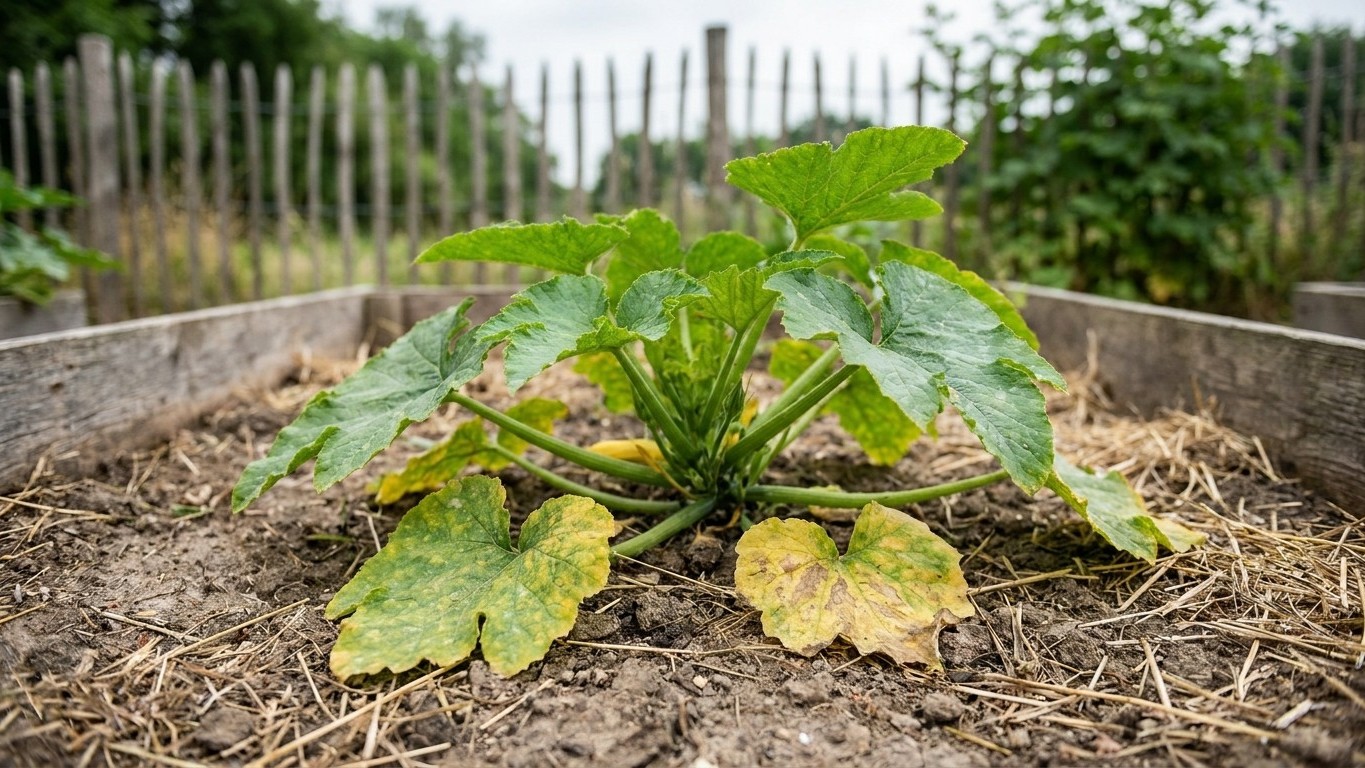

Summer squash tells you it’s ready long before a calendar does: skin that’s glossy rather than dull, flesh that gives slightly under a thumbnail, and a size still closer to a cucumber than a baseball bat. In Delaware, that moment usually lands somewhere between early June and mid-October depending on planting date, but the bigger issue isn’t picking on time. It’s that a domestic fridge only buys you about a week, so a glut has to go into the freezer or onto a neighbor’s porch, not into a root cellar.
When summer squash are ready in Delaware
Forget the calendar for a second. The plant is the calendar. Zucchini and yellow squash are ready to cut when the skin has that slight sheen and the fruit is still small, roughly 4 to 6 inches for straightneck and crookneck types, up to 6 to 8 inches for zucchini. Press a thumbnail into the skin: if it pierces easily, the squash is tender. Wait past that point and the skin dulls, the seeds harden, and the flesh turns spongy.
Frequency matters as much as size. Squash plants slow down setting new fruit once one matures fully on the vine, so picking small and often is what actually drives yield, according to Clemson Cooperative Extension’s Home & Garden Information Center. A plant checked every day or two during peak production will keep flowering and fruiting for weeks longer than one checked once a week.
The Delaware window
Delaware’s growing season runs from the last spring frost to the first fall frost, and at the reference weather station near Wilmington (USW00013781), NOAA’s 1991-2020 Climate Normals put the last spring frost between April 3 and April 14, and the first fall frost between October 26 and November 7. Summer squash typically reaches first harvest about 55 days after planting, per Clemson’s figures. Direct-sow after frost risk fades in mid-April, and the first fruits show up by early-to-mid June, with picking continuing right up until frost, giving most Delaware gardens a harvest window of roughly early June through late October.
That range comes from an airport weather station, not from any one backyard. Suburban and rural gardens in Delaware often see the last spring frost arrive later and the first fall frost arrive earlier than the airport figures, sometimes by one to two weeks, and more at higher elevation inland. Check your own county’s frost history, or ask the University of Delaware Cooperative Extension, before betting a planting date on the state average.
Keeping them, and for how long
Here’s the fact that changes how people plan for a glut: summer squash simply does not store the way winter squash does. Clemson Cooperative Extension’s Home & Garden Information Center states it plainly: summer squash should be stored “in a plastic bag in the refrigerator for up to 1 week.” That’s the whole window. Winter squash, by contrast, can hold for months in a cool, dry spot, which is why the two get lumped together in casual garden talk when they really shouldn’t be.
That one week is a ceiling, not a promise. It assumes squash harvested at the right size, unblemished, and refrigerated promptly, at a temperature and humidity a produce drawer is built to hold. A squash left on the counter overnight after picking, or one with a soft spot from bruising in the garden bag, will not make it anywhere close to up to 1 week. Nicks in the skin let moisture escape and let rot organisms in, so the fruit that looked fine at harvest can turn to mush by day three.
Why freezing, not storing, is the real answer
Given that ceiling, the practical move for a Delaware garden producing more zucchini than one household can eat is to shred or slice and freeze it, rather than looking for a cooler corner of the house to extend shelf life. There isn’t a storage trick that gets summer squash past about a week in usable condition; the plant simply wasn’t built for long keeping the way a butternut or acorn squash was. Blanching sliced squash briefly before freezing helps texture hold up better in soups and sautés later, though frozen squash will still be softer than fresh once thawed, useful for cooked dishes rather than a raw salad.
Freezing sidesteps the clock, but it also means treating the harvest itself differently than a cellar crop. Instead of curing squash for storage the way you might a butternut, the job is picking at peak size, refrigerating within hours, and processing anything that won’t be eaten within days rather than letting it sit and hoping.
Where in the house that actually is
The Clemson figure assumes a refrigerator, and that’s not a small detail. A domestic fridge set to standard temperature, typically in the mid-to-upper 30s Fahrenheit, sits colder than some produce prefers but is close enough to right for summer squash over a short week, especially inside a loosely closed plastic bag that holds a little humidity around the fruit. That combination, cold plus retained moisture, is what the crisper drawer is designed for, and it’s the closest thing a Delaware kitchen has to the conditions the storage guidance describes.
A heated pantry or kitchen counter is the wrong call entirely. Room temperature accelerates the same softening and seed-hardening that happens on the vine if you wait too long to pick, so squash left out simply burns through its one-week window in two or three days instead. A garage is no better, since Delaware’s swing between a warm afternoon and a cool night, especially in early June or late September, means a garage shelf runs through a wider temperature range in 24 hours than the fridge does in a week.
Skip the built-in thermometer on the fridge door and use a separate appliance thermometer placed in the crisper drawer itself for a day. Refrigerator dials are notoriously imprecise, and a drawer packed with other produce can run several degrees warmer than the display suggests. Checking that drawer temperature directly is worth the five minutes it takes, because a fridge running too warm quietly shaves days off that one-week ceiling without anyone noticing until the squash goes soft early.
What goes wrong here
Two patterns show up again and again in Delaware gardens, and both are avoidable. The first is pest pressure late in the season. The University of Delaware Cooperative Extension documents squash bug, squash vine borer, and both spotted and striped cucumber beetles as pests affecting squash crops in the state, alongside squash beetle. Squash vine borer in particular can take down a healthy-looking plant almost overnight in midsummer, when the larvae have already tunneled into the stem before wilting shows up outside. Checking the base of stems for small holes and a sawdust-like frass starting in early summer catches it before the plant collapses.
The second pattern is simpler and more common: a glut nobody planned for. Delaware summers bring roughly 17.6 days a year at or above 90F at the reference station near Wilmington, and squash plants under that kind of heat load, combined with even modest summer rainfall (June averaging 4.67 inches, July 4.41, August 3.98, per NOAA’s monthly normals for the same station), tend to fruit heavily and fast. A gardener who checks the patch every few days instead of daily can go from a manageable handful of squash to a countertop overrun within a week, because the plant reads every missed harvest as room to keep producing.
Picking daily during peak weeks, and freezing or giving away anything beyond immediate use, prevents the glut from forming in the first place rather than trying to solve it after the fact. A damp, humid stretch in late summer also raises the odds of fungal issues like powdery mildew on the leaves, which won’t ruin fruit already picked but will shorten how long the plant keeps producing, another reason picking on schedule rather than by convenience pays off in a Delaware backyard.