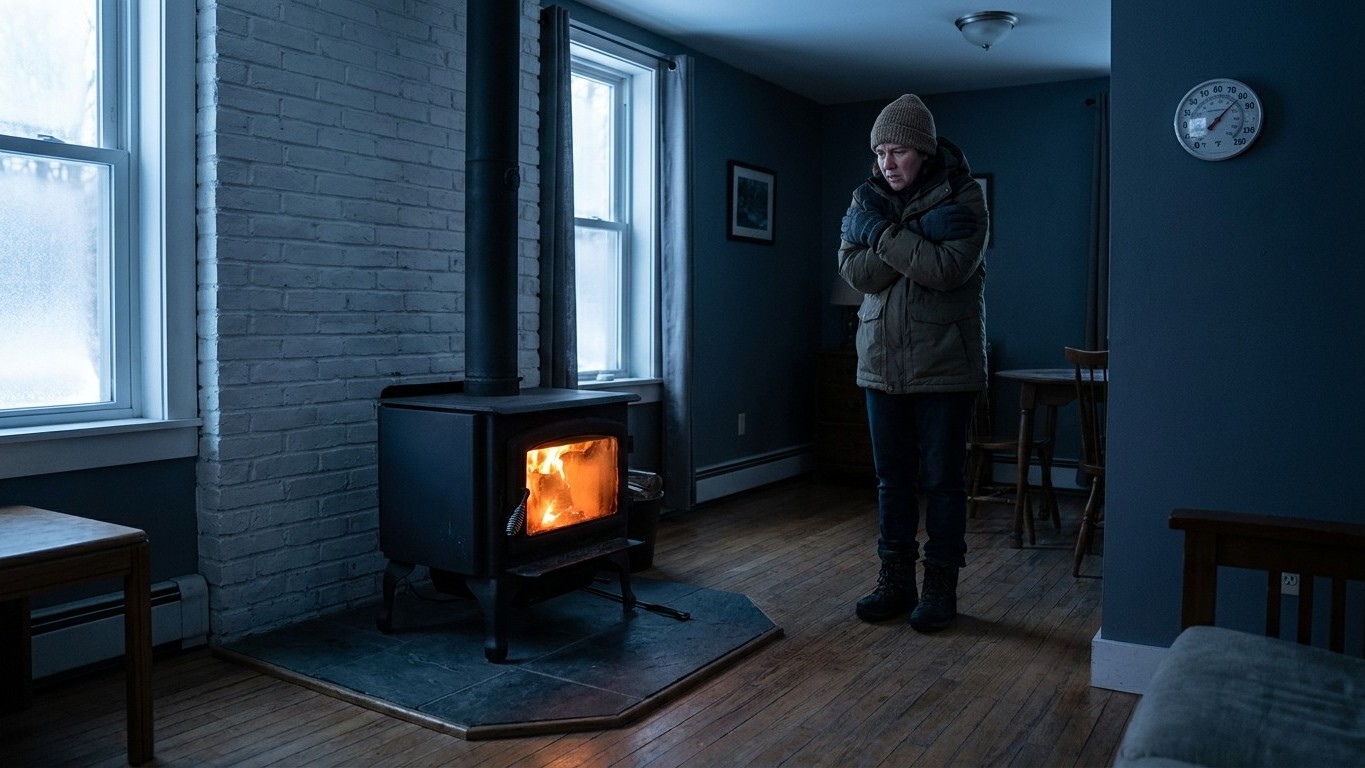

The room stays cold no matter how much wood you feed the fire, or the glass blackens and the heat never seems to reach past three feet from the stove. Both point to the same family of causes: a stove that is not sized, fed, or vented the way it needs to be. None of this means the stove is broken.
What you are seeing

You load the firebox, you watch flames, and yet the thermometer on the far wall barely moves. Or the opposite: the stove roars hot right in front of it, but the rest of the house stays as cold as it was an hour ago. Some of you are seeing a smoky glass door, a flue that never seems to draw right, or a stove that only feels warm if you stand close enough to touch it.
None of this is an emergency in the way a chimney fire is an emergency. A stove that underperforms will not hurt you tonight. But it is not something to shrug off for the season either, because a cold room next to a working stove usually means the wood, the airflow, or the stove itself is working against you, and that pattern tends to get worse, not better, as the weeks go on.
The first thing to separate is heat you can’t feel from heat that isn’t there. Stand near the stove: is the metal genuinely hot to the touch, or just warm? A stove that’s merely warm is underfed or starved of air, and that’s a different problem than a stove that’s blazing hot but the heat still isn’t reaching the room. The second scenario is often about the room itself, not the fire. The first is about what’s burning inside the firebox.
Look at the glass, too. A clean, clear pane with an orange, active flame tells you combustion is happening properly, even if the heat delivery is poor. A sooty, blackened glass with a sluggish, low fire tells you the fire itself is being smothered, and that’s a mechanical problem that needs attention before anything else. These two symptoms point you toward two very different fixes, and mixing them up wastes a whole evening of troubleshooting.
Why it happens
The most common cause is the one nobody expects: the stove is too big for the room. That sounds backwards, so it helps to walk through the mechanism. An oversized stove, if run wide open, would overheat the space in minutes, so instinct (and often the manual) tells the owner to damp it down. A damped fire burns cool and starved of oxygen. Cool fires do not radiate much heat, and they do not burn clean. The result is a room that stays cold while the flue slowly fills with tar and creosote from the incomplete combustion. The stove looks like it’s failing to heat the room, when actually it’s being held back from ever burning hot enough to do its job. This is worth checking first, because it explains the majority of “my stove doesn’t heat” complaints, and it’s the one homeowners are least likely to suspect since a bigger stove sounds like it should mean more heat, not less.
The second most common cause is wet wood. Firewood that hasn’t seasoned properly still carries a significant amount of water in its cell structure. Before that wood can throw off usable heat, the fire has to boil off that water first. Evaporation consumes energy. That energy comes directly out of the fire, which means it never reaches the room as radiant heat. You’ll often hear this as hissing or popping at the ends of the logs, or see dark, sooty streaks running down the glass. The fire might look lively, but a large share of its output is being spent turning water into steam instead of warming your living room.
Third, and specific to homes with an open fireplace rather than a sealed stove insert: an open fire draws room air up the chimney to feed combustion, and it can pull out more warm air than the flames put back in. You end up with a fireplace that feels hot if you’re sitting directly in front of it, while the rest of the house grows colder because the fire is actively vacuuming out the warm air you already paid to generate.
Fourth, and easy to overlook: the house itself. A stove, however well run, heats air that then has to stay inside the room to do any good. If that room loses heat through poor insulation, drafty windows, or gaps around doors as fast as the stove produces it, no amount of extra wood will close the gap. A bigger fire cannot fix a house that leaks heat. This is the cause people reach for last, usually after they’ve already bought more firewood, when it should often be checked earlier, because a leaky room will make even a perfectly sized, perfectly seasoned fire seem inadequate.
What to do about it
Tonight, check the wood first, since it’s the fastest thing to rule out. Split a piece open and look at the color inside; darker, damp-looking wood, or wood that hisses and sizzles rather than crackling cleanly, is not ready to burn efficiently. If that’s what you’re loading, switch to the driest, oldest wood in your stack for the rest of the season and set the wet batch aside to season properly before next winter.
Next, look at how you’re running the air controls. If you’ve been closing the damper down low to keep the room from overheating, that’s the oversized-stove pattern showing up in real time. Try running the stove hotter for shorter bursts rather than smothering it low for hours, and pay attention to whether the flue and glass stay cleaner as a result. A shorter, hotter burn that you refuel more often will usually put out more usable heat than a long, throttled-down smolder.
If you have an open fireplace pulling warm air out of the room, closing doors to unused parts of the house and cracking a window near the fireplace itself (counterintuitive, but it gives the fire outside air to draw instead of your heated room air) can make a real difference.
There’s a limit to what you can diagnose or fix yourself, though. If the glass stays black no matter what wood or air settings you try, if you smell smoke inside the house, or if you haven’t had the flue inspected in the past year, that’s a job for a professional chimney sweep. Creosote buildup from cool, damped-down burning is a fire hazard, not just an efficiency problem, and only a sweep can tell you how much has accumulated and whether the flue is still safe to use. Don’t try to guess your way past that one.
How to keep it from coming back
Most of these problems trace back to one of three upstream habits: wood that wasn’t given enough time to dry, a stove that doesn’t match the room it’s heating, or air controls run out of habit rather than by watching the fire. Fixing the symptom tonight won’t stick unless one of those three gets addressed for good.
Seasoning is the one that rewards patience more than money. Wood that’s properly dried burns hotter, cleaner, and produces far less of the tar and soot that come from boiling off trapped moisture. If wet wood keeps showing up in your stack no matter what you do, that’s worth its own closer look, and the sibling page in this series, Why Your Firewood Never Seems to Dry Out, walks through why some wood refuses to season even after a full year under cover.
Sizing matters just as much, but it’s a one-time decision rather than an ongoing habit. If you’re consistently damping a stove down to keep a room livable, that’s a sign the unit was chosen for a bigger space than the one it’s actually heating, and no amount of good wood will undo that mismatch.
Air control is the daily habit that ties the other two together. A fire run wide open on well-seasoned wood, refueled more often in smaller amounts, will almost always outperform a big load smothered down low, both in heat delivered to the room and in how clean the flue stays over the season.