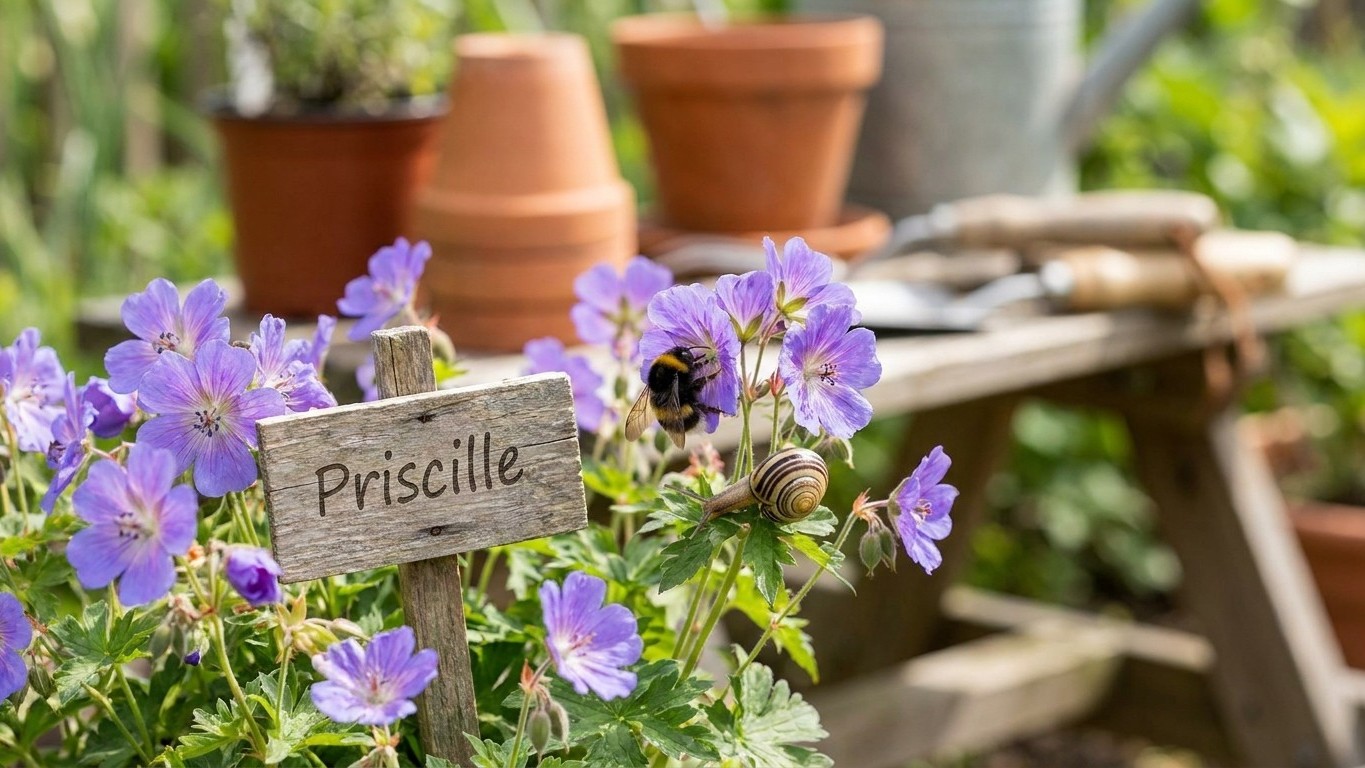

Priscilla’s blossoms open pink and stay pink far longer than most apples, which fools people into thinking she’s self-sufficient — that a showy bloom means she’s set for pollen on her own. She isn’t. Priscilla needs a genuine partner tree nearby, and only certain ones will do: Arkansas Black, Golden Delicious, Ozark Gold, or Rome Beauty. Plant one of those where bees can cross between the two, and Priscilla goes from a light, patchy crop to a full one.
The short answer
If you already have Priscilla and want to know what to plant next to her, the answer is one of four named varieties: Arkansas Black, Golden Delicious, Ozark Gold, or Rome Beauty. Any one of them, planted where bees can reach both trees, will pollinate Priscilla’s blossoms and let her set a full crop instead of a scattered one.
You need two trees, not three. Because none of those four partner varieties carries sterile pollen, each one can fertilize Priscilla and Priscilla can fertilize it back. That two-way exchange is what makes a simple pair work. A third tree only becomes necessary when the partner you’ve chosen has sterile pollen itself, so it can take fertility from Priscilla but never return it, leaving Priscilla short of a partner of her own. None of the four names above puts you in that situation.
Nearly all apple varieties crop better with a compatible partner nearby than they do alone, and Priscilla is no exception. A lone Priscilla tree may still flower and even set a light, patchy crop some years off a stray pollinator two gardens over, but it isn’t something to plan around. For a general primer on how apple pollination works before you commit to a planting plan, see Apple Pollination.
Why these varieties and not others

The whole system runs on timing. Two apple varieties can only pollinate each other if their flowers are open on the tree at the same few days, so a bee visiting one carries pollen that is still useful when it lands on the other. Bloom group is simply a ranking of which varieties flower early, mid-season, or late relative to each other, and Clemson Cooperative Extension places Priscilla in group C alongside Arkansas Black, Golden Delicious, Ozark Gold, Rome Beauty, Jonagold, and Stayman.
That ranking is relative, not a calendar. Clemson’s HGIC 1350 and the University of Georgia’s C740 both make the same point: the actual date group C blooms shifts by weeks between a warm Piedmont spring and a cooler mountain one, but Priscilla’s position in the sequence, next to those other six varieties, does not change. So instead of asking “does Priscilla bloom in April”, ask “does my other apple tree bloom in the same window as Priscilla does, wherever that window falls this year.” Group C answers that second question, not the first.
What bloom group alone doesn’t tell you
Sharing a bloom group gets two trees’ flowers open at the same time. It says nothing about whether the pollen that lands is actually fertile, and it says nothing about whether one variety was bred from the other. Both of those are separate checks, and skipping them is exactly how a grower ends up with two trees in full bloom and no apples in October. Group C membership is a necessary condition for Priscilla’s pollinators, never a sufficient one.
That’s the gap Jonagold and Stayman fall into, and it’s worth reading closely before you buy a tree based on bloom group alone.
What cannot pollinate it
Jonagold and Stayman are the trap here, because both flower right alongside Priscilla in group C, and a grower who only checks bloom timing will plant one and assume the job is done. It isn’t. Jonagold and Stayman both carry sterile pollen, which means their flowers can still accept pollen from Priscilla and set fruit on their own branches, but the pollen they produce cannot fertilize anything, including Priscilla.
Plant Priscilla next to only Jonagold, only Stayman, or both together, and you get flowers on all three trees in the same week and no apples on any of them come autumn, because nobody in that trio is putting out pollen that works. This is the exact case the sterile-pollen warning exists for: matching bloom dates with nothing behind them.
Beyond Jonagold and Stayman, no parentage exclusion rules out a variety bred directly from Priscilla ever fertilizing her back, the way a seedling can’t pollinate its own parent tree. If you’re growing Priscilla alongside another variety, check that variety’s own pollination notes rather than assuming compatibility, and the same caution applies if you’re comparing notes with a neighbor growing What Pollinates Cortland, and What Cannot, since Cortland’s compatible list is its own, separate set of names.
How close the second tree has to be

Pollen moves on bees, not on the wind, so the real question is how far a foraging bee is willing to carry it between visits. The closer the two trees, the more reliable the crop. Same garden beats same street, and same row beats opposite corners of a large lot. A honeybee working a Priscilla tree will often finish that tree before moving to the next flowering apple, so the second tree being twenty feet away rather than two hundred makes a measurable difference in how much pollen actually arrives.
What else can do the job
- A neighbor’s Golden Delicious or Rome Beauty tree, if it’s close enough for bees to cross the boundary between gardens
- An ornamental flowering crabapple, provided it’s in bloom during the same window as Priscilla
- A pollinator branch grafted onto an existing tree, discussed further below
None of that helps if the bees themselves stay home. Cold, wind, or wet weather during bloom keeps bees off the flowers no matter how well the two varieties are matched or how close together they stand, and there is no substitute for good pollinator weather. A perfectly chosen partner variety planted right next to Priscilla still sets nothing in a week of rain, which is one more reason not to rely on a single well-timed variety and hope the weather cooperates every spring.
If there is no room for a second tree
A small garden doesn’t rule out a working pollination pair, but every option involves some trade-off worth knowing before you commit.
The realistic options
| Option | What it solves | What it doesn’t solve |
|---|---|---|
| Multi-grafted tree (several varieties on one trunk) | Fits a compatible pollinator into the same footprint as Priscilla | Needs pruning discipline so no single graft takes over the tree |
| Pollinator branch grafted onto an existing Priscilla | Adds pollen without a second trunk or root system | Only as productive as that one branch, and slower to establish |
| Columnar apple variety planted alongside | Very narrow footprint, works in a border or large pot | Still needs to be a variety that actually pollinates Priscilla |
| Flowering crabapple nearby | Reliable pollen source, often already grown as an ornamental | Produces no eating fruit of its own |
Whichever route you take, the underlying rule still applies: check that the graft, branch, or crabapple actually blooms alongside Priscilla and carries fertile pollen, rather than assuming any nearby apple wood will do. A grower solving the same space problem for a different variety, say for What Pollinates Red Delicious, and What Cannot, is working through the identical checklist, just with a different set of compatible names.
Common questions
Can I use a crabapple to pollinate Priscilla instead of buying a second apple tree?
Yes, provided the crabapple flowers during the same window Priscilla does. Not every ornamental crabapple blooms early enough or late enough to line up, so check its bloom timing before relying on it.
My Priscilla and Jonagold both bloomed at the same time this year, so why did I get no apples?
Because Jonagold’s pollen is sterile. Matching bloom dates only gets the flowers open together, it doesn’t mean the pollen your Jonagold produces is capable of fertilizing anything, including Priscilla.
How many years until a new pollinator tree actually helps Priscilla set fruit?
This depends on the age and rootstock of the tree you plant, which varies with the nursery stock you’re buying. Ask the nursery for the expected bearing age of the specific tree and rootstock combination you’re choosing.
Does it matter which direction the second tree is planted from Priscilla, like north versus south?
No, direction doesn’t matter to the bees carrying the pollen. Distance and bloom-time overlap are what matter, not compass position.
Can two Priscilla trees pollinate each other?
No. Two trees of the same variety flower at exactly the same time but carry genetically identical pollen, which does not fertilize a Priscilla flower any better than the tree’s own pollen would. You need a genuinely different variety from the compatible list.