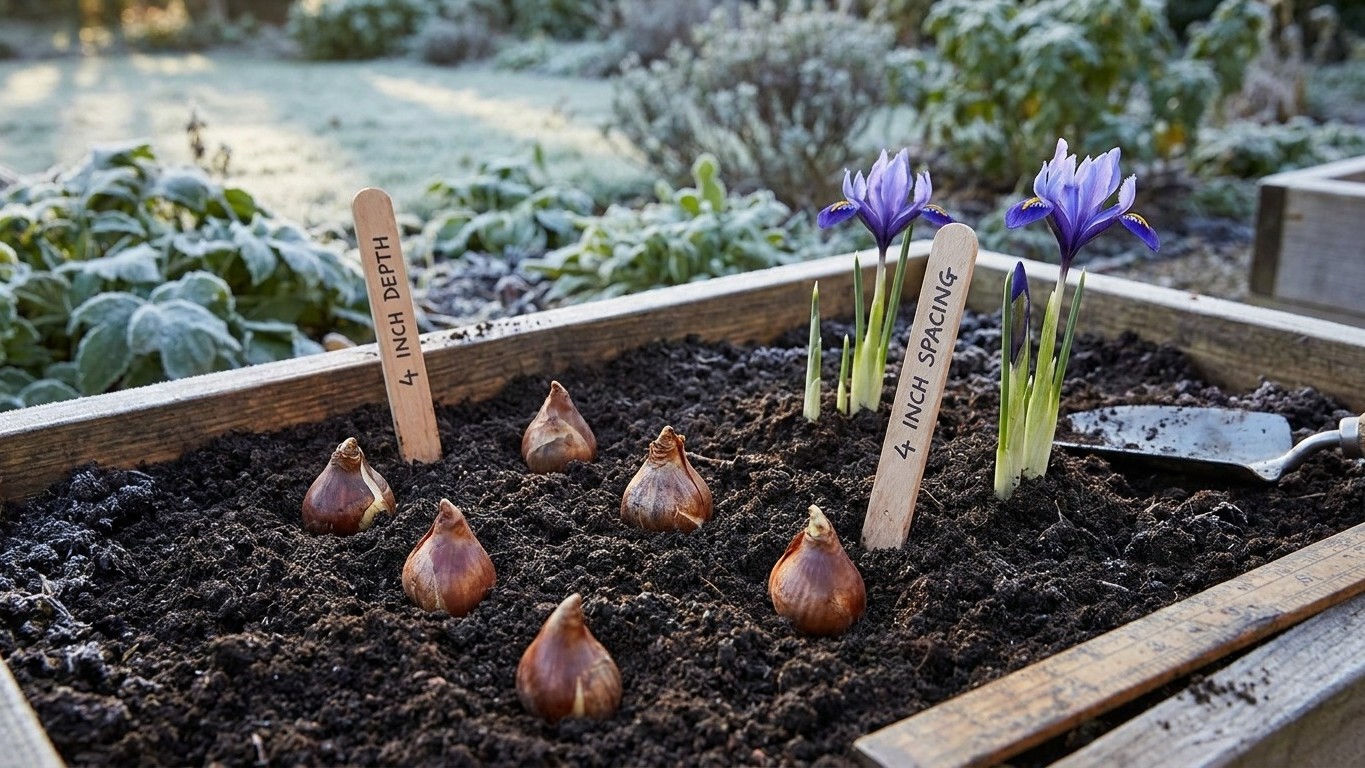

Dutch Iris bulbs need 4 inches of soil, 4 inches of space from their neighbors, and 8-10 weeks below 45F to bloom at all. Skip any of those three numbers and you get leaves with no flowers, or a flower stalk too short to see over the mulch. Hardy in USDA zones 6-9, it blooms in late spring and asks for less winter chill than a tulip, which is exactly why it works in gardens further south than most spring bulbs can tolerate.
What Dutch Iris actually is

Two numbers matter before you buy a single bulb. The first is the hardiness range: USDA zones 6-9, using the USDA system specifically, not a Canadian or European scale, which are built on different climate variables and don’t convert directly. The second is the cold requirement, and it’s the one that actually decides whether you get flowers: 8-10 weeks below 45F, according to Cornell University’s Department of Horticulture, Flower Bulb Research Program. That figure isn’t a soft guideline. A bulb that gets nowhere near 8 weeks of cold will often produce foliage and nothing else. A bulb that gets close, say six or seven weeks, doesn’t necessarily skip flowering entirely, but it tends to flower poorly, with fewer blooms or shorter stems. If your winters sit right at that edge, treat the outcome as uncertain rather than guaranteed either way.
Dutch Iris belongs to the iris family, and it blooms late spring, which puts it after the earliest crocuses and daffodils but ahead of the summer perennials taking over the bed. Colors run blue, yellow, and white, giving it a cooler palette than the reds and oranges that dominate tulip displays.
What sets it apart from most spring bulbs sold alongside it is the chill math working in reverse. Tulips generally demand more cold than Dutch Iris does, which is why gardeners in warmer parts of zone 8 or 9 who’ve given up on tulips flowering reliably can still get a respectable show from Dutch Iris. It’s one of the few spring bulbs where a milder winter isn’t automatically disqualifying. The tradeoff shows up elsewhere, in how the bulb behaves over multiple seasons, which is worth understanding before you plant a large bed of it.
How deep and how far apart
The planting math for Dutch Iris is simple, and both numbers do real work underground.
- Depth: 4 inches. This buffers the bulb against freeze-thaw cycles in the soil and keeps it from heaving up to the surface over winter, which is what happens to bulbs planted too shallow in ground that repeatedly freezes and thaws.
- Spacing: 4 inches apart. This is the difference between a planting that reads as a solid drift of color and one that looks like scattered dots. Tighter spacing within that range gives a denser mass; the full 4 inches gives each stem room to stand on its own.
Orientation matters, though Dutch Iris bulbs are usually cooperative about it. Plant with the pointed end up and the flatter, rougher base down, since that’s where the roots emerge. If a bulb arrives without a clear point, an oddly shaped or damaged one, plant it on its side rather than guessing wrong. Bulbs are generally capable of righting their own growth direction underground, so a sideways placement isn’t a fatal error the way planting upside down can be.
Soil drainage deserves the same attention as depth and spacing, since Dutch Iris doesn’t tolerate standing water around the bulb during dormancy. A raised bed or amended, gritty soil solves most of the problem in heavier clay ground. Plant in fall, well ahead of the ground freezing, so the bulb has time to establish roots before winter dormancy sets in and before the cold-requirement clock described above actually starts counting.
Will it come back next year
Here’s the honest answer, not the one on the bag: Dutch Iris is not reliably perennial in wet winters. Some gardeners get several years of return bloom out of a planting; others find it fades to foliage-only or disappears after a season or two, and the deciding factor is usually how wet the soil stays through winter dormancy, not luck or soil fertility.
The mechanism is worth understanding, because it explains both the failures and the fixes. Next year’s flower isn’t formed in spring when you see the bloom, it’s built inside the bulb after that bloom fades, while the foliage is still green and photosynthesizing. That’s why the single most damaging thing a gardener can do to a Dutch Iris planting is cut back the leaves as soon as the flower drops. The leaves look untidy for weeks afterward, yellowing slowly, and the temptation to tidy them up early is strong. But cutting green foliage cuts off the bulb’s ability to store the energy it needs to flower again, and it’s the most common reason a Dutch Iris bed blooms beautifully the first spring and produces nothing but leaves the second.
Let the foliage yellow completely and pull away with almost no resistance before removing it. In gardens with heavy or slow-draining soil, treating Dutch Iris as an annual, replanting fresh bulbs each fall, is often the more realistic approach than counting on multi-year return.
What eats it, and what leaves it alone
Rodents target Dutch Iris bulbs, and it’s worth knowing that before you plant a bed of them and lose it over winter. Squirrels, voles, and similar diggers will excavate freshly planted bulbs, particularly in the weeks right after planting when the disturbed soil is easy to smell and easy to dig.
The measure that actually works is unglamorous: wire mesh laid directly over the planting area, pinned down at the edges, and left in place until the ground freezes solid. Once the soil is frozen, digging becomes difficult enough that most rodents move on to easier targets, and the mesh can come off. Sprays, repellent granules, and companion planting tricks get marketed heavily around bulb season, but a physical barrier over the bed during that vulnerable early window is the difference that actually holds up, especially in areas with a known squirrel or vole population near the garden.
Once the bulbs are established and the ground has frozen, the risk drops off substantially for the rest of winter. The mesh is a one-time task at planting, not an ongoing chore, which makes it a reasonable trade for a bed that would otherwise need replanting in spring.