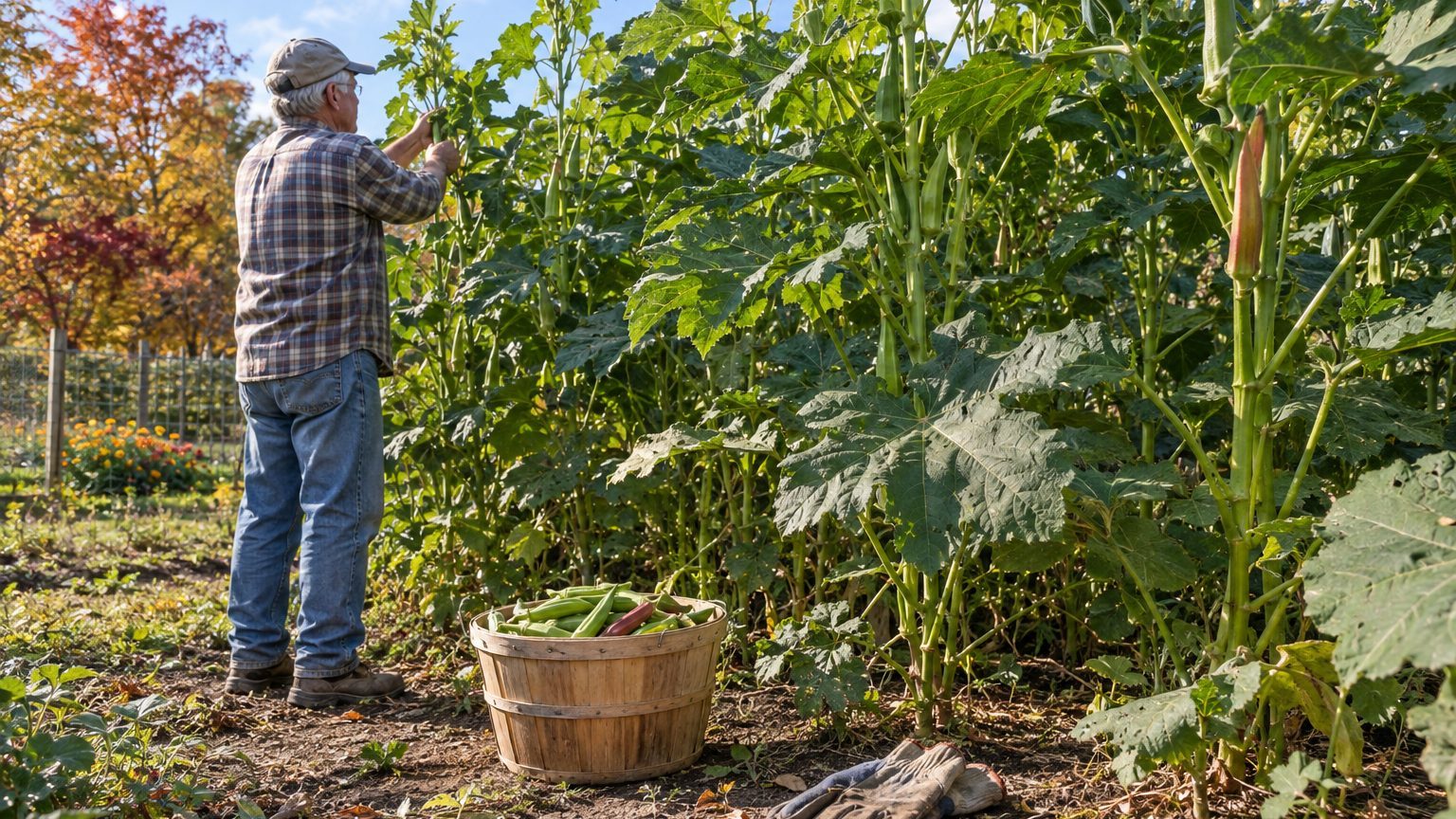

Long sleeves, gloves, and a sharp pair of pruners. That is the whole kit for handling okra without spending the evening scratching your forearms. The itch comes from tiny stiff hairs (some people call them spines, though they are closer to bristles) that cover the stems, leaf undersides and pods of most okra plants. They are not toxic and they do not cause lasting harm. They are, however, very good at lodging in bare skin.
Gardeners in Texas, Georgia, Louisiana and the Carolinas learn this early, usually in July, usually while wearing a tank top. The plants are tall by then, often 5 to 7 feet in a good year, and the pods hide behind leaves the size of dinner plates. Reaching in for a harvest means dragging your arm across the whole mess.
What those spines actually are
Okra belongs to the mallow family, the same one that gives us hibiscus, hollyhock and cotton. Plenty of mallows are fuzzy, and okra is no exception. The hairs are botanical structures called trichomes, and on okra they run from soft and downy to sharp enough to feel like fiberglass splinters, depending on the variety and the age of the plant.
The irritation is mostly mechanical. The bristles poke into the top layer of skin and stay there, which produces a prickly, itchy rash that looks a bit like a mild heat rash. A true allergy is a different thing and much rarer. If you get hives, swelling, or trouble breathing after contact with okra, that is a reason to call a doctor, not to buy better gloves.
Older pods are worse. A pod picked at 3 inches is covered in short, soft fuzz. Leave it a few more days and the same pod turns stiff, ridged and woody, and the hairs harden along with it. Leaves tell a similar story: young foliage at the top of the plant is gentler than the big, coarse leaves lower down.
Then there is the “spineless” label on seed packets. It helps, but it is a promise about the pods, not the whole plant. Clemson Spineless, a South Carolina release dating to the late 1930s, produces smooth-feeling pods, yet its leaves and stems can still scratch. Treat any spineless variety as a way to make harvesting easier, not as permission to go bare-armed. If you are choosing varieties for a new bed, the broader picture of heat, picking schedules and pod quality is covered in Growing Okra: Heat, Daily Picking, and the Slime Question.
Dressing for the job when it is 95 degrees
Here is the tension. Okra thrives in weather that makes long sleeves miserable. Soil temperatures need to sit above roughly 65 to 70 degrees for seeds to sprout, and the plants really take off once nights stay warm. So the protective gear has to be breathable or you will skip it, and skipped gear protects nobody.
A few choices that hold up in summer:
- A loose, lightweight long-sleeve shirt. Tightly woven cotton or a synthetic work shirt with a UPF rating blocks the bristles and the sun. Thin, loosely knit fabrics can trap hairs in the weave, so skip those.
- Gloves with a smooth outer surface. Nitrile-coated or leather-palmed gloves shed bristles. Plain terrycloth or knit cotton gloves hold onto them, and you will carry the itch with you every time you touch your face.
- Sleeve covers, if a full shirt is too hot. Cheap cooling sleeves, the kind sold for golf or cycling, cover the forearm, which is where most of the contact happens.
- Safety glasses for topping or pruning. Bristles and bits of leaf debris drift when you cut tall stems, and eyes are a poor place to find them.
Timing matters as much as clothing. Early morning is the cooler window, and it is also when you can see pods best, since they have grown overnight and the leaves are not yet wilting. Some gardeners avoid picking when the foliage is soaking wet, because damp leaves cling to sleeves and rub more hairs loose. Waiting an hour for the dew to burn off is a small price.
Skin that is sweaty and warm tends to feel the irritation more, and any bristle lodged in a damp forearm is harder to flick away. That is one more reason to cover up rather than power through. Long pants help too, since the lower leaves sit at thigh height on a mature plant.
Picking without wrestling the plant
Good technique cuts contact in half. The standard advice is to harvest pods when they are 2 to 4 inches long, which for most varieties lands about four to six days after the flower opens. Those blooms are short-lived, and the pod timeline starts right behind them, a rhythm explained in Okra Flowers, and Why They Last One Day. Picking at that size gives you tender pods, and the hairs are at their softest.
Cut, do not pull. The stem attaching a pod to the plant is tough and fibrous, and tugging it either rips the pod or yanks the whole branch toward you. Use a sharp knife or small pruners and snip just above the cap, leaving a short bit of stem on the pod. Hold the pod by the cap, not the body, so your glove stays off the hairiest part.
Many gardeners remove the lowest leaves once pods start forming, snipping them off at the stem below the lowest pod. This opens up airflow, makes pods visible from a step back, and means you are no longer brushing the broadest, coarsest leaves on every pass. It also lets you scan the plant for pods you missed, which matters because one forgotten pod that grows to 8 inches turns into a woody club that tells the plant it has done its job and can slow down production.
Carry a bucket or a shallow basket, not a bag you press against your body. Pods rubbing against a bare midsection inside a shirt pouch is a classic way to get a stripe of itchy skin below the ribs. Once you are done, take the gloves and outer shirt off before you go inside, and put the shirt straight into the wash. Bristles shed into laundry can pass to other clothes, so wash the garden shirt separately for the first cycle or two.
If you plan to grow okra year after year, think about where it sits too. Planting a bed you can reach from both sides, with a clear path, saves you from squeezing sideways through the rows. The same bed should rotate on a schedule, since okra shares soil pests with several other crops, which Rotating Okra: What It Shares Problems With lays out in detail.
When the itch has already started, and what to do in the kitchen
If bristles are in your skin, the first rule is not to scratch or rub, which drives them deeper and spreads them. Wide tape works better than anything else. Press a piece of duct tape or masking tape against the area, then peel it off in the direction the hairs lie. Repeat with a fresh strip until the surface feels smooth. Then rinse with cool water and soap. Hot water opens pores and can intensify the itch.
For the lingering sting, a cool compress calms it. A small amount of over-the-counter hydrocortisone cream or calamine lotion is a common way to take the edge off, and most rashes from okra fade within a few hours to a day. A rash that blisters, spreads, or lasts several days is worth showing a doctor.
Once the pods are in the house, the fuzz is easy to manage. Rinse them under cool running water and rub gently with a clean dish towel or a soft vegetable brush. That takes off the loose hairs on most pods. Wearing a thin pair of kitchen gloves during this step is reasonable if your hands are sensitive. Cooking finishes the job: heat softens whatever remains, which is why fried, roasted or stewed okra has no trace of prickle.
Store unwashed pods dry. Moisture is what turns the surface dark and slick, so tuck them into a paper bag in the refrigerator and use them within two or three days. Wash only right before cooking. And if you have a surplus (which every okra grower eventually does), blanching and freezing whole pods keeps them for months.
The slime that comes with okra is a separate matter. It is a mucilage inside the pod, unrelated to the outer hairs, and how you cut and cook the pods changes how much of it shows up. That is why some cooks leave pods whole and others slice them thin.
One last nuance: the hairs that bother you in the garden are not entirely a flaw. Trichomes are part of how the plant manages heat and moisture loss in brutal summers, and they likely make life harder for some chewing insects too. The same fuzz that gets in your skin is part of why okra keeps producing in weather that flattens tomatoes and beans.