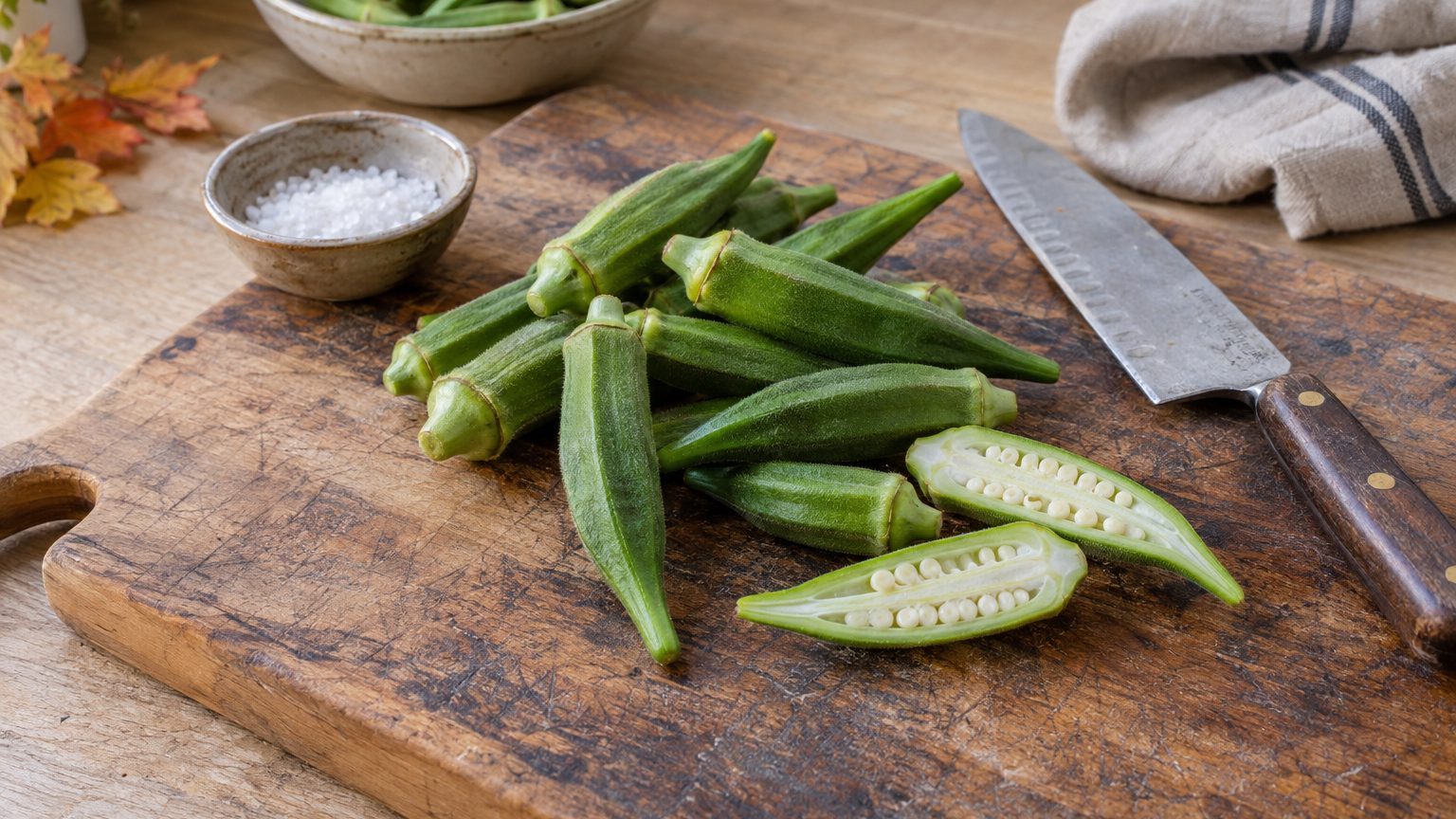

Okra slime is a plant gum called mucilage, a mix of sugars and proteins that swells into a gel when it meets water. You can’t breed or grow it out of the pod, but you can control it in the kitchen. Dry heat, acid, whole pods and a hot pan all keep it in check, and small pods picked young have the least trouble to begin with. The gardener’s job is to pick right. The cook’s job is to keep moisture and cut surfaces to a minimum.
That is the short version. The longer one explains why the same pod can turn out crisp and clean in one pan and stringy in another, and when the slime is actually worth keeping.
What the slime actually is
Okra belongs to the mallow family (Malvaceae), alongside hibiscus, cotton and the marshmallow plant that once gave the candy its name. All of them make mucilage. The chemistry varies by species, but the okra version is generally described as a complex polysaccharide built from sugars such as galactose, rhamnose and galacturonic acid, with some protein attached. Think of it as a very long, branching molecule that grabs water and holds on.
The plant isn’t making slime to annoy dinner guests. Mucilage helps tissues retain water and protects seeds, which makes sense for a crop that evolved in hot, dry-spell climates. Inside the pod, the gel sits in cells around the seeds and along the walls. Leave the pod intact and it stays put. Slice it open and you break those cells, releasing the gel the moment liquid shows up.
That explains the most useful rule in okra cooking. Surface area drives slime. A whole pod released into a hot oven barely leaks. A pile of quarter-inch rounds simmered in water produces a thick, stringy mess in minutes. Same vegetable, completely different result.
Researchers have taken an interest in okra mucilage beyond the kitchen. It has been studied as a binder in pharmaceutical tablets and as a natural flocculant for clearing particles out of water. None of that changes what happens in your skillet, but it does show the stuff is a serious material, not just a nuisance.
Five ways to cook around it
Nobody needs to give up okra because of texture. The fixes are old, cheap and mostly about managing water.
Use dry, high heat
Roasting is the most forgiving method. Toss whole pods or halved lengthwise pods with oil and salt, spread them on a sheet pan with space between them, and roast at about 425°F for 15 to 20 minutes. The surface moisture evaporates before the gel can pool. Grilling and searing in a cast-iron skillet work the same way. The goal is browning, because browned edges mean the water has left.
Crowding is the usual mistake. Pack a pan full of okra and the pods steam in their own moisture, which is exactly the condition that turns mucilage into goo. If the pan looks full, use two.
Add acid
Tomatoes, vinegar, lemon juice and tamarind all change how the gel behaves. Acid is thought to break down or thin the mucilage, which is why so many traditional dishes pair okra with tomatoes. Stewed okra and tomatoes is a staple of Southern kitchens for a reason, and the pairing shows up in Indian, Middle Eastern and Greek cooking too. If you want a quick pre-treatment, toss sliced pods in a splash of vinegar, let them sit about 30 minutes, then rinse and pat them thoroughly dry before cooking.
Keep pods dry and whole as long as possible
Wash okra, then dry it completely. A damp pod going into hot oil spits and steams. Wait to cut until right before cooking, since slicing early gives the gel time to form on the exposed ends. If a recipe calls for rounds, cut them with a sharp knife, because a dull blade crushes cells and releases more.
Coat and fry
Cornmeal or seasoned flour absorbs surface moisture and builds a crust, and frying at 350 to 375°F finishes the job fast. Fried okra is the classic slime-proof dish. The pieces are small, but the coating and the hot oil leave the gel no chance to spread.
Pickle it
Pickled okra goes into the jar whole, sits in vinegar brine, and comes out with a firm snap. The acid tames most of the slime, though some people still notice a slight slickness around the seeds. If you have never liked okra, a pickled pod is the easiest place to start.
Frozen okra deserves a short warning. Thawing it on the counter releases a lot of water, and the pods turn slippery. Cook from frozen in a very hot oven or pan instead, and give them room.
Growing and picking for less slime
Much of the slime problem is decided in the garden. Pod age matters most. Okra pods grow fast in summer heat, often reaching harvest size within four to six days after the flower opens. Young pods around 2 to 4 inches long are tender with modest mucilage. Let them reach 6 inches and they turn fibrous and woody, and the texture complaint shifts from slimy to tough. Neither is pleasant. Daily picking during peak heat keeps pods in the sweet spot, a routine covered in more detail in Growing Okra: Heat, Daily Picking, and the Slime Question.
Variety is a more contested subject. You will see claims online that certain cultivars are less slimy, and some gardeners swear by particular types. The evidence is thin. Pod shape and ridging may affect how much cut surface you create (a rounder pod has fewer ridges to trap moisture), but no widely cited trial shows one variety reliably delivering a slime-free pod. Choose varieties for your climate and growing space. If you only have a patio, Okra in a Container: Which Types Work sorts out which plants stay compact enough to be practical.
Plant stress is another factor people raise. Okra that dries out between waterings or struggles in cool weather may produce tougher pods, though how that affects the gel is not well documented. What is clear is that steady moisture and consistent warmth produce better-tasting pods overall. Okra wants soil temperatures well into the 70s before it really takes off, which is why northern gardeners in states such as Michigan or Minnesota often start seedlings indoors and wait until late spring to transplant.
Mid-season management plays a role too. A plant that has gotten leggy and slow late in the year will often produce fewer, lower-quality pods, and a hard pruning can reset production. The method is laid out in Cutting Okra Back in Mid-Season. Fresh growth after a cutback gives you a new round of tender pods, which are the ones you want for any low-slime recipe.
One handling note while you’re in the garden: the small spines on the stems and pods can irritate bare skin and make you itch for an hour. That is a separate issue from the mucilage, which is harmless to touch. Long sleeves and a pair of gloves solve it.
When the slime is the point
Plenty of cooks want it. Gumbo is the clearest example. The word itself traces back to West African languages, where okra went by names like ki ngombo in Bantu languages, and the dish carried the plant’s name and its thickening power across the Atlantic. In a pot of gumbo, mucilage does the job a roux or filé powder does, giving the broth body and a silky texture. Many Louisiana cooks choose okra gumbo precisely because the slime thickens the pot as it simmers.
The method is the opposite of roasting. Slice the pods, sauté them briefly in oil or fat to start building flavor, then simmer them in liquid for a good while. Long, wet cooking brings out the gel on purpose. Some cooks sear the okra first to cut back the slickness and then let it thicken the stew in moderation. Either approach is legitimate, and which one suits you depends on how thick you like your bowl.
The same logic works in soups and braises outside Louisiana. Sudanese and Egyptian cooks stew okra with tomato, onion and meat, and many Indian dishes cook okra with spices until the texture softens into a sauce. Cooks across these traditions use acid, spice and long cooking times to keep the slime pleasant without eliminating it. If a recipe leans on the gel, follow it as written and don’t fight the pot.
A simple way to decide: if the okra is the main event and you want crisp edges, cook it hot, dry and whole. If it’s an ingredient in a stew you want thick, slice it and simmer. Slime itself is not a flaw. It’s a tool that works well in the right pot.
For anyone still unconvinced, there’s a quick test worth running in your own kitchen. Roast half a tray of whole pods and simmer sliced pods from the same batch in a little water, then taste both side by side. The difference between them is usually enough to settle the argument about whether you dislike okra or just dislike one way of cooking it.
One last detail: dried okra seed pods hold their mucilage for a long time, and old cookbooks mention okra gel as a clarifying agent for coffee in lean wartime periods. Few people do it now, but it’s a reminder that this humble gel has found uses well beyond the soup pot.