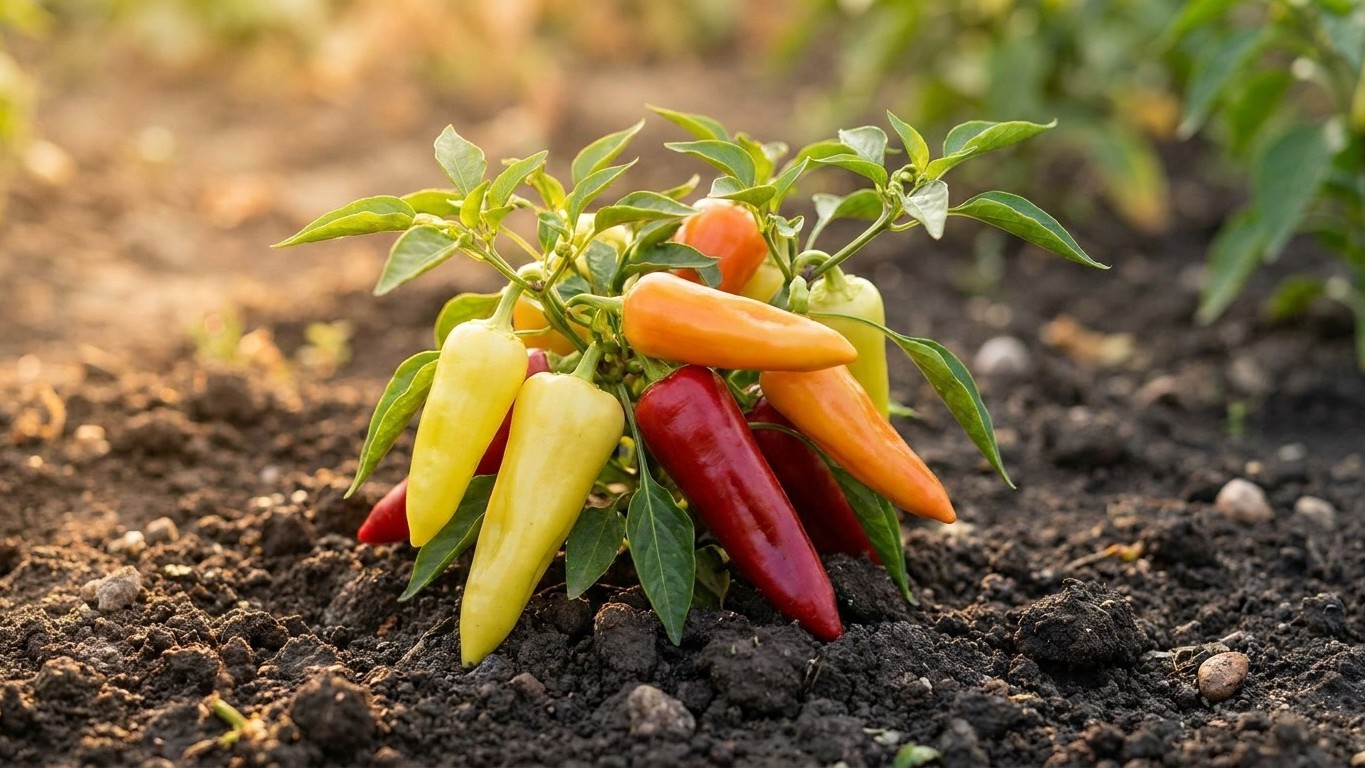

Sweet Sunset is a compact pepper plant whose fruit shifts color as it ripens, from pale yellow to orange and finally deep red, according to NC State Extension. It isn’t sorted into a heat or type category by the two university extension services this page relies on, so the smartest move is to plant it once your soil has warmed past 65°F, the same rule that governs every pepper regardless of name.
What Sweet Sunset Pepper Actually Is
Here’s where most seed listings get vague, and where it helps to slow down. Clemson Cooperative Extension sorts recommended peppers into clear buckets: bell, banana, jalapeno, habanero, cayenne, and a catch-all “other hot peppers” group. Sweet Sunset doesn’t appear on that list. NC State Extension describes it instead, and describes it in a single line: “Compact banana petter changes color from pale yellow to orange and deep red as it matures.”
That’s the entire published description. No fruit length, no fruit width, no yield per plant, no days to maturity. A lot of variety pages will hand you a confident number anyway. This one won’t, because the number doesn’t exist in the source material, and inventing one to fill a gap does the reader a disservice rather than a favor.
What the wording does tell you is shape by association, since “banana pepper” describes a form more than it locks in a category. Whether Sweet Sunset behaves like a mild banana pepper for cooking purposes or leans toward something spicier isn’t stated by either source, and guessing at it here would be exactly the kind of overreach this page is trying to avoid.
One distinction matters before anything else: some pepper plants sold in nurseries are ornamental, bred for colorful foliage and berry-like fruit rather than for eating, and those are not food. Sweet Sunset, as described by NC State, is an edible cultivar grown for its fruit. Keep that line clear if you’re shopping among several colorful pepper varieties at the garden center.
How Hot Is Sweet Sunset Pepper?
Short answer: nobody has published a Scoville number for this cultivar, and treating any figure as fact would be a mistake. Heat in peppers tracks with type far more reliably than with a single variety name. A bell pepper carries essentially no heat. A jalapeno runs 2,500 to 8,000 Scoville units. A habanero sits in the extreme range, and the Carolina Reaper averages 1.64 million Scoville units, the hottest widely cited figure in cultivated peppers. Those two numbers, the jalapeno range and the Reaper average, are the only Scoville figures backed by solid data in this reference set. Everything else is type-level description, not measurement.
Since Sweet Sunset isn’t placed in Clemson’s type categories and NC State gives no heat rating, the honest answer is that its heat level isn’t documented. What NC State does say, speaking broadly about edible ornamental-leaning cultivars like this one, is that fruits are edible “but spiciness is unpredictable in intensity.”
That word, unpredictable, is the actual useful information here, more useful than a fake number would be. Capsaicin production in peppers responds to stress. A plant that goes through a dry, hot stretch late in the season tends to concentrate more capsaicin in its fruit than the same plant grown in a mild, well-watered summer. Two peppers off the same plant, picked weeks apart, can bite differently depending on what the weather did in between. If you’re growing Sweet Sunset for the first time, taste a small piece before you commit a fruit to a full dish, and expect some year-to-year swing rather than a fixed heat level.
Growing Conditions: What This Cultivar Needs
Size and habit
The word “compact” in NC State’s description is the one growing clue this cultivar offers. Compact pepper plants tend to suit containers, raised beds, and tight garden footprints better than sprawling varieties do, and their smaller stature can mean less staking. Beyond that, though, the source doesn’t detail plant height, spread, or spacing recommendations specific to Sweet Sunset, so a grower is left applying general pepper spacing guidance rather than a cultivar-specific number.
Timing: the one figure that isn’t published
Days to maturity is the number most gardeners want before they plant, and it’s the number missing here. Only one pepper in this reference set has a published days-to-maturity figure at all; Sweet Sunset isn’t it. The count printed on your own seed packet is the figure that will actually apply to your seed lot and your region, and it’s worth checking that packet rather than relying on a generic estimate pulled from the pepper’s type.
What does hold true regardless of cultivar is soil temperature. Peppers are a warm-season crop through and through, and setting transplants into cold ground doesn’t just slow growth, it can stall a plant for weeks while it waits for conditions to catch up. If you’re starting from seed, timing that start correctly matters as much as picking the variety; our guide to starting pepper seeds indoors walks through when to begin. And when it’s time to move seedlings outside, the soil-temperature threshold described in our transplanting peppers outdoors page is the detail that prevents the stall in the first place.
Taste and Use in the Kitchen
NC State’s description doesn’t include a tasting note for Sweet Sunset beyond the color change and the compact habit, so the honest move is to describe what the pepper’s form generally suggests rather than inventing a flavor claim for this specific cultivar. Banana-shaped peppers as a category tend toward mild, sweet-leaning flesh, which is why they show up often in pickling jars and on sandwich toppings rather than in dishes built around heat.
For comparison, the type descriptions Clemson Cooperative Extension does publish are useful shorthand for what different pepper shapes are typically good for: a bell pepper is sweet and holds its structure well when stuffed or roasted; a true banana pepper is mild and suited to pickling; a jalapeno works in fresh salsa, poppers, and quick pickles; a cayenne is usually dried and ground into powder; a habanero is fruity in aroma and used in small amounts because of its heat.
Where a source does give a cultivar a specific tasting note, that note is worth quoting directly rather than paraphrased, since paraphrase can drift into claims the source never made. For Sweet Sunset, no such quote exists in the material behind this page. Until a more detailed source publishes one, the safest guidance is to treat it by its described form, compact and banana-shaped, and taste a sample from your own plant before deciding how to use the rest of the harvest.
Common questions
Is Sweet Sunset pepper hot?
No Scoville figure is published for this cultivar. NC State Extension notes that fruits like it are edible “but spiciness is unpredictable in intensity,” meaning heat can vary from plant to plant and season to season rather than sitting at a fixed level.
When should I plant Sweet Sunset pepper seedlings outside?
No cultivar-specific days-to-maturity figure is published for Sweet Sunset, so rely on the timing printed on your seed packet. The universal rule for all peppers still applies: wait until soil has warmed, since cold ground stalls transplants for weeks regardless of variety.
What type of pepper is Sweet Sunset?
Clemson Cooperative Extension’s recommended list doesn’t place it in a category (bell, banana, jalapeno, habanero, cayenne, or other hot pepper). NC State Extension describes it only as a compact plant whose fruit changes from pale yellow to orange to deep red as it ripens.
Are all colorful pepper plants edible?
No. Some ornamental pepper varieties are bred for decorative foliage and berry-like fruit rather than for eating, and those are not food crops. Sweet Sunset, as described by NC State Extension, is grown as an edible cultivar, but it’s worth confirming that distinction before eating fruit from any unfamiliar colorful pepper plant.