
Certified seed potatoes are not optional because uncertified seed carries plant virus that can quietly wreck an entire planting, according to Utah State University Extension. A potato from the grocery store, or one saved from an uncertified batch, can look completely healthy and still pass disease straight from tuber to plant. Certification is the one widely available check on that risk before the seed ever touches soil.
The short answer
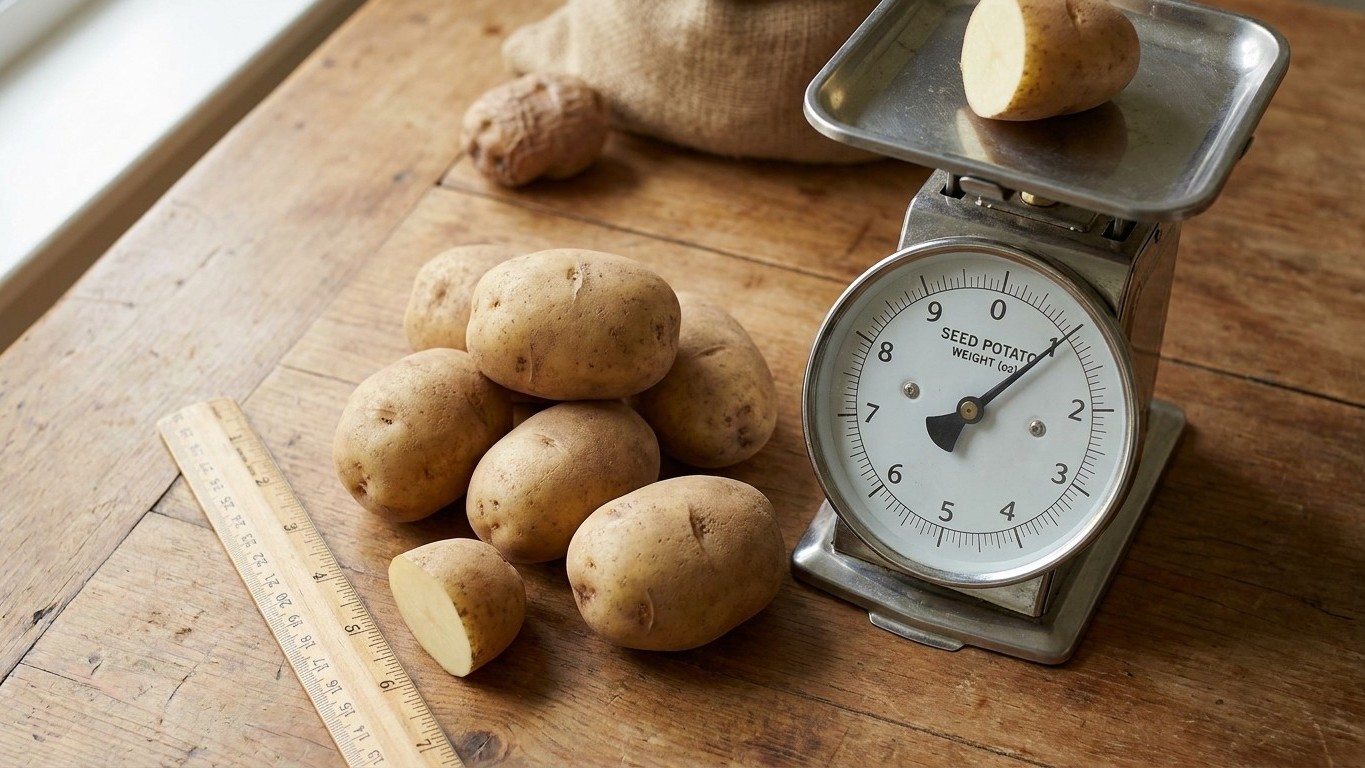
Once you accept that virus is the threat, the next question is what “good seed” physically looks like once you’ve bought it right. That’s where the University of Maine Cooperative Extension’s Bulletin #2077 gets specific: seed pieces should be blocky, weigh between 1 3/4 and 2 1/4 ounces, carry at least one eye, and never measure under an inch across. That standard exists for a practical reason, not an aesthetic one. A blocky piece with enough mass holds the stored starch and moisture a new sprout needs to push through soil before it has roots of its own to draw on. A sliver under an inch runs out of reserves fast, and a piece with no eye simply never sprouts at all, no matter how healthy the tissue around it is.
Certification and seed-piece condition are two separate checks, and both matter. Certification addresses what you cannot see: whether the mother plant that produced this tuber was carrying a virus that spreads through the vegetative tissue itself. Size and eye count address what you can see and measure with a kitchen scale. A seed piece can meet every dimension in the Maine bulletin and still be infected if it never came from a certified source. Equally, seed can be certified and still perform poorly in the ground if it’s cut too small or has no live eye. Certification is the seller’s guarantee against invisible disease. Seed-piece grading is the grower’s own guarantee against a weak start. You need both, but they answer different questions.
Why “looks fine” isn’t a standard
A potato tuber can carry a viral infection with no outward symptom at all, no discoloration, no soft spot, nothing a shopper or a gardener would notice. That’s precisely why Utah State University Extension frames certified seed as the baseline rather than an upgrade: without a certification program checking the seed source, there’s no way to distinguish a clean tuber from an infected one just by handling it.
What actually decides it
Potatoes propagate the mother plant, not a new individual
A tomato seed carries genetic material from two parent plants and starts life as a distinct organism. A seed potato is different: it’s a piece of the mother plant itself, cloned forward. Whatever was present in that mother plant’s vascular tissue, including any virus circulating in its sap, travels into every tuber it produces and into every plant grown from those tubers. There’s no genetic reset between generations the way there is with true seed. This is the core reason virus is such a persistent problem in potatoes specifically, and it’s why the fix has to happen at the source, before you ever buy the seed, rather than through anything you can do once the tubers are in your kitchen.
Symptomless carriers spread invisibly
Because virus can live in a plant without producing any visible sign, an infected seed lot can be replanted, harvested, and replanted again for multiple cycles with nobody noticing a problem until yields quietly decline. That slow, silent slide is different from a disease that shows up as obvious rot or blight; there’s no single bad-looking tuber to cull. The only way to interrupt that cycle is to start from stock that was checked before symptoms could even become the deciding factor, which is exactly what a certification program is designed to do.
Cut surfaces are an entry point, not the cause
Cutting seed potatoes into pieces exposes fresh tissue, and a cut surface is more vulnerable to rot organisms in the soil than intact skin. But that’s a separate risk from virus, and it’s a reason to handle seed pieces carefully after cutting, not a reason to think seed piece handling can substitute for buying clean stock in the first place. A perfectly handled cut piece from an infected mother plant is still infected seed.
How to do it
- Buy tubers labeled and sold specifically as certified seed potatoes, not table stock sold for eating, and not potatoes carried over from a previous uncertified planting.
- Check the seed for a certification tag or lot marking from the supplier before purchase; if a seller can’t identify the seed as certified, treat it as uncertified.
- Sort the tubers by weight and shape, setting aside any piece under an inch across or lacking a visible eye, per the standard in University of Maine Cooperative Extension Bulletin #2077.
- Cut larger tubers into blocky pieces weighing between 1 3/4 and 2 1/4 ounces, making sure each piece keeps at least one eye intact.
- Handle cut pieces gently and keep the cutting tool and work surface clean between seed lots to avoid moving contamination from one piece to the next.
- Plant the prepared seed pieces promptly, keeping certified lots separate from any other seed source so a problem in one batch doesn’t get blamed on, or spread to, the other.
What goes wrong
- Buying “seed potatoes” with no certification marking. Some sellers use the phrase loosely to mean any potato suitable for planting. Ask directly whether the lot is certified, and if there’s no clear answer, assume it isn’t and look for a supplier who states it plainly.
- Planting grocery-store potatoes to save money. Utah State University Extension is explicit that uncertified seed, including table potatoes, can carry virus. The upfront savings disappear the moment a virus-affected planting underperforms for an entire season.
- Cutting pieces smaller than an inch to stretch a limited seed supply. The University of Maine Cooperative Extension standard exists because undersized pieces lack the reserves to establish well. Stretching seed this way tends to produce weak, uneven stands rather than more plants worth having.
- Choosing pieces by eye count alone and ignoring weight. A piece can have an eye and still fall well outside the 1 3/4 to 2 1/4 ounce range. Weigh a sample on a kitchen scale rather than judging size visually, since tuber shape can make weight deceptive.
- Assuming a healthy-looking crop last season means the seed is safe to replant this season. Because virus can be symptomless, a clean-looking harvest doesn’t confirm clean stock. Certified seed removes that guesswork; saved uncertified seed does not.
Common questions
Can I use a potato from my own garden as next year’s seed?
Doing so carries the same risk Utah State University Extension warns about with any uncertified seed: if the parent plant carried a symptomless virus, every tuber it produced carries it forward, whether it came from your garden or a grocery shelf.
Does certified seed cost more than regular seed potatoes?
That’s a pricing question the sources used here don’t address. What they do establish is the risk difference: certified seed has been checked at the source, and uncertified seed, including table stock, has not.
What if my seed pieces are certified but smaller than an inch?
Certification and size are separate standards. A certified piece under an inch, per University of Maine Cooperative Extension guidance, still lacks the stored reserves a larger blocky piece provides, so it’s worth cutting fewer, larger pieces rather than stretching a lot thin.
How many eyes does a good seed piece need?
The University of Maine Cooperative Extension standard specifies at least one eye per piece as the minimum. A piece with no eye at all won’t sprout regardless of its size or weight.