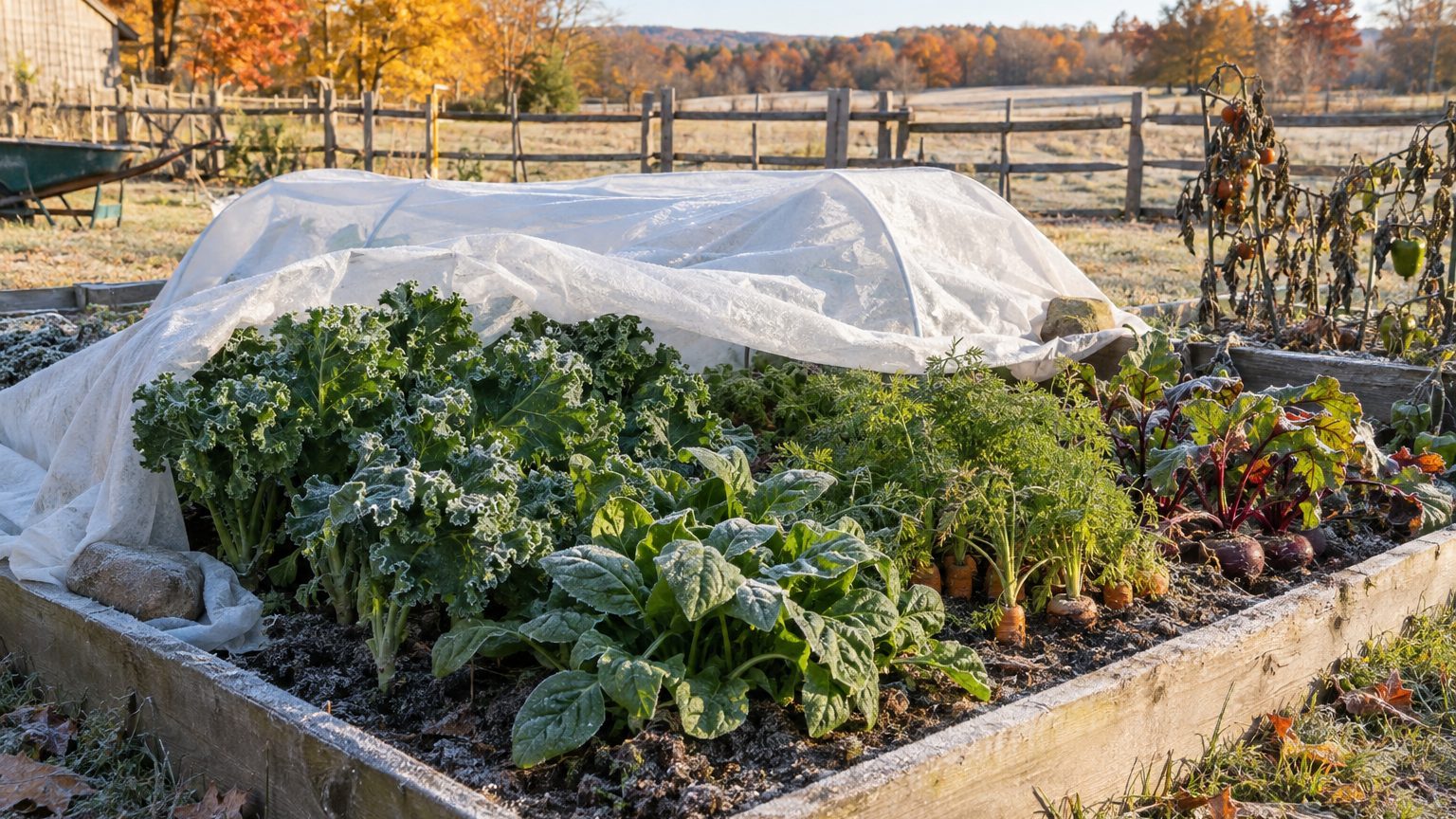

Cover the crops that can already take a frost: spinach, kale, collards, mâche, carrots, beets, and most other cool-season greens and roots. A cover keeps them in better shape and growing a little longer. Tender crops such as tomatoes, peppers, basil, and cucumbers gain a few extra nights at best, then die anyway. Choosing the crop matters more than choosing the cover.
What is actually going on
Covering the wrong crop is the commonest waste of effort in winter gardening, and it comes from a misunderstanding of what a cover does. It does not turn a warm-season plant into a cold-season one. It shifts the damaging temperature a little lower. Whether a crop is worth covering depends on how close it already is to surviving without help.
How does a cover protect a crop at night?
Soil soaks up heat all day and gives it back after dark. A cover traps part of that heat and holds the air around the plants still, so it can’t blow away. A second layer, such as fabric laid inside a low tunnel, adds another pocket of still air. The gain is real but variable. It depends on the material, the wind, how clear the night is, and whether the ground was warm or already cold and wet when the night began. Clear, calm nights are the hardest, because the ground radiates its heat straight up to the sky.
A cover shifts the limit. It does not remove it. A crop under fabric that would die at a light frost may survive a light frost, but a hard freeze on a clear night will still take it. Anyone who believes a cover makes a bed frost-proof can lose the whole bed on a single night.
Why do hardy crops benefit most?
Hardy greens and roots protect themselves. As the weather cools they pile up sugars in their cells, which lowers the temperature at which the tissue freezes. Spinach and kale can stiffen overnight and thaw out unharmed. What they lose in an open bed is quality: leaves get wind-scorched, splashed with mud, shredded by hail, or crushed under ice. Repeated freezing and thawing leaves outer leaves tattered and bitter. The cover keeps the crop clean, tender, and harvestable, and it keeps the soil from locking up solid so you can still dig roots.
Growth is the other half. In midwinter, shrinking daylight slows even hardy crops to a near stop, and no cover changes that. A cover gives the best return in the shoulder seasons, when a crop is still gaining size and a cold snap would otherwise end the harvest. Everything here is passive: sun, soil heat, and still air. Never put a heater, lamp, or candle under a cover. The fire and carbon monoxide risks are real.
If you use a closed structure like a cold frame, remember that sun can cook it. On a bright spring or fall day, a shut frame overheats its contents within an hour. The article on the sunny day that kills a covered crop covers that in detail.
In the garden
The table below sorts common crops by whether a cover repays the effort. The last column says what happens when you guess wrong, because that is where the learning is.
| Crop | Worth covering? | What goes wrong |
|---|---|---|
| Spinach, mâche, claytonia | Yes. They are very hardy, and the cover keeps leaves clean and tender. | Sown too late, they sit tiny and barely grow. The cover only preserves a crop that never got big. |
| Kale, collards | Yes, mainly for quality and for wind and snow protection. | Leaves under heavy, wet fabric can rot, and a sealed cover in sun turns the bed soggy. |
| Carrots, beets, turnips, parsnips | Yes. A thick mulch or low cover keeps the soil diggable. | Roots left in frozen ground can’t be harvested, and mild spells under cover can trigger tops to regrow, softening the root. |
| Lettuce, arugula, other salad greens | Sometimes. Cold-tolerant types do well, but many are only half-hardy. | A hard freeze turns leaves translucent and slimy within a day. |
| Cabbage, broccoli, and other mature brassicas | Often. Heads handle cold, and the cover protects them from repeated thaw damage. | Trapped moisture invites rot, especially if the cover stays on during mild, wet weather. |
| Tomatoes, peppers, eggplant, basil, cucumbers, beans | No for the season. A cover buys a night or two at the edges. | One clear, cold night blackens the plants. The cover delayed the loss and fooled you into skipping the harvest. |
Why does a tender crop still die under fabric?
Tender plants have no antifreeze. Their cells contain mostly plain water, and ice crystals inside the tissue rupture it. A cover trapping a bit of soil heat can hold the air above the damaging point on a mild night, but it cannot hold it there through a real freeze. Tender crops also stop growing in cold soil, so even if they survive, they sit and produce nothing.
That makes the practical rule simple. Use covers on hardy crops to protect quality and extend harvest. Use them on tender crops only at the very edges of the season, to get past one unexpected cold night, and then pick what is ripe. The first cold night a covered crop endures is a warning, not a victory.
Fabric touching the leaves is another quiet failure. Where the cover rests on the plant, cold passes straight through, and the leaves under the contact point freeze first. Hoops or supports that hold the cover above the crop keep that pocket of still air intact.
What it depends on where you are
The principle is the same everywhere: hardy crops repay a cover, tender crops do not. The specifics change with your climate, and three things matter most.
Season length comes first. Where winters are long, the useful window for a cover is the stretch at both ends of the season, and the crops you sow in late summer need to reach harvest size before daylight shrinks. Where winters are mild, a cover is mostly a way to get through occasional cold snaps while the garden keeps producing.
Summer heat comes second. Where summers are hot and humid, as in the Deep South, many cool-season crops are planted in fall and grown through winter. Covers there guard against sudden cold fronts and are pulled back quickly, since fabric left on in warm, damp weather invites fungal disease. In cooler regions, a crop sown in midsummer for fall harvest may need shade or extra water to germinate at all.
Summer rainfall is the third. In wet regions, slugs and rot thrive under covers, so airflow and drainage matter more. In dry regions, a covered bed can dry out faster than you expect, and fabric lets rain through but slows it, so watering still counts.
For your own conditions, start with the state pages on this site, which cover the local pattern of seasons. Then check with your county extension office, which knows which varieties do best nearby and when local gardeners typically sow and cover. The overview in extending the season: what a cover buys, and what it cannot gives the wider picture.
The mistake that costs the most
The most expensive error is treating a cover as a substitute for choosing a hardy crop. It looks like this: tomatoes, peppers, or cucumbers are still producing in fall, a frost is forecast, and a sheet or fabric goes over the bed in hope. The first night or two, the plants come through fine. That success convinces the gardener the cover works, and the next cold night, a clear, calm one, wipes out the bed.
The loss is bigger than the plants. The gardener has also skipped the chance to pick the fruit while it was still good, and the cover has also hidden how fast conditions were changing. A crop that is not hardy will not be rescued by anything that is passive, and anything active, like a heater, is a fire and carbon monoxide risk that has no place under a cover.
What to do instead is plan the other way around. Decide in late summer which hardy crops will fill the bed, and sow them early enough to reach harvest size before growth slows. Packet days to maturity count from sowing for direct-seeded crops like spinach, carrots, beets, and turnips, so work backward from your first expected hard freeze and leave a margin, since cooling weather slows growth. Then use the cover for what it does well: keeping those crops clean, tender, and diggable.
For the tender crops still in the bed when cold arrives, harvest everything usable before the forecast night. Green tomatoes can ripen indoors, peppers can be picked, and basil can be cut and used. If you do use a closed structure, vent it on any sunny day, even a cold one. And when the weather turns mild again, read when to take the covers off again before you leave a bed sealed for weeks.
Common questions
Can I grow tomatoes through winter with a cover?
No. A cover can bridge a single cool night near the end of the season, but tomatoes are tender and stop growing in cold soil. Pick what has colored and ripen the rest indoors.
What is the easiest crop to start with?
Spinach, kale, and carrots are forgiving. They tolerate frost, they repay a light cover with cleaner, more tender harvests, and they are hard to ruin if you sow on time.
Is a cover worth it for lettuce?
It depends on the type. Cold-hardy varieties handle it well. Tender types can turn slimy after a hard freeze even under fabric, so check the variety description and watch the forecast.
Do I need to open a cover on a cold day?
If the cover is a closed structure, yes, whenever the sun is out. A shut frame can overheat quickly even when the air outside feels cold. Fabric laid directly over a bed breathes more and is more forgiving, but remove it when weather turns mild.