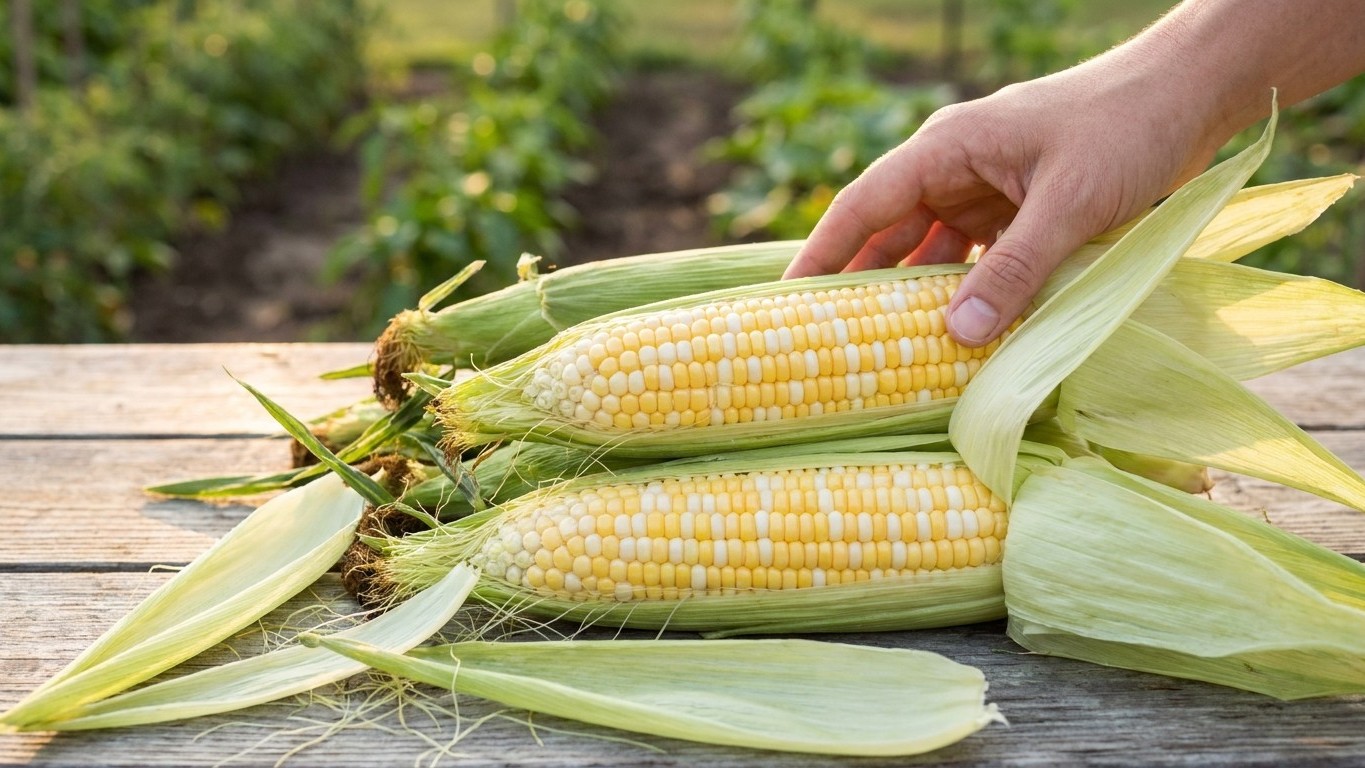

Peaches and Cream is a bicolor sweet corn with a sugary enhanced (se) genotype, a cultivar Clemson Cooperative Extension recommends for home gardens. That genotype is the whole story: it’s sweeter and more tender than standard sugary (su) corn, it holds its sugar longer after picking, and it needs no isolation from other sweet corn. Plant it once soil at 4 inches reaches 50°F.
Genotype and Kernel Color: What Makes This Ear Sweet
Sweet corn breeding comes down to three genotype families, and the letters matter more than the variety name on the seed packet. Sugary (su) is the old-fashioned type: sweet at picking, but that sweetness fades fast because the sugar converts to starch within hours. Sugary enhanced (se) types, which is what Peaches and Cream is, carry a gene that slows that conversion, giving a longer window of sweetness and a more tender kernel wall. Supersweet (sh2) types push sugar content even higher and hold it longest of the three, but they come with a strict isolation requirement that se corn does not share.
Clemson Cooperative Extension lists Peaches and Cream as an se cultivar with bicolor kernels, meaning each ear carries a mix of white and yellow kernels rather than a single solid color. That’s a cosmetic trait, not a flavor one. Nothing in the Clemson data supports the idea that white kernels taste sweeter than yellow, or the other way around. Sweetness comes entirely from the genotype, in this case se, not from whether the ear leans more white or more yellow.
That distinction is worth holding onto, because seed catalogs sometimes lean on color language that can imply a taste difference where none exists genetically. What actually separates one sweet corn cultivar from another on the tongue is the su, se, or sh2 designation. For Peaches and Cream, that designation is se, and everything downstream, from planting rules to isolation needs to how long an ear stays sweet in the fridge, traces back to that one classification.
Soil Temperature: The Real Planting Rule
Corn seed doesn’t care what the calendar says. It cares what the soil says, and the two aren’t always the same thing in early spring when a warm afternoon can fool a gardener into thinking it’s planting time while the ground underneath is still cold. The rule that applies to Peaches and Cream, as an se cultivar, is a soil temperature of 50°F measured at a 4-inch depth before sowing. That’s the threshold for ordinary sweet corn genotypes, su and se alike. Supersweet (sh2) types need warmer ground, 65°F at that same depth, because their seed is more prone to rot in cool, wet soil. Peaches and Cream doesn’t fall into that stricter category, so the 50°F mark is the one to watch.
The depth matters as much as the number. A thermometer pushed just under the surface will read warmer than the soil an inch or two deeper, where the seed actually sits and where germination happens. A soil thermometer, checked at the 4-inch mark on a few consecutive mornings rather than a single afternoon reading, gives a more honest picture of whether the ground is ready.
No calendar date substitutes for that reading, because soil warms at different rates depending on region, soil type, and whether the bed is mulched, tilled, or left undisturbed over winter. The same is true for days to maturity. No published maturity figure exists for this cultivar in the Clemson data, and none should be assumed from its genotype alone, since se cultivars vary in maturity length by seed source. The seed packet in hand carries the maturity count that applies to that specific seed lot. That’s the number to circle on the calendar once the soil reading gives the green light to sow.
Isolation: Does Peaches and Cream Need It?
Isolation distance is the rule that trips up gardeners who grew up hearing “don’t plant different corn types too close together” without knowing which types that warning actually applies to. For sh2 supersweet corn, isolation is essential, because pollen drift from ordinary sweet corn onto a supersweet ear produces starchy, tough kernels that look completely normal on the stalk and only reveal the problem once bitten into.
Peaches and Cream doesn’t carry that risk. As a sugary enhanced (se) cultivar, it needs no isolation from other sweet corn varieties, including standard su types and other se cultivars growing in the same garden or a neighboring plot. Cross-pollination between su and se sweet corn doesn’t produce the same starchy, ruined result that su pollen causes on sh2 corn. A gardener growing Peaches and Cream alongside another sweet corn variety, of nearly any type short of a supersweet, isn’t risking the crop by skipping isolation measures.
The isolation rule so many gardeners have heard, and sometimes apply out of caution to every corn planting regardless of type, is specifically a supersweet concern. Since Clemson’s data identifies Peaches and Cream as se rather than sh2, that rule simply doesn’t apply here. No isolation distance is published for se cultivars because none is needed, and inventing one would misapply a rule meant for a different genotype entirely.
Taste, Storage, and Why the Genotype Matters at Harvest
Genotype doesn’t stop mattering once the ear is picked. It shapes how long that sweetness survives in the kitchen, which is often the more practical concern for a home gardener who can’t eat an entire harvest the same afternoon it comes off the stalk. Clemson Cooperative Extension puts it plainly: “Sweet corn loses sugar from the kernel rapidly at high temperatures… Sweet corn can be stored under optimal conditions for about five days, but will lose sweetness with each day of storage.”
That five-day figure is a ceiling under optimal cold storage, not a guarantee, and it varies by genotype. Standard sugary (su) corn loses its sugar fastest of the three types, which is why old garden advice insisted on running the ear straight from stalk to boiling water. Sugary enhanced (se) cultivars, like Peaches and Cream, hold their sweetness noticeably longer than su types, giving a wider window between picking and eating without a dramatic drop in flavor. Supersweet (sh2) types hold sugar longest of all three, part of why commercial growers favor them for corn that has to survive shipping and shelf time.
For a home garden, that ranking is the practical case for choosing an se cultivar like this one. It won’t demand the immediate harvest-to-pot urgency that su corn does, but it also won’t hold quite as long in the crisper drawer as an sh2 variety would. Refrigerating ears promptly and keeping storage time short still matters, since heat accelerates sugar loss regardless of genotype. The se classification simply buys a few extra days of forgiveness that su corn never offered.
Common questions
Is Peaches and Cream a supersweet (sh2) corn?
No. Clemson Cooperative Extension lists it as sugary enhanced (se), a different genotype from supersweet. That means it doesn’t require isolation from other sweet corn, unlike sh2 cultivars.
Do white kernels on the ear taste different from the yellow ones?
No credible source ties kernel color to sweetness. Peaches and Cream’s bicolor kernels are a visual trait; the sweetness comes from its se genotype, not from the mix of white and yellow.
What soil temperature should I wait for before planting?
Wait until the soil reaches 50°F at a 4-inch depth, checked on more than one morning rather than a single warm afternoon. That’s the threshold for se cultivars like this one, not the 65°F mark reserved for supersweet types.
How many days until Peaches and Cream corn matures?
No maturity figure is published for this cultivar independent of the seed source. Check the days-to-maturity count printed on the specific seed packet used, since that figure varies by seed lot.