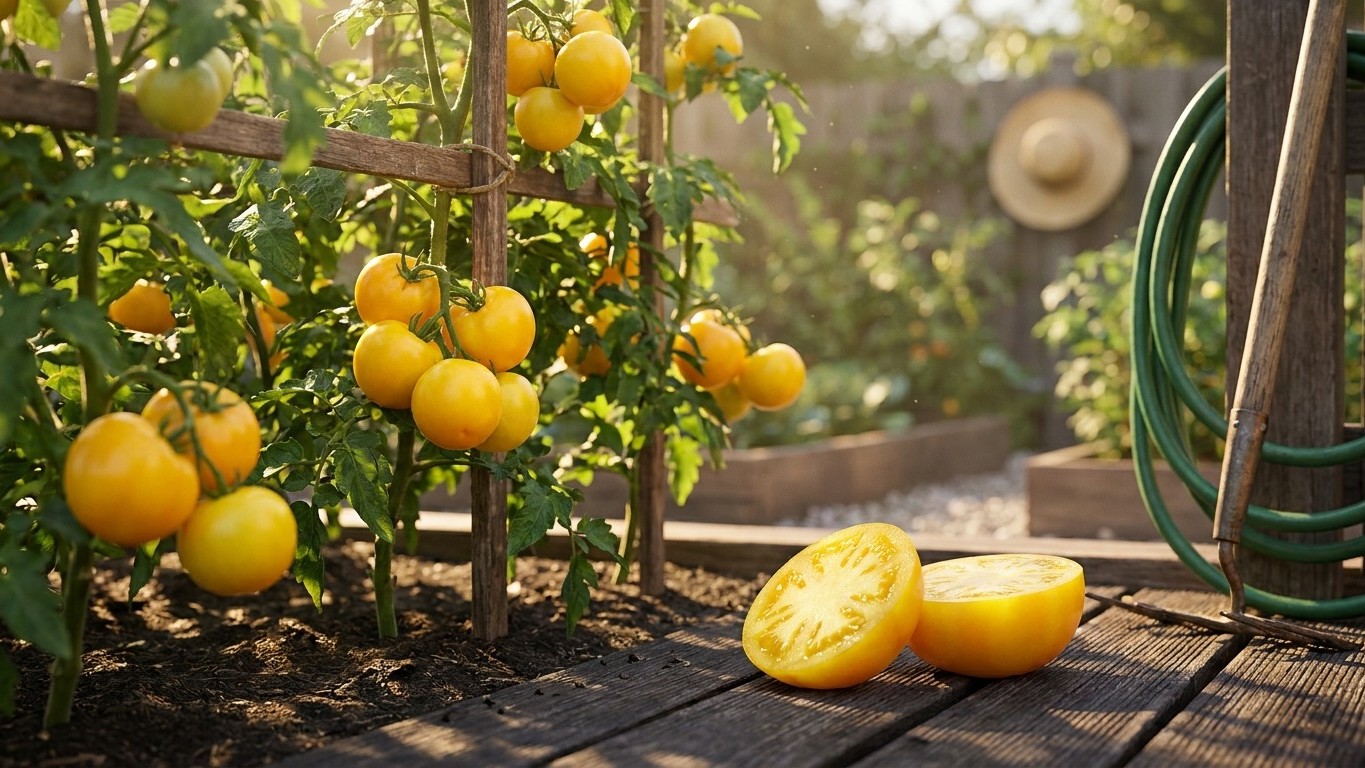

Lemon Boy Plus is a specialty indeterminate tomato bred as an upgraded version of the classic Lemon Boy, producing yellow, 7–8 oz fruit with sweet, tangy flavor and stronger disease resistance. It reaches maturity in about 75 days from transplant, which puts it comfortably in range for most of the country, though the answer changes once you account for how long your soil needs to warm up before that clock even starts.
What Brandywine actually is

Lemon Boy Plus is a specialty tomato, an indeterminate that keeps growing and setting fruit right up until frost takes it down. That habit is the first thing to plan around: an indeterminate vine on this timeline needs a tall cage or a stake set at planting time, not added later once the plant has sprawled. The fruit runs 7–8 oz, yellow-skinned, sized for slicing rather than canning or snacking.
The maturity figure published for this variety is 75 days, and that count starts from transplant, not from the day you sow seed indoors. That distinction matters because a gardener who counts from seeding will think the plant is running late when it isn’t; the six to eight weeks a seedling spends under lights before it goes in the ground don’t count against the 75.
On flavor, the variety is described as an updated take on the classic Lemon Boy, with added disease resistance layered onto a sweet, tangy taste that’s described as a step up from typical yellow tomatoes. That combination, a known yellow flavor profile plus a modernized resistance package, is really the whole pitch of this variety, and it shapes how it gets used: gardeners who tried the original Lemon Boy and want the same eating experience with fewer plant losses are the target audience here.
Where it ripens in time, and where it is a gamble
Seventy-five days from transplant is a moderate timeline as tomatoes go, neither a 55-day early cherry nor a 90-plus-day beefsteak that pushes deep into fall. That middle position is exactly why the math around your local frost-free window matters more than it would for a variety that’s obviously early or obviously late.
Here’s the arithmetic to run for your own yard. Start with your area’s frost-free window, the stretch between the last spring frost and the first fall frost. Subtract roughly two weeks at the front end, because tomato soil temperature needs to sit in the 60s before transplants go in without stalling; setting plants into cold soil doesn’t kill them outright but it does stop growth, which quietly adds days to the maturity clock. Then subtract the 75 days to maturity. Whatever is left over is your margin for actually picking fruit, not just reaching the first ripe tomato.
In a region with a long, warm growing season, that subtraction leaves a wide cushion, plenty of room to harvest for weeks before frost ends things. In a region where the frost-free window is short, the same subtraction can leave only a narrow slice of season for picking, or none at all if a cold spring delays transplanting past the ideal date. The specific figures for any named city, the actual frost-free day count from a station’s climate record, aren’t part of the data behind this article, so rather than invent a number for a particular town, the honest move is to point you to your own extension service or a NOAA National Centers for Environmental Information station near you and have you run the subtraction with real local figures.
What you can say without a specific station in hand: 75 days from transplant is squarely in the range that most of the continental U.S. can accommodate if plants go in after the soil has genuinely warmed, not on the calendar date that “feels” right. The variety isn’t a stretch for northern gardens the way a 90-day heirloom would be, but it also isn’t so quick that a short-season grower can treat the maturity date as an afterthought. Gardeners in regions with a compressed frost-free window are the ones who most need to do the subtraction before they buy the seed, because for them the margin between comfortable and tight can come down to a single week of late spring cold.
The two ways a season goes wrong
A long frost-free window on paper doesn’t guarantee a good tomato season, and two limits explain why. The first shows up in the north: even where frost arrives late, the accumulated warmth across the season can still be short, and tomatoes don’t just need days, they need heat. Fruit set specifically stalls when nighttime temperatures drop below 50°F, which happens more often than gardeners expect in northern regions even well before the calendar frost date, and again in early fall as nights cool before the first freeze actually lands.
The second limit shows up in the south, and it works in the opposite direction. Once daytime temperatures climb above roughly 86°F, tomato pollen goes sterile and blossoms drop without setting fruit. That’s why growers in hot climates typically run two separate crops, a spring planting that finishes before the worst heat and a second planting timed to fruit as temperatures ease in fall, rather than expecting one plant to produce through the entire warm season.
For a 75-day variety like this one, the northern cold-night limit is the more relevant risk. A maturity window in the middle of the season means the plant is likely to hit its fruiting stretch during the warmest part of summer in most regions, sidestepping the worst of the southern heat-sterility window in a single-season sense, but a northern grower whose nights dip below 50°F late in spring or early in fall can lose fruit set on either end of that 75-day count without ever seeing a frost.
What it resists, and what it does not
The published resistance package for Lemon Boy Plus is specific, and the grades aren’t all the same strength. The variety carries High resistance to Gray Leaf Spot, Alternaria Stem Canker, and Fusarium Crown and Root Rot. It carries Intermediate resistance to Nematodes and to Leaf Molds A through E.
That distinction between High and Intermediate isn’t a formality. High resistance means the plant is bred to substantially block the pathogen from taking hold or causing damage. Intermediate resistance means something narrower: the plant slows the disease’s development or limits its severity, but it does not stop the pathogen outright. A gardener growing this variety in nematode-heavy soil should still expect some nematode pressure and manage for it, rather than assuming the plant is immune because “resistant” appears on the label.
- High resistance: Gray Leaf Spot, Alternaria Stem Canker, Fusarium Crown and Root Rot
- Intermediate resistance: Nematodes, Leaf Molds A–E
Outside that list, no other resistances are published for this variety. That means common tomato threats like early blight, late blight, Fusarium wilt races beyond crown and root rot, Verticillium wilt, and Septoria leaf spot aren’t covered by any bred-in resistance here. Gardeners in regions where those diseases are common pressure should plan on cultural controls, rotation, mulching, and airflow, rather than counting on the plant’s genetics to handle them.
Growing it without the usual mistakes
Because Lemon Boy Plus is indeterminate, it doesn’t ripen in one flush the way a determinate bush variety does. It keeps producing new flowers and fruit continuously until frost stops it, which means the harvest is spread across weeks rather than concentrated into a single busy stretch. That’s good news for a household eating tomatoes steadily through the season, but it changes the support plan: a determinate’s short cage is not enough here. This vine needs a tall cage, at minimum five to six feet, or a stake set at transplant time and tied up as the plant climbs, because the vine’s total height by season’s end will outgrow anything sized for a bush type.
Spacing should account for that same continued growth. A plant that keeps extending all season needs airflow around it well into late summer, not just at planting, to keep foliage diseases in check given that several common ones (early blight, Septoria, Verticillium) aren’t covered by this variety’s resistance package.
On feeding, the mistake specific to an indeterminate on a 75-day maturity timeline is continuing heavy nitrogen fertilization once fruit set is underway. Because the plant keeps growing and setting fruit simultaneously, pushing extra nitrogen mid-season encourages more vine and leaf at the expense of the fruit load already on the plant, and it can also thicken foliage in a way that traps humidity against a plant that’s only partially protected against leaf mold. Once the first fruit clusters are set, shifting to a lower-nitrogen, potassium-leaning feed supports the ongoing fruit production this variety is built for, rather than fueling vine growth the cage or stake will just have to catch up with.
The timing mistake this specific maturity invites is transplanting on the calendar date rather than the soil-temperature date. Because the 75-day count only starts once the plant is actually in the ground and growing, setting transplants into soil that hasn’t warmed enough doesn’t just risk cold damage, it stalls the plant and quietly pushes the harvest date later than the label suggests, eating directly into whatever margin a grower calculated against their local frost-free window.
Common questions
Is Lemon Boy Plus the same as the original Lemon Boy tomato?
No. It’s described as an updated version of the classic Lemon Boy, built on the same yellow-fruited, sweet-tangy flavor profile but with added disease resistance bred in, which the original variety didn’t carry to the same degree.
Does 75 days to maturity mean 75 days from seed?
No. The published figure is counted from transplant into the garden, not from when seed is sown indoors. Gardeners starting seed six to eight weeks before their last frost date need to add that indoor time separately when planning a harvest date.
Will Lemon Boy Plus resist blight?
Not according to the published resistance list. The variety carries High resistance to Gray Leaf Spot, Alternaria Stem Canker, and Fusarium Crown and Root Rot, and Intermediate resistance to Nematodes and Leaf Molds A–E. Early blight and late blight aren’t on that list, so no bred-in protection against either should be assumed.
Does this variety need a cage or a stake?
Yes, and it needs a tall one. As an indeterminate, the vine keeps growing and fruiting until frost, which means a short determinate-style cage won’t contain it by late summer. A tall cage or a stake set up at transplant time, with ties added as the plant climbs, is the practical requirement here.