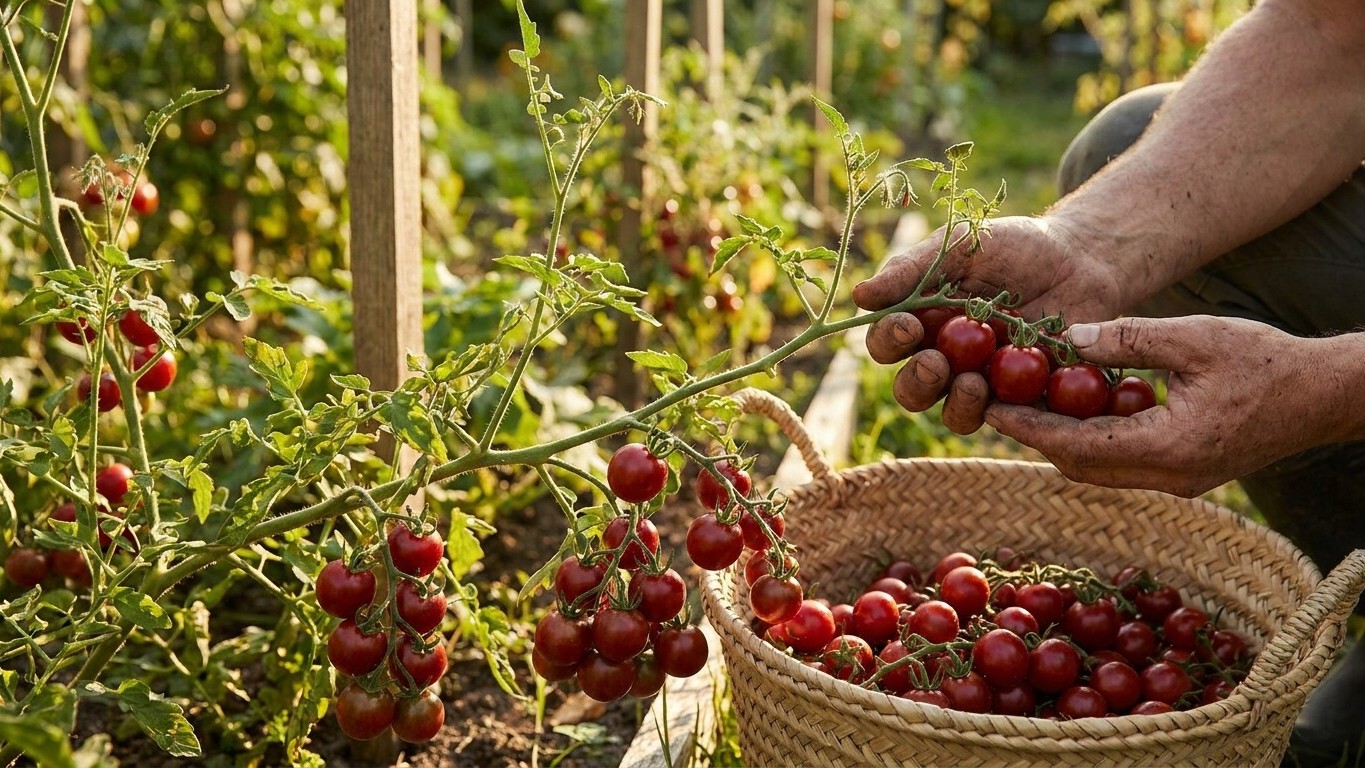

Matt’s Wild Cherry Tomato is a small-fruited heirloom, ripening in just 60 days from transplant, that most gardens in the continental United States can grow without racing the calendar. It’s a snacking tomato, not a slicer, and its short window to harvest means the real question isn’t whether it fits your season, but how you manage a vine that never stops once it starts.
What Matt’s Wild Cherry Tomato actually is

Start with the fruit, because that’s what decides how you use this plant. Matt’s Wild Cherry Tomato produces red fruit weighing about 5 gm each, small enough that “slicing” one makes no sense. These are eaten whole, tossed into salads or grabbed off the vine as a snack while you’re weeding. The catalogue description calls the flavor simply “the wild tomato with great flavor,” and that wording matters: this isn’t a refined modern hybrid bred for uniform size or shipping. It’s an heirloom, closer to the tomato’s ancestral form than most varieties sold today.
Days to maturity is listed at 60, and that figure is counted from transplant, not from the day you sow seed indoors. That distinction changes how you plan your calendar backward from your last frost date. Sixty days from transplant is short by tomato standards, on par with the earliest cherry varieties on the market, which is exactly why this plant fits into short-season gardens that would struggle with a 90-day beefsteak.
The habit is indeterminate, meaning the vine keeps growing and setting fruit until frost kills it, rather than stopping after one flush. That single fact drives most of the practical decisions below: staking, spacing, feeding, and how long you’ll be picking. A determinate plant gives you a harvest window and then quits. This one doesn’t quit on its own, which is a very different kind of commitment for a gardener.
Where it ripens in time, and where it is a gamble
The arithmetic here is simple enough to redo for your own backyard. Take your frost-free window, the number of days between your last spring frost and your first fall frost. Subtract roughly two weeks, because soil needs time to warm before a transplant will actually start growing instead of sitting still. Subtract the 60 days to first ripe fruit. What’s left is your actual picking window, the stretch of time you’ll spend harvesting before frost ends the season.
For a gardener in a short-season region, that math looks tight with most tomatoes but comfortable with this one. A frost-free window of roughly 100 to 110 days, typical of northern growing areas like interior Maine or the Upper Midwest, leaves about 85 to 95 days after the soil-warming subtraction. Take away the 60 days to maturity and you’re still left with a month or more of picking before the first fall frost. That’s a real margin, not a photo finish.
Move to a mid-season climate, the kind found through the Ohio Valley, the Mid-Atlantic, or much of the Pacific Northwest away from the coast, and frost-free windows commonly run 150 to 180 days. Run the same subtraction and you’re left with two to three months of harvest. At that point the limiting factor stops being frost entirely and becomes something else, which the next section covers.
In long-season regions, the Gulf Coast, peninsular Florida, and much of the Desert Southwest, frost-free windows can stretch past 240 days, sometimes with no real frost at all in a typical winter. Here the 60-day maturity of Matt’s Wild Cherry Tomato isn’t a constraint in either direction; the plant has so much runway that gardeners in these areas often plant twice, once in spring and again in late summer, rather than relying on one continuous season.
| Region type | Typical frost-free window | Minus soil warm-up (14 days) | Minus days to maturity (60) | Approx. picking window left |
|---|---|---|---|---|
| Short-season North | ~100-110 days | ~86-96 days | ~26-36 days | 3-5 weeks |
| Mid-season | ~150-180 days | ~136-166 days | ~76-106 days | 2-3 months |
| Long-season South | ~240+ days | ~226+ days | ~166+ days | 5+ months |
Where this variety runs into trouble isn’t a lack of days on paper. It’s what happens inside that window, which a frost table can’t show you.
The two ways a season goes wrong
A long frost-free window doesn’t guarantee a good crop, and a short one doesn’t automatically mean failure. Two separate limits sit underneath the calendar math, and they pull in opposite directions depending on where you garden.
In the north, the problem is accumulated warmth, not calendar days. A frost-free window can technically run 100 days while nights still dip below 50F for stretches in early summer, and tomato flowers won’t set fruit reliably in that kind of cold. A plant can sit alive and green for weeks without adding a single ripe cherry to the bowl if nighttime temperatures stay too low, regardless of how many frost-free days remain on the calendar.
In the south, the opposite failure shows up in the height of summer. Once daytime temperatures push consistently above 86F, tomato pollen turns sterile, and flowers drop without setting fruit at all. This is why southern growers split their season into a spring crop and a separate autumn crop instead of expecting one continuous harvest from May through October. The plant survives the heat; it just stops producing through the worst of it.
For Matt’s Wild Cherry Tomato specifically, the short 60-day maturity tilts the balance toward the heat problem mattering more, at least for gardeners south of the mid-Atlantic. Because the vine is indeterminate and keeps trying to flower all season, it runs straight into that mid-summer sterility window rather than finishing before it arrives, the way a fast determinate variety planted very early might avoid it entirely. In the far north, the cold-night limit is the one to watch, but only in the shortest-season pockets where nighttime temperatures struggle to clear 50F even in July.
What it resists, and what it does not
No disease resistances are published for Matt’s Wild Cherry Tomato. That’s worth stating plainly rather than glossing over, because gardeners often assume an heirloom carries some built-in toughness simply because it’s old. It doesn’t come with a resistance code attached, and none should be assumed.
Practically, that means common tomato diseases such as early blight, late blight, fusarium wilt, and verticillium wilt aren’t blocked or slowed by anything bred into this plant. If any of those show up in your soil or your region’s humidity pattern, this variety has no genetic backup to lean on. The defense has to come from how you grow it, not from the seed itself.
That risk compounds with the indeterminate habit. A plant that keeps growing and fruiting for months has more time exposed to foliage disease than a determinate variety that ripens in one quick flush and gets pulled. Long-season gardeners in humid climates, the Southeast especially, should treat this absence of resistance as a reason to rotate beds yearly, avoid overhead watering that splashes soil onto leaves, and space plants generously enough that air moves through the foliage. None of that guarantees a clean season, but skipping it on a variety with zero published resistance is asking for trouble.
Growing it without the usual mistakes
The indeterminate habit is the single fact that should shape your whole plan for this plant. Because it keeps growing until frost, a short stake or a small tomato cage won’t hold it past midsummer. Plan for a tall cage or a sturdy stake from the start, and expect to tie or clip the main stem as it climbs rather than adding support later once the vine has already sprawled.
The 60-day maturity invites a different mistake: starting seed indoors too early, the way you might for a slower 85-day beefsteak. Because this variety moves fast once transplanted, an overly early start just produces a leggy, root-bound seedling sitting in a pot waiting for warm soil. Count backward from your local transplant date using the 60-day figure, not from habit built around slower varieties.
Feeding needs a similar adjustment. Once the plant sets its first flush of fruit, cut back on nitrogen. An indeterminate vine fed heavily all season will keep pushing leafy growth at the expense of fruit, especially a small-fruited cherry type that doesn’t need much energy per tomato to begin with. A lighter, steadier feeding schedule after fruit set usually beats a heavy early dose that just grows vine.
Because there’s no disease resistance to fall back on, avoid planting this variety in the same soil where tomatoes grew the previous year, and keep an eye on lower leaves through the height of summer heat when the plant is under the most stress and least able to fend off fungal issues on its own.
Common questions
Is Matt’s Wild Cherry Tomato good for slicing?
No. The fruit weighs about 5 gm each, sized for snacking or salads whole rather than cutting into slices for a sandwich.
How many days until I get ripe fruit?
About 60 days, counted from the date you transplant seedlings outdoors, not from when you sowed the seed indoors.
Does this variety resist common tomato diseases?
No resistances are published for it. Treat it as unprotected against early blight, late blight, and similar diseases, and rely on crop rotation and airflow instead.
Does it need a cage or stake?
Yes. It’s indeterminate and keeps growing and fruiting until frost, so a tall stake or sturdy cage set up at planting time works far better than adding support later in the season.