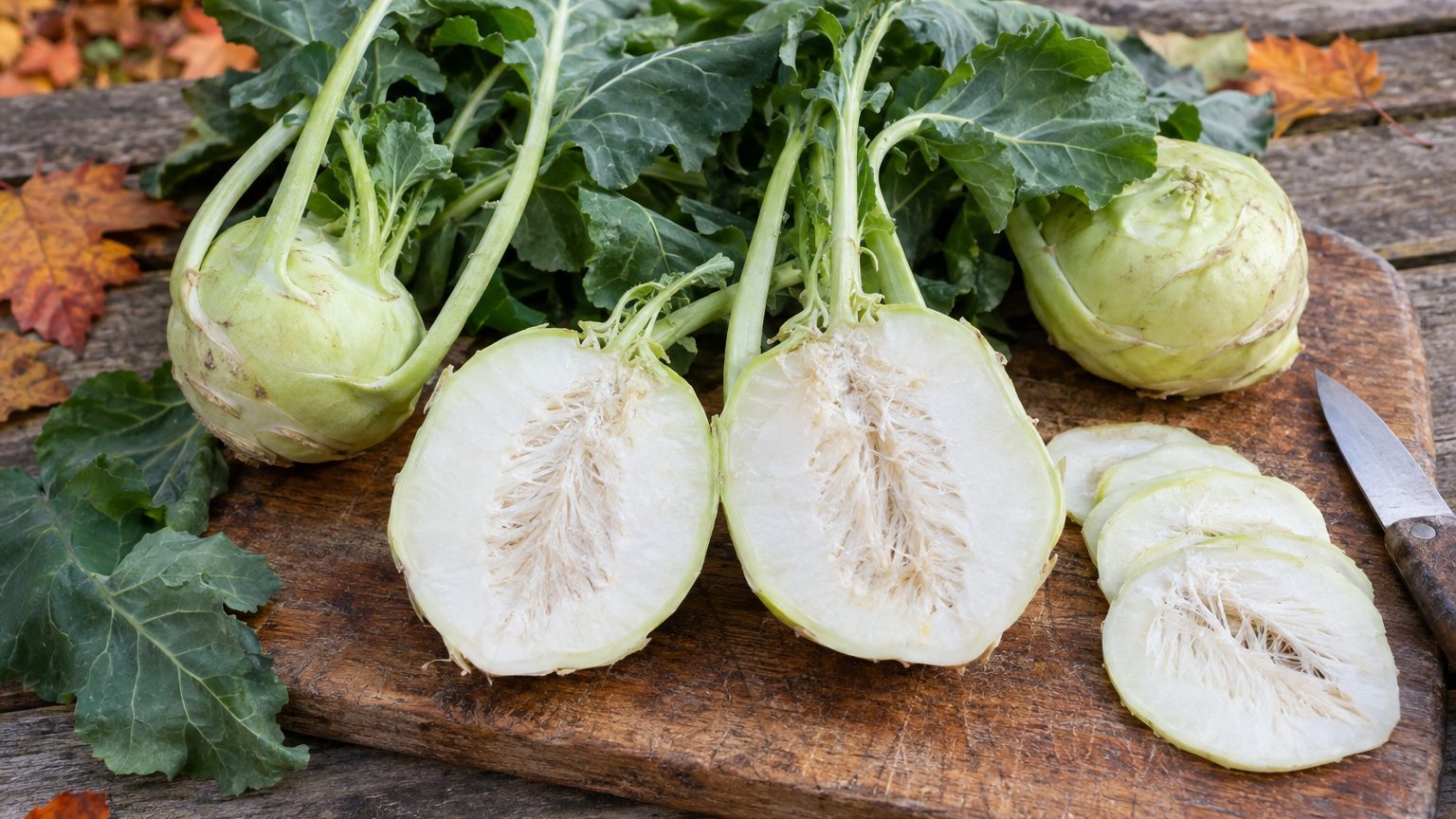

Kohlrabi turns woody when growth stalls, and stalled growth almost always traces back to heat, dry spells, crowding, or simply waiting too long to pick. The fibers form as the swollen stem ages, and once they set, no amount of cooking fully erases them. A woody bulb is still usable, though. Peel it deeper than you think you need to, cut out any dry, pithy core, and cook the rest in soup or a puree where texture matters less. Next season’s crop is where the real fix lives.
That matters more than it sounds, because kohlrabi is one of the stranger members of the Celeriac, Kohlrabi, Horseradish and Jerusalem Artichokes group. Botanically it isn’t a root at all. The globe you eat is a thickened stem that swells just above the soil line, which explains both its fast growth and its habit of turning tough when conditions go sideways.
What “woody” actually means inside the bulb
A healthy kohlrabi is crisp, juicy, and mild, somewhere between a broccoli stem and a sweet radish. Woody ones fail in a few different ways, and telling them apart helps you decide what to do with the bulb in your hand.
The first kind is stringy flesh. Cut the bulb in half and you see pale, thread-like fibers running through the white interior, usually denser toward the outer edge. Bite into a raw slice and you chew and chew. This is the classic overgrown bulb, and it’s the one most gardeners meet.
The second kind is a dry or spongy center. The middle looks matte instead of glossy, sometimes with small hollow pockets or a cottony texture. That points to stress or age, and the pithy core is rarely worth eating even if the outer flesh is fine.
The third kind hides in the skin and the leaf stalks. The peel on any kohlrabi is tougher than the flesh, and on older bulbs there’s a fibrous layer just beneath it that a vegetable peeler skims right over. Leaf stems get tough too, which is why the greens from big bulbs often need their midribs stripped before cooking.
One quick check at the garden bed saves a lot of disappointment. Press a thumbnail into the skin. If it feels glossy and gives slightly, you’re probably fine. If it feels hard, dull, or already cracked, expect fibers inside.
Why kohlrabi gets tough in the garden
Kohlrabi is a cool-season brassica, in the same species as cabbage, broccoli, and kale. It wants steady growth from seedling to harvest, and anything that interrupts that rhythm pushes the plant to build structure instead of sweet, tender tissue.
Heat and slow growth
Warm weather is the biggest culprit. Spring-planted kohlrabi that matures into a stretch of 80°F days will often toughen, even if the bulb is still small. The plant rushes through development, and the flesh firms up. Gardeners in the South and Southwest, where spring warms quickly, usually get better results from fall and winter plantings than from spring ones. Northern gardeners in states like Minnesota or Vermont often can squeeze in both seasons.
Early varieties typically reach harvest size in roughly 45 to 60 days from sowing, which makes timing tight. Miss the window by a few weeks of heat and you land in woody territory.
Uneven water
Kohlrabi has shallow roots, so it feels every dry spell. When soil swings from parched to soaked, growth lurches forward and stops, and the bulb can crack as well as toughen. A target of about 1 inch of water per week, more in hot or sandy conditions, is a sensible baseline. A few inches of straw or shredded leaf mulch evens out moisture and keeps the soil cooler, which helps with both problems at once.
Crowding, poor soil, and pests
Plants crammed closer than about 4 to 6 inches apart compete for water and nutrients and tend to produce small, fibrous bulbs. Poor fertility does the same. Kohlrabi likes loose, fertile soil with a pH around 6.0 to 7.0 and a decent supply of nitrogen early on. A sprinkle of compost at planting is usually enough for a small bed.
Pests contribute too. Flea beetles chew leaves on young seedlings, and cabbage root maggots can damage the root zone. Anything that sets the plant back for a week or two can leave you with a tougher bulb at harvest. Floating row cover over seedlings from day one is a cheap defense against both.
Cold snaps and bolting
Here’s the confusing one. Young plants exposed to extended cool temperatures, generally below 50°F, can be triggered to bolt later, sending up a flower stalk instead of building a tender bulb. A bolting plant diverts everything into the stalk, and the bulb goes fibrous. Setting out transplants too early, before nights settle, is the usual cause. Hardening off transplants and using row cover on cold nights reduces the risk.
Simply waiting too long
Most standard kohlrabi varieties are at their best when the bulb is about 2 to 3 inches across, roughly the size of a tennis ball or smaller. Leave them in the ground for another few weeks and the flesh gets coarse. That’s the mistake behind many woody bulbs, and it’s tempting to make, because the bulb keeps getting bigger and bigger size feels like success.
There’s a partial exception. Some large-storage types, such as Kossak and Gigante (sold under a few names), are bred to grow far bigger, sometimes 8 inches or more, while staying tender. Even so, they aren’t immune to heat and drought, so those same watering and timing rules apply.
Salvaging a woody bulb in the kitchen
Throwing out a tough kohlrabi is rarely necessary. A little knife work and the right recipe can rescue most of them.
Start by cutting off the root end and the leaf stubs. Then peel generously with a paring knife rather than a vegetable peeler, taking off about an eighth of an inch or more. Look for the fibrous layer just beneath the skin, which looks slightly more translucent or stringy than the white flesh beneath. Keep peeling until it’s gone. Quarter the bulb and check the center. If it’s dry, spongy, or hollow, cut it away.
From there, texture decides the method. Raw preparations like slaws and matchsticks need crisp flesh, so skip them with a tough bulb. Cooking breaks fibers down, which makes these options far more forgiving:
- Simmer chunks in soup or stew until completely soft, about 20 to 30 minutes.
- Roast cubes at 400°F until browned and tender, tossing with oil and salt.
- Boil or steam, then mash or puree with butter, similar to turnips.
- Grate finely for fritters or latkes, where the shredding cuts the fibers short.
For especially stringy bulbs, blending is the most reliable route. A creamy kohlrabi soup puréed in a blender hides almost any leftover fiber, and if it’s still stringy, pass it through a fine sieve.
The leaves are worth saving. Young leaves cook like collards. Older ones need the thick central rib removed, then a longer braise of 20 minutes or so. Even if the bulb is a loss, the greens often aren’t.
Growing tender kohlrabi next time
Prevention comes down to planning around temperature rather than the calendar. Count backward from your average last spring frost date and set transplants out roughly 2 to 4 weeks before it, when the bed can be worked and nights are cool but not hard-freezing. For a fall crop, sow about 6 to 8 weeks before your first expected fall frost. Fall-grown kohlrabi, maturing as days shorten and cool, is often the sweetest and most tender of the year. Your state’s cooperative extension office publishes planting calendars by region, and those beat any generic rule of thumb.
Stagger sowings every two weeks rather than planting the whole row at once. That keeps you from facing 20 bulbs that all hit peak at the same moment, then slip into woodiness together while you’re away for a weekend. Three or four plants per sowing is plenty for most households.
Pick by size, not by calendar. Check the bulbs every few days once they reach golf-ball size. For standard varieties, harvest when they’re 2 to 3 inches wide. Cut the stem just below the bulb with a sharp knife, and leave the roots to be pulled or tilled in later.
Variety choice also helps. Fast early types are good for short seasons and cool springs. Large-storage types suit fall gardens where a long, cool stretch lets them size up slowly. Purple and green types are similar in texture, so pick based on how you like the color. Seed catalogs usually list days to maturity, and shorter numbers favor you in warm climates.
Storing what you pick
Storage affects texture as well. Twist or cut off the leaves right after harvest, since they pull moisture out of the bulb, and keep them separately in the refrigerator for a few days. Bulbs themselves hold in a perforated bag in the crisper drawer for several weeks. A root cellar or an unheated space hovering near freezing with high humidity can stretch that to a couple of months for larger, firm bulbs.
Kohlrabi isn’t a candidate for winter in-ground storage the way some of its cousins are. Hard freezes damage the bulb, and the extra weeks only add fiber. Gardeners curious about which crops do tolerate that treatment can read about leaving these roots in the soil over winter. And for a vegetable at the opposite end of the fussiness scale, one that thrives on neglect and sometimes causes the opposite problem, there’s horseradish: easy to grow, hard to remove.
A small supplementary detail for anyone eager to test their timing: the bulb is the same plant as a cabbage that never formed a head. Because it’s a stem swelling in place, it can’t be “rescued” by letting it rest, so the only second chance a woody kohlrabi gets is the one you give it in the kitchen.