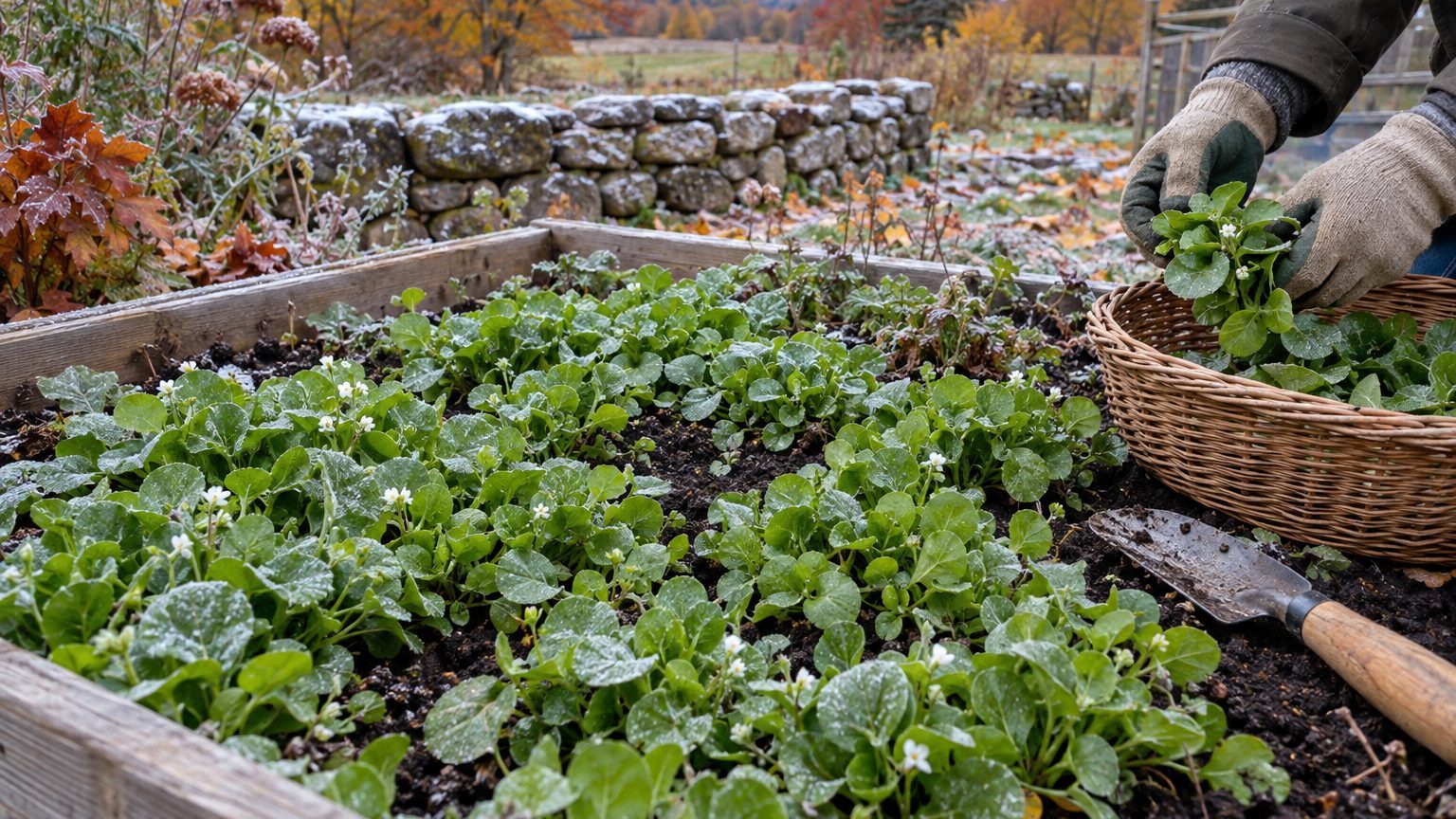

Claytonia is the winter salad that keeps growing when lettuce stalls. Sown into cool soil, it forms a low rosette of round, spoon-shaped leaves you can cut from fall through early spring. Then it flowers, sets seed and leaves volunteers for the following year. Gardeners also call it winter purslane or miner’s lettuce. It is one of the cold-season crops covered in Winter Salads: What Grows When Lettuce Will Not.
What is actually going on
Why does claytonia grow when other salads stop?
Most salad crops only hold in winter. A lettuce that is already up will sit through the cold, alive but adding almost nothing. Claytonia is adapted to a cool, wet season, so its seed germinates in cool soil and its seedlings keep making leaves at temperatures where lettuce, arugula and spinach mostly pause. That growth in cold weather is the reason to plant it.
Short days matter as well. Midwinter light is thin, and claytonia is a flat, ground-hugging rosette that makes use of it. Sitting close to the soil, the plant also benefits from the little warmth the ground holds. A cold frame, low tunnel or layer of row cover pushes growth further, because the air under cover stays warmer than the open garden on a clear night. A hard freeze can flatten or scorch leaves. The plant usually pushes new ones from the crown after a thaw, and cover limits the damage.
Heat is the other half of the story. Warm soil blocks germination, and long, warm days make the plant flower early, with smaller leaves on shorter stems. That is why claytonia is a fall-to-spring crop where summers are hot, and can stretch into early summer where summers stay cool.
Why does claytonia self-seed so freely?
In spring each plant sends up small white flowers from the center of the leaf, where the stem passes through and makes a cup. Every plant sets a large number of tiny, glossy black seeds. They drop, sit through the warm months, and sprout when the soil cools in fall, the same cue a gardener uses. A bed left alone restocks itself. A bed meant for tomatoes in May will also be full of claytonia seedlings unless you pull them.
Seed catalogs sell a few leaf types, some rounder and some more elongated. Your state’s cooperative extension service can tell you which have been trialed near you. Grow it from packet seed in beds and containers, where you control the sowing and the harvest.
In the garden
The steps below follow the plant through its year. Each row includes what happens when that step goes wrong, because the failures are where most of the learning is.
| Step | What to do | If it goes wrong |
|---|---|---|
| Timing the sowing | Sow when the soil has cooled in early to mid fall, or in late winter under cover in mild spells. | Seed sown into warm soil sprouts poorly or not at all, leaving gaps in the row. |
| Seed depth | Scatter the tiny seed on fine, firm soil and barely cover it, or press it in. | Buried seed never reaches the surface. Seed left loose on dry soil blows or washes away. |
| Thinning | Thin crowded seedlings so leaves have room to spread flat. | Dense stands stay small and damp, and the leaves stay narrow and weak. |
| Watering | Keep the surface evenly moist while seedlings emerge, then water lightly. | A crust forms on dry soil and blocks seedlings. Soggy soil in cold weather invites rot. |
| Cold protection | Use row cover or a cold frame in hard freezes and wet spells. | Exposed leaves can burn or turn to mush in a deep freeze, and growth stops for weeks. |
| Cutting | Snip leaves and tender stems above the crown, leaving the center. | Cutting the whole plant to the soil slows regrowth, and the crown can rot in cold, wet soil. |
| Spring flowering | Cut hard as buds appear, or leave a patch to bloom if you want seed. | Once plants flower, leaf size shrinks, and the bed turns into a seed source. |
How do you keep claytonia from taking over the bed?
Decide in early spring which plants will go to seed. Leave one corner or one container to flower, and pull or hoe the rest before the seed pods mature. Seedlings that come up in fall where you did not want them are easy to pull, since the roots are shallow. Pulling before seed set is far easier than weeding the following fall.
Watering gets overlooked in winter because the plants look dormant. Roots still drink, and a cold frame can dry out fast on a sunny day. The guide to Watering Salads in Cold Weather covers how much and when, including the risk of watering late in the day before a freeze.
What it depends on where you are
Which parts of growing claytonia are the same everywhere?
The biology holds across the country. The seed wants cool soil to sprout. The plant makes leaves in low light and cool air. Heat and long days trigger flowering, and the seed drops and waits for fall. If you understand those four points, you can read your own garden: when the soil cools, when the days lengthen and when the first warm spell arrives.
The plant also tolerates a wide range of soils, as long as they drain. A raised bed, a pot of loose mix or a window box all work. Container soil freezes and thaws faster than ground soil, so containers need a little more shelter in a hard winter.
What changes with season length, summer heat and rainfall?
Season length decides how many weeks of cutting you get. Where winters are mild, cutting can run for months. Where the ground freezes solid, claytonia under a cold frame may sit still for weeks, then resume as light returns. Summer heat sets the sowing window. In the Deep South and the desert Southwest the usable window opens late and closes early. In the Pacific Northwest and the cooler parts of the Northeast, it is wider, and a spring sowing can work in a shaded bed.
Summer rainfall matters more than gardeners expect. Where summers are wet, volunteer seedlings may sprout early in fall, and you will be thinning them. Where summers are dry and hot, seed sits dormant until the first cool rains. A wet, mild winter can also bring slugs, which go for tender rosettes.
How do you find the right sowing window where you live?
Start with the guides on this site, which are organized by state, beginning with Winter Salads: What Grows When Lettuce Will Not. Then call or visit your state’s cooperative extension service. Extension offices publish local planting calendars and know which leaf types have been trialed in your soils and winters. For a similar cool-season green with different habits, see Garden Cress and Land Cress.
The mistake that costs the most
What happens if you sow claytonia on lettuce’s schedule?
The costliest error is treating claytonia like lettuce and sowing it in spring or warm fall soil. Gardeners do this because most salad crops go in when the weather turns mild. For claytonia that is too late. In spring the seed may sprout, but the plants go straight to flower, and you cut a few small leaves before the bed turns to blooms. In warm fall soil the seed often sits without sprouting, and gardeners then assume the seed is bad and reseed or give up.
Either way, a whole season is gone. A failed fall sowing cannot be rescued in January, when cold soil slows even claytonia, and the beds that should have been green stay bare.
What should you do instead?
Sow when the soil has cooled, which is a test you can run with your hand. If the bed no longer feels warm in the afternoon and the nights have turned cool, the seed will sprout. If the soil is still hot, wait a week or two. Shade the seedbed with a board or a piece of shade cloth for the first few days if the sun is still strong, and keep the surface evenly moist until the seedlings emerge.
Where summers are hot, a second, later sowing in a protected bed spreads the harvest. Where summers are mild, a shaded bed may carry the crop into early summer. Either way, let the soil temperature set the date, with your extension service’s planting calendar as a check.
Common questions
Can you grow claytonia in a container?
Yes. A wide, shallow pot of loose potting mix suits the rosette. Scatter the seed, barely cover it, and keep the surface moist. Containers freeze through faster than beds, so move them against a wall or under cover in a hard freeze.
Does claytonia come back every year?
Each plant lives one season, but the seed it drops sprouts the next fall. If you let a few plants flower and shed seed, the bed usually restocks itself. Pull volunteers where you do not want them while the seedlings are still small.
How do you cut claytonia so it regrows?
Use scissors or a sharp knife to snip leaves and their stems above the center of the rosette. Leave the growing point so new leaves can form. Cutting everything to the soil weakens the plant, especially in cold, wet ground.
Does claytonia need a cold frame?
Not always. In mild winters it grows in the open. In hard winters a cold frame, low tunnel or row cover protects the leaves from scorch and keeps growth moving. Your extension office can tell you how often a hard freeze hits your area.