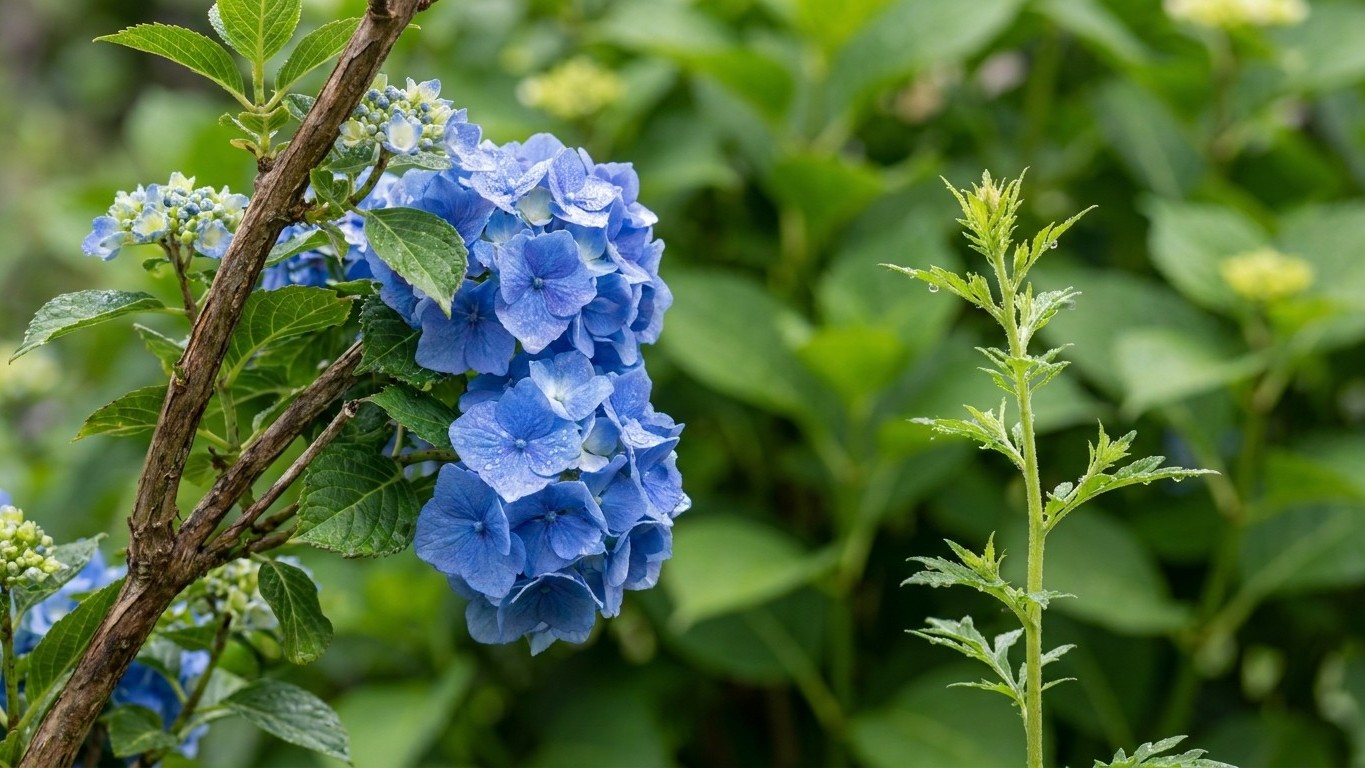

Growing hydrangeas in Yukon works when you choose the right type. Panicle and smooth hydrangeas flower on the current year’s growth, so a harsh winter that kills stem tips still leaves room for blooms. Bigleaf types often lose their buds and give you leaves with no flowers. Buy container-grown plants, set them out once spring frost has passed, give them shelter from wind, and mulch deeply before the ground freezes. For the basics that apply everywhere, see How to Grow Hydrangeas: The Complete Guide.
When to plant Hydrangeas in Yukon

The reference city for these dates is Whitehorse, using the Whitehorse A weather station. Its mean last spring frost falls on June 5, which means that in one year out of two the last frost comes later. Treat June 5 as the middle of a window. Gardens north of Whitehorse and anything on higher ground run weeks behind it. The reference station has about 80 frost-free days between the mean last spring frost (June 5) and the mean first fall frost (August 25), and the frost-free season is shorter than that in half of all years. These are Canadian climate normals for 1981-2010, so a warming trend may have shifted them slightly.
A shrub needs a full summer to build roots before the soil freezes, and a plant set out in late summer often heaves out of the ground in its first winter. The practical trigger is simple. Wait until the last hard frost has passed in your own garden and the soil is workable. Then check the forecast for the following ten days. New hydrangea leaves blacken at a light frost, so a plant already in the ground needs a sheet or frost cloth on any cold night.
Can you grow hydrangeas from seed in Yukon?
Technically yes, but it rarely makes sense. Named hydrangea cultivars do not come true from seed, and seedlings take years to reach flowering size. With roughly 80 frost-free days, you would spend several summers waiting for a first bloom. Buying a one- to three-gallon plant from a nursery saves two or three seasons.
If you want to propagate, softwood cuttings are the better route. Take them in early to mid summer from shoots that have not flowered, root them in a bright spot indoors, and overwinter the young plants in a cool, frost-free place. They go outside the following spring.
How do you harden off a hydrangea before planting?
Nursery stock often spends spring in a heated greenhouse, and the tender growth scorches or wilts in direct sun and wind. Hardening off takes several days of gradually longer outdoor exposure. On the first day, set the pot in full shade, out of the wind, for a short spell. Start the process well before your planting day, so the plant is ready when you are. Plants grown from cuttings need a longer, gentler hardening off.
Transplant on a cloudy afternoon, water the hole before and after, and keep frost cloth within reach for the first while. Because the mean last frost date is a midpoint, a cold night after planting is a real possibility.
Soil and site preparation
Start with the site. In a short, cool season, panicle hydrangeas flower best in full sun, and smooth and bigleaf types do well with morning sun and some afternoon shade. **Shelter from wind** is the factor that most often decides success. A south- or east-facing wall, a fence, or the lee side of a shed holds heat, blocks desiccating gusts, and catches snow that insulates the crown all winter. An open, windswept lot will strip leaves and dry out stems before they harden.
Hydrangeas want soil that stays evenly moist yet drains. Fast-draining gravel or sand dries out too quickly, and heavy silt that holds water in spring rots roots. The fix for both is organic matter. Work in several inches of compost, aged manure, or leaf mold over a wide area, not just the planting hole, so roots can spread into improved soil.
When should you amend the soil before planting?
Do it as early as the ground allows. If you can dig the bed the previous fall, spread compost then and let winter settle it. Otherwise, work it in as soon as the soil thaws and crumbles, well before planting day. That gap lets the bed settle and gives you time for a soil test through a lab. Test pH before you plant, because it controls flower colour on bigleaf types and how well iron is absorbed. Where the ground is cold and wet in spring, a raised bed warms sooner and drains better.
How far apart do you space hydrangeas?
Full-size panicle hydrangeas need generous room between plants. Compact types can sit closer together. Dig a hole wider than the root ball and no deeper, set the crown level with the surrounding soil, and finish with a layer of mulch pulled back from the stems.
Varieties that suit Yukon
With a short frost-free season and hard winters, four traits matter. First, **flowering on new wood**, so winter dieback does not cancel the show. Second, earlier bloom, so flowers open before the first fall frost. Third, a compact habit, so the whole shrub can sit under snow. Fourth, sturdy stems that hold up heavy blooms. Many panicle and smooth types are rated hardy to USDA zone 3, but a rating is only a guide, because a cold snap with no snow cover can go past it.
| Type | Widely sold examples | Blooms on | What it offers |
|---|---|---|---|
| Panicle (H. paniculata) | Limelight, Quick Fire, Little Lime, Bobo | New wood | Hardiest group. Quick Fire opens earlier than most panicles. Little Lime and Bobo stay compact enough to sit under snow. |
| Smooth (H. arborescens) | Annabelle, Incrediball | New wood | Dies back and regrows from the base. Incrediball has stiffer stems than Annabelle, which flops after rain. |
| Bigleaf (H. macrophylla) | Endless Summer | Old and new wood | Colour shifts with soil pH, but buds on old wood are often killed. Best grown in a large pot you can shelter over winter. |
For most gardens, panicle hydrangeas are the safest choice. They tolerate cold, sun, and wind, and they set buds on stems grown in the same season. Among them, **early bloomers like Quick Fire** make the most sense where the window between the last and first frost is short. The flowers are white and age to pink or red, which gives color without any soil chemistry.
Smooth hydrangeas are a good second choice, and they shrug off a winter that kills every stem above ground. Gardeners across the north, including readers of our Growing Hydrangeas in Alaska: Types, Colour and Winter guide, make the same call. For milder coastal conditions, Growing Hydrangeas in British Columbia: Types, Colour and Winter shows how much the list widens once winters ease.
What to plant alongside
Good neighbors for hydrangeas share their moisture and light needs without fighting over them. Hostas, ferns, astilbe, and heuchera all like the same moist, part-shaded ground, and their foliage shades the soil around the hydrangea’s roots, which keeps it cooler and slows evaporation. In the north, those perennials are hardy enough to survive without much trouble. Spring bulbs such as daffodils and crocus fill the gap before hydrangea leaves open, then fade out of the way.
Low ground covers help too. A living carpet of something shallow-rooted keeps weeds down and holds moisture, but leave a ring of bare mulch around the stems so air can move at the crown.
Keep hydrangeas away from thirsty, shallow-rooted trees. Birch and aspen send roots across a wide area and will strip moisture and nutrients from nearby beds, so plant well away from the trunk, or add a deep root barrier. Spruce are fine at a distance, but the dry shade right under them is poor ground for a plant that wants steady moisture.
Watering, feeding and support
How often should you water hydrangeas?
The name means “water vessel,” and the plants wilt quickly in dry soil. In a cool climate, however, soil dries slowly and roots rot in constant wet. Aim for a deep soak in the first season, enough to wet the soil well below the surface, and water again during dry, windy stretches. Once the plant is established, water deeply during dry spells. Advice written for very hot places, such as Growing Hydrangeas in Alabama: Types, Colour and Winter, calls for far more frequent watering than a northern garden needs, and the dry-climate guidance in Growing Hydrangeas in Nevada: Types, Colour and Winter pushes mulch and drip lines more than a cool summer does.
A two-to-three-inch layer of shredded bark or leaf mold slows evaporation and keeps the root zone cooler. Pull it a couple of inches back from the stems to prevent rot.
When and how should you feed hydrangeas?
Feed lightly. A slow-release balanced fertilizer as new growth starts, and a second light dose early in summer, is enough. Stop feeding by midsummer. Late nitrogen pushes soft shoots that do not harden before frost, and frost kills them back. Compost worked in each spring often does the job alone.
Do hydrangeas need staking or pruning?
Panicle types usually hold their heads on stout stems, though a wet week can bow them. Smooth hydrangeas such as Annabelle flop in rain, and a peony ring or a few stakes set early in the season prevents it. Prune panicle and smooth types in spring, when buds begin to swell. Cut panicles back by about a third, and cut smooth types down low, since both bloom on new growth. Leave bigleaf types alone apart from removing dead wood after leaves open. Hydrangeas spread by suckers very little, but if basal shoots crowd the center, remove the weakest ones at ground level.
Common problems

Why won’t a hydrangea bloom?
Winter-killed buds are the most common cause, and they mostly affect bigleaf types that flower on old wood. Pruning at the wrong time removes buds on those varieties, and too much shade or too much nitrogen fertilizer gives leaves with little bloom. If a panicle or smooth hydrangea has no flowers, check the site first. It may be sitting in deep shade, or it may have been fed too heavily. Plants are also slower to flower in their first year or two after planting.
Why are the leaves wilting, yellow, or spotted?
A plant that droops at midday and recovers in the evening is telling you the soil is dry. Drooping that continues after watering points to root rot from poor drainage. **Yellow leaves with green veins** usually mean iron is locked up in alkaline soil, and a soil test confirms it. Brown crispy edges come from wind, sun scorch, or dry roots. Powdery mildew shows up as a white film on leaves in cool, humid, crowded conditions, and spacing plants for airflow reduces it. Small brown spots with a purple edge are leaf spot, which usually looks worse than it is. Rake up fallen leaves and avoid watering overhead.
Which pests bother hydrangeas in Yukon?
No Canadian territory or province publishes a home-garden pest list of its own. The University of Alaska Fairbanks Cooperative Extension documents aphids, cutworms, root maggots, slugs, and spruce beetle for neighbouring Alaska. The insects cross the border, but the calendar of when they appear may differ, and none of them is ruled out in Yukon. For identification, send a sample or a clear photo to your local agriculture office.
Aphids cluster on soft new growth and are washed off with a strong spray of water. Slugs chew ragged holes in leaves in damp, shaded spots, and beer traps or hand picking at dusk thin them. Cutworms cut young plants at the base, so a paper collar around newly planted stems helps in the first weeks. Root maggots go mainly for vegetables in nearby beds. Spruce beetle attacks spruce trees, not hydrangeas, but it matters if you plant under or beside spruce.
Ripening before the frost comes back
For a shrub, the question is whether the plant has time to flower and harden its new wood before the first fall frost. Both frost dates are means, so in one year out of two the first frost arrives earlier than August 25. Districts to the north and at higher elevations run shorter. Hydrangeas planted in spring spend the first part of that season rebuilding leaves, then begin flowering on new stems.
Panicle and smooth types set buds on stems grown this season, so the earlier a cultivar flowers, the more likely the blooms open before frost nips them. **Earlier bloomers** such as Quick Fire fit a short window. Late-flowering panicles still make leaves and stems, but their blooms may open just as frost closes in. Bigleaf types flowering on old wood depend on buds surviving winter, so season length matters less than winter survival.
Several things buy extra weeks. Larger starter plants begin with bigger root systems and leaf out faster. A planting spot against a south-facing wall warms sooner. Black plastic or dark mulch laid over the bed in spring warms the soil before planting. A frost cloth or light row cover over the plant on cold nights protects emerging leaves in spring and buds in fall.
To redo this for your own district, look up the local mean last and first frost dates from a nearby weather station, and compare that window to the one at Whitehorse. If your window is shorter, lean toward early bloomers and compact plants. If it is much shorter, a large container that moves indoors in fall is the safer approach.
Harvest and end of season
Cut hydrangeas for a vase in the cool of the morning. Remove the bottom leaves, recut the stems at an angle, and put them into water straight away. Panicle blooms last longest when they are fully open and slightly firm. Take only a few stems from young plants, because every cut removes leaves the shrub needs to build strength.
For dried flowers, leave the heads on the plant until the petals feel papery and the colour has deepened to cream, pink, or antique green. Then cut them, strip the leaves, and hang them upside down in a dry, shaded spot, or stand them in a vase with an inch of water and let them dry slowly. Panicle and smooth heads left on the plant over winter also protect developing buds below, and they look good under frost.
As the first fall frost approaches, around August 25 on average at Whitehorse, keep cloth handy for a surprise early cold snap while heads are still colourful. Water well before the ground freezes, since a plant going into winter dry suffers more dieback. Once the soil begins to freeze, pile shredded leaves or bark over the crown. For bigleaf types, surround the plant with a wire cage and fill it with dry leaves, then wrap burlap around the outside to block wind. Do not prune panicle or smooth types in fall.
Local help
Frost dates, soil conditions, and pest timing vary from one district to the next, so a local office gives better answers than any regional average. Contact Agriculture and Agri-Food Canada for guidance on soil testing and for help identifying a pest or disease. More northern growing advice sits in our Yukon guides.
Common questions
Can hydrangeas survive winter in Yukon?
Panicle and smooth hydrangeas can, especially in a sheltered spot with snow cover and a thick layer of mulch over the crown. Even if stems die back, new growth from the base still flowers the next summer. Bigleaf types are less reliable and survive best in large pots kept in a cold but frost-free place.
What is the best hydrangea for a short, cold season?
A compact or early-blooming panicle hydrangea is the safest starting point. Cultivars such as Quick Fire, Little Lime, and Bobo flower on new wood, tolerate cold, and fit under snow. Smooth types like Incrediball are a good second choice.
Can you change the colour of a hydrangea?
Only bigleaf hydrangeas change colour with soil chemistry. Blooms turn bluer in acidic soil where aluminum is available and pinker in neutral to alkaline soil. White panicle and smooth types stay white, though panicle blooms often age to pink in cool fall nights. A soil test before you add anything tells you where you start.
When should hydrangeas be pruned?
Prune panicle and smooth types in spring, when buds swell and you can see which stems survived. Bigleaf types need only dead wood removed after leaves unfold, because cutting old stems removes flower buds. Fall pruning leaves cut stems exposed to winter damage and removes natural protection.
Can hydrangeas grow in pots in Yukon?
Yes, and containers give you control over soil and sheltered placement. Roots in pots freeze much harder than roots in the ground, so move the pot to an unheated garage or porch for winter, or sink it into the ground and mulch heavily. Keep the soil slightly damp over winter, never soaked, and bring the plant out gradually in spring.