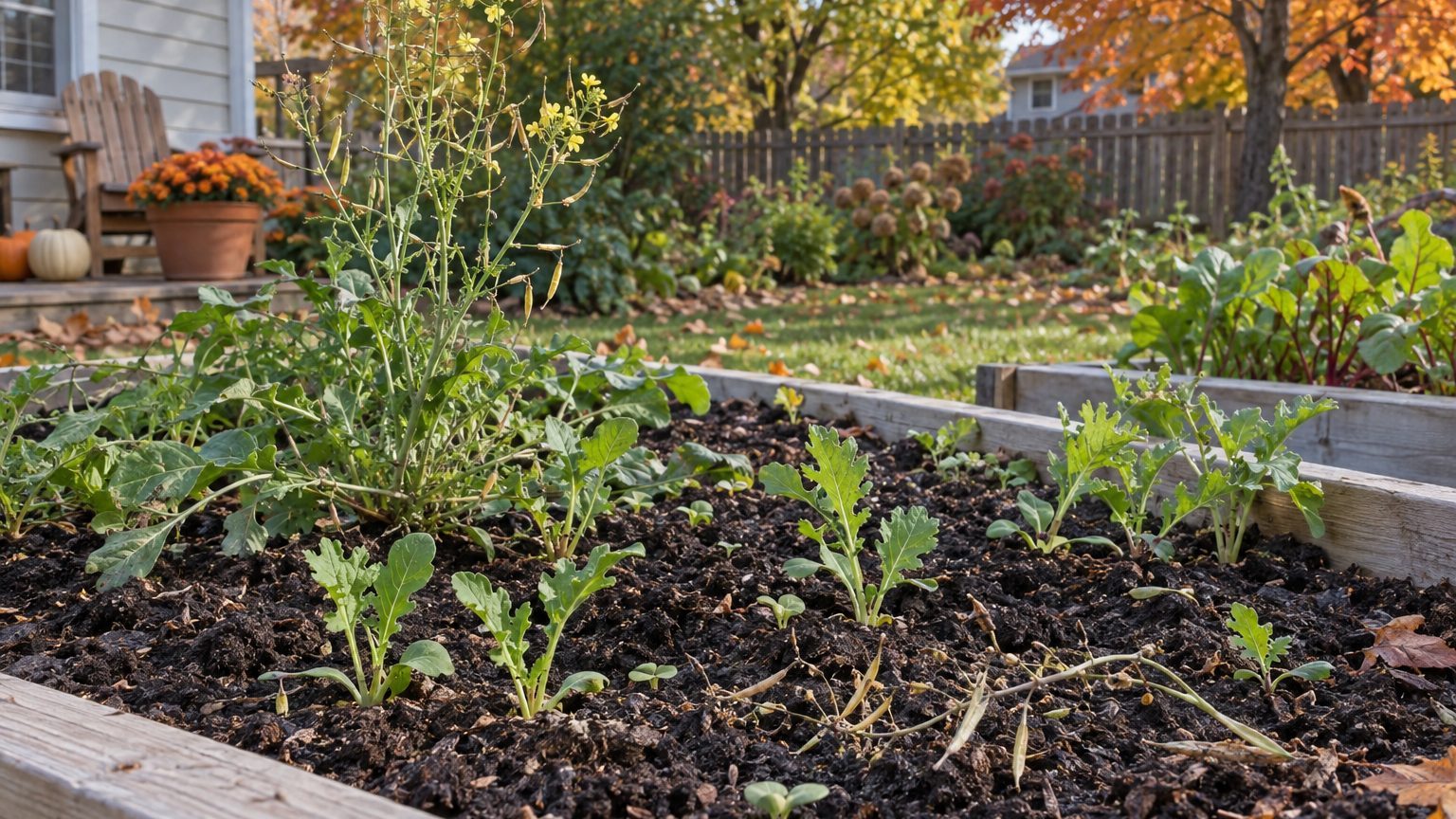

Yes, several winter salad crops reseed themselves, including arugula, Asian mustard greens, mâche, claytonia and some leaf lettuce. Let one plant flower in spring and its seed drops into the bed, then sprouts when conditions suit it, often the following fall. That is a free crop for some gardeners and a weeding job for others. Among the winter salads that grow when lettuce will not, these ask the least of you.
What is actually going on
Two traits do all the work: prolific seeding and easy germination. A salad plant that is allowed to flower puts its energy into seed, and a single plant can drop hundreds of them. The seed falls where the stalk leans, where wind carries it, or where a boot or a hoe scatters it. Wherever it lands, it sprouts once moisture and soil temperature are right. Nobody has to sow anything.
Why does salad seed come up on its own?
Cool-season greens bolt when days lengthen and the weather warms. A flower stalk shoots up, the leaves turn coarse and bitter, and small flowers open along the stalk. In the mustard family (arugula and the Asian mustards), the flowers give way to slim pods that dry over several weeks. Dry pods split and the seed spills.
Then the seed waits. Many cool-season seeds sprout poorly in hot soil, and lettuce is the best-known example. So the seed lies through summer and germinates when fall rain and cooler soil arrive. That is the same moment a winter crop needs to start, which is why volunteers so often show up on schedule without any help.
The flip side is volume. A bed that reseeds for three or four years builds a reserve of seed in the soil. Each year more seedlings come up than the bed can hold, and they carpet paths, pots and neighboring beds. Convenient or a nuisance depends entirely on how much room you have and how much thinning you will do.
Will the seedlings match the parent plant?
Not always. Seed from a hybrid parent varies, and the volunteers can look different from what you planted. Types within the same species can also cross-pollinate through visiting insects, so two kinds of Asian mustard growing side by side may blend over a few seasons. Open-pollinated types come closest to repeating themselves. Your state’s cooperative extension service can tell you which varieties have been trialled where you live, and it is worth asking before you decide which plant to let go to seed.
Cold changes more than germination. It also changes how the leaves taste, which is covered in Why These Salads Taste Different in Winter.
In the garden
Not every winter salad reseeds with the same enthusiasm. Some drop seed freely and sprout in drifts. Others come back only now and then. The table shows how each type behaves, how to use it deliberately, and what happens when it gets away from you.
Which winter salads reseed, and what goes wrong with each?
| Type | How it reseeds | Using it on purpose | When it goes wrong |
|---|---|---|---|
| Arugula | Bolts quickly in warm weather and sheds seed heavily | Leave a few plants in a corner of the bed to supply fall seedlings | Seedlings spread into paths and other beds, and old plants turn harshly hot-tasting |
| Asian mustard greens (mizuna and similar types) | Tall flower stalks and many pods | Let one plant mature while you cut the rest | Dense mats of seedlings, and mixed offspring where several kinds grow close together |
| Mâche (corn salad) | Small plants set fine seed in late spring | Stop cutting a patch in spring and leave it undisturbed through summer | Tiny seedlings crowd into a mat of undersized rosettes if never thinned |
| Claytonia | Self-sows freely, especially in cool, shaded, moist soil | Keep it in a shady bed that suits it | Colonizes the whole bed and shades out slower neighbors |
| Leaf lettuce | Bolts in heat, drops seed, and sprouts only after the soil cools | Allow one or two plants to flower at the bed’s edge | Patchy, unreliable volunteers, and offspring that differ from a hybrid parent |
| Garden cress | Runs to seed within weeks of warm weather | Sow a small patch and let part of it flower | Seeds before you have cut much, then leaves a bed full of seedlings to pull |
Salad here means plants grown in beds and containers. Seed and seedlings that come from your own plants are one thing. Gathering greens from ditches, streams or roadsides is another, and it carries real risks, so none of these crops should be harvested from the wild.
How do you use self-seeding on purpose?
Pick the best plant, not the first one to bolt. Leave it standing at the edge of a bed where it will not shade the rest. Let the pods or seed heads turn dry and tan, then shake them over bare soil or cut the stalk and tip it out where you want the crop. Mark the spot with a stake. Seed lying in bare soil is easy to hoe away by accident.
How do you stop it when you have had enough?
Cut the flower stalks while the flowers are still open, before pods swell and fill. Once pods are green and fat, the seed is close to viable and can finish drying on a pile. Pull whole plants rather than snipping them at the base. Seedlings are easiest to remove while they are small, and a hoe or a quick hand-pull handles a bed in minutes. A layer of mulch over bare soil in late summer blocks most seed from reaching the ground.
What it depends on where you are
The habit is the same everywhere. A salad plant flowers, drops seed and sprouts again. Where and when it does that is local, and local conditions can change the outcome completely.
Season length comes first. In a short growing season a plant may bolt late, or set seed too close to winter for the seedlings to establish. In a long season it may flower early, drop seed in midsummer and see seedlings come up long before the weather suits them.
Summer heat and summer rain come next. Where summers are hot and dry, seed lies dormant on the surface until fall moisture arrives, which suits winter salad well. Where summers are hot and wet, seed can sprout in summer and the seedlings die in the heat, leaving the bed bare by the time cool weather returns. Mild winters let volunteers keep growing on their own. Hard winters often call for a cover, and Winter Salads Under a Cover shows how that works for seedlings you do not want to lose.
The same salad can be a weed in one county and a reliable crop in the next. Look at the state pages in this series for your state’s timing, then check your own local cooperative extension office for the varieties trialled near you and the weeks that suit your own summers. Extension staff know how soil, rainfall and last-frost patterns behave in your county, and they can tell you whether to expect volunteers in September or in November.
The mistake that costs the most
Pulling the plants too soon is the one that costs the most. A salad plant that has bolted looks finished. The leaves are bitter, the stalk is tall and the bed looks untidy, so out it comes. The seed pods are still green, and a pulled plant leaves nothing to drop in the soil. No seed, no volunteers, and an empty bed in fall.
Seed needs time to mature on the plant. In the mustard family that means pods that go from green to tan and dry, and seed that rattles when you shake them. Other types differ slightly, but the rule is the same: wait until the seed heads have dried before you clear them. This usually takes several weeks after flowering, and weather speeds or slows it.
If you cannot bear the look, choose one plant and leave it. Pull the rest while the flowers are still open. One healthy plant can supply a whole bed, and it is easier to manage than a dozen scruffy ones. When its seed is dry, cut the stalk and tip it over the bare soil you want planted, or set the stalk upside down in a paper bag to catch the seed.
Mark the spot, then keep the hoe away from it through early fall. Sprouts can appear within days of the first cool rain. A little patience in midsummer pays off in September, when a bed of seedlings is up without any sowing.
Common questions
Will self-seeded winter salad come back every year?
Usually, as long as at least one plant sets seed each year and the bed is not tilled or mulched too deeply before the seed sprouts. Some years the weather works against it. A wet summer can rot seed, and a heat wave can scorch young seedlings. Keeping a few seed packets on hand covers a failed year.
Is it better to let plants reseed or to sow fresh seed?
Fresh seed gives you control over variety, spacing and timing. Reseeding costs nothing and saves work, but the plants may vary and the seedlings come up wherever the seed fell. Many gardeners do both, sowing a main crop and tolerating volunteers as a bonus.
Can I save seed from volunteers and sow it elsewhere?
Yes. Collect dry seed heads in a paper bag, shake out the seed and store it somewhere cool and dry. The offspring may not match a hybrid parent, and crossing between related types is possible. Your state extension service can suggest which varieties do well locally if you want predictable results.
Does reseeding work in containers?
It can. A pot left to go to seed in spring will often sprout again in fall if the potting mix stays undisturbed and the container is not refilled. Containers dry out and heat up faster than beds, so seed in a pot is often better moved into partial shade over the summer.