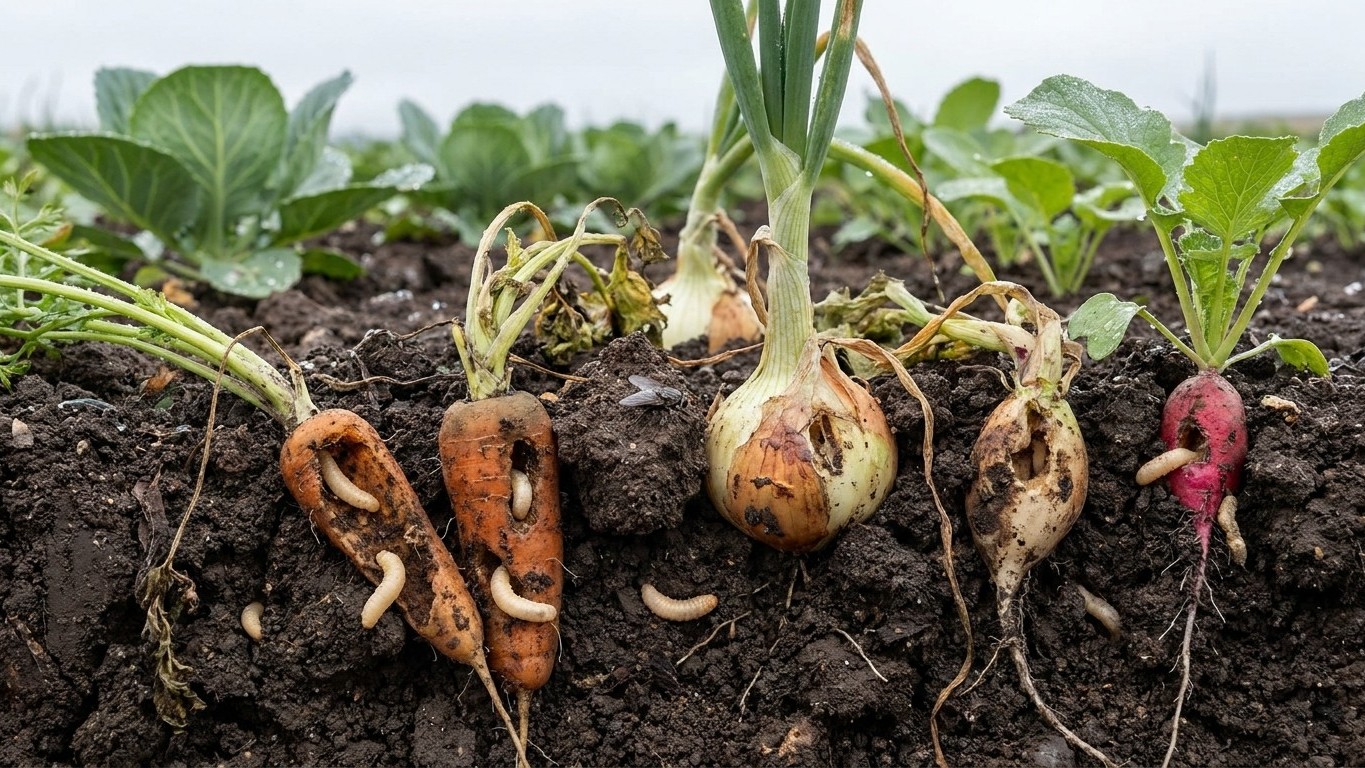

For most Georgia gardens, the best unusual roots are the ones that use the long warm season: sunchokes, purple-fleshed sweet potatoes, and ginger or turmeric grown in a pot. Cool-season oddities such as salsify, celeriac, and daikon do better sown for fall than in spring. The figures here come from Atlanta, and the state runs from mountain zone 6a to coastal 9b, so treat them as a starting point.
The short answer for Georgia
The frost numbers explain the split. NOAA’s 1991-2020 Climate Normals for the Atlanta station put the last spring 32°F freeze between March 11 and March 29, and the first fall freeze between November 13 and December 1. Both ranges are the 30-70% probability band of a 32°F freeze. They are odds, not promises, and a late cold snap can still land outside them. Pair the late end of spring with the early end of fall and you get about 229 days between freezes. Pair the early end with the late end and it’s about 265. That’s a long runway by national standards, and it’s why slow, heat-tolerant roots make sense here.
Winter is mild at the reference station too. The mean daily minimum of the coldest month is 35.6°F. That’s an average, so individual nights still dip below freezing, but it means hardy roots can sit in the ground through much of a Georgia winter instead of needing a dig-and-store routine.
Warm-season roots: the surest bets
Sweet potatoes lead the list because the state’s growing conditions suit them, and unusual types (purple-fleshed ones such as ‘Stokes Purple’) are as easy as the orange kind. Jerusalem artichokes are hardy far below zone 6a, so they overwinter statewide, and they spread aggressively. Give them a bed you can sacrifice. Ginger and turmeric are tender and slow, so start them early in spring in containers and harvest after fall cools the foliage. Yacon needs the whole season and rewards you only if frost holds off, which in much of Georgia it does into November.
Cool-season roots: plant for fall and winter
Salsify, scorzonera, celeriac, parsnips, daikon, and rutabaga prefer cool soil. Sow them from late summer into fall and let them mature in the cooler months, rather than fighting a Georgia summer. Timing details are in When to Plant Unusual Roots in Georgia.
| Type | Examples | Best season in Georgia | Main risk |
|---|---|---|---|
| Heat-lovers | Purple sweet potatoes, yacon | Spring planting, fall harvest | Early fall freeze in the north |
| Hardy perennials | Jerusalem artichoke | Late winter to spring planting | Spreads past its bed |
| Tender spices | Ginger, turmeric | Early spring in pots | Cold nights, soggy soil |
| Cool-season | Salsify, celeriac, daikon, parsnip | Late summer to fall sowing | Summer heat at germination |
For a broader look at the whole group, see Growing Unusual Root Crops in Georgia.
What will not work here
Spring sowing of the slow, cool-loving roots is the classic Georgia failure. Parsnips, salsify, and celeriac sown in March are asked to size up just as the heat arrives. Germination of parsnips is already slow and fussy, and warm soil makes it worse. Any root that needs a long cool stretch to fatten will bolt, stall, or turn woody once summer settles in. With frost ending between March 11 and March 29, spring feels like a generous window, but for these crops it’s a trap.
Georgia’s humidity is the second problem. This page does not carry rainfall or summer humidity figures, so treat this as general horticulture rather than a local measurement. Humid subtropical summers favor fungal and bacterial rot, especially where soil stays wet. Close spacing, the habit of packing roots into tight rows, traps moisture around the foliage and crowns. Space generously, raise beds where clay holds water, and avoid heavy mulch pushed up against crowns. Ginger and turmeric are the most exposed: they hate soggy soil, and a pot with poor drainage in a rainy stretch will rot them before they size up.
The mild winter cuts both ways. A coldest-month minimum of 35.6°F on average sounds gentle, but it misleads people into leaving tender roots in the ground. Yacon, ginger, and turmeric are killed by a freeze, and a single hard night in the cold half of the state can take them. Meanwhile, the same warmth lets hardy roots such as Jerusalem artichokes persist and return from every missed tuber. If you plant them and later decide they were a mistake, you’ll be digging for years.
Finally, Atlanta’s own numbers can fool you. The reference station sits at an urban airport, a heat island. North Georgia and the mountains freeze several weeks earlier in fall, so a gardener there who plants a full-season yacon on Atlanta’s calendar may lose the crop to frost before it bulks up. The coastal plain, by contrast, runs milder, which helps ginger and turmeric but makes cool-season roots harder to finish before warm weather returns.
What changes across Georgia
Georgia has no single zone. The USDA Plant Hardiness Zone Map (2023 edition, built on 1991-2020 normals) spreads the state from 6a to 9b. That system rests on one variable, the average annual extreme minimum temperature. Because it measures only the coldest night, it tells you whether a perennial root survives winter, not how long your season is or how hot your summer runs. A grower in zone 6a and one in zone 9b are working with different crops.
In the mountains and the northern tier, shift everything earlier at the back end. The first fall freeze arrives several weeks before the Atlanta window of November 13 to December 1, so favor roots that finish quickly or that tolerate a light frost. Plant sweet potato slips and tender spices as soon as cold nights are truly behind you, and treat yacon as a gamble. Cool-season roots, meanwhile, do well at elevation because summers are gentler, and a spring sowing has a better chance than it does farther south.
Toward the coast and the southern plain, the logic reverses. Warmth is abundant, so ginger, turmeric, and sweet potatoes thrive, and hardy roots overwinter easily. The squeeze comes on cool-season crops, which need a later sowing and an earlier finish so they don’t mature into spring warmth. Winter becomes your main season for daikon, celeriac, and salsify.
Which zone applies to your address? Look it up on the USDA map by ZIP code rather than guessing from the state average. This page can’t tell you, and a county line can separate two very different zones.
Where to check this for your own county
A county recommendation beats a state one, and this page is the state one. Georgia is large enough that a single set of dates averages together very different gardens. University of Georgia Extension runs county offices staffed by agents who know local soils, rainfall patterns, and the pests that show up in your area.
Start by looking for two things. The first is a local vegetable planting calendar for your county or nearest region, which will give sowing and transplanting windows tuned to your own frost pattern. This page does not have county-level vegetable calendars in its verified facts, so it will not guess at them. The second is any list of varieties trialled or recommended in your area. Variety performance in Georgia depends heavily on heat tolerance and disease resistance, and a cultivar that shines in the Piedmont may sulk on the coastal plain.
While you’re there, ask about soil testing through your county office. Roots are unforgiving of compaction and wrong pH, and Georgia’s red clay is a common limit on long, straight roots such as parsnips and salsify. A local agent can tell you whether to loosen, raise, or amend before you invest a season.
The NOAA data behind the frost dates here is public if you want to see the source: the 1991-2020 Climate Normals for the Atlanta station. It is one station, which is exactly why local advice matters.
Checking this against your own garden
Your own observation outranks every date above. Three things are worth watching, and none needs an instrument.
- Soil warmth by feel. Push your hand a few inches into the bed in the morning. If it still feels distinctly cool, hold off on sweet potato slips and ginger. A bed that warms early is a sunny, well-drained one, and it can start tender crops ahead of the calendar.
- First true leaves. Sow a small test row of something quick, like daikon, and note how long the first true leaves (the ones after the seed leaves) take to appear. Slow, stalled seedlings mean the soil or air is off for that crop. A fast start means your microclimate is running ahead.
- Frost on the ground. On the first cold mornings of fall, see where white frost lingers and where it doesn’t. Low spots collect cold air and will freeze before the Atlanta window of November 13 to December 1. Those spots are poor for yacon and tender spices, and fine for hardy roots.
Keep notes for a season. Two or three dated entries will tell you more about your yard than a state average ever can, and they make the extension calendar easier to adjust.
Common questions
What is the easiest unusual root for a first-timer in Georgia?
Sweet potatoes, including purple-fleshed types, are the most forgiving. They like the heat, need little attention once established, and fit Georgia’s long season between freezes.
Will Jerusalem artichokes survive a Georgia winter?
Yes, across the whole 6a to 9b range. They are hardy well below zone 6a. The bigger concern is that they spread, so plant them where wandering is acceptable.
Can I grow ginger and turmeric in Georgia?
Yes, with care. Start them early in spring in containers with good drainage, keep them out of soggy soil, and bring pots in or harvest before freezing nights arrive.
Should I plant unusual roots in spring or fall?
It depends on the type. Heat-lovers go in after the last spring freeze risk passes, while salsify, celeriac, daikon, and parsnips usually do better sown for fall and winter harvest.