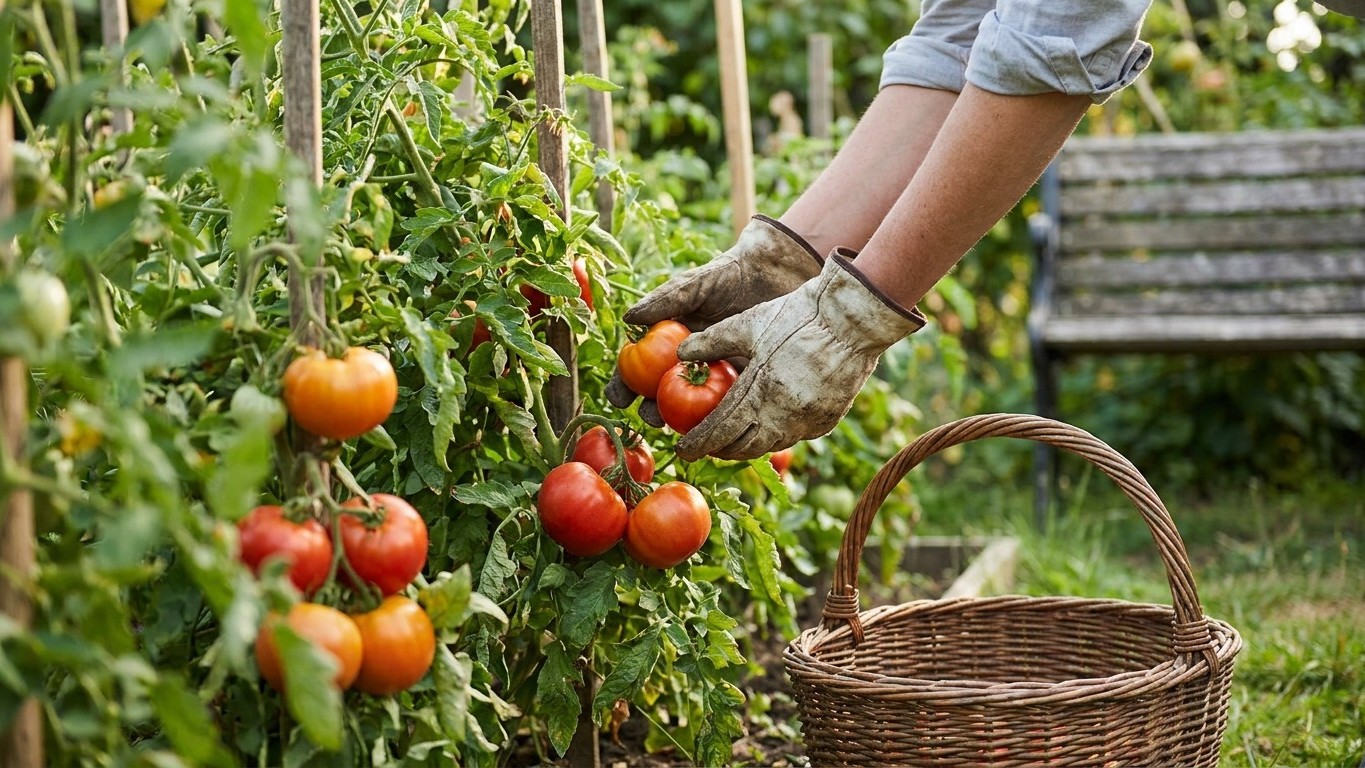

The best time to pick a tomato is when its skin has colored fully and the fruit yields just slightly to a gentle squeeze, never rock hard and never mushy. Waiting for perfect vine-ripeness on every fruit costs you more tomatoes than it saves, since splitting, sunscald and pests all get worse the longer a ripe fruit hangs on the plant. Check each truss daily once the first fruit on it starts to turn color, and pick that one before you check the rest.
Why this matters
Picking at the right moment is the difference between a tomato that tastes like something and one that tastes like watery cardboard. A tomato that stays on the vine past its peak keeps drawing water from the plant, and that water dilutes the sugars and acids that built up while it was ripening. Wait too long and the skin around the shoulders can split from rain or a sudden watering, which opens the fruit to rot and to insects overnight.
Picking too early carries its own cost. A tomato pulled while still hard and pale green never develops the full flavor it would have gotten from a few more days on the plant, because most of a tomato’s sugar and color development happens attached to the vine, fed by the plant’s own photosynthesis. The plant itself also benefits from prompt picking: every ripe fruit left in place is one the plant keeps feeding instead of putting that energy into the fruit still developing behind it.
When to do it
Forget the calendar and watch the fruit itself. The first sign is color break, the moment a green tomato starts showing a blush of pink, yellow, or orange at the blossom end, depending on the variety. From that point the fruit is committed to ripening whether it stays on the plant or not, which is the whole reason ripening indoors works at all.
Once color break starts, check that truss every day or two. A tomato that has gone from blush to about three-quarters colored is close enough that a light squeeze test tells you the rest. Firm with a little give at the shoulders and around the stem means ripe. Rock hard means wait. Squishy or leaking at the blossom end means you waited a day too long already.
Late in the season, watch the weather forecast as closely as the fruit. Once a frost warning is likely, it’s worth picking everything showing any hint of color break, along with a selection of the largest full-green fruit, rather than gambling on a few more days of ripening on the vine. Green tomatoes that never reached color break before a hard freeze generally won’t ripen well even indoors, since the process depends on internal chemistry that starts at the vine.
How to do it

Picking from the vine
Use two fingers and a thumb, or garden snips if the stem is tough. Hold the fruit in your palm and bend it gently upward and back toward the main stem until the stem snaps at the natural joint just above the fruit, called the calyx knuckle. If it doesn’t come away easily, don’t force it and risk tearing the vine. Snip instead, leaving a short length of stem attached to the tomato itself, about the width of a fingernail. That little stub keeps the scar at the blossom end sealed and slows moisture loss during storage.
Pick with dry hands into a shallow box or basket rather than a deep bucket. Tomatoes bruise under their own weight when stacked more than two or three deep, and a bruise you can’t see today turns into a soft spot in two days. Handle each fruit once: set it down where it’s going to sit, rather than moving it from container to container.
Ripening the rest indoors
Green tomatoes that show any color break, plus solid full-size green fruit pulled ahead of frost, both ripen indoors reasonably well. Lay them in a single layer on newspaper or a shallow tray, stem scar facing up, with space between fruit so they aren’t touching. Some growers wrap each tomato individually in newspaper, which slows moisture loss and contains any fruit that starts to rot before it spreads to its neighbors.
Keep them at normal indoor room temperature, out of direct sunlight. A sunny windowsill looks like the obvious spot but it isn’t: direct sun heats the fruit unevenly and can cause soft spots without actually speeding up ripening, since color development is driven by the fruit’s internal ethylene, not by light. Check the tray every couple of days and pull out anything ripe, along with anything showing rot, before it spreads.
- Fruit showing color break: ripens fastest, often within a week or two
- Solid green, full-size fruit: ripens more slowly and less reliably
- Small or immature green fruit: rarely worth saving, best used green in relish or fried
Once a batch ripens, decide fast whether you’re eating it, cooking it, or holding it a few days, since ripe tomatoes do not belong in the refrigerator if you want to keep their texture and flavor. The full method for keeping ripe fruit at its best, and why cold storage wrecks it, is covered in Storing Tomatoes: Why the Fridge Ruins Them, and What to Do Instead.
What goes wrong

The most common mistake is leaving fruit on the vine too long out of a sense that vine-ripe always beats indoor-ripened. Past full color, a tomato gains almost nothing in flavor and loses ground fast to splitting, birds, and stink bugs. If you’re finding soft, sunken patches on fruit that looked fine two days ago, that’s the sign you’ve been leaving them out there past their point.
The mistake that looks like extra care but isn’t is checking on ripening green tomatoes constantly by handling them. Every squeeze test bruises the flesh slightly, and a tomato covered in thumbprint bruises rots from the inside before it ever finishes coloring. Look instead of touch, and only pick up a fruit you actually intend to move.
Another failure is storing green tomatoes in a sealed bag or airtight container to “help them along.” Tomatoes need some airflow while ripening. Trapped moisture in a closed bag encourages mold long before the fruit colors up, and one moldy tomato in a sealed bag can take out the whole batch overnight.
Finally, don’t wash tomatoes before storing them for ripening. Water on the skin, especially around the stem scar, is an invitation for rot to start exactly where the fruit is most vulnerable. Wash them right before you eat or cook them, not before they go on the tray.
Doing it differently
How you grow the plant changes some of the practical details here, even if the ripeness signs on the fruit itself don’t change. Container-grown tomatoes tend to ripen a touch faster than the same variety in a raised bed or in-ground, since containers heat up more during the day, so check them a little more often once fruit starts coloring.
Greenhouse-grown tomatoes ripen on a longer window since they aren’t racing an outdoor frost, which means you can afford to leave borderline fruit on the vine an extra day or two to judge ripeness more by feel than by urgency. That patience doesn’t apply outdoors once cold weather is a real risk.
Determinate varieties, the compact types that set most of their fruit in a short window, tend to ripen in flushes, so you’ll often be picking a large batch at once rather than a few tomatoes a day. Indeterminate varieties keep producing and ripening steadily until frost, which spreads the harvest out but also means more frequent checking through the season. Either way, how heavily the plant was pruned earlier in the season affects how much fruit ripens at once and how exposed it is to sun scald, which is one more reason the choices made in Pruning Tomato Plants: Which Shoots to Remove and Which to Leave Alone show up at harvest time.
If you’re planning to save seed from any of this year’s fruit, pick those specific tomatoes at full vine-ripeness rather than pulling them early to finish indoors, since seed viability and germination rates are better from fruit that ripened fully attached to the plant. The fermenting and drying process is covered in Saving Tomato Seeds: Fermenting, Drying and Which Varieties Come True, and it’s worth flagging those fruit before you start picking so they don’t end up in the kitchen basket by mistake.
Whatever the method, harvesting is only the last step in a season of decisions that started back at How to Grow Tomatoes, and the payoff for getting the timing right here is a tomato that actually tastes like the reason you grew it.
Common questions
Can I eat green tomatoes that never turned color?
Yes, fully green unripe tomatoes are edible and are the whole point of fried green tomatoes and green tomato relish. They just won’t taste like a ripe tomato, since the sugars that develop with ripening never had the chance to form.
Why did my tomatoes crack right after I picked them?
Cracking usually happens before picking, from a heavy watering or rain after a dry spell, and just shows up more once the fruit softens further indoors. It’s not caused by the harvest itself, but a cracked tomato won’t keep as long, so use it first.
Do tomatoes ripen faster on a sunny windowsill?
No, tomatoes ripen from internal ethylene and warmth, not light exposure, so a sunny windowsill doesn’t speed things up and can cause uneven soft spots from the heat. A normal room out of direct sun works as well or better.
How do I know if a tomato is overripe versus just ripe?
An overripe tomato feels soft all over rather than just yielding slightly at the shoulders, and it may show wrinkling near the stem or a slightly fermented smell. Use those right away in sauce or soup rather than eating them fresh, since the texture has already broken down.