
Choose by flesh type and by how wet your spot is, not by a calendar date. Orange-fleshed types suit most Hawaii gardens. Purple-fleshed Okinawan types reward patient growers with well-drained soil. White-fleshed types work if you want a drier, milder root. No freeze reaches the places people garden here, so season length never rules a variety out. Rain, elevation and wind exposure do.
The short answer for Hawaii
Start with the climate numbers, because they explain the short list. At the NOAA reference station in Honolulu, the 1991-2020 normals show zero days a year at or below 32°F. Frost reaches only the high volcanic summits of Mauna Kea, Mauna Loa and Haleakala, never the lowland and mid-elevation ground where gardens sit. A slow sweet potato will not be caught by an early cold snap, so you can choose on taste and growing conditions instead.
Heat is a small factor as well. The same station averages 18.7 days a year at 90°F or more. That is enough to dry a shallow bed in a hurry, but not enough to stress the vines the way a mainland Deep South summer does. Rain is the bigger variable. Honolulu’s normals add up to 16.4 inches a year, with about 1.9 inches across June, July and August (June 0.5, July 0.52, August 0.84). Windward slopes get far more. The right variety depends on where your garden sits on that range.
Which sweet potato type should you grow in Hawaii?
Sorting by type is more useful than chasing cultivar names, which vary by seller and island. Three types cover most choices:
| Type | Texture and taste | Best fit in Hawaii |
|---|---|---|
| Orange-fleshed | Moist, sweet, soft when baked | General home gardens, including drier leeward lowlands with irrigation |
| Purple-fleshed (Okinawan type) | Dense, dry, mildly sweet | Well-drained soil and growers happy to wait for a full-size root |
| White or cream-fleshed | Firm, drier, less sweet | Cooks who want a starchy root for steaming, frying or mashing |
Beginners should lean orange. Orange types are widely sold as slips and are forgiving about soil. Hawaii also has a long history with the crop. ʻUala, as sweet potato is called in Hawaiian, came with the first Polynesian voyagers, so the plant is at home here.
How long do sweet potatoes take to mature in Hawaii?
Counted from transplanting slips, most types need several months. In the lowlands, with no frost deadline, the length of that window matters little. At higher elevations, where nights run cooler, growth slows and the wait stretches. If you are deciding when to start, see When to Plant Sweet Potatoes in Hawaii.
What will not work here
A frost-based calendar fails first. Mainland advice says to plant two weeks after the last spring frost and harvest before the first fall one. In the lowlands of Hawaii neither date exists, so that advice leaves a gardener waiting for a signal that never comes. Growing here follows rainfall, elevation and which side of the mountain you live on.
Weekly watering fails on the dry leeward side. Honolulu’s June normal is 0.5 inches, and the whole summer brings about 1.9 inches. Add 18.7 days a year at 90°F or more, and a bed watered once a week dries between visits. Soil changes the math. Sandy ground drains within the day, so even a wet month can leave sweet potatoes thirsty, while heavy clay can hold water for a week. Rain that comes as one hard downpour mostly runs off. These are normals for one reference station, so a rain gauge on your own plot tells you what your garden actually gets.
Close spacing fails on the wet windward side. Sweet potato vines sprawl and form a dense mat of leaves. In constant humidity that mat stays damp, and foliage disease and root rot follow. Give vines more room where it rains most, and plant on ridges or mounds so water drains away from the roots.
Poorly drained ground fails in any rainfall zone. Roots sitting in saturated clay split, rot or turn out misshapen. Purple-fleshed types in particular want loose, well-drained soil.
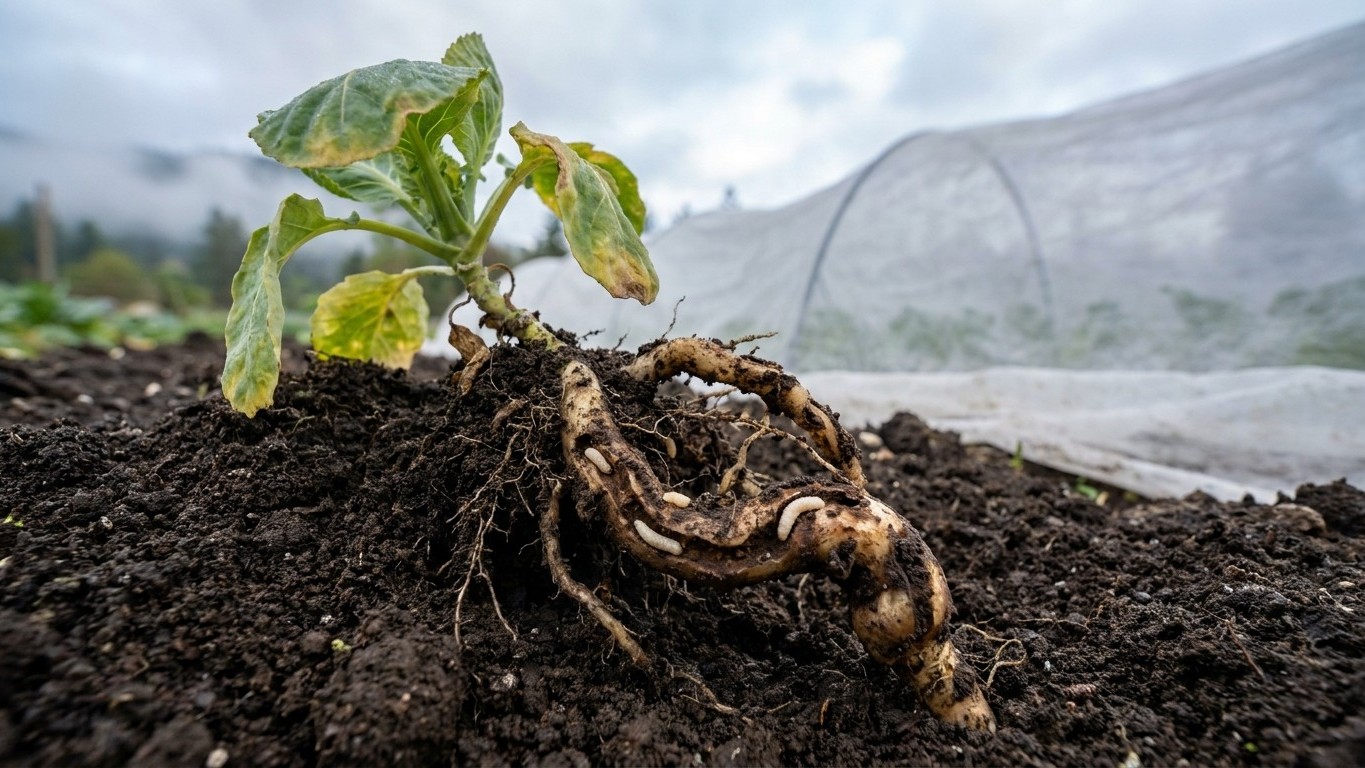
Pests fail some plantings too. Sweetpotato weevil is a known problem in warm climates, and the grubs tunnel through roots and leave them bitter and inedible. Buy clean slips from a reputable source, and rotate the bed instead of replanting sweet potatoes in the same spot every season. Slips cut from grocery-store roots can carry disease or pests along with them. Store roots are sometimes treated with sprout inhibitors as well.
What changes across Hawaii
Hawaii is not one garden. The USDA Plant Hardiness Zone Map (2023 edition, built on 1991-2020 normals) runs from 9a to 13a across the state. That is a very wide spread, and it means there is no single answer for the state. The zones rest on one variable, the average annual extreme minimum temperature. The mapped spread reflects the cold summit ground at the top end of the range and the warm coastal lowlands at the bottom. Honolulu works as the reference city for the numbers above, but other parts of the state differ from it.
Elevation is the biggest shift. Every few hundred feet up, nights cool and sweet potatoes grow more slowly. Plant sooner than you think you should and expect a longer wait. Choose compact or earlier-maturing types if you can find them. Higher ground also tends to bring more cloud and mist, which affects both drying time and foliage disease.
Exposure is the second shift. Trade winds push moist air up windward slopes, so the east and north sides of the islands get far more rain than leeward coasts. A windward gardener fights rot and needs raised beds. A leeward gardener fights drought and needs mulch and a reliable drip line. Neither is wrong, but the two gardens call for different spacing, bed shape and watering habits.
Do not take a zone from a neighbor or from a seed catalog. Look up your own location on the USDA Plant Hardiness Zone Map by ZIP code, and use that result to see how your ground compares to Honolulu’s. Then use your own rainfall and elevation to adjust.
For the broader growing picture, see Growing Sweet Potatoes in Hawaii.
Where to check this for your own county
The College of Tropical Agriculture and Human Resources runs the state’s extension network. Start with University of Hawaii CTAHR Extension and find the office that serves your county. Hawaii County, Maui County, Honolulu County and Kauai County each have different rainfall patterns, soils and elevations, and the extension advice reflects that.
Look for three things when you get there:
- A local planting calendar for your island or district, which will be built on rainfall and elevation instead of frost.
- Sweet potato varieties trialled in your county, with notes on yield, disease and pest resistance.
- Guidance on soil, drainage and weevil control for your area.
A county recommendation beats a state one, every time. A statewide rule of thumb has to cover everything from a dry Kona-side lot to a rainy Hilo yard, and it will be wrong for some of them. An agent who has watched local trials can tell you which type held up in your soil.
Call or email if the website does not list a sweet potato variety. Extension staff often know what local growers have had success with, and they can tell you where to find clean planting stock.
Checking this against your own garden
Your own ground outranks every number above. Three things are worth watching.
The first is soil warmth by feel. Push your hand a few inches into the bed in the morning. Soil that feels cool and damp even after a sunny day points to shade, cold air drainage or heavy ground, and your plants will grow slowly there. Soil that feels warm and loose points to a spot where the vines will take off.
The second is how slips behave after planting. Healthy slips put out new leaves soon after planting. If they stall, wilt or yellow, either the bed is too dry, too wet or too cool, or the slips were poor. Replace a few and compare. That tells you whether the problem is your microclimate or your stock.
The third is how long the soil stays wet after rain. Dig a finger-deep hole a day after a good soaking. Mud means slow drainage, so mound the bed and widen spacing. Dry dust means fast drainage, so mulch and plan on frequent watering. A cheap rain gauge on the plot adds the number.
Near harvest time, dig one hill to check root size. If the roots are still small, give the vines a few more weeks. Sweet potatoes keep sizing up as long as the weather stays mild, and the lowlands rarely hand you a cutoff date.
Common questions
What is the easiest sweet potato for a beginner in Hawaii?
An orange-fleshed type is the easiest place to start. Slips are easy to find, the roots are moist and sweet, and the plants tolerate a range of soils.
Can you grow sweet potatoes all year in Hawaii?
In the lowlands, no frost stops the vines at any time of year, so timing follows rainfall instead. At higher elevations cooler nights slow growth and lengthen the wait to harvest.
How far apart should sweet potato slips be planted?
A common spacing is about 12 inches apart in rows roughly 3 feet apart. Add room on wet windward ground so the vine mat dries between rains.
Should I plant slips from grocery-store sweet potatoes?
Clean slips from a reputable source are the safer choice. Store roots can carry disease or pests such as sweetpotato weevil, and some are treated to stop sprouting.