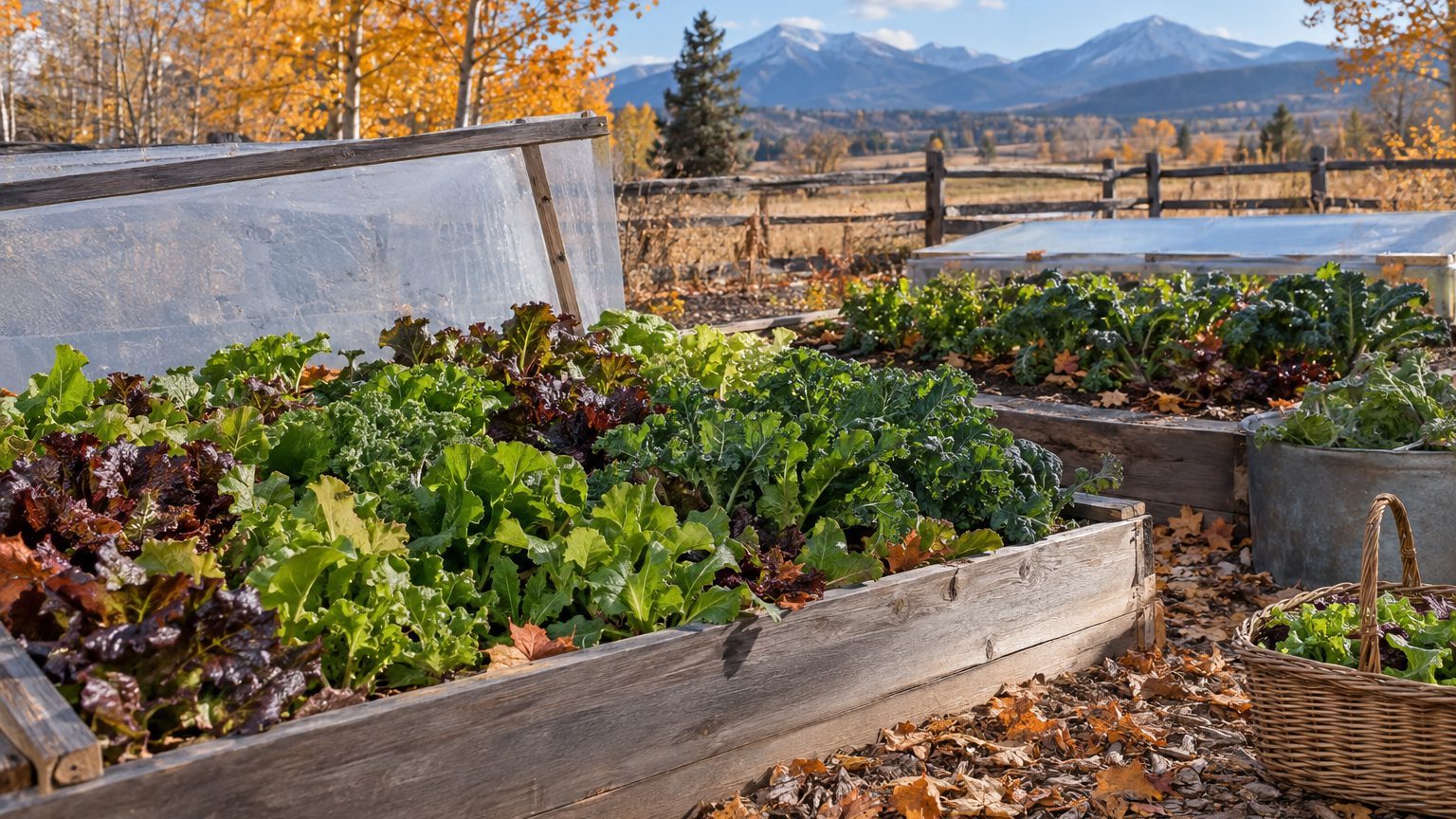

Hawaii’s winter is the easy part of growing salad, because no freeze reaches the places people garden. The trouble is warmth and rain, which push lettuce to bolt and rot the lower leaves. Choose your bed by exposure and elevation before you choose a date. Then sow one small block of quick loose-leaf greens where they get afternoon shade, and see how they do before committing the whole bed.
When the soil is warm enough in Hawaii

On the mainland, the date question is answered by the last spring frost. Here there is no such date. NOAA’s 1991-2020 climate normals for the Honolulu station (USW00022521) record zero days per year at or below 32 F, and NCEI could not even compute the freeze percentiles at 32 F or 36 F. There is no frost season in lowland Hawaii. Frost turns up only on the high summits of Mauna Kea, Mauna Loa and Haleakala, and nobody is sowing arugula up there.
A frost date is only ever a probability, and it is also a proxy. Winter salads wait for soil that has warmed enough to sprout seed, and on the mainland that happens some weeks after the frost risk ends. In Hawaii the proxy flips. The soil never chills, so the question is whether it has become too warm for cool-season greens to germinate and grow tender.
NOAA’s Honolulu normals put the mean daily minimum of the coldest month at 66.8 F. That is a mean of the nightly lows, not a record low, and it means the coldest nights of the year are still mild. Other parts of the state differ. Upcountry Maui, the Kula slopes, Waimea and the Volcano area sit higher and run cooler, and a garden at 3,000 feet has a very different feel from one on the Honolulu plain.
Sow by comfort, not by calendar. Salad seed germinates and grows best in the coolest weeks your site offers. In practice that means the cooler months of the year, and within any month it means the cooler hours of the day. Sow in the evening, keep the seedbed shaded and moist, and water the ground before you sow so the soil is cool to the touch.
Some growers chill lettuce seed in the refrigerator for a short spell before sowing, which helps it sprout in warm ground. Others sow in a flat under shade and move seedlings out once they have a couple of true leaves. If you are new to the crop as a whole, Winter Salads: What Grows When Lettuce Will Not covers the basics.
Every bed is a garden bed or a container. You grow the crop and you cut it. The state’s extension service is the place to ask what has been trialled on your island and at your elevation.
How long the season lasts here
The usual sum is easy. Take the first fall frost, subtract the last spring frost, and the days between are your growing window. Both frost dates in the NOAA NCEI normals for Honolulu come back as “no freeze,” so there is nothing to subtract. In the lowlands the window is not closed by cold at either end. Something else ends it, and that something is heat.
What a window like this allows is repeated sowing. Where a freeze closes the season, as it does in Texas and Oklahoma, the first sowing may be the only one that reaches useful size, and a gardener has to weigh whether a transplant’s root check is worth the lost days. Here you can afford to be relaxed about it. A batch that fails in a warm spell costs you a few weeks, not a season.
Stagger small batches
Instead of one big sowing, put in small batches at intervals and cut each one young. Lettuce and mustards that sit in the ground waiting for a big harvest tend to bolt or turn bitter in warm weather, so the freshly sown row behind them is the insurance. Our succession sowing guide goes into spacing and timing in detail. The principle here is simple. Sow a little, often, and pull the row that starts to run up to seed.
Transplanting versus direct sowing also tips the other way. Because the season is not short, you have no need to start seed indoors just to gain days. You start seedlings in a cool, shaded spot for another reason: to protect them from a hot afternoon or a heavy downpour while they are tiny. Loose-leaf lettuce and most Asian greens tolerate transplanting well when moved young. Roots on arugula are more sensitive, so it is usually better sown where it will grow.
Elevation stretches the window
Elevation is the other lever. The USDA Plant Hardiness Zone Map (2023 edition) spans zones 9a to 13a across the state, a range built on the average annual extreme minimum. It is a territory-wide range, and the wide spread tells you that the coolest ground and the warmest ground are not the same gardening world. A cooler upcountry site holds cool-season greens in good condition for longer. A hot leeward lowland site has a narrower comfortable stretch, and you manage it with shade and quick turnover.
Check the local conditions at your own site before you plan more than a few weeks ahead. Note when the afternoon sun turns harsh, when the trade winds are steady and when your area gets its heaviest rain. That log is worth more than any calendar.
Heat and water in Hawaii

The cold barely applies here. NOAA’s Honolulu normals put the coldest month’s mean daily minimum at 66.8 F, so no salad crop needs a row cover, cold frame or low tunnel to stay edible through winter. What decides your success is warmth, rain and wind.
NOAA’s climate normals for the station nearest you, and the extension service, will have them. Rainfall in particular swings a great deal over short distances, from dry leeward coasts to wet windward slopes.
What the heat does
Heat is the first limit. Lettuce, spinach-type greens and many mustards respond to warm days and warm nights by bolting, sending up a flower stalk and turning bitter. You cannot prevent it in hot weather. You can slow it and outpace it.
- Shade cloth over the bed during the hottest hours, or a bed on the east side of a wall or tree.
- Mulch to keep roots cooler and hold moisture.
- Water in the morning so leaves dry before evening.
- Harvest early in the day, when leaves are crisp.
- Cut young and often instead of waiting for full size.
What the rain does
Water is the second limit. Windward sides catch heavy, frequent rain, and salad greens sitting in wet soil under humid air are open to fungal leaf spots, downy mildew and rot at the base. Drainage matters more than fertilizer. Grow in raised beds, mound rows in heavy soil, or use containers with generous drainage holes. A container under an eave or a lanai roof keeps the worst downpours off tender leaves. Leave space between plants so air moves through, because dense, wet foliage stays wet.
Slugs and snails also enjoy wet, mild conditions. Hand picking in the evening, shallow traps and keeping mulch back from the crowns are practices that work without a product. On leeward sides where rain is scarce, the risk turns around. There you water more often, and a drip line or soaker hose beats overhead watering because it keeps foliage dry and cuts down on disease.
Which winter salads suit Hawaii
Choose by type, and choose the type that copes with warm nights, rain and humidity. The right variety for a windward Hilo garden differs from the right one for a dry Kona slope. The extension service linked above is where to ask.
Here are the types worth trying first, and what to weigh for each.
Loose-leaf lettuce

Loose-leaf lettuce is cut leaf by leaf or as a young bunch, so it never has to sit through warm weeks waiting for a head to form. It is the best starting point. Look for seed sold as heat tolerant or slow to bolt, and ask the extension service which have done well on your island.
Arugula

Arugula grows fast and can be cut young, which suits a climate where waiting invites trouble. It turns sharp and bitter quickly in heat, so sow small and often.
Mizuna and other Asian mustards

Mizuna, tatsoi, bok choy and mustard greens usually manage moist, mild weather better than head lettuce and are cut young for salad. In wet spots, disease resistance and good airflow matter more than any other trait on the seed packet.
Kale and chard

Kale and chard handle warmth and give you tender baby leaves for salad, then keep producing as larger leaves. They are the reliable backup when lettuce sulks.
Reason from your site. On a windward bed, put drainage and disease resistance first. On a hot leeward one, put shade at the root and slow bolting first. At higher elevation you can push toward the more classic lettuces. Start with a small trial of two or three types and keep notes on which one holds up longest.
Common questions
Can I use a mainland planting calendar for winter salads in Hawaii?
No. Mainland calendars count back from a frost date, and lowland Hawaii has none. Use them only for the general order of sowing, then adjust for your elevation, rainfall and how hot your bed gets.
Why does my lettuce shoot up and taste bitter?
That is bolting, and warmth is the usual trigger. Move sowings to the coolest weeks, add afternoon shade, water regularly and cut the plants young. A row that has begun to bolt will not come back, so pull it and lean on your next batch.
Can I grow salad greens in pots on a lanai?
Yes, and it is one of the better approaches for wet or hot sites. Pots let you move plants out of the worst sun or rain, and drainage is easy to control. Use a light potting mix and check moisture more often than you would in the ground, since containers dry out faster.
Does my USDA hardiness zone tell me which salads to plant?
Not much. The USDA hardiness zone is built on one variable, the average annual extreme minimum, and Hawaii’s range of 9a to 13a says little about heat or rain. Those decide salad crops here far more than winter cold, so let your local conditions guide the choice.