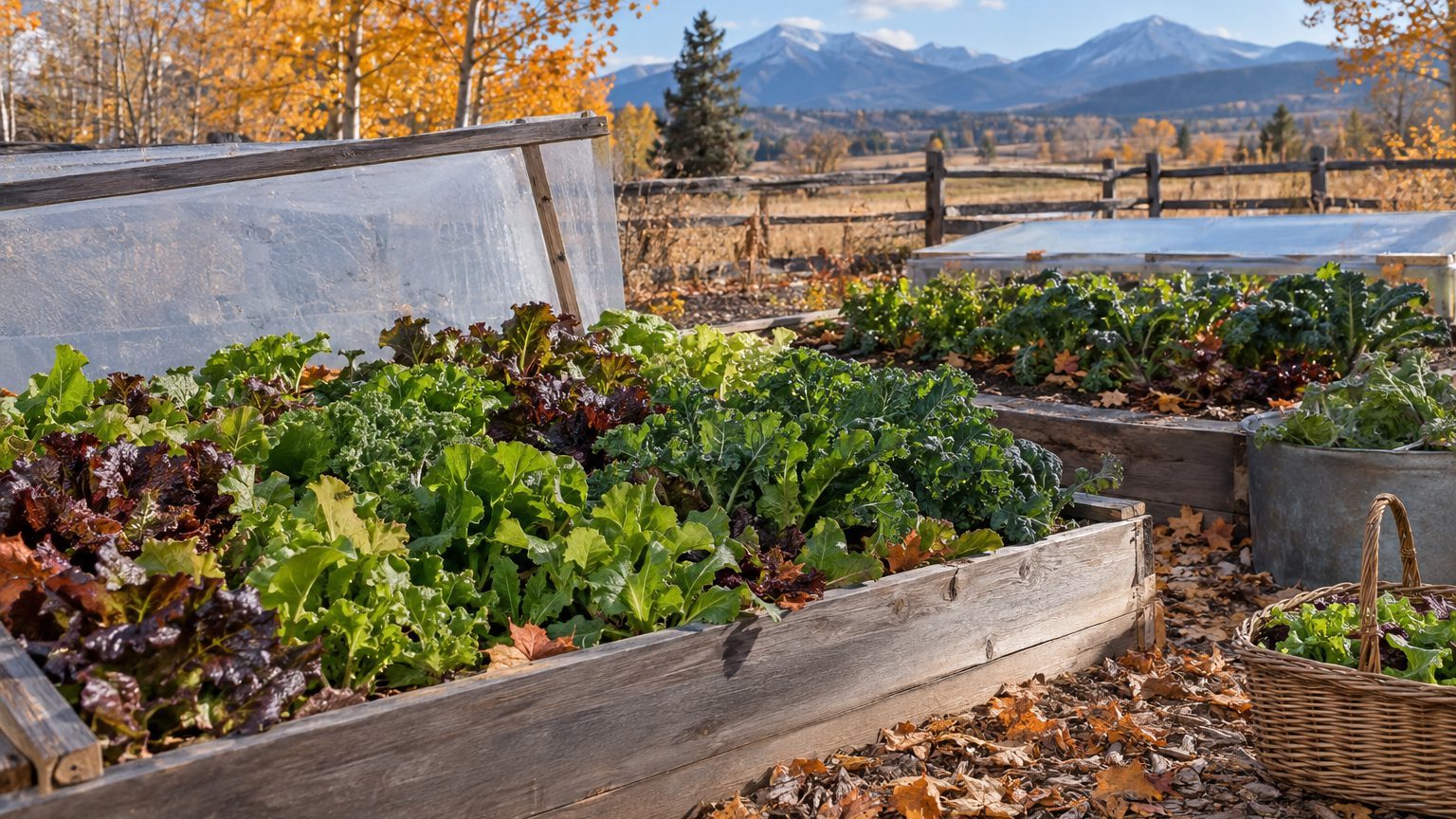

Oklahoma is a good state for winter salads, mostly because its winters are cold enough to stop warm-season crops but rarely hold hardy greens down for long. The calendar to work from is simple. At the Oklahoma City reference station the last spring freeze clears between March 28 and April 10, and the first fall freeze arrives between October 29 and November 8.
When the soil is warm enough in Oklahoma
Start with the date everyone asks about. For the Oklahoma City airport station, NOAA’s 1991-2020 U.S. Climate Normals put the last spring frost between March 28 and April 10, the stretch where the odds of a 32 F freeze sit in the 30 to 70 percent band. That is a probability, not a promise. A freeze after the band is entirely possible, so the date is a planning anchor and nothing more.
It is also a reference-city figure. Suburban and rural gardens typically see the last spring frost one to two weeks later than an airport station, and more at elevation. If you garden outside the metro area, your own date may fall into mid-to-late April. Check your county before you pencil anything in.
Why the frost date is only a proxy
Frost measures the air. Winter salad crops, once you are sowing or transplanting them, care about the soil, and soil warms after the frost risk ends, not alongside it. A bed can be frost-free for a week and still be sluggish at planting depth, especially if it is shaded or heavy clay.
A cheap soil thermometer settles the argument. Push it in at seed depth in the morning, when the reading is at its lowest, and compare it with the germination range printed on the seed packet. Different salad crops want different readings, so this page gives you no single magic number. The packet does, and so does the state extension service.
Fall is when most Oklahoma winter salads actually start
For harvest through the cold months, the clock runs the other way. You count back from the first fall frost, October 29 to November 8 at the same reference station, and the same one-to-two-week caution applies in the opposite direction: rural gardens often get that first freeze earlier. The soil problem in fall is not coolness but leftover summer heat. Seed sown into hot, dry ground can sit there or come up patchy, so shade the bed and keep the surface evenly moist until seedlings are through.
Everything on this page is for beds and containers you control. Salad greens here are sown, tended and cut at home, never gathered from ditches, creek banks or pastures.
How long the season lasts here
Put the two frost bands together and the growing window comes out like this. If the last spring freeze lands on the late end (April 10) and the first fall freeze on the early end (October 29), that is 202 days. If they land on the generous ends (March 28 and November 8), it is 225 days. Both figures come from the Oklahoma City reference station.
Trim those numbers for a rural garden. One to two weeks off each end can cost you two to four weeks in total, which still leaves a long season by national standards. Oklahoma sits at the generous end of what the cocon covers, and a window this long changes the plan more than any single variety choice.
A long window allows a second sowing. Instead of putting every seed in the ground on one weekend and then facing a glut followed by bare soil, you can stagger two or three sowings a couple of weeks apart. Salad crops that bolt or sulk in a warm spell can be replaced by the next round already coming along. The succession sowing guide on this site walks through the spacing of those rounds and how to choose the interval.
It also eases the transplant question. In a short-season state, a transplant is often the only way to get a crop to size before the light fails, and gardeners accept the root disturbance that comes with it. With 200-plus days available, direct sowing becomes the default for most leafy types, and transplants are a convenience rather than a rescue. Crops that dislike root disturbance, which includes many of the leafy roots-and-greens crowd, are simply better sown in place.
Gardeners who want to see how a different state’s calendar changes the plan can compare Winter Salads for North Carolina Gardens and Winter Salads for Georgia Gardens. The frost bands differ, and so does what a second sowing can realistically deliver.
Heat and water in Oklahoma
This page would normally lean on two numbers here, the count of days above 90 F and the summer rainfall at the reference station. Neither is among the verified figures behind this article, so neither appears. Inventing a day count would only dress a guess as data. What can be said honestly is that Oklahoma summers are hot, and that the heat matters mainly at one moment: late summer, when fall seed goes into warm ground and has to come up.
After that, the cold decides. The mean daily minimum of the coldest month at Oklahoma City is 27.0 F (NOAA’s 1991-2020 normals). That is an average, so plenty of nights run colder. The USDA Plant Hardiness Zone Map 2023 lists the state at 6a to 8a, and since that system rests on the average annual extreme minimum, the range shows how much the state varies. Use the city figure for planning and expect the Panhandle and the southeast to differ.
Against a 27.0 F average night, salad crops sort themselves into groups:
| Type of crop | Against Oklahoma winter lows | What it needs |
|---|---|---|
| Hardy leafy greens (spinach, mâche, kale-type greens) | Usually stand uncovered | Mulch at the root, steady moisture |
| Mustard greens, arugula, loose-leaf lettuce | Fine most nights, stressed in hard snaps | Row cover pulled over on cold forecasts |
| Tender head lettuce, delicate baby leaf | Stay edible only with protection | Cold frame or low tunnel |
| Warm-season salad plants (basil, cucumbers) | Cannot manage at all | Finish before first frost, or move indoors |
The first frost sets the other limit, how late a sowing can still reach useful size. With first-freeze odds beginning at October 29, a sowing that goes in only a few weeks before that date gets short, dim days to grow in, and growth slows to a crawl as winter deepens. Plants that are small going into December stay small. Sow early enough that they are already established before the light fails, then treat winter as a holding period for cutting.
Water needs change with the season. Late-summer sowings need frequent, light watering to keep the seed zone from crusting. Once plants are established and temperatures drop, the demand falls, but sunny, windy winter days can still dry a raised bed or container faster than you would think. Check the soil with a finger rather than assuming recent weather did the work.
Which winter salads suit Oklahoma
Choose by type, and let the territory’s facts do the reasoning. The long window (202 to 225 days at the reference station) means you do not need to hunt for the very earliest-maturing types. The hot late summer favors crops that tolerate warm germination conditions, plus a bed with some afternoon shade and mulch to cool the root zone. Spacing matters too. Plants given room for air to move dry off faster after rain or dew, which cuts down on leaf disease.
Humidity varies across the state, so disease resistance belongs high on the list, especially in the wetter east. A type that holds up in a damp spell will beat one that merely grew fast on paper. For the cold itself, pair your picks with the table above: hardy leafy greens for the uncovered beds, and mustards, arugula and loose-leaf lettuce for beds you are willing to cover. Keep tender heads for a cold frame.
This page names no cultivars, and that is deliberate. The only recommendation that means anything is a variety trialled where you garden, and this article does not have those trials. A name lifted from a catalog or another state could fail in your soil and cost you a season. Oklahoma State University Extension publishes the locally tested lists, and the county office can tell you which varieties perform in your area.
For the bigger picture on what grows when lettuce will not, see Winter Salads: What Grows When Lettuce Will Not.
Common questions
When should I start winter salads in Oklahoma?
Count back from the first fall frost, which falls between October 29 and November 8 at the Oklahoma City reference station. Rural gardens often freeze one to two weeks earlier. Sow early enough that plants are established before the days get short.
Do I need row cover?
For the hardiest greens, often not. The average coldest-month night is 27.0 F at the reference station, and many nights run colder. Mustards, arugula and loose-leaf lettuce are safer with cover on cold forecasts, and tender heads need a frame or tunnel.
Is the Oklahoma City frost date my frost date?
Probably not exactly. The figures come from an airport station, and suburban and rural gardens typically see the last spring frost later and the first fall frost earlier, often by one to two weeks. Check your county’s data and watch your own thermometer.
Can I grow winter salads in containers?
Yes. Containers are handy because you can move them against a wall or under cover during a hard freeze. The caveat is that pots dry out and chill faster than a bed, so they need closer watering checks and insulation around the sides.