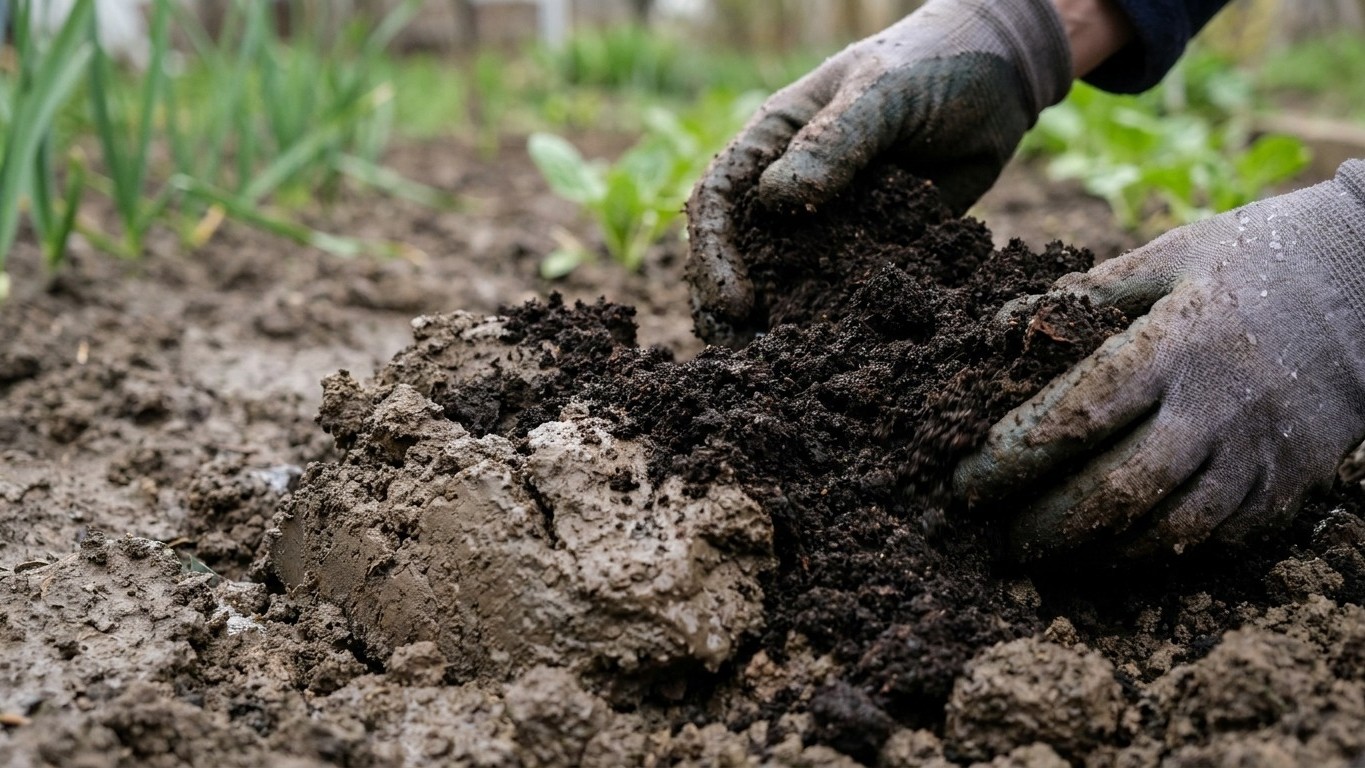

Illinois beets face a soil that holds water like a sponge and a spring that can swing from soggy to bone-dry within a few weeks. Sow two to three weeks before the last frost, keep that ground consistently moist through the first six weeks, and match your amendments to whichever soil you actually have, because the Drummer series that represents the state is heavy clay, not the sandy loam beets prefer.
The short answer
Illinois’ official state soil is the Drummer series, a Mollisol, the deep, dark prairie soil that built the Corn Belt. Its surface horizon runs about 8 percent sand, 31 percent clay and 61 percent silt, with organic matter around 5.5 percent and a surface pH near 6.7. It is also classified poorly drained. That combination is worth sitting with for a second: a clay-heavy, silt-heavy soil that struggles to shed water is close to the opposite of what a beet root wants to grow through, which is why understanding Beet Soil in Illinois matters before you plant.
Utah State University Extension is blunt about the requirement: beets want deep, sandy, well-drained soil rich in organic matter, and the fix is modest, no more than 1 inch of composted organic matter worked into every 100 square feet. On a soil like Drummer, that inch of compost is doing real work, loosening the clay’s grip so a taproot can push straight down instead of forking around a compacted layer or sitting in a puddle after rain.
The heat side of the equation matters just as much, and it’s worth being precise about it. Utah State’s data ties woodiness in the root to heat above 85 F combined with water stress, a specific and testable mechanism, not a vague warning about “hot summers.” An exact count of how many days a year the reference city spends above 90 F isn’t published in the sources behind this page, so it won’t be guessed at here. What can be said is that once temperatures climb into that range and the soil around the root dries out at the same time, the root toughens and turns fibrous, and no amount of watering after the fact reverses it.
None of this should be read as a diagnosis of any one backyard. Illinois spans hundreds of mapped soil series, and Drummer, for all its official status, describes a statewide tendency toward heavy, poorly drained ground, not a measurement of the bed behind a specific house. A river-bottom garden, a hillside plot, or any yard where a builder scraped and refilled the topsoil can behave nothing like this profile. Treat the Drummer numbers as a reason to test your own soil, not a substitute for doing it.
The six weeks that decide it here
Knowing exactly When to Sow Beets in Illinois means sowing two to three weeks ahead of the last frost, so the first six weeks of that root’s life will land inside a fairly well-defined stretch of the Illinois calendar. NOAA’s 1991-2020 climate normals put the last spring freeze at the reference station between April 11 and April 22, so a beet seeded in late March or early April is pushing its first true leaves through soil that is, statistically, still inside the frost window in a meaningful share of years.
That timing matters because Illinois spring weather doesn’t settle into one steady pattern. It swings. A cold, wet stretch that keeps the clay-heavy ground saturated and slow to warm can be followed within days by a dry, windy run that pulls moisture out of the top few inches fast, especially once the soil surface starts to crust the way clay-rich ground does when it dries. For a beet seedling, that swing is the whole ballgame. Utah State’s research links water stress in exactly this early window, the first six weeks, to premature flowering, meaning the plant bolts and sends up a seed stalk instead of building a root worth harvesting.
Bolting and woodiness get lumped together in casual garden talk, but they come from different failures at different times and deserve to be kept separate. Bolting is an early-season problem, triggered by dry stress while the plant is still small and deciding whether to invest in a root or in survival. Woodiness is a mid-to-late-season problem, driven by heat above 85 F layered on top of water stress once the root is already forming. A gardener who waters faithfully in July but let the seed bed dry out in April has solved the wrong half of the problem.
Because the last frost date itself carries real local variation, none of this should be treated as fixed for every address in the state. NOAA’s figures come from an airport weather station, and suburban and rural gardens typically see their own last frost land one to two weeks later than that reading, sometimes more where elevation is higher. Anyone planning a sowing date around April 11 to April 22 should treat it as a starting estimate for the reference city, not a guarantee for their particular row.
What goes wrong here
- Clay soil crusts over before germination. Drummer-type ground, high in silt and clay, can seal into a hard crust after a rain-then-dry cycle, trapping seedlings underneath. Rake in the 1-inch layer of compost Utah State recommends before sowing, and keep the top inch of soil from drying into a hard cap by watering lightly and often until seedlings emerge.
- Poor drainage rots the taproot. A “poorly drained” classification means water can sit around the root zone longer than a beet tolerates, especially in a wet spring. Raised beds or ridged rows lift the root zone above standing water and let excess moisture drain away from the taproot.
- A dry snap in the first six weeks triggers bolting. When an Illinois spring swings from wet to dry, the seedling stage is the most vulnerable point. Water consistently and check soil moisture by hand rather than by calendar during those first six weeks after sowing.
- Summer heat above 85 F plus dry soil turns the root woody. This is a separate failure from bolting, arriving later, once the root is already sizing up. Mulch to hold soil moisture and water deeply during hot stretches so the root never dries out while temperatures are high.
- Unamended clay produces forked or stubby roots. Heavy, unbroken clay resists a straight-growing taproot the way compacted gravel resists a shovel. Work compost in deeply, not just at the surface, so the loosened zone extends past where the root will grow.
Checking this against your own county
Everything above describes the state’s representative soil and one reference city’s frost dates, and both are starting points rather than answers for a specific yard. The most useful next step is a soil test through University of Illinois Extension, which can tell you your actual texture, drainage and organic matter rather than the statewide average. Extension staff can also confirm a realistic last-frost estimate for your county, since the NOAA figures used here come from a single airport station and local frost timing can run later in outlying areas. Reach the service directly at University of Illinois Extension to find your county office and get numbers specific to your address rather than to the state as a whole.
Common questions
How many days do beets need from sowing to harvest in Illinois?
Beets are sown directly in the garden, not transplanted, and the days-to-maturity count, generally 60 to 80 days depending on variety, runs from the seeding date, not from any later transplant date. Because beets don’t transplant well, that seed-to-harvest clock starts the moment you put seed in the ground.
Should I amend Drummer-type clay soil before planting beets?
Yes, if your garden resembles the state’s heavy clay soil. Utah State University Extension recommends working in no more than 1 inch of composted organic matter per 100 square feet, which loosens clay enough for a taproot to grow straight without over-loosening the bed or burying it in nutrients it doesn’t need.
Are bolting and woody roots the same problem?
No. Bolting happens early, within the first six weeks after sowing, and is linked to water stress while the plant is still small. Woodiness happens later, once temperatures pass 85 F while the soil is also dry, and affects the texture of an already-forming root. Fixing one doesn’t automatically prevent the other.
Can I trust the April 11 to April 22 last-frost window for my whole county?
Treat it as a reference point tied to one weather station’s 1991-2020 climate normals, not a county-wide guarantee. Rural and suburban gardens typically see their last frost land one to two weeks later than an airport reading, so checking with your local University of Illinois Extension office is worth the phone call before you sow.