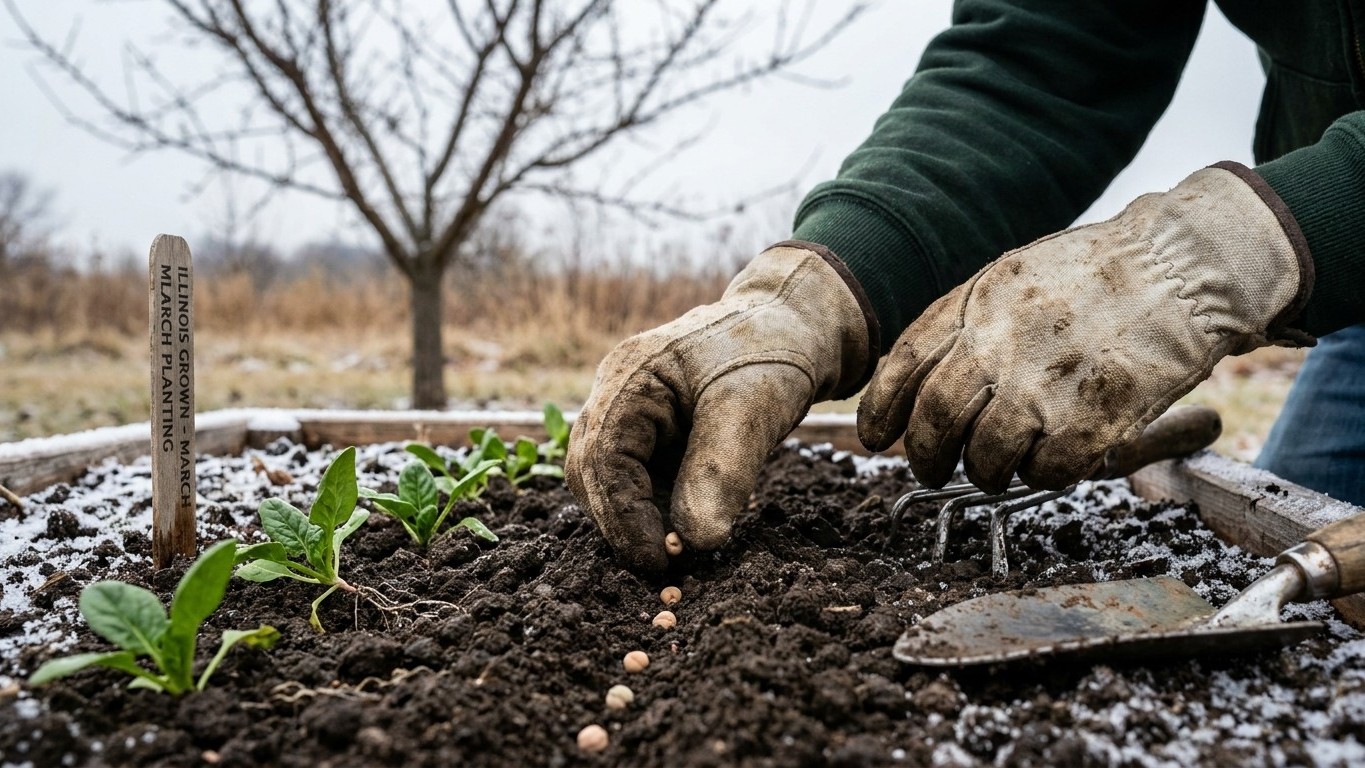

March in Illinois means cold, workable soil in the south and often still-frozen ground in the north. Peas, spinach, onion sets, and radishes can go into open ground where the soil has thawed and drains freely, garlic and shallots planted last fall keep growing untouched, and bare-root fruit trees and asparagus crowns go in while they’re still dormant. Tomatoes and peppers stay indoors under lights, counted back from the April frost window rather than the calendar page.
What goes in the ground in March

Soil temperature, not the date on the wall, decides what survives outdoors this month. Peas will germinate in soil as cold as 40 F, spinach and lettuce close behind them, but a bean or squash seed dropped into that same cold ground just rots before it sprouts. Illinois’ last spring frost falls between April 11 and April 22 at the reference station used for this page (Chicago O’Hare, per NOAA NCEI 1991-2020 climate normals), which puts March squarely three to six weeks ahead of that window. That’s early spring territory, not frost-safe territory, and the crops that belong in the ground now are the ones bred to shrug off a hard freeze.
The state’s spread across USDA hardiness zones 5a to 7b matters here more than almost anywhere else in this series. Southern Illinois, closer to zone 7, often has workable, unfrozen soil by early March. Central counties usually catch up by mid to late month. Northern Illinois, especially near Lake Michigan where the lake effect keeps the ground cold and wet longer, can still have frozen or saturated soil into the final week of March, and pushing a spade into that ground does more harm than good.
| Region | USDA Zone | Typical March soil | Reasonably safe direct-sow |
|---|---|---|---|
| Northern IL | 5a-5b | Often still frozen or waterlogged | Peas, spinach late in the month if soil has dried |
| Central IL | 6a-6b | Workable by mid to late month | Peas, spinach, onion sets, radishes |
| Southern IL | 6b-7b | Workable early to mid month | Peas, spinach, lettuce, onion sets, radishes, potatoes late in the month |
Garlic and shallots need no new planting now; they were tucked in last fall and are simply pushing green shoots as the soil warms. Where the ground is still too wet or frozen to work, a cold frame or a low tunnel over garden fabric buys two to three weeks of head start on lettuce and spinach without any risk. Bare-root roses, fruit trees, raspberry canes, and asparagus crowns can also go in this month, as long as they’re still dormant and the planting hole isn’t sitting in standing water. Skip anything warm-season. Tomatoes, peppers, beans, and squash seed dropped into ground this cold simply sit and rot.
What to start under cover
Indoor seed-starting this month runs on subtraction, not addition. Take the April 11 to April 22 frost window for the reference station, subtract the weeks a given crop needs before it’s ready to transplant, and that’s the week to start the seed tray. Peppers need 8 to 10 weeks of indoor growth before they’re transplant-ready, which for many Illinois gardens means seed should already be started by early March, if not sooner. Tomatoes need 6 to 8 weeks, so a March start still lines up with an April or early May transplant date once the soil has warmed. Broccoli and cabbage run on the same 6 to 8 week clock and tolerate a slightly earlier move outdoors, since they can handle a light frost that would kill a pepper seedling outright.
| Crop | Weeks needed indoors before transplant | March status |
|---|---|---|
| Peppers | 8-10 | Should already be started; start now if behind |
| Tomatoes | 6-8 | Start now for a mid-spring transplant |
| Broccoli, cabbage | 6-8 | Start now; can transplant slightly before last frost |
The two ways this goes wrong both come from ignoring that arithmetic. Start too early, working off a fixed date instead of the actual frost window, and the seedlings outgrow their pots weeks before it’s safe to move them outside, turning leggy and rootbound on a windowsill. Start too late, and a northern Illinois gardener whose safe transplant date might not arrive until well into May runs out of growing season before a pepper plant even sets fruit. Counting backward from the local frost window, not the seed packet’s generic date, is what keeps a tray of seedlings on schedule.
What is ready to pick
Little comes out of open Illinois ground in March, and that’s worth saying plainly rather than dodging. What keeps a household fed this month comes mostly from what was tucked away last fall or tucked under cover this winter. Kale and leeks that overwintered under a heavy mulch or a blanket of snow are often still standing and edible once the ground softens enough to dig them, and their flavor after a hard freeze tends to be sweeter, not worse. A cold frame planted with spinach or mache back in fall or in a cold winter month can already be producing pickable leaves by March, especially in the southern half of the state.
Indoors, sprouts and microgreens fill the gap on a countertop in a matter of days rather than weeks, and rhubarb crowns brought in from the garden and forced in a dark, warm spot will push tender stalks well ahead of anything outdoors. This is also the month to go through the root cellar or pantry shelf and check stored squash, potatoes, and onions by hand. A soft spot on a squash, a sprouting eye pushing out of a potato, or a papery onion gone spongy at the neck all mean that piece needs to be used or composted now, before it takes the rest of the bin with it.
The jobs that matter this month
March carries more real deadlines than its quiet reputation suggests, and skipping them costs the whole season rather than just the month. Dormant pruning of apple, pear, and peach trees, along with raspberry and blackberry canes, needs to happen before buds break and sap starts moving; cut after that point and the tree wastes energy healing wounds instead of setting fruit. This is also the last real window to order seed before popular varieties sell out, a problem that hits every spring as garden centers and mail-order catalogs run through their stock of the most requested tomato and pepper varieties first.
Soil testing and amending belong here too, while beds are still empty and there’s no risk of disturbing anything growing. A basic soil test through a local extension office lab tells a gardener whether lime, compost, or a specific nutrient is actually needed, rather than guessing and over-applying. Compost piles built up over the fall and winter should get turned now to keep them breaking down evenly instead of going anaerobic in a cold, packed heap. Tools that sat idle all winter, pruners, shovels, hoes, need a real cleaning and a sharpening pass before the pace of the season picks up; a dull blade tears plant tissue instead of cutting it cleanly, which opens the door to disease.
Raised beds, fence lines, and trellis structures that took a beating from winter weather should get repaired now, before they’re loaded with plants and soil. And that pantry check from the previous section deserves a second pass here as a task in its own right: going through stored crops for rot isn’t just about salvaging dinner, it’s about keeping one bad potato from spreading mold through an entire bin before the next harvest even starts.
What not to do in March
The classic March mistake in Illinois is trusting the air instead of the soil. A run of 60-degree days can feel like spring has arrived, but the ground eight inches down is often still cold and slow to drain, especially in northern counties. Planting tomato or pepper starts, or direct-sowing beans and squash, into that cold soil because the afternoon felt warm almost always ends the same way: seeds rot before they sprout, and transplants sit stalled and yellowing until the ground finally catches up weeks later.
The second common error is uncovering cold frames, pulling back winter mulch, or removing row cover too early after a mild stretch. The frost window at the reference station runs all the way to April 22, and a week of warm weather in early or mid March is no guarantee against a hard freeze afterward. Plants hardened off too soon under that false sense of security can lose weeks of growth, or die outright, when the cold returns.
Nitrogen timing trips people up too. Feeding a heavy dose of nitrogen fertilizer to dormant fruit trees or overwintered greens this early can push soft, tender new growth right before a freeze, which then gets damaged or killed. It’s also easy for nitrogen applied to wet March soil to leach away before plants can use it at all. The better move is a light soil amendment based on an actual test result, saved for when growth is already underway, rather than a heavy feed applied on faith.
Checking this against your own county
A state-wide March forecast is a starting point, not an instruction, and Illinois is wide enough that it has to be treated that way. The gap between USDA zones 5a and 7b across the state, the lake effect that keeps the Chicago area cooler and wetter into spring, and elevation differences in the western counties can all shift these windows by two weeks or more in either direction. A gardener in Cairo and a gardener near Rockford are working from genuinely different calendars even though they share a state line.
The most reliable way to close that gap is a call or visit to the University of Illinois Extension, which tracks local frost data, soil conditions, and planting calendars down to the county level.
Common questions
Can I plant tomatoes outdoors in Illinois in March?
No. Tomatoes are a warm-season crop and the state’s last spring frost falls between April 11 and April 22 at the reference station used for this page. Tomato seedlings started indoors in March should stay under lights until after that frost window has safely passed in your specific county.
Is it too early to start seeds indoors in March?
For peppers, it may already be late; they need 8 to 10 weeks before transplanting. Tomatoes, broccoli, and cabbage, which need 6 to 8 weeks, are right on schedule for a March start ahead of the April frost window.
What vegetables can handle a frost in Illinois?
Peas, spinach, lettuce, kale, and onion sets tolerate a light frost and are the safest direct-sown crops once the soil in your area is workable, even though the region’s last frost isn’t expected until mid to late April.
Why is my Illinois garden soil still frozen in March?
Northern Illinois, closer to USDA zone 5a, and areas near Lake Michigan warm more slowly than southern counties near zone 7b. Air temperature can feel like spring while soil eight inches down is still cold and slow to drain, which is why checking soil condition matters more than checking the thermometer.