
Yes, sweet corn ripens across nearly all of Illinois in a normal year. The math works in the gardener’s favor here: the frost-free season stretches close to 195 days, and sweet corn only needs 60 to 90 days once the soil is warm enough to sprout the seed. The catch isn’t whether the season is long enough. It’s timing the planting so the crop actually gets that full window instead of losing three or four weeks to cold soil at the start.
The short answer
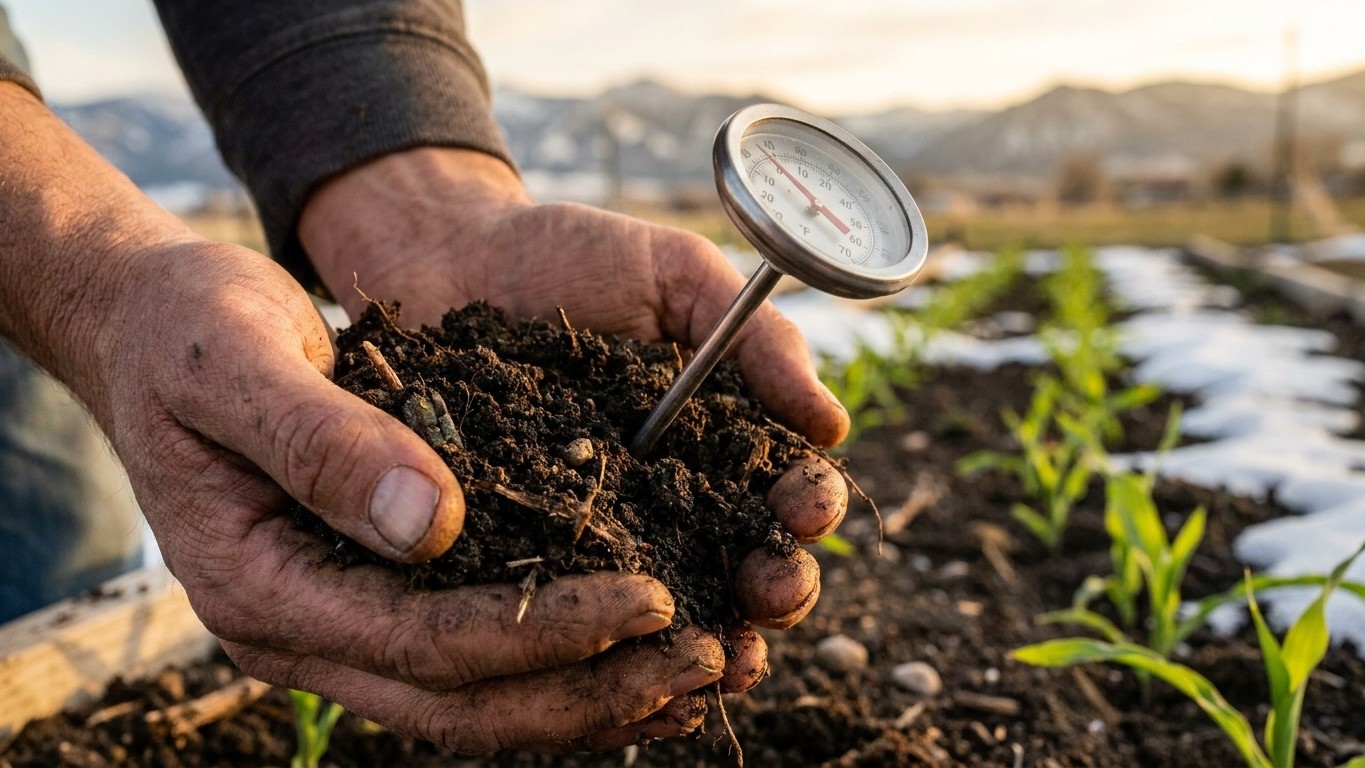
Soil temperature is the gatekeeper, not the calendar date of the last frost. Illinois soil doesn’t cross the 60-degree Fahrenheit line that sweet corn needs the moment the frost risk passes in mid-April. It lags behind, sometimes by several weeks, because soil warms more slowly than the air above it. A gardener who plants the day after the last frost, expecting to save time, often ends up with seed sitting in cold, damp ground doing nothing, which is worse than waiting.
Here’s what the actual dates give you. NOAA climate normals for the reference station put the last spring frost between April 11 and April 22, and the first fall frost between October 24 and November 3. That’s a frost-free stretch of roughly 195 to 196 days. Even if the soil doesn’t hit 60 degrees until three to five weeks after that last frost, and Illinois springs can be slow to warm, you’re still left with somewhere around 150 to 165 days before the first fall frost shows up. Sweet corn’s top maturity range, 90 days, fits inside that window with room to spare.
Summer heat matters too, though differently than most people assume. The Chicago reference station averages 14.0 days a year at 90 degrees Fahrenheit or hotter. That’s enough heat load to stress pollination if a heat wave lands right when the tassels are shedding pollen and the silks are receptive, which is the plant’s most vulnerable few days. It’s not enough to threaten the crop overall, but it explains why a stretch of ripening ears can turn spotty or underfilled in a hot July, even when the season length was never in question.
So the short version: Will Sweet Corn Ripen in Illinois? Yes, as long as you plant by soil temperature, not by the frost date on the calendar, and the length of the Illinois season will carry almost any sweet corn variety to harvest without trouble. For a closer look at exact dates and timing by region, see When to Sow Sweet Corn in Illinois.
Does a late variety fit here?
The maturity days printed on a seed packet count from the day you plant, not from when the silks appear. That’s worth separating out, because a second, shorter clock starts once silks show up on the ear: picking typically follows somewhere between 17 and 24 days after silk emergence. The 60 to 90 day figure tells you whether the crop fits the season. The 17 to 24 day figure tells you which week to start checking ears. Mixing the two up is how gardeners either pick too early or let ears go starchy on the stalk.
A 60-day variety
A fast, 60-day sweet corn fits Illinois with room to spare in almost every part of the state. Even accounting for a slow, cool spring where soil doesn’t reach 60 degrees until well into the second half of May, a 60-day variety planted then still finishes in mid-to-late July, months ahead of the first fall frost in late October or early November. This is the safer choice for anyone gardening at higher ground or in a low spot where frost tends to settle late and linger, since it leaves the widest possible buffer on both ends of the season.
A 90-day variety
A full 90-day variety also fits, and comfortably, given the season length worked out above. Planted once the soil is genuinely warm, even as late as early June in a slow year, a 90-day variety still ripens by early September, leaving six or more weeks of cushion before the first frost risk arrives. The one place a late variety runs into trouble is if planting gets pushed back further, into mid-June or later, whether from a wet spring or a gardener simply starting late. At that point the margin shrinks fast, and a 60-day variety becomes the more reliable bet. But for anyone planting on a normal Illinois schedule, the 90-day corn is not a gamble here.
What goes wrong here
- Soil sown too cold. Seed goes into ground that hasn’t reached 60 degrees yet, usually because the gardener planted right at the last frost date instead of waiting for the soil itself to warm. The seed sits, rots, or sprouts weak and uneven. The fix is simple: check soil temperature directly with a probe thermometer a few inches down, rather than trusting the frost date alone, and hold off until it’s consistently above 60.
- A variety too late for the season. This shows up less often in Illinois than in shorter-season states, but it still happens when planting slips into mid-June with a full 90-day variety. The days needed simply run out before the first frost. The remedy is matching the variety to the actual planting date: switch to a 60-day type if the calendar has already slipped, rather than pushing a long-season corn and hoping the fall frost holds off.
- Sweetness lost because two types tasseled together. This one has nothing to do with climate. Standard (su), sugary enhanced (se), and supersweet (sh2) sweet corn types cross-pollinate if their tassels shed pollen at the same time, and the result is starchy, disappointing ears even though everything else about the growing season went right. The fix is timing, not distance: stagger planting dates so the varieties don’t tassel in the same week, or plant only one type in a given year. Corn should also go in blocks of three or more rows rather than a single long row, since that block shape is what lets each plant pollinate its neighbors reliably in the first place.
Checking this against your own county
The frost dates above come from a single reference weather station, and real gardens rarely match it exactly. Suburban yards and rural properties typically see the last spring frost arrive later, and the first fall frost arrive earlier, than an airport station reports, sometimes by one to two weeks, more if the garden sits at higher elevation or in a low-lying spot where cold air pools. That difference can matter more for a 90-day variety, where the margin is real but not unlimited.
The most reliable way to close that gap is to check local numbers directly. University of Illinois Extension (extension.illinois.edu) publishes county-level planting guidance and can confirm how the general dates above line up with conditions in a specific area of the state.
Common questions
Can sweet corn be planted before the last frost in Illinois?
No. Even if the air temperature briefly allows it, the soil almost never reaches the 60-degree threshold sweet corn needs until well after that last frost date has passed, so planting earlier just risks rotted seed.
Does a hot Illinois summer hurt sweet corn?
It can, specifically during the few days when tassels are shedding pollen and silks are receptive. With an average of 14.0 days a year at 90 degrees or above, a heat wave landing at exactly that stage can reduce kernel fill, even though the season overall is long enough for the crop to mature.
How do I know when sweet corn is actually ripe?
Look for three signs together: silks that have turned dry and brown, husks that are still moist and green, and milky juice when a kernel is punctured. Any one sign alone can be misleading.
Can I grow two sweet corn varieties in the same garden?
Yes, as long as they don’t tassel during the same week. Stagger the planting dates so one variety finishes pollinating before the next begins, since it’s timing, not distance, that keeps the sweetness from crossing.