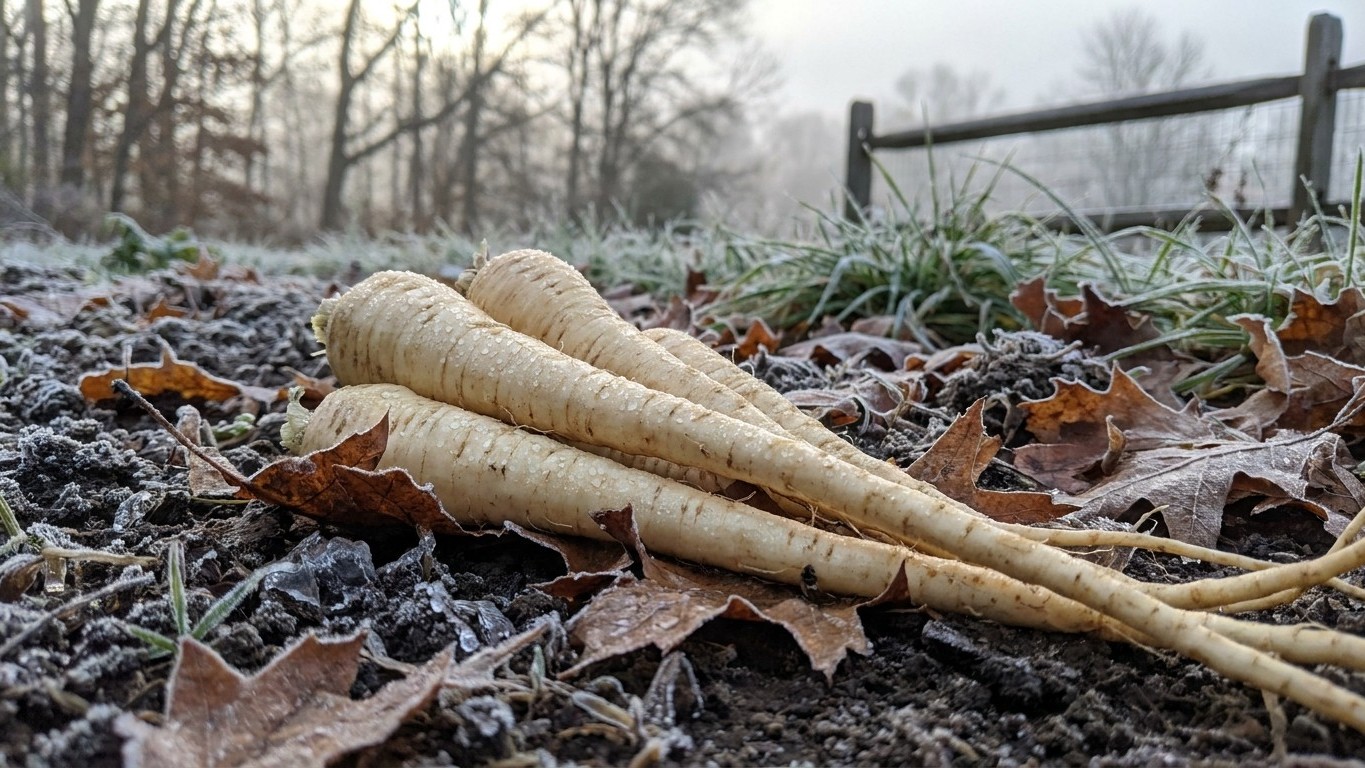

Two of Purdue Extension Entomology’s documented vegetable pests for Indiana actually feed on parsnip: the seedcorn maggot, which attacks the seed and seedling before the plant is even out of the ground, and the cabbage looper, which chews foliage later in the season. Timing tracks the state’s frost windows, not the calendar month.
Which pests attack parsnip in Indiana

Purdue Extension Entomology documents ten pest species for Indiana vegetable gardens: asparagus beetle, brown marmorated stink bug, cabbage looper, Colorado potato beetle, Mexican bean beetle, seedcorn maggot, spotted cucumber beetle, squash bug, squash vine borer, and striped cucumber beetle. That is the full list this page can name, and it is short by design, not by omission.
Most of those ten have nothing to do with a root crop in the carrot family. Asparagus beetle stays on asparagus spears and ferns. Colorado potato beetle wants nightshades, potato and tomato foliage mainly. Mexican bean beetle is a legume specialist. Squash bug, squash vine borer, and striped cucumber beetle are cucurbit pests, they need a squash, melon, or cucumber vine to lay eggs on and won’t touch a parsnip row. Spotted cucumber beetle behaves the same way, favoring cucurbit blossoms and roots over anything in the carrot family. Brown marmorated stink bug is a generalist that does real damage to fruiting vegetables and tree fruit, but it isn’t documented here as a root-crop feeder.
That leaves two names worth tracking on a parsnip bed. The seedcorn maggot targets the seed itself during the slow window between sowing and emergence, which matters because parsnip seed is unusually slow to come up. The cabbage looper is a foliage feeder that shows up once the tops are established, and while it is best known on cole crops, it will feed on a range of broadleaf vegetable foliage, parsnip tops included.
Purdue Extension Entomology documents these two as the pests relevant to a parsnip planting in this state. That’s not a long list, and it shouldn’t be padded into one. A gardener who spots chewed foliage or a patchy stand and starts hunting for squash bugs or Colorado potato beetles is looking in the wrong place.
When each one shows up, and what it does first
Parsnip is sown in place, directly into the bed, roughly two to three weeks before the last spring frost. In Indiana that frost window runs from April 9 to April 21 around the Indianapolis reference station, with southern counties tending earlier and northern counties later. Germination takes 14 to 21 days, which is a long stretch of bare, often cool and damp soil for a seed to sit in undisturbed.
That germination window is exactly when the seedcorn maggot does its work. The larvae feed on the seed and the emerging root before a seedling ever breaks the surface, so the first sign an Indiana gardener actually sees isn’t a bug, it’s a gap: a section of row that never comes up, or comes up thin and uneven while the rest of the bed fills in normally. Cool, wet spring soil right after sowing is the condition that favors this pest, which is one more reason a rushed, overly early sowing into cold ground carries risk beyond just slow germination.
Cabbage looper arrives later, once parsnip tops are up and growing, well into the 100 to 120 day season the crop needs to mature. Its damage looks different from the start: ragged holes and chewed margins on the leaves themselves, sometimes with a pale green caterpillar visible on the underside of a leaf if you look closely. It’s a foliage problem, not an emergence problem, and it tends to build gradually rather than appear all at once the way a bare patch of un-germinated row does.
Because parsnip stays in the ground long past its neighbors, sweetening only after it’s caught several weeks of frosty weather following the first fall frost (October 21 to October 30 around Indianapolis), foliage feeding late in the season matters more here than it would on a crop that’s harvested and gone by early fall. A parsnip bed with thinning tops heading into that stretch has less leaf area to keep feeding the root through the cold snaps that make the crop worth growing in the first place.
Telling the damage apart from everything else
A gap in the row or a chewed leaf doesn’t automatically mean an insect. Parsnip has a short, specific list of documented pests here, but a longer list of things that mimic pest damage.
| Symptom | Possible cause | What tells it apart |
|---|---|---|
| Row fails to emerge, or comes up patchy | Seedcorn maggot, or simply cold soil slowing germination | Dig gently near a gap; damaged or missing seed points to the maggot, an intact but unsprouted seed points to cold, wet soil still within its 14-to-21-day window |
| Chewed, ragged leaves | Cabbage looper, or slug feeding | Looper damage comes with visible caterpillars and drier, torn leaf edges; slug damage is smoother-edged and worse after rain |
| Roots fork into two or more legs | Heavy or stony ground, or overwatering | Neither is insect damage; check soil texture at planting depth and recent watering habits, since these are two separate causes and not the same problem |
| Pale, stunted tops | Nutrient deficiency or crowding | Uniform across the row rather than patchy, and unrelated to any chewing or missing seed |
Forked roots deserve their own note because gardeners often blame a pest that was never involved. A forked parsnip root traces to either heavy or stony soil that deflects the taproot, or to overwatering that encourages side branching, and those are two distinct causes that call for two different fixes, not one. Neither shows up on Purdue’s documented pest list for a reason: it isn’t an insect problem at all.
When a symptom doesn’t match anything above cleanly, that’s the moment to bring a sample or a clear photo to a local extension office rather than guess from a description online.
What actually works here, and what is a waste of time
On a crop with a season this long, timing beats treatment. Getting a floating row cover onto the bed at sowing and keeping it in place through the full 14-to-21-day germination window is the single move that matters most against seedcorn maggot, since it keeps the adult fly from laying eggs near the seed in the first place. Once the maggot has already fed on a seed, there’s nothing to spray that brings that seedling back, so the cover has to go on before the problem starts, not after a gap appears.
For cabbage looper later in the season, handpicking caterpillars off the undersides of leaves works fine on a home garden scale, and keeping the bed weeded reduces the moths’ egg-laying sites nearby. A lightweight cover can also keep adult moths off the foliage, though by midseason growers usually need to remove it periodically for weeding and thinning, so it’s a partial fix rather than a set-and-forget one.
What doesn’t help: treating the soil after a patchy row has already failed to emerge, since the damage is done and the seed is gone either way. Reflexively blaming and treating for a pest not on Purdue’s documented list for this crop, when the real cause is heavy soil or overwatering, also wastes a season’s worth of attention on the wrong fix. Any product decision, timing, and what’s actually labeled for use in Indiana belongs with the local extension office, not a general guess.
Where to check this for your own county
Purdue Extension Entomology is the service that documents these pests statewide, but presence on the ground varies by county and even by garden. A seedcorn maggot problem tied to a wet spring in one part of the state doesn’t mean every Indiana garden faces the same pressure that year.
The next step is a call or visit to the county Purdue Extension office, which tracks local conditions more closely than any statewide list can. County staff can confirm whether current reports in the area involve seedcorn maggot, cabbage looper, or something else entirely, and they know the local frost timing well enough to say whether a given spring is running early or late against the April 9 to April 21 normal window.
Bring specifics when reaching out: when the row was sown, how the emergence looked, and a photo of any leaf damage. That’s more useful to a county educator than a description alone, and it’s the fastest way to get an answer specific to one garden rather than to the state as a whole.
Common questions
Does Indiana’s list of parsnip pests ever grow beyond these two?
Purdue Extension Entomology documents ten pest species across Indiana vegetable crops, and only the seedcorn maggot and cabbage looper are relevant to parsnip specifically. A local county office may flag something new; if so, that’s the source to trust over a general list.
Why does a bare patch in the row matter more with parsnip than with faster crops?
Because germination already takes 14 to 21 days, a bare patch caused by seedcorn maggot can look identical to a patch that’s simply still germinating, and telling them apart means checking the seed itself rather than waiting longer.
Do parsnips need a hard freeze to sweeten, or just cold weather?
They need several weeks of frosty weather after the first fall frost, which converts stored starch to sugar. A mild fall with no real frost produces a fine-looking root that never develops that sweetness, regardless of how well it grew.
Is a forked root ever a sign of pest damage?
No. Forking traces to heavy or stony soil deflecting the taproot, or to overwatering, not to any insect on the documented list for this crop.