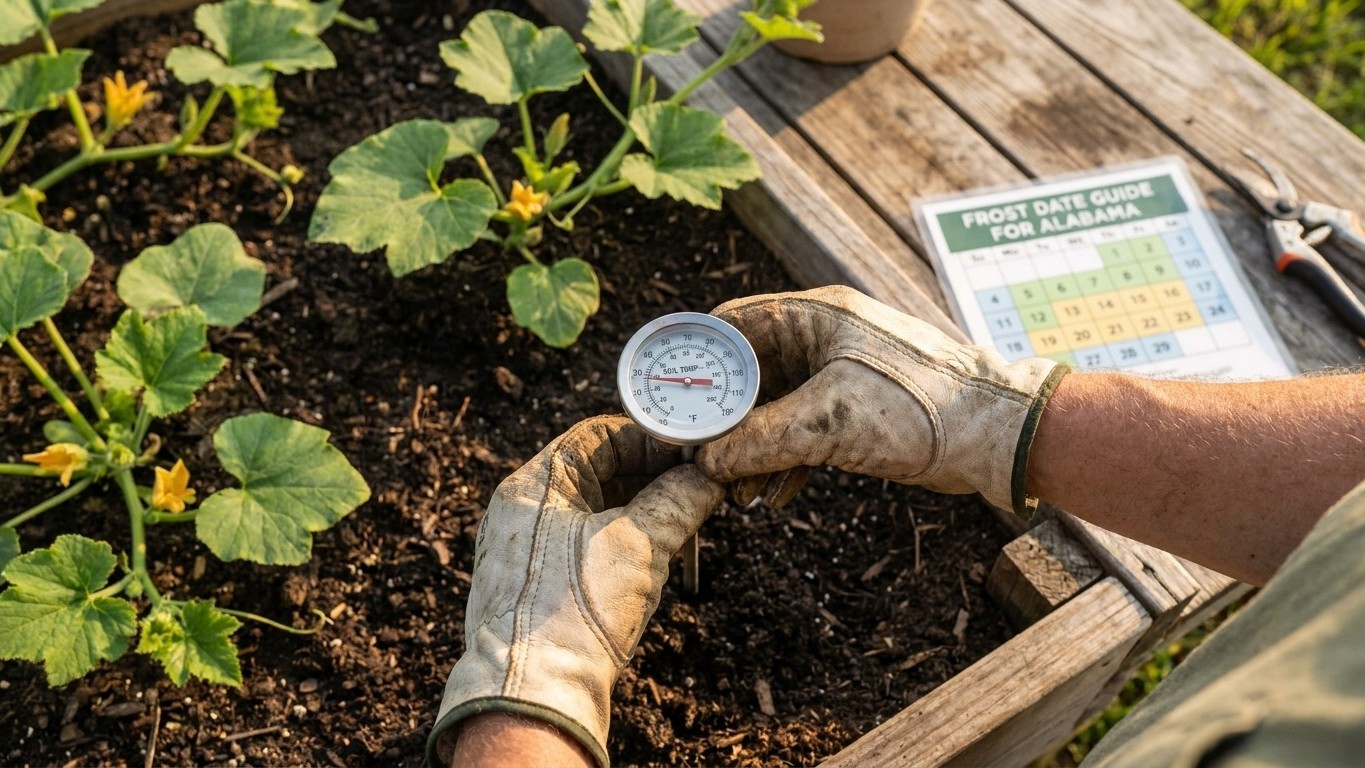

In most of Indiana, pumpkin seed goes into the ground once soil hits 65°F, which usually lands somewhere between mid-May and early June. That timing isn’t arbitrary. It’s built backward from the state’s first fall frost window (October 21 to October 30) and the 45 to 55 days a pumpkin needs after flowering to turn from green knob to orange harvest.
The short answer
Start with the frost. Indianapolis, the reference point for Indiana’s climate normals, sees its first fall freeze somewhere between October 21 and October 30. That’s the hard stop. Whatever is still hanging green on the vine when that window arrives isn’t going to finish ripening in the field.
Now work backward. Pumpkins need 45 to 55 days after flowering, not after sowing, not after germination, to reach a hardened, colored rind ready for harvest. That distinction matters more than almost anything else in this whole calculation. A gardener who counts from the day seed went into the dirt will consistently overestimate how much runway they actually have.
Do the subtraction both ways and you get a window, not a date. Take the earliest frost risk (October 21) and the longer maturation period (55 days), and the last safe flowering date lands around August 27. Take the later end of the frost window (October 30) and the shorter maturation period (45 days), and flowers opening as late as mid-September can still finish in time. So the real target for the last productive flowers on an Indiana pumpkin vine sits somewhere between the final days of August and roughly September 15, depending on how much risk a grower is willing to carry.
That’s a fairly generous spread for early flowers on vines set out at the recommended time, but it leaves almost no room for delayed planting, a cool spring that slows growth, or a second flush of blossoms after the first fruit set. A vine that’s still throwing new female flowers in late September in Indiana is, for practical purposes, done producing anything that will color up before the frost window closes.
Southern Indiana gets a modest cushion here. Because the region tends to run its fall frost later than the Indianapolis reference point, sometimes by two weeks or more, growers near the Ohio River can often push that flowering deadline a bit later than gardeners near the Michigan state line. It’s not a guarantee, but it’s a real difference worth factoring in if you garden in the southern third of the state.
When to sow here
The mistake most Indiana gardeners make is treating the last spring frost date as the green light for pumpkin seed. It isn’t. The last spring frost window here runs April 9 to April 21, but soil temperature lags behind air temperature by weeks, not days. A yard can be frost-free and still have cold, wet soil that will rot pumpkin seed before it ever sprouts.
- Let the spring frost window close first. April 9 to April 21 is when the air stops threatening a freeze, but treat this as the earliest possible marker on the calendar, not the planting date itself.
- Wait for the soil, not the calendar, to hit 65°F. In most of Indiana that doesn’t happen until well into May, sometimes not until early June in a cool, wet spring. Push a soil thermometer two to three inches into the bed rather than guessing from the weather report.
- Account for the north-south split. Southern Indiana counties typically warm up ahead of the Indianapolis reference point, sometimes by two weeks, while far-northern counties can lag behind it by a similar margin. A sowing date that works near Evansville can be too early near South Bend.
- Use row covers if you want to move earlier. A cover over a prepared bed can effectively buy about two weeks, letting a gardener sow into soil that hasn’t quite reached 65°F on its own while the cover traps enough heat to get seed moving.
- Check your math against the fall frost window before committing. Take whatever sowing date you land on, estimate the days to flowering for your seed, then confirm the resulting bloom period falls inside the late-August-to-mid-September safety zone from the section above. If it doesn’t, either the sowing date needs to move earlier or the variety needs to be swapped for one that flowers sooner.
None of this is a one-size-fits-all date. It’s closer to a checklist that has to clear in order: frost window passed, soil warm enough, regional adjustment made, and the back-end math checked against the harvest deadline. Skipping the soil-temperature step is the single most common reason Indiana pumpkin seed either rots in the ground or sprouts weak and stunted.
What goes wrong here
- A late flower that never colors. This happens when the vine’s later blossoms open after the safe window closes, usually because the whole planting was delayed by a cold, wet spring. The fruit sets, grows for a few weeks, and is still green and soft when frost hits. The remedy is upstream: sow as soon as soil reliably hits 65°F rather than waiting for a “safe” calendar date, and consider row covers to gain those two extra weeks if the spring runs cold.
- A fruit caught by frost before harvest. Even a pumpkin that has fully colored can be damaged if it’s left in the field once frost arrives. The source guidance here is specific: harvest with the stem attached before frost, and store fruit only somewhere it will not freeze. No storage temperature or humidity figure is published in that guidance, so don’t rely on a number borrowed from another crop, watch the forecast and bring fruit in ahead of the first hard cold rather than after.
- A vine that dies back before the skin hardens. Vines weakened early in the season by pests often can’t sustain the fruit through the final weeks of ripening, leaving a rind that never toughens properly. Squash bugs and cucumber beetles are the usual culprits behind this kind of early vine decline in Indiana gardens; both have their own state-specific pages on this site covering identification and management, worth a look if leaves are yellowing or wilting weeks before harvest should even be a question.
- Soil that never quite reaches 65°F on schedule. A cool, shaded, or heavy clay bed can lag well behind the regional average, pushing the whole clock later without the gardener realizing it. Black plastic mulch or a row cover laid down a week or two before sowing helps close that gap and keeps the season-length math from slipping into risky territory.
Common questions
Can I still sow pumpkins in June in Indiana?
It depends on how late the seed will flower. Working backward from the October 21 to October 30 frost window and the 45 to 55 day maturation period, a June sowing only works if the vine flowers by mid-September at the latest. Late June sowings cut that margin very thin.
Does southern Indiana really get more growing time than Indianapolis?
Southern Indiana tends to see its last spring frost earlier and its first fall frost later than the Indianapolis reference point, sometimes by two weeks or more on each end. That gives southern growers a wider practical window than the statewide averages suggest, while northern counties should plan tighter.
Why does soil temperature matter more than the frost date for sowing?
Because pumpkin seed can rot in cold, damp soil even after the air has warmed past frost risk. Soil at 65°F germinates seed reliably; soil in the 40s and 50s often doesn’t, regardless of what the thermometer says about the air overhead.
How do I know when to harvest before frost hits?
Watch the fruit’s color and the rind’s hardness, and cut with the stem attached once the pumpkin looks and feels ready, ahead of the forecasted frost rather than after it. The available guidance doesn’t specify an exact days-before-frost cutoff, only that harvest should happen before frost and storage should be somewhere the fruit won’t freeze.