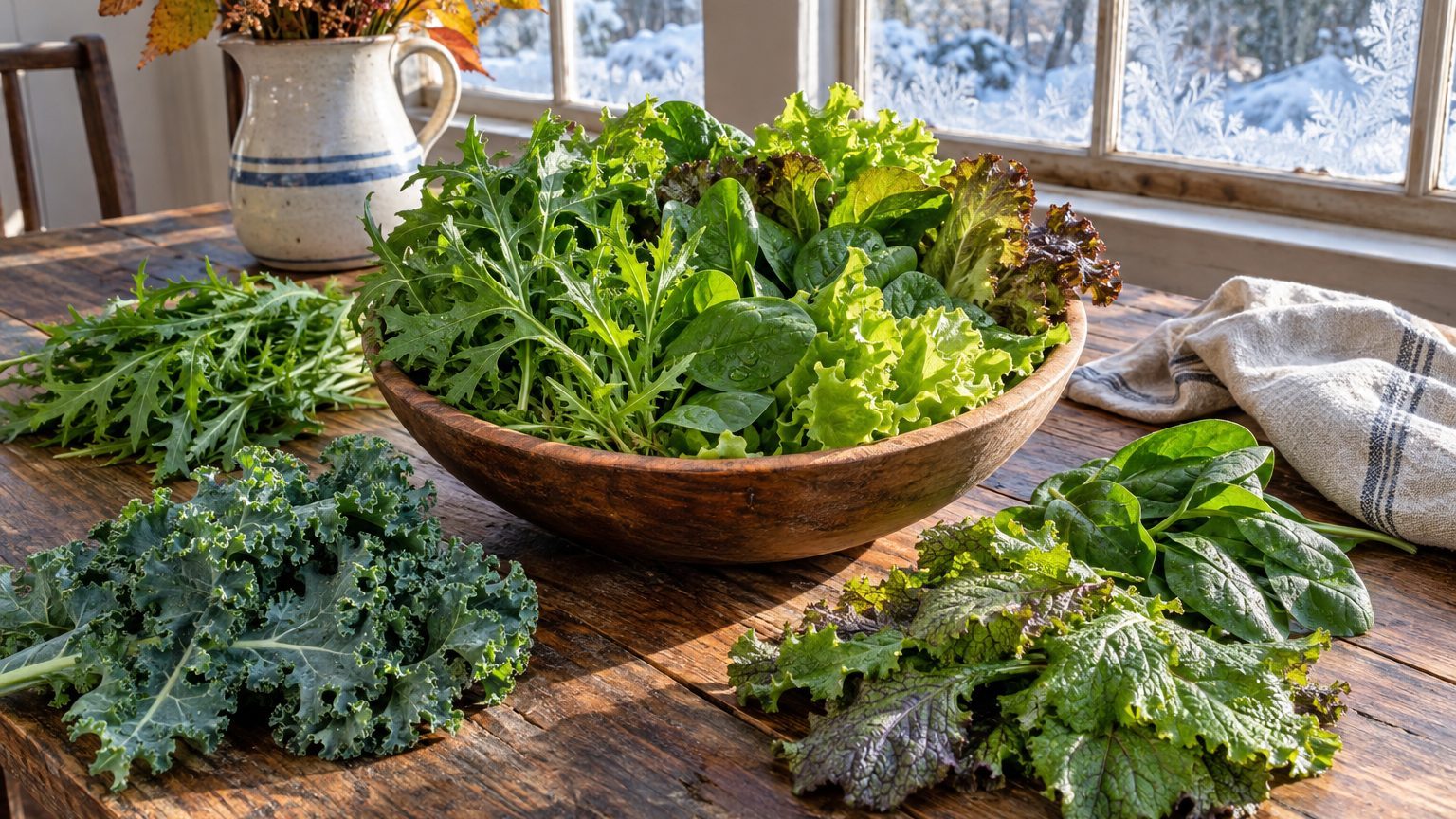

Cold-hardy leafy greens make the best winter salads in Indiana: spinach, mâche, claytonia, kale, and hardy Asian greens such as tatsoi and mizuna. Tender head lettuce can work too, but only under cover. The reason is the climate. At the Indianapolis reference station, the mean daily minimum in the coldest month is 20.9°F. That is cold enough to flatten tender leaves, yet mild enough that hardy ones keep going.
The short answer for Indiana
Choose by type rather than by cultivar name: hardy greens outdoors, tender lettuces and mild salad mixes under cover, and slow-sizing heading crops only if they go in early. The frost dates explain why. For Indianapolis, the last spring 32°F freeze falls between April 9 and April 21, and the first fall freeze between October 21 and October 30 (NOAA 1991-2020 Climate Normals). Those dates mark the 30-70% probability band of a 32°F freeze. Inside that window, a freeze is somewhere between 30 and 70 percent likely on any given date. They are not guarantees. Purdue adds that roughly a 10% chance of a 32°F event remains after the published spring date.
Hardy greens that carry the winter
Spinach, mâche (corn salad), claytonia and kale tolerate a freeze and come back after one. In most Indiana winters they stand outdoors with little help, and they give the steadiest harvest from November through March. Row cover during the coldest stretches keeps the leaves cleaner and tender.
Where lettuce and the in-between greens fit
Arugula, mizuna, tatsoi and endive sit in the middle. They are fine through the fall freezes, but December and January ask for a low tunnel or cold frame. Lettuce is the tender end of the range. It rewards cover, and without it, it is a fall crop that ends around the first hard freezes.
| Type | Examples | Outdoors, no cover | With row cover or cold frame |
|---|---|---|---|
| Very hardy | Spinach, mâche, claytonia, kale | Usually holds through the winter | Cleaner leaves, steadier growth |
| Moderately hardy | Arugula, mizuna, tatsoi, endive | Good through fall freezes | Needed for December and January |
| Tender | Leaf and head lettuce | Fall harvest only | Can continue into winter |
For the wider picture, see Winter Salads for Indiana Gardens. Sowing dates are covered in When to Sow Winter Salads in Indiana.
What will not work here
Late sowing fails first. The frost window ends in late October, and by the time November arrives, days are short and growth slows to a crawl. A bed sown in mid-October may germinate, but the plants stay seedlings through winter and give only a few leaves. The slowest types, such as radicchio and big-headed endive, need to be established well before the first fall freeze, which is why they are poor bets for anyone who starts late.
Heat at sowing time
The opposite problem hits early. Sowing in August or early September means seeds meet warm soil, and lettuce in particular germinates poorly in it. A gardener who sows on the calendar date and waters once a week will watch patchy rows come up and dry out between soakings. Seed in warm soil wants light, frequent watering until it emerges, plus shade cloth or a shaded spot.
Humidity and wet ground
Indiana’s humid air and wet, often clay-heavy soil punish tight spacing. Crowded leaves stay damp, and downy mildew, gray mold and slugs move in. A winter bed that never dries out also rots roots, so raised beds or well-drained rows matter more than most guides admit. Thin seedlings to the spacing on the packet, even when it looks sparse. Greens fill in quickly once the weather cools.
Finally, trusting the 20.9°F figure too literally will cost you. It is a mean daily minimum, so plenty of nights run colder, and the hardiness zone is based on the average annual extreme minimum, which is lower still. Uncovered tender lettuce on a hard-freeze night is gone by morning. Cover for lettuce is a requirement, not a luxury.
What changes across Indiana
There is no single answer for the state. The USDA Plant Hardiness Zone Map (2023, based on 1991-2020 normals) places Indiana across zones 5b to 7a, which is a real spread in winter cold. The USDA zone rests on one variable only, the average annual extreme minimum temperature. The Indianapolis figures above are a central reference, not a statewide rule. Southern Indiana runs earlier in spring and later in autumn than the north by a fortnight or more.
Northern Indiana
Gardeners in the north have a shorter fall to work with. Sow earlier than the Indianapolis dates suggest, lean on the very hardy types, and put row cover on sooner. Lettuce under cover is a smaller bet here, and a cold frame earns its keep.
Southern Indiana
In the south, the first freeze comes later and winters are milder, so the hardy greens may stay productive all winter and moderate types go further outdoors. The trade-off is warmth at sowing time: soil stays hot longer into September, so germination can lag if you sow too eagerly.
Check the USDA map for your own location rather than assuming. This page cannot tell you which zone you are in, and the map takes a minute to read.
Where to check this for your own county
Your state land-grant extension service is the next stop. Purdue Extension serves Indiana through county offices, and what you want from it is local. Look for a planting calendar for your area and for the varieties trialled in your county, not just in the state.
When you reach the site, search for vegetable planting guides and for your county’s extension office, which will have educators and often Master Gardener volunteers who know local soil and microclimates. Ask what has performed in cold frames and unheated tunnels near you. Trial results from nearby beat any general list, including this one.
A county recommendation beats a state one, and this page is the state one. It rests on Indianapolis frost normals and a statewide zone range, and it does not carry county-level calendars or trial data. Where the two disagree, trust the county.
Checking this against your own garden
Your own observations outrank every date here. Three are worth watching.
- Soil warmth by feel. Push your hand a few inches into the bed in the morning. If it still feels warm, lettuce seed will struggle, and you should wait or shade it. A cool, comfortable feel says germination will go well. A bed that reaches this point earlier than your neighbor’s tells you it is a warm microclimate.
- First true leaves. The tiny rounded seed leaves come first, then the true leaves with the shape of the mature plant. Once they appear, seedlings can handle thinning and cover. If true leaves are slow to show in October, growth is already stalling, and that bed needs protection or a different crop.
- Frost on your most tender plants. Note when basil blackens or squash vines collapse, and where in the yard it happens first. Low corners and open spots get frost earliest. In spring, the first male flowers on early squash tell the same story in reverse: the garden is warm enough.
Keep notes for one season, and the dates on any calendar start to match your garden.
Common questions
Can I grow lettuce outdoors all winter in Indiana?
Rarely without cover. Lettuce is the tender end of the winter salad range, and a hard freeze can finish uncovered plants. A cold frame or low tunnel extends the harvest well into winter.
What is the most reliable winter salad green here?
Spinach, mâche and claytonia are the usual choices, along with kale. They tolerate freezes and recover afterward, so they give the steadiest winter harvest with the least fuss.
When should I sow?
Early enough that plants are established before the first fall freeze, which falls between October 21 and October 30 at the Indianapolis reference station. Exact sowing windows are on the planting calendar page, and your county extension office can refine them.
Does the 20.9°F figure mean plants only face that cold?
No. It is the mean daily minimum of the coldest month at Indianapolis, so many nights are colder, and it describes one reference station, not the whole state. Hardiness zones are built on the average annual extreme minimum, which runs lower than this figure.