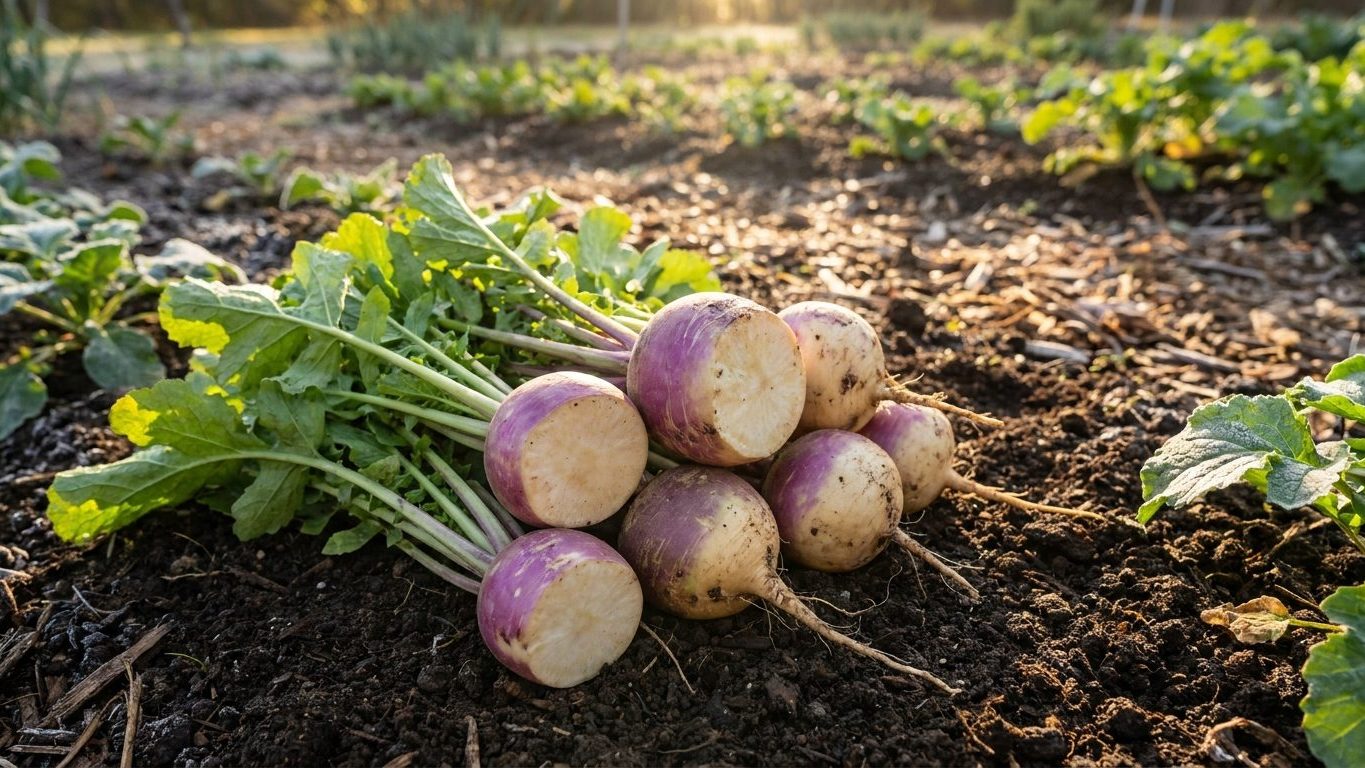

Iowa gardeners get two chances at turnips and one good chance at rutabaga. Sow turnips in early spring once the ground can be worked, then again in midsummer for fall roots. Rutabaga, which wants a long cool stretch to size up, belongs in that summer slot. The dates below come from NOAA’s frost normals, and they come with a catch: Iowa State’s county records run later in spring and earlier in fall.
When the soil is warm enough in Iowa
NOAA’s 1991-2020 Climate Normals put the last spring 32°F freeze between April 12 and April 24. That is the band where the probability sits between 30 and 70 percent, and it comes from the airport station NOAA uses for Des Moines. A frost date is a probability, not a promise, so some years will break it in either direction.
Now the caution. Iowa State Extension county figures, which cover 1950 to 2021, run about 4 days later in spring than that airport station. Airports in cities hold a little extra heat, so the NOAA numbers are the optimistic end. If your garden sits in open country, plan on the later side of the range, and then add a margin.
Frost is only a proxy, though. Turnip and rutabaga seed does not care what the air did last Tuesday. It cares what the soil is doing, and soil warms after the frost risk ends, not along with it. Soil in April can be cold, soggy and slow, and a seed sitting in it can rot or sulk before it ever sprouts. A cheap soil thermometer pushed a couple of inches down tells you more than the calendar does. Your state extension service can tell you which soil readings it treats as the go signal for brassica seed.
Two sowing windows, two different jobs
The spring sowing is for quick, tender, small-rooted turnips. They have to make roots before summer heat toughens them and turns them pithy or sharp. Sow them as soon as the bed is workable and not waterlogged, and expect to be eating them before the warm months settle in.
The fall sowing is the one that pays off most. Roots that bulk up while nights cool down are sweeter, and the first light frosts finish the job by pushing starch toward sugar. To place it, work backward from the first fall frost. The seed packet’s days-to-maturity figure is the number to count back from, and the first fall frost in the NOAA normals falls between October 14 and October 25. Then add a margin, because the Iowa State county records put fall frost about 10 days earlier than the airport does.
Rutabaga follows the same logic but asks more of the calendar, since it takes longer than turnips to finish. It is a brassica, like turnip, so it shares its troubles with cabbage, kale and mustard. Do not sow either one where those crops grew recently. The Growing Turnips and Rutabaga: An Autumn Crop, Sweetened by Frost guide covers the crop in general, and the rotation page in this series explains the brassica rule in full.
How long the season lasts here
Count the days between the frost dates and you get the real size of the window. Using NOAA’s normals, the shortest stretch runs from April 24 to October 14, which is 173 days. The longest runs from April 12 to October 25, which is 196 days. Those are frost-free spans, and none of them is a guarantee.
| Source | Last spring frost | First fall frost | Window |
|---|---|---|---|
| NOAA 1991-2020 normals (airport station) | April 12 to April 24 | October 14 to October 25 | 173 to 196 days |
| Iowa State Extension county records, 1950-2021 | About 4 days later than NOAA | About 10 days earlier than NOAA | About 14 days shorter |
Trimming 14 days off the NOAA span leaves a more cautious working window, somewhere near 159 to 182 days. Which end applies to you depends on how far you are from a city and how open the site is. A low spot where cold air pools sits at the short end every time.
What does that length allow? It allows two sowings. That is the useful answer. A window this size fits a spring planting of quick turnips and still leaves room for a second sowing in summer, timed to finish as the nights cool. In a northern state with a window of 120 days or so, the first sowing would be the only one, and every week lost to a late spring would matter. Iowa is more forgiving. If the first sowing fails (a cold snap, a crust on the soil, flea beetles chewing the seedlings), there is time to try again.
The same length settles the question of transplanting. Turnip and rutabaga taproots resent being disturbed, and a transplant that bends or breaks its root grows a forked, stunted one. In a short season you might gamble on starting indoors to gain a few weeks. With a window this long, direct sowing wins, and there is no reason to risk the root. Reserve transplants for emergencies, and check the root before you plant it.
For spacing the second sowing, the succession sowing guide in this series sets out how to stagger plantings by a few weeks rather than putting everything in at once. Staggering also hedges against a bad week of weather.
Heat and water in Iowa
This page does not carry a verified count of days above 90°F for Iowa, nor a summer rainfall total. Rather than guess at either, I will leave them out. A count at one reference station would not describe the whole state anyway, since conditions shift from the Mississippi River counties to the loess hills in the west.
What can be said is that Iowa summers are warm and humid enough to matter for a cool-season crop. Heat is the enemy of turnips and rutabaga, so the gardener’s job is to keep the crop out of it. The spring planting finishes early. The fall planting goes in as summer turns, with the bed kept evenly moist so the seedlings do not stall. Mulch holds soil moisture and keeps the root zone cooler. Uneven watering, a long dry spell followed by a soaking, is what splits roots and makes them woody. Humid weather brings its own trouble, with fungal leaf diseases and rot that spread faster where foliage stays wet. Spacing and airflow help more than anything you can spray.
The two facts that govern an autumn crop are cold ones, though. The first is the coldest month. The mean daily minimum there is 13.8°F, measured at the Des Moines reference station for 1991 to 2020. That is an average of the lowest temperature on each day, not the record low, so plenty of nights fall well under it. With figures like that, the ground freezes hard. Leaving roots in the soil under a thick mulch is a gamble in Iowa, and the gardener who relies on it should expect to lose some. The safer plan is to lift the roots before the ground locks up and store them.
Storage touches food safety, so inspect every root before it goes away and again while it is stored. Look at the crown and the skin. A soft patch, a spot that weeps liquid, or a moldy crown ends the question for that root, however sound the rest looks. A root that seems firm is not proven safe by its appearance, and this page promises no keeping time.
The second cold fact is how much frost sweetening you actually get. The stretch between the first frosts (October 14 to October 25 in the NOAA normals) and the hard freeze that seals the ground is when starch turns to sugar in the root. The facts here give no date for that hard freeze, so watch the ground itself. Zone matters too. The USDA Plant Hardiness Zone Map (2023 edition, built on 1991-2020 normals) places Iowa across zones 4b to 6a, a spread that shows how much the state varies. A garden in the north will freeze sooner than one near the Missouri line.
Which turnips and rutabaga suit Iowa
I am not naming varieties here, and the reason is simple. The only useful recommendation is one backed by local trials, and this page does not have those results. A name pulled from a seed catalog can fail in your soil, and any gardener can tell a made-up recommendation from a tested one. The place to get the tested list is Iowa State University Extension, which can point you to what has been grown and judged in Iowa conditions. Your county office may also know what has done well nearby.
What this page can do is reason from the territory’s facts. A season of roughly 159 to 196 days is not short, so you do not need to hunt for the very earliest types, though earliness still helps for the spring sowing. Choose quick-maturing, small-rooted turnips for that planting. For the fall crop, a longer-maturing type has room to finish and usually sweetens better in the cold.
Humidity changes the criteria more. Where leaves stay wet, disease resistance should come first on the list, ahead of size or looks. Check the seed description for resistance to common leaf and root diseases. Heat leans the same way: favor types that carry a full leaf canopy for shade at the root, and give them room so air can move between plants.
Rutabaga deserves a separate thought. It is the slower crop, and in Iowa it is a summer-sown, fall-harvested one, with the same caution about heat during germination. It also tolerates cold better than most turnips, which suits a state with a coldest-month minimum of 13.8°F. Still, hardiness is a general trait of the type. It does not substitute for local trial data.
Both are brassicas, so choose a bed where cabbage, kale, mustard or other turnips have not grown lately. Their pests and diseases carry over from one to the other. Gardeners elsewhere face the same choices under different climates, and the guides to Growing Turnips and Rutabaga in Rhode Island and Growing Turnips and Rutabaga in Prince Edward Island show how the answer shifts when the season gets cooler and shorter.
Common questions
When should I plant turnips in Iowa?
Sow a spring crop once the soil is workable and warm enough, not just when frost ends. NOAA puts the last spring freeze between April 12 and April 24, but Iowa State county records run about 4 days later. Sow a fall crop in midsummer, counting back from the first fall frost.
Can I grow a second crop in the fall?
Yes. A frost-free window of 173 to 196 days by NOAA’s normals leaves room for a spring sowing and a later one for fall harvest. Use the packet’s days-to-maturity figure and count back from the first fall frost, which NOAA places between October 14 and October 25.
Can I leave rutabaga in the ground over winter?
It is a risk. The coldest month averages a daily minimum of 13.8°F at Des Moines, and many nights fall lower. Mulch helps, but the safer course is to lift roots before the ground freezes hard. Inspect anything you store, and discard any root with a soft patch, a weeping spot or a moldy crown.
Which variety should I buy?
Ask Iowa State University Extension for the types trialled in your part of the state. Choose by type for now: early small-rooted turnips for spring, disease-resistant types for humid weather, and a slower-maturing rutabaga for fall. Remember that turnips and rutabaga are brassicas, so keep them out of beds where cabbage-family crops grew recently.