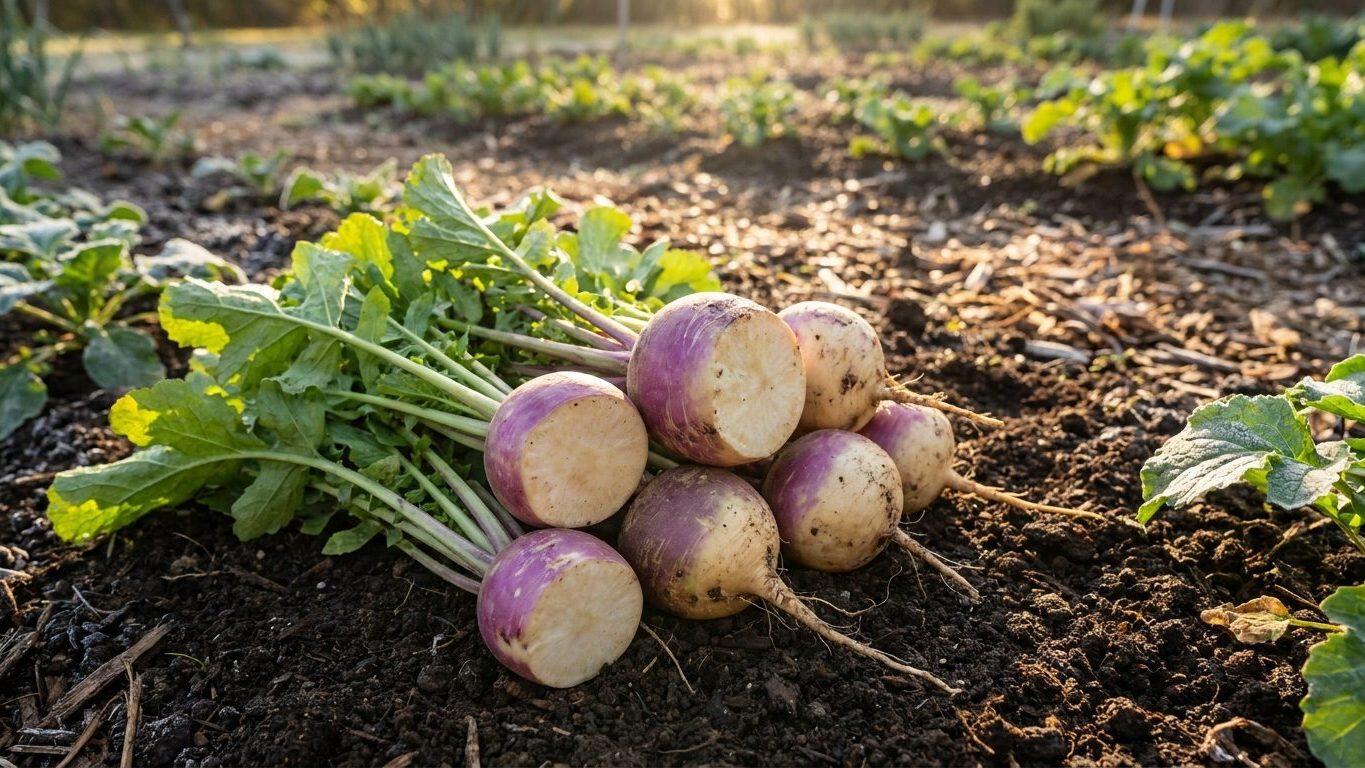

Yes, Kansas gardeners can sow turnips in spring, but the crop that pays off is the autumn one, and rutabaga belongs almost entirely to autumn. At the Wichita reference station, the last spring freeze falls between April 4 and April 18, and the first fall freeze between October 23 and November 2. Those dates frame everything below. For the general crop guide, see Growing Turnips and Rutabaga: An Autumn Crop, Sweetened by Frost.
When the soil is warm enough in Kansas
What the frost date does and doesn’t tell you
The date question first. NOAA’s 1991-2020 Climate Normals put the last spring frost at the reference station between April 4 and April 18. That is the 30-70% band for a 32°F freeze (NOAA NCEI 1991-2020 Climate Normals). In plain terms, somewhere in those two weeks the odds of another freeze drop from roughly even to unlikely. A frost date is a probability, not a promise, and a late freeze can still show up after it.
The figures also come from an airport station in Wichita. Gardens in the suburbs and out in the country usually see the last spring frost later than the airport does, often by one to two weeks, and more at elevation. Check your own county’s normals before you pencil anything onto a calendar.
The frost date is a stand-in for what the roots care about, which is the soil. Soil lags the air. A few mild afternoons in late March can make the garden feel ready while the ground a few inches down is still cold and sodden. Turnip and rutabaga seed sown into cold, wet ground sits, sulks and sometimes rots, while seed sown a week later into crumbly, workable soil catches up fast.
Checking the ground instead of the calendar
Use a soil thermometer, pushed in a few inches deep in the morning, when the reading is at its lowest. Take it on several days in a row, not once. The exact sowing thresholds and dates for your part of the state are worth getting from K-State Research and Extension, which has local trial data this page doesn’t.
Turnips have a spring window and rutabaga barely has one. A spring turnip has to size up before Kansas summer heat arrives, and heat turns roots woody and sharp-tasting. Rutabaga wants a long, cool stretch to fill out, which points it toward a late-summer sowing and a fall harvest. If you want a spring crop, sow early in the window once the soil has dropped its winter chill. Seedlings shrug off a light frost, but a hard freeze on tiny plants is another matter, so cover very early sowings with a sheet or row cover. Treat the autumn planting as the main event.
How long the season lasts here
Put the two frost bands side by side and the arithmetic is simple. Both dates come from the same NOAA normals at the reference station, so the subtraction is legitimate.
| Scenario | Last spring freeze | First fall freeze | Days between |
|---|---|---|---|
| Longest window | April 4 | November 2 | 212 |
| Both early dates | April 4 | October 23 | 202 |
| Both late dates | April 18 | November 2 | 198 |
| Shortest window | April 18 | October 23 | 188 |
So the reference-station window runs from about 188 to 212 days, roughly six to seven months. A rural or higher-elevation garden often loses a week or two at each end, so your own window may be a fortnight to a month shorter. Even so, that is a generous stretch for a crop that tolerates light frost.
What a window this long allows
A window of this length allows two sowings in one year, which a short northern season does not. A spring sowing of quick turnips can be pulled before the heat settles in, and the same bed, or a fresh one, takes the fall sowing for the roots you will store or eat into the cold months. Roots dislike being moved, and a transplanted seedling often forks or stunts its taproot, so Kansas gardeners can direct-sow twice and skip transplanting. If a hot spell or a flea beetle attack wipes out a sowing, there is room to simply sow again. For a look at how a much shorter season changes the plan, Growing Turnips and Rutabaga in Quebec works through that tradeoff.
The fall sowing is where the calendar gets tight, because you count backward from the first fall freeze, not forward from spring. Seed packets list the days to maturity for each type, and that figure, plus a margin for slower fall growth as days shorten, tells you the latest sowing date. The succession sowing guide on this site walks through spacing sowings across the season so that you aren’t harvesting everything in one week.
Heat and water in Kansas
The two numbers this page can’t give you
Two figures would normally anchor this section: the count of days above 90°F and the summer rainfall total. Neither is in the verified set for this page, so I won’t quote one or guess at it. Both vary a good deal across a state where the east is wetter and the west is drier, and a single airport station in Wichita doesn’t describe all of it. For your county’s numbers, NOAA’s climate normals and K-State Research and Extension are the places to look.
What can be said without a number is how heat and water bear on this crop. Kansas summers are hot enough that a late-summer sowing needs help. Seed sown into baking, dry soil germinates unevenly, and the soil surface can crust over before seedlings push through. Keep the seedbed evenly moist until the plants are up, and shade the row lightly if the weather stays brutal. Even moisture afterward matters too, because roots that go dry and then get soaked tend to split.
Turnips and rutabaga are brassicas, the same family as cabbage, kale and mustard, and they share the troubles of all three. Flea beetles, root maggots and clubroot do not care which family member you planted last, so a gardener who rotates turnips into a cabbage bed has rotated nothing. Wet, warm spells also invite fungal trouble, so space plants for airflow and keep foliage dry where you can. The rotation page on this site explains how to keep brassica families apart from year to year.
Cold decides the rest
This is an autumn crop, so the two facts that govern the finish are cold ones. The first is the coldest month. At the Wichita reference station, the mean daily minimum of the coldest month is 22.5°F (NOAA NCEI Climate Normals 1991-2020). That is an average of the nightly lows, not the record low, so some nights are colder. The USDA Plant Hardiness Zone Map (2023) puts Kansas between zones 5b and 7a, a range built on the average annual extreme minimum, which tells you the state’s northern and southern edges differ a lot from the reference city.
What does that mean for the roots? In a mild part of the state, a thick mulch can hold roots in the ground for a stretch of cold weather, and you harvest as needed. Where the ground freezes hard, roots left in the soil are at risk, and lifting and storing them is the safer plan. Roots that freeze, thaw and sit are not worth eating.
Storage touches food safety, so inspect before you trust. A soft patch, a weeping spot or a moldy crown ends the question, and that root goes in the compost, not the pantry. A root that looks sound can still carry trouble you cannot see, so don’t count on a fixed keeping time. Check stored roots regularly and pull out any that have started to go.
The second cold fact is how much frost sweetening the crop actually gets. Cold nights nudge starch toward sugar, and that is why autumn roots taste better than summer ones. The first fall freeze comes between October 23 and November 2, so there is a stretch of cold nights before the ground locks up. If your sowing date lets roots reach size by then, you get the sweetness. If the sowing was late, the roots may meet a hard freeze too small to bother with.
Which turnips and rutabaga suit Kansas
The honest answer is by type, not by name. This page has no source for cultivars trialled in Kansas, and a variety recommended without local trial data is a guess dressed up as advice. The varieties that perform best in your area are the ones tested there, and K-State Research and Extension is where that information lives. Ask your county office what they recommend for spring and fall sowings.
The window of 188 to 212 days at the reference station is long enough that you needn’t hunt for the very earliest types, though a rural garden with a shorter season has less margin. Kansas weather swings between dry spells and humid, wet ones, so disease resistance belongs near the top of the list, and seed descriptions state which diseases a type resists.
| Type | Where it fits in Kansas | What to check |
|---|---|---|
| Quick, small-rooted turnips | Spring sowing, pulled before summer heat; also a late fall sowing | Days to maturity on the packet; tolerance for warm spells |
| Larger globe turnips | Fall sowing for roots you eat or store | Disease resistance listed; sound crown |
| Turnips grown for greens | Spring or fall, cut young | Leaf quality; tolerance of heat before bolting |
| Rutabaga | Late-summer sowing for fall harvest | Time to maturity against your first freeze; disease resistance |
Rutabaga is the type that most tests a rural garden’s calendar. It wants a long cool season, so if your first fall freeze arrives at the early end of the band or earlier, count back carefully from the maturity listed on the packet before committing space. Growing Turnips and Rutabaga in Kentucky covers a wetter, more humid climate where disease resistance weighs even more.
Common questions
When should I plant turnips in Kansas?
For spring, wait until the soil has warmed and the freeze risk has passed. At the Wichita reference station, the last spring freeze falls between April 4 and April 18 (NOAA 1991-2020), and rural gardens are usually one to two weeks later. For fall, count backward from the first fall freeze, October 23 to November 2 at the same station, using the maturity time on your seed packet.
Can I grow rutabaga in Kansas?
Yes, as a fall crop. It needs a long, cool stretch to size up, so sow in late summer and check that the days to maturity fit before your first freeze. In a rural garden with an earlier freeze, that margin is thinner than at the reference station.
Do turnips survive winter in the ground?
It depends on where you are. The mean daily minimum of the coldest month at Wichita is 22.5°F, and Kansas spans USDA zones 5b to 7a. In milder spots, mulched roots can stay in the ground for a while. Where the ground freezes hard, lift them. Any root with a soft patch, a weeping spot or a moldy crown should be discarded, not kept.
Which variety should I buy?
Choose by type first: quick turnips for spring, larger globe types for fall, rutabaga for late-summer sowing, with disease resistance listed on the packet. For named varieties that have been trialled in your area, ask K-State Research and Extension. Turnips and rutabaga are brassicas, so keep them out of beds that recently held cabbage, kale or mustard.