
Kansas favors roots that finish before the worst summer heat or after it: parsnips, salsify and burdock sown in early spring, daikon and black radish sown in late summer, and Jerusalem artichokes or horseradish planted once and left to spread. The frost-free stretch is long, but hot summers and heavy clay decide which roots pay off. The slowest tropical roots, such as yacon and oca, are the ones to skip.
The short answer for Kansas
Choose by type. Hardy long-season roots (parsnip, salsify, scorzonera, burdock) go in as soon as the soil can be worked and come out in fall or winter. Fast roots (daikon, black Spanish radish, watermelon radish) belong in late summer, when the heat breaks and a fall crop has two months of cooling weather. Perennial roots (Jerusalem artichoke, horseradish) suit nearly every Kansas yard. Tropical roots that want seven warm months without frost are the poor fit.
The dates behind that advice come from the Wichita airport station. Its last spring freeze (32°F) falls between April 4 and April 18, the band where the odds of another freeze run between 30 and 70 percent. The first fall freeze falls between October 23 and November 2, using the same band. A single year can land outside either range. Suburban and rural gardens usually see the last spring frost one to two weeks later and the first fall frost one to two weeks earlier, and more so at elevation. The frost-free stretch at the reference station runs from early or mid April to late October or early November.
Which unusual roots suit Kansas best?
Parsnips are the dependable winter root. They sit in the ground for a long season from sowing and turn sweeter after frost. Salsify and scorzonera take longer, and reward patience with long, narrow roots tasting faintly of oyster and artichoke. Burdock (the gobo of Japanese cooking) grows a long root in loose, deep soil, and named varieties are the usual seed-packet choice.
Daikon is the quick win, ready soon after sowing. Jerusalem artichokes grow tall, bloom yellow in late summer and give tubers after the tops die back. Horseradish is planted from crowns in spring and dug the following fall.
How do the main roots compare?
| Root | When to plant | Time to harvest | Fit for Kansas |
|---|---|---|---|
| Parsnip | Early spring, as soon as soil is workable | Roughly 100 to 120 days from sowing | Good, with fresh seed and even moisture |
| Salsify / scorzonera | Early spring | Roughly 120 days or more | Good in deep, loose soil |
| Burdock | Early spring | Roughly 120 days | Good in raised beds or sandy ground |
| Daikon / black radish | Late August into early September | Roughly 50 to 70 days | Very good as a fall crop |
| Jerusalem artichoke | Spring, from tubers | After tops die back in fall | Very good, but it spreads |
| Horseradish | Spring, from crowns | Following fall | Very good |
What will not work here
Jicama is the clearest failure. It needs a very long run of hot nights, and its tubers fatten late, so frost arrives before the harvest does. Oca and mashua have a similar problem: they form tubers as days shorten in autumn, and a Kansas freeze in late October or early November, or earlier in rural gardens, ends the job before much has formed. Yacon sits on the edge. A garden that gets the full Wichita stretch might harvest something, but a rural garden that loses one to two weeks at each end often will not.
Why do summer sowings of cool-season roots fail?
Parsnips and carrot-family roots sown in June or July struggle to germinate in hot soil, and the seed that does sprout dries out between waterings. Parsnip seed also loses viability fast, so last year’s packet is a gamble. A spring sowing that slips into May has the opposite problem: the roots mature in July heat and come out woody and strong-flavored instead of sweet. Daikon sown in early summer bolts to seed before the root swells, which is why the late-August window matters.
Kansas summers are hot and the wind pulls moisture from a bed quickly. A gardener who waters lightly once a week grows shallow, cracked or forked roots. One deep soaking, plus a layer of straw or shredded leaves, holds the moisture steady and keeps the soil cool.
Why do roots fork in Kansas clay?
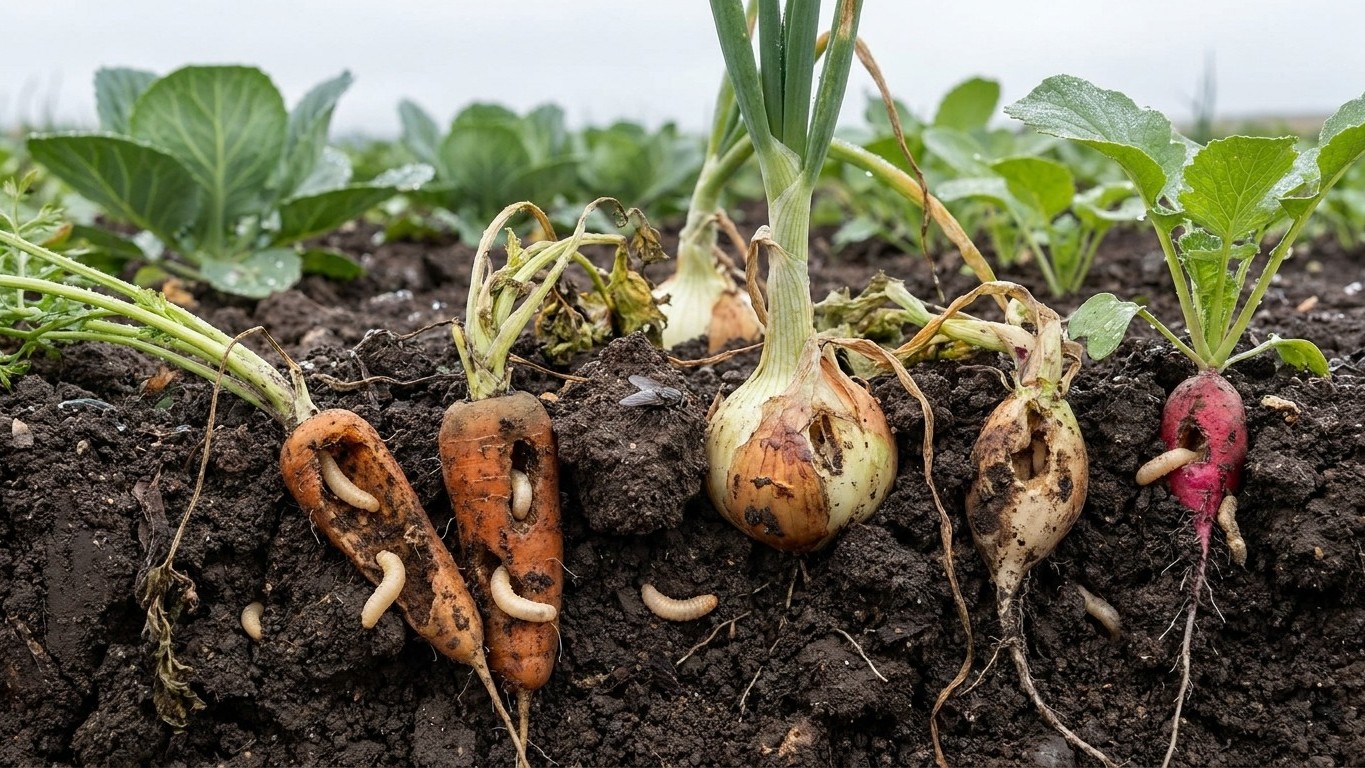
Heavy clay is common in the eastern part of the state, and a root that hits a hard layer splits into forks or stops short. Burdock, salsify and parsnip suffer most because they push straight down for a foot or more. Loosen the bed deeply, or build a raised bed. Skip fresh manure, which also causes forking. Wet clay can rot perennial crowns such as horseradish, so plant them on a slight rise.
Winter cold is rarely the cause of failure. The mean daily minimum of the coldest month at Wichita is 22.5°F, which hardy roots in the ground handle easily.
What changes across Kansas
Kansas covers USDA hardiness zones 5b to 7a, and other parts of the territory differ. That span has no single answer. It is built on one variable only, the average annual extreme minimum temperature, so it says nothing on its own about summer heat, wind or season length. The USDA Plant Hardiness Zone Map, searchable by ZIP code, shows where a particular yard falls. Use it rather than guessing from a neighbor’s garden.
A gardener in the north or northwest, or on the higher ground toward Colorado, should shift everything earlier in fall and later in spring. Sow daikon earlier in the season rather than at the end of the month. Choose the faster parsnip and radish varieties. Mulch overwintering roots deeper, since frozen ground can make digging in January impossible. Spring sowing waits until the soil is workable, which can be a couple of weeks after the Wichita dates. The When to Plant Unusual Roots in Kansas guide lays out those windows in more detail.
The southern and southeastern counties run warmer, so fall sowings can go in a little later and winter digging is easier. The tradeoff is more summer heat and, in the east, wetter clay. Jerusalem artichoke and horseradish handle the whole range. Salsify, parsnip and burdock work across it, but with different sowing dates at each end.
Where to check this for your own county
The state’s land-grant university runs K-State Research and Extension, with local offices that know the soil and weather around them. Start there for two things. The first is the local planting calendar for your county or district, which gives frost-date guidance matched to your area. The second is the vegetable varieties that have been trialled near you. A variety that performs in a Wichita trial may behave differently in a Hays or Garden City garden.
A county recommendation beats a state one. Statewide guidance averages a wide territory, from humid clay in the east to windy high plains in the west, so any single date can be off by a couple of weeks for a given yard. The local office can also say what a soil test should show, which pH range suits roots, and whether your area has pests or diseases affecting them.
For the broader picture of what to grow and how, Growing Unusual Root Crops in Kansas covers soil prep and bed layout. When an extension recommendation and a general guide disagree, follow the extension office. It has watched the ground in your county for years.
Checking this against your own garden
Your own yard outranks every date above. Three observations tell you more than any chart.
- Soil by feel. In early spring, push a hand into the bed. If a handful crumbles instead of smearing into a wet ribbon, it is workable, and parsnip and salsify seed can go in. If one corner stays cold and sticky a week after the rest, that spot is a low or shaded pocket and will always run late.
- The first true leaves. After the rounded seed leaves, the first set of leaves that look like the adult plant mark real establishment. When radish and parsnip seedlings reach that stage, compare beds. A bed that gets there a week sooner is warmer and drains better.
- Where frost shows first in fall. On the first cold, clear morning, walk the yard and note where white frost covers the grass. Those low spots frost earlier, so keep late daikon and tender roots away from them.
Write the dates down for a season or two. A notebook of your own frost and germination dates will be more accurate than the airport figures, and it will tell you how far your yard sits from them.
Common questions
Can parsnips stay in the ground over winter in Kansas?
Yes. The mean daily minimum in the coldest month at Wichita is 22.5°F, and parsnips tolerate that, often tasting sweeter after frost. Mulch with straw or leaves where the ground freezes hard, and dig them before new growth starts in spring.
When should I sow daikon for a fall crop?
Late August into early September suits the Wichita area, since daikon needs roughly 50 to 70 days and the first fall freeze falls between October 23 and November 2. In the north and northwest, or in a rural garden with an earlier frost, sow a couple of weeks sooner.
Will Jerusalem artichokes take over my garden?
They can. Any tuber left in the ground sprouts the next year, so the patch spreads. Give them a dedicated corner or a raised bed with solid sides, and dig thoroughly each fall to keep them contained.
Is yacon worth trying in Kansas?
It is a gamble. Yacon needs a long frost-free season, and a rural garden with earlier fall frost may lose the harvest. If you try it, plant a few starts as soon as frost danger passes and protect the plants if an early freeze is forecast.