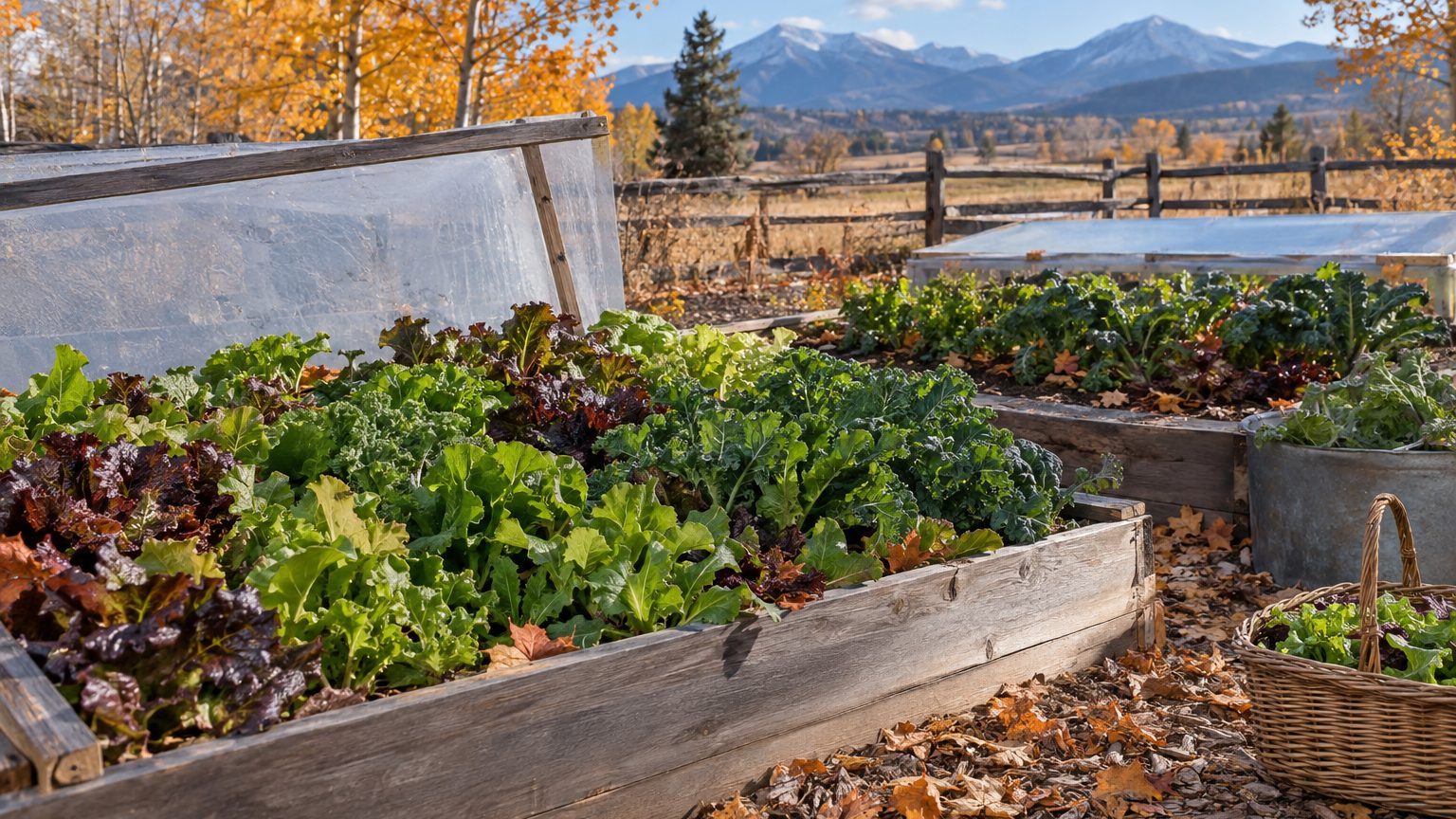

Kentucky winter salad is sown in heat and picked in cold, and the sowing is the hard part, not the freeze. Advice written for colder states is all about keeping greens alive through January. Here the winters are mild enough that hardy types mostly stand outdoors, while late-summer soil is often too warm for lettuce and spinach seed to sprout evenly. Sow the hardy greens in a bed that gets afternoon shade, and keep a length of row cover ready for the first hard freeze.
When the soil is warm enough in Kentucky

NOAA’s 1991-2020 climate normals put the last spring freeze at Louisville between March 24 and April 4, using the 32°F freeze probabilities in the 30 to 70 percent band. That is one station. NWS Louisville notes that this urban site runs differently from the rural land around it in Jefferson County, so a country garden should expect a tighter window. The hills of eastern Kentucky and the river counties of the west will differ again. A frost date is a probability, not a promise.
For a winter salad, the spring date does a different job than it does for tomatoes. You are not waiting on it to plant. It marks the end of the cold your overwintered greens have been living through, and the point after which a spring sowing of the same crops stops needing cover. It is also only a proxy. Frost risk ends first and the soil warms afterward, so soil temperature, not the calendar, decides when seed will sprout. A cheap soil thermometer pushed in to seed depth in the morning tells you more than any date range.
The trouble here is warm soil, not cold
The date that matters most for this crop falls in late summer, when Kentucky beds are still warm and the sowing for winter has to happen. Lettuce seed in particular stalls in hot soil, and spinach comes up patchy. This is why winter salad sowings are set well ahead of the first fall freeze rather than after it.
Three habits help. Sow in the shade of taller crops, or under shade cloth, so the seed bed stays cooler than the open garden. Water the furrow before you drop the seed, then keep it evenly moist. Lay a board or a sheet of burlap over the row until the first sprouts show, and take it off the day they appear so they do not stretch and rot in the dark.
If you have not yet worked out which greens belong in a winter bed, Winter Salads: What Grows When Lettuce Will Not lays out the whole crop. This page talks in types, not cultivar names, because the varieties that have been trialed in Kentucky are a question for Kentucky’s extension service. Everything here assumes beds and containers filled from seed packets or nursery transplants. Nothing on this site involves gathering salad greens from the wild.
How long the season lasts here
NOAA’s 1991-2020 normals for Louisville put the first fall freeze between November 2 and November 12. Set that against the spring range of March 24 to April 4 and the frost-free stretch runs from about 212 days in the tightest pairing (April 4 to November 2) to about 233 days in the loosest (March 24 to November 12). That is roughly seven months. Because NWS Louisville warns that the city station differs from the rural county around it, a garden outside town should count on the shorter end, or a little under it.
What seven months allows
A window this long is not a constraint on winter salad. It is room to sow more than once, and the room that counts sits in late summer and early fall, before the first freeze range begins.
- Two or three sowings of each hardy green instead of one big planting.
- A fresh short row every week or two through early fall, so the bed never all matures at once.
- A final sowing of the tenderest types under cover, kept as insurance.
Staggering is the whole point of succession sowing. A single sowing in a hot week can fail outright. Five short rows sown across a month will not all fail, and they will not all be ready on the same weekend either. The first sowing should never be your only sowing here.
Transplants or direct seed
With this much time, direct sowing works for most of the crop, and it spares the roots. Spinach, mâche and other types with a taproot or fine root system resent being moved. Lettuce, endive and escarole are more forgiving, and starting them in trays in a shaded spot is a sound answer to hot soil. Move them to the bed once the ground has cooled. Roots of tray-grown plants check less when the transplant is small and the bed is watered in.
Count backward from the first freeze range, not forward from spring. Take the days to maturity printed on the packet, remember those figures are catalogue numbers that vary by a week or two with the season, and give yourself a generous margin. Leaf growth slows as the days shorten, so a plant sown on the tight side of that count will stall at seedling size.
The window also shifts as you leave Louisville. Compare Winter Salads for West Virginia Gardens, the state across Kentucky’s eastern border, and Winter Salads for Rhode Island Gardens, a coastal state where the same crops keep a different clock. Elevation and distance from water move a frost date more than most gardeners expect.
Heat and water in Kentucky

The FACTS for this page do not include a count of days above 90°F or a summer rainfall total, so this page states none. Both are printed in NOAA’s climate normals for the Louisville station, and they describe that one station, not the whole state. The general picture is a hot, humid summer with rain that arrives in heavy bursts, and that picture explains most of what goes wrong with fall-sown greens.
Heat delays seed and pushes lettuce and spinach to bolt. Humidity keeps foliage wet, and warm, damp weather overlapping with young seedlings is when downy mildew and leaf spot take hold. So give every seedling airflow: thin to the spacing on the packet, water the soil rather than the leaves, and do it in the morning so the surface dries before night. In a wet winter, raised beds or beds mounded a few inches drain better and keep roots out of standing water.
The cold decides the rest
NOAA’s 1991-2020 normals for Louisville give a mean daily minimum of 27.8°F in the coldest month. That is an average night low just under freezing, not a record, and individual nights run colder. The USDA Plant Hardiness Zone Map (2023) places Kentucky in zones 6a to 7a, a rating built on the average annual extreme minimum. Together they say most winter nights are gentle on a hardy leaf, and a few are not.
| Type | Uncovered | Under row cover |
|---|---|---|
| Mâche, claytonia | Stands through typical winters | Cleaner leaves, slightly faster growth |
| Spinach, kale | Stands, with some leaf damage in hard snaps | Stays in better shape and keeps growing |
| Arugula, mizuna, tatsoi | Takes light freezes only | Needed for hard freezes |
| Lettuce, endive, escarole | Fails in a hard freeze | Needed from the first hard freeze on |
| Basil and tender herbs | Cannot manage | Gone at the first frost |
The first fall freeze, which NOAA’s normals put between November 2 and November 12 at Louisville, sets the other limit. Growth slows to a crawl as light fades, so what you harvest in midwinter is roughly the size the plants reached before that range began, plus slow regrowth after each cutting. A sowing that misses the cutoff sits as a seedling until spring. Sow it earlier next year.
Which winter salads suit Kentucky
Choose by type first, and let this state’s facts pick the type. A seven-month window means you do not need the very earliest maturing kinds, so speed is a low priority. A hot late summer favors types that germinate in cool ground and take shade at the root. A humid climate makes disease resistance the first criterion, ahead of flavor and ahead of size.
Why this page names no varieties
You will not find a cultivar name here. Naming one would mean claiming it performs in Kentucky, and this page has no local trial results to back that up. A variety praised in a catalogue written for another climate can mildew or bolt badly here. The University of Kentucky’s Cooperative Extension Service is the body that knows which varieties have been grown and watched in Kentucky soil and weather, and its county offices are the place to ask. Their answer will be worth more than any list I could print.
What to check before you buy
- Downy mildew resistance, listed on the packet for many lettuce and spinach types.
- Cold hardiness or winter use stated by the seed company.
- Slow-to-bolt labeling for anything sown into warm soil.
- Days to maturity, treated as a rough count that shifts a week or two.
Then plant a spread. Hardy greens such as mâche, claytonia, spinach and kale carry the bed through winter with little fuss. Arugula and the Asian mustards fill the shoulders of fall and spring. Lettuce and endive are the reward crop, and they only pay off if you keep row cover ready. Grow at least three types rather than one, because a mild winter and a hard one favor different crops, and you will not know which you are getting until it arrives.
Common questions
Do I need a cold frame or hoop tunnel in Kentucky?
Not for the hardiest greens. Mâche, claytonia, spinach and kale usually stand outdoors through a typical winter here. A light row cover is enough for most of the rest, and a cold frame or low hoop pays off mainly for lettuce and endive. If you only build one, build it for those.
Why did my spinach go to seed in spring?
Lengthening days and warming weather trigger it, not the last frost. Overwintered spinach bolts as spring returns, and no covering will stop that. Cut what is still tender, then pull the bed and sow something else.
Can I pick leaves that froze solid overnight?
Wait until they thaw. Picking or handling frozen leaves bruises them, and they turn dark and slimy quickly. Leaves that thaw and hold their shape are fine, while those that stay limp and translucent are finished and can go on the compost.
Do winter salad beds need watering?
Yes, whenever the soil is dry a finger’s depth down. Rain often misses the ground under row cover, and a covered bed dries out more than you would expect. Water on a mild morning so the leaves are not wet going into a freezing night.