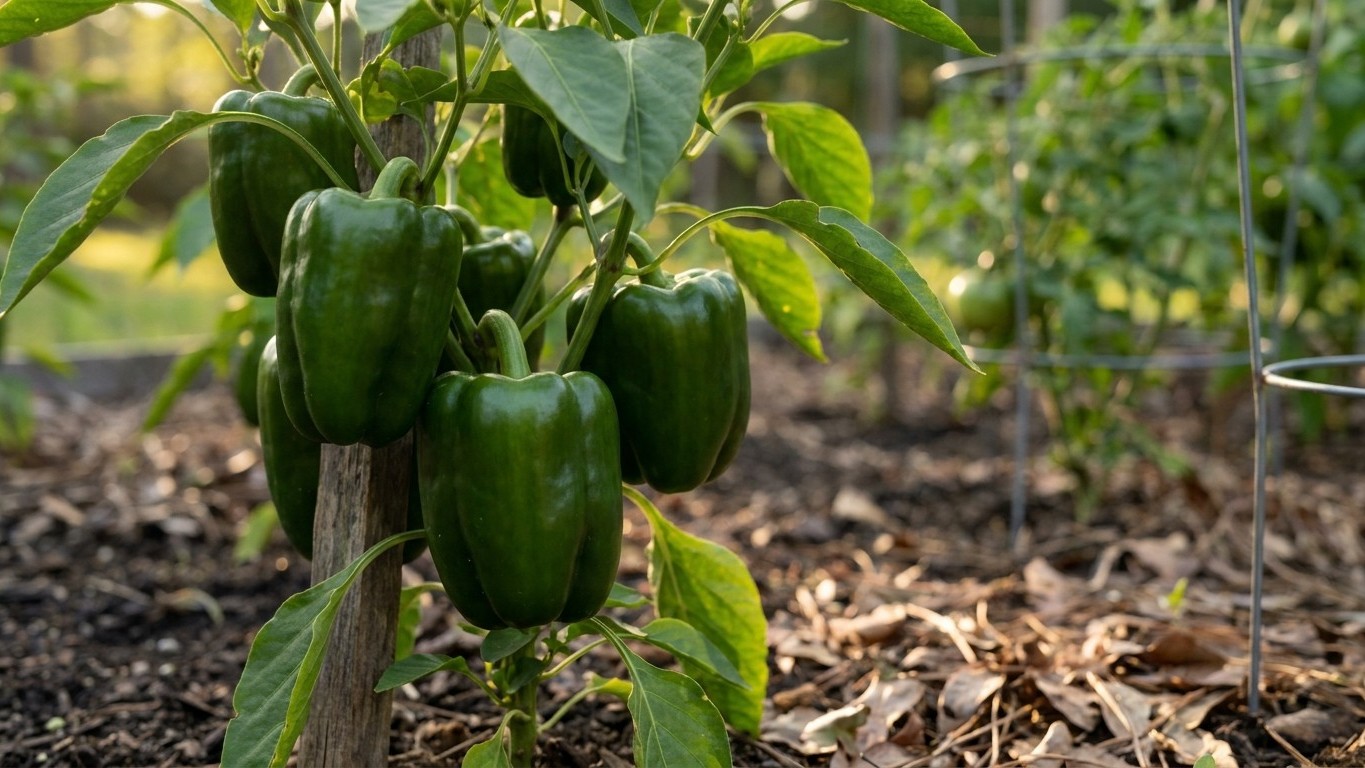

The honest answer is less about insects and more about the thermostat. Kentucky’s pepper trouble usually starts with heat stress and frost timing rather than a specific bug chewing through the leaves, and the numbers below explain why so much “pest damage” reported in home gardens turns out to be weather doing the work instead.
Which pests attack pepper in Kentucky
Here’s where this page has to be straight with you: the sourced climate and crop data available for Kentucky pepper growing does not include a species-level insect inventory tied to an entomology service for this state. Insect presence shifts too much from one county to the next for a statewide list to mean much anyway. What actually gets documented reliably at the state level is climate, not bug counts, and that’s the material this page can stand behind.
So instead of guessing at names, look at what the climate record actually forces onto a pepper plant in Kentucky. The reference station data (Louisville) shows an average of 37.2 days a year at or above 90°F, concentrated in the exact stretch when pepper plants are flowering and setting fruit. Heat this consistent causes blossom drop, sunscald, and leaf curl that look, to an untrained eye, exactly like feeding damage. A grower who sees dropped flowers or curled leaves and assumes an insect is responsible may spend weeks chasing the wrong problem.
What this means for your garden
Frost timing sits on the other end of the same coin. Kentucky’s last spring frost window runs March 24 to April 4 at the reference station, and NWS Louisville has flagged that this urban station trends later in spring and earlier in fall than the surrounding rural county. A rural garden should treat that window as tighter, not looser. Cold-stressed transplants set out too early show stunted, purplish, or dropped leaves, another set of symptoms that gets misread as pest activity.
None of this means insects never touch pepper plants in Kentucky. It means this page won’t name species that aren’t documented in the sourced material for this territory, because a made-up list does more harm than an honest gap. The next section works through the calendar using what’s actually confirmed: heat load and frost dates, and how each one shows up on the plant first.
When each one shows up, and what it does first
Start the clock at transplant, not at a calendar month, since transplant timing itself moves with the season. Pepper transplants need 8 to 10 weeks indoors before they go in the ground, and they should go into soil that has reached 60°F, after frost risk has passed. Given the March 24 to April 4 frost window, that pushes most Kentucky transplanting into mid to late spring, later in rural counties than the urban reference suggests.
The first thing most growers notice isn’t a chewed leaf. It’s a plant that looks fine but drops its flowers. Fruit set fails on both ends of the temperature scale: nights below 55°F stall it just as effectively as days above 90°F do. Early in the season, right after transplant, cool nights are the more likely culprit if blossoms drop with no visible damage on the foliage. This site doesn’t carry summer night minimums for Kentucky, so that judgment call has to be made locally.
The mid-summer stretch
By the time plants are flowering heavily, Kentucky is well into its run of 90-plus-degree days, averaging 37.2 of them across the year and typically stacked into summer. This is when fruit set failure from heat becomes the more likely explanation for empty blossoms, especially if the plant otherwise looks healthy. Fruit that does set generally ripens roughly 35 to 45 days after flowering, and Clemson Extension figures put full harvest readiness at about 70 to 85 days after transplant. That’s a long window where heat stress can interrupt production more than once in a season.
If a grower does see actual chewing, holes, or frass on leaves and stems, that’s a different signal, one that points toward insect feeding rather than climate stress, and it’s worth getting a firsthand look rather than guessing from a description. The next section lays out how to tell these apart before reaching for any kind of treatment.
Telling the damage apart from everything else
Misdiagnosis wastes a growing season faster than any actual pest does. Chewed tissue with ragged edges or visible droppings on the leaf points toward insect feeding; smooth-edged wilting or dropped leaves with no chew marks usually points somewhere else first.
| Symptom | Likely cause | What settles it |
|---|---|---|
| Ragged holes, chew marks, dark droppings on leaves | Insect feeding | Visible insect or frass present; get it identified in person |
| Flowers dropping, no leaf damage | Heat above 90°F or cold nights below 55°F | Timing against the current heat stretch or recent overnight lows |
| Yellowing between leaf veins, older leaves first | Nutrient deficiency | Soil test through your extension office |
| Wilting despite moist soil | Root or vascular disease | Stem cross-section and lab diagnosis needed |
| Sunken, pale patches on fruit shoulders | Sunscald from heat exposure | Appears on fruit facing direct afternoon sun, no chewing involved |
Mechanical damage from wind, hail, or garden tools can also mimic feeding injury, particularly torn or split stems blamed on borers with no other evidence. And a plant simply underwatered during one of Kentucky’s 90-degree stretches will droop and curl in a way that looks a lot like stress from a root-feeding insect, without one actually being present.
This page won’t tell a reader what’s in their own garden from a written description, and no page reasonably could. The signs above are meant to narrow the guess before calling for help, not replace an actual look at the plant.
What actually works here, and what is a waste of time
On a growing season shaped as much by heat and frost as Kentucky’s is, timing beats treatment almost every time. Getting the transplant date right, soil at 60°F, after the March 24 to April 4 frost window closes, does more for a healthy pepper crop than any product applied later. A physical barrier like row cover, put down before a late frost threatens rather than after damage shows, protects transplants during exactly the window when cold-stressed leaves get mistaken for something else.
During the stretch of 90-plus-degree days, the useful move is timing shade rather than reaching for a spray. Afternoon shade cloth or strategic plant spacing during the hottest part of the day reduces blossom drop and sunscald, both of which have nothing to do with insects and won’t respond to anything meant to treat them. Watering consistently through that heat stretch matters more than most people assume; a plant under water stress during a 90-degree run shows symptoms almost identical to feeding damage.
What’s a waste of time: treating a plant for an insect that was never confirmed present. This site doesn’t recommend any specific product, active ingredient, or dosage for pepper pests, because pesticide registration and legal use vary by state and by product, and that’s a question for a licensed extension entomologist, not a general gardening page. Guessing at a treatment based on symptoms alone risks harming beneficial insects for no benefit and delays the actual fix if the real cause is heat, cold, or water.
One more timing mistake costs growers fruit after all that work: refrigerating the harvest. A home refrigerator runs colder than peppers can tolerate. Clemson Extension puts optimal storage at 45 to 50°F with 80 to 90 percent humidity, good for two to three weeks under those conditions. Standard refrigerators run colder than that, and peppers held below about 45°F pit and soften from chilling injury, the same texture failure many growers blame on the growing season instead of the storage step.
Where to check this for your own county
State and regional climate data can tell you the frost window and the heat load. It can’t tell you what’s actually feeding on the pepper plants in a specific backyard three counties over. That gap only gets closed by a county-level extension office, and it’s worth calling before spending money on any treatment.
Every county in Kentucky has access to a Cooperative Extension office through the state’s land-grant university system, and that’s the right first call for an actual pest identification, not a guess based on symptoms described over the phone or matched to a photo online. Bring a sample if possible, or a clear photo of both the damage and anything found on the plant. Extension agents can also confirm whether a soil test is warranted if the symptoms look more like a nutrient issue than feeding damage.
Keep in mind that even county-level advice describes what’s common in that area, not a guarantee about one particular garden. Microclimates inside a single county, a low spot that holds frost longer, a south-facing bed that runs hotter, can shift both frost timing and pest pressure away from the county average. The frost window and heat-day count on this page describe a reference station; a specific garden may run warmer, cooler, earlier, or later.
The next practical step is simple: if there’s visible damage right now, get a photo or sample to the local extension office before doing anything else. If the issue is blossom drop with no visible feeding, check it against the season’s recent heat and overnight temperatures first, since that’s the more likely explanation given Kentucky’s climate pattern.
Common questions
Does Kentucky’s heat really affect pepper more than insects do?
The documented climate data for this territory shows a consistent, measurable heat load, an average of 37.2 days a year at or above 90°F, concentrated during flowering and fruit set. That’s a confirmed stressor. Insect pressure isn’t tracked at that same statewide level, which is exactly why a county extension check matters more than assuming either cause.
When is it safe to transplant peppers outdoors in Kentucky?
After the last frost risk has passed and soil temperature reaches 60°F. The reference frost window runs March 24 to April 4, but rural gardens should expect that window to run tighter than the urban station suggests.
Why did my pepper flowers drop with no visible chewing on the leaves?
Fruit set fails on both ends of the temperature range, below 55°F at night or above 90°F during the day. With no chewing or frass visible, temperature stress is the more likely explanation, especially during a stretch of hot days.
Can I store harvested peppers in the refrigerator?
Not ideally. Clemson Extension recommends 45 to 50°F with high humidity for up to two to three weeks. A standard refrigerator runs colder than that, and peppers held below roughly 45°F develop pitting and soft spots from chilling injury.