
In Kentucky, a pepper variety ripens if it can flower and set fruit before the summer heat load shuts pollination down and after the last spring freeze has passed. The reference station near Louisville averages 37.2 days a year at 90 F or hotter, which pinches the top end of the season. The bottom end depends on the last spring freeze, typically falling between March 24 and April 4. Between those two limits, the plants that finish are the ones started early enough indoors to already have fruit forming before the heat arrives.
The short answer

The reference station near Louisville logs an average of 37.2 days a year at 90 F or above, based on the NOAA NCEI Climate Normals for 1991 to 2020. That’s the number that decides how much of a Kentucky summer is actually usable for pepper production, because pepper flowers stop setting fruit once daytime temperatures climb past that 90 F mark. The pollen becomes unreliable, blossoms drop instead of turning into fruit, and a plant that looked loaded with flowers in June can sit stalled through the hottest stretch without producing anything new. Thirty-seven days doesn’t sound like much measured against a full year, but bunched into the hottest weeks of summer, that’s enough to knock out a meaningful chunk of the fruiting window for a plant that needs a steady several weeks to build a crop.
The other threshold matters just as much, and it sits at the opposite end of the thermometer. Nights below 55 F cause the same kind of fruit-set failure as excess heat, according to Utah State University Extension: cool air interferes with pollen the same way scorching air does, and blossoms abort rather than set fruit. That threshold is a real constraint in Kentucky gardens, especially in the shoulder weeks right after transplanting and again as fall approaches. But this site does not carry summer night minima for Kentucky, so there’s no published figure here to lean on for that side of the equation. The honest answer is that a gardener has to watch their own thermometer on cool nights rather than assume a number based on where the state sits on a map. Latitude alone won’t tell you what a particular county, river valley, or ridge does after dark in June, and guessing wrong on that point causes just as much crop failure as ignoring the heat side.
Put those two limits together and the workable window for pepper fruit-set in Kentucky sits between “nights warm enough” and “days cool enough,” with 37.2 average days a year falling outside that range on the hot side alone. Varieties that ripen here are the ones whose flowering-to-fruit window, 35 to 45 days from bloom according to Utah State Extension, lands mostly inside that middle stretch rather than getting caught by either edge of the thermometer.
When to start seed here
Working backward from the frost date does the job better than guessing at a calendar month, and it’s arithmetic anyone can redo for their own county rather than borrow from a general planting chart.
- Start with the last spring frost. NOAA’s 1991-2020 Climate Normals put the 32 F freeze probability for the Louisville reference station between March 24 and April 4. NWS Louisville has noted that this urban station tends to run later in spring than the surrounding rural parts of Jefferson County, so a rural garden should expect a tighter, earlier window than the city figure alone suggests.
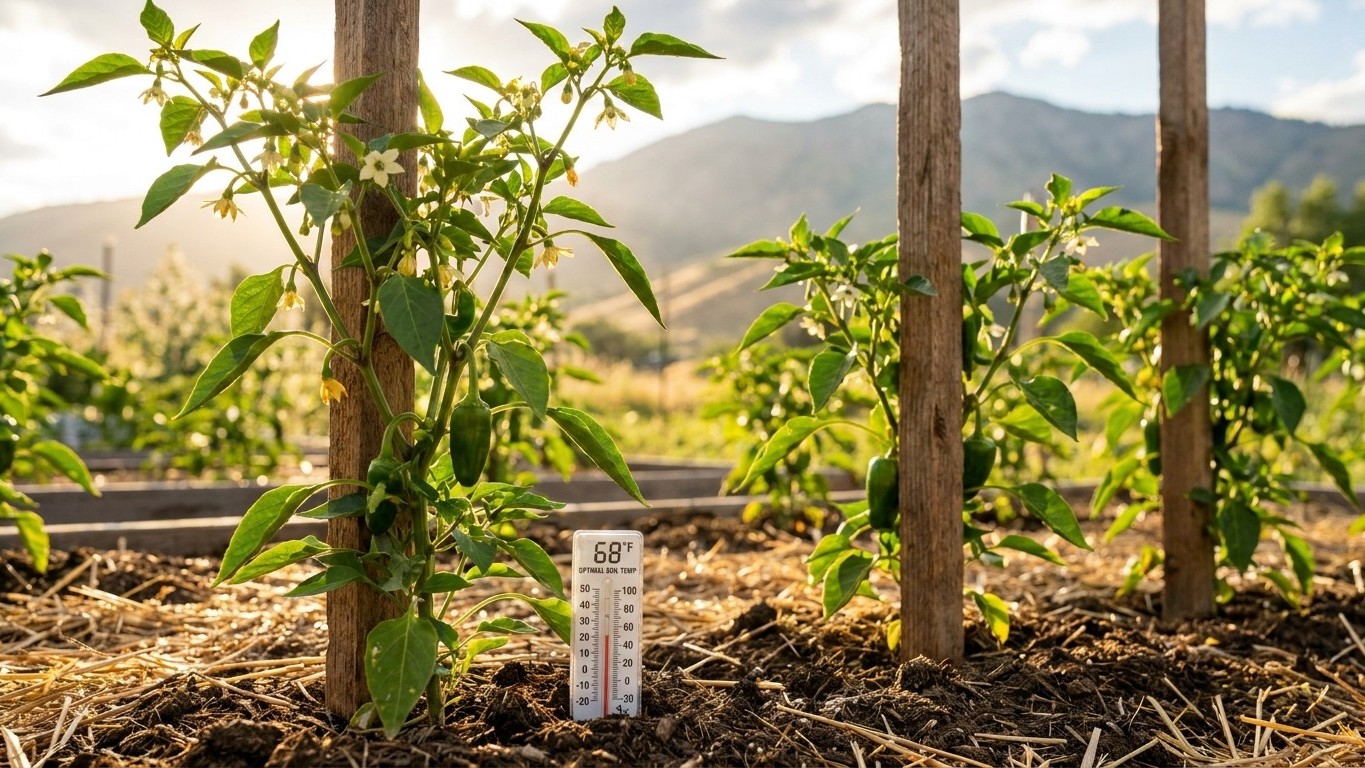
- Wait for 60 F soil, not just a frost-free calendar date. Utah State University Extension is specific on this: peppers go into the ground only after frost has passed and the soil itself has warmed to 60 F. Air temperature can feel warm on a given afternoon while the soil three inches down is still cold enough to stall root growth, so a soil thermometer left in the bed is worth more than a fixed date on a calendar.
- Count back 8 to 10 weeks from that transplant date. That’s how long pepper seedlings need indoors before they’re sturdy enough to go into the garden, per Utah State Extension. If the last frost falls near March 24 and the soil hits 60 F a week or two after that, seed-starting lands somewhere in the back half of January to early February, depending on how quickly the following spring’s soil actually warms.
- Build in slack for a slow spring. Soil warms unevenly year to year, and a wet, overcast April holds soil temperature down even after the air has already cleared 60 F. Starting seed on the early side of that 8-to-10-week window gives room to wait an extra week or two for the soil to actually reach 60 F, instead of transplanting into cold ground on a fixed date because the calendar says it’s time.
None of this requires a special app or a printed chart. It requires a frost date for your own county (rural Jefferson County residents should lean earlier than the Louisville station’s March 24 to April 4 range), a soil thermometer, and the willingness to count back 8 to 10 weeks from whichever transplant date the soil actually delivers rather than the date a generic calendar assigns.
What goes wrong here
- Blossom drop from a hot spell. Once daytime highs push past 90 F, the kind of heat that shows up an average of 37.2 days a year at the Louisville reference station, pepper flowers abort instead of setting fruit. The remedy is timing rather than variety shopping: get plants transplanted early enough, once soil hits 60 F after frost, that they’ve already set a first flush of fruit before the hottest stretch of summer arrives, so the plant has something to finish ripening even if flowering stalls during peak heat.
- Blossom drop from a cool night. The same failure shows up at the other extreme. Utah State University Extension lists nights below 55 F as a second cause of the identical fruit-set problem. Because this site doesn’t track summer night minima for Kentucky, the fix is to watch your own overnight lows directly, particularly in the weeks right after transplant and again as nights cool down heading into fall, and to hold off expecting new fruit set on any night that drops much below that mark.
- Sunscald on exposed fruit. Kentucky summer sun is strong enough to bleach and blister pepper skin on fruit that loses its leaf cover, whether from disease, over-eager pruning, or a plant that never filled out fully. The remedy is leaving foliage in place rather than stripping it back for a tidier look, and staking plants so a summer wind event doesn’t tear off the leaves that were shading developing fruit underneath.
- Blossom-end rot on the fruit tip. This shows up as a sunken, leathery patch on the blossom end and usually traces back to uneven watering rather than a calcium shortage in the soil itself. Fruit that goes from bone-dry to soaked and back again during a hot, dry stretch, the same stretch that racks up those 90 F days, develops the disorder even in soil that tests fine for calcium on a lab report. Even, regular watering through the hottest weeks does more to prevent it than any additive poured on after the damage shows up.
Common questions
Do all pepper varieties need the same 8 to 10 weeks indoors?
Utah State University Extension gives 8 to 10 weeks as the general indoor start window for peppers before transplanting, without breaking that figure out by variety. Where a seed packet lists a different range for a specific type, that packet figure should take priority over the general guideline given here.
What if my county’s soil warms to 60 F later than the Louisville station’s frost date suggests?
Then transplant later. The 60 F soil threshold from Utah State University Extension matters more than any fixed calendar date, and NWS Louisville has already flagged that its own station runs later in spring than the rural parts of Jefferson County, so a direct soil-temperature reading should override a generic date range no matter which Kentucky county you’re gardening in.
Can I do anything about nights below 55 F if I don’t know my local minimum?
Track it yourself with a basic outdoor thermometer left in the garden rather than relying on a general forecast for the nearest city, since overnight lows can vary meaningfully between a river valley, a ridge, and an urban weather station even within the same county. This site does not publish summer night minima for Kentucky, so there’s no shortcut figure to substitute for a direct reading of your own site.
Does the 35 to 45 day figure from Utah State Extension count from seed or from transplant?
Neither. That window runs from flowering, the point at which the plant sets its first blossoms, not from the sowing date or the transplant date. A plant transplanted on schedule can still flower weeks later depending on growing conditions, so the fruiting clock only starts once blossoms actually appear on the plant.