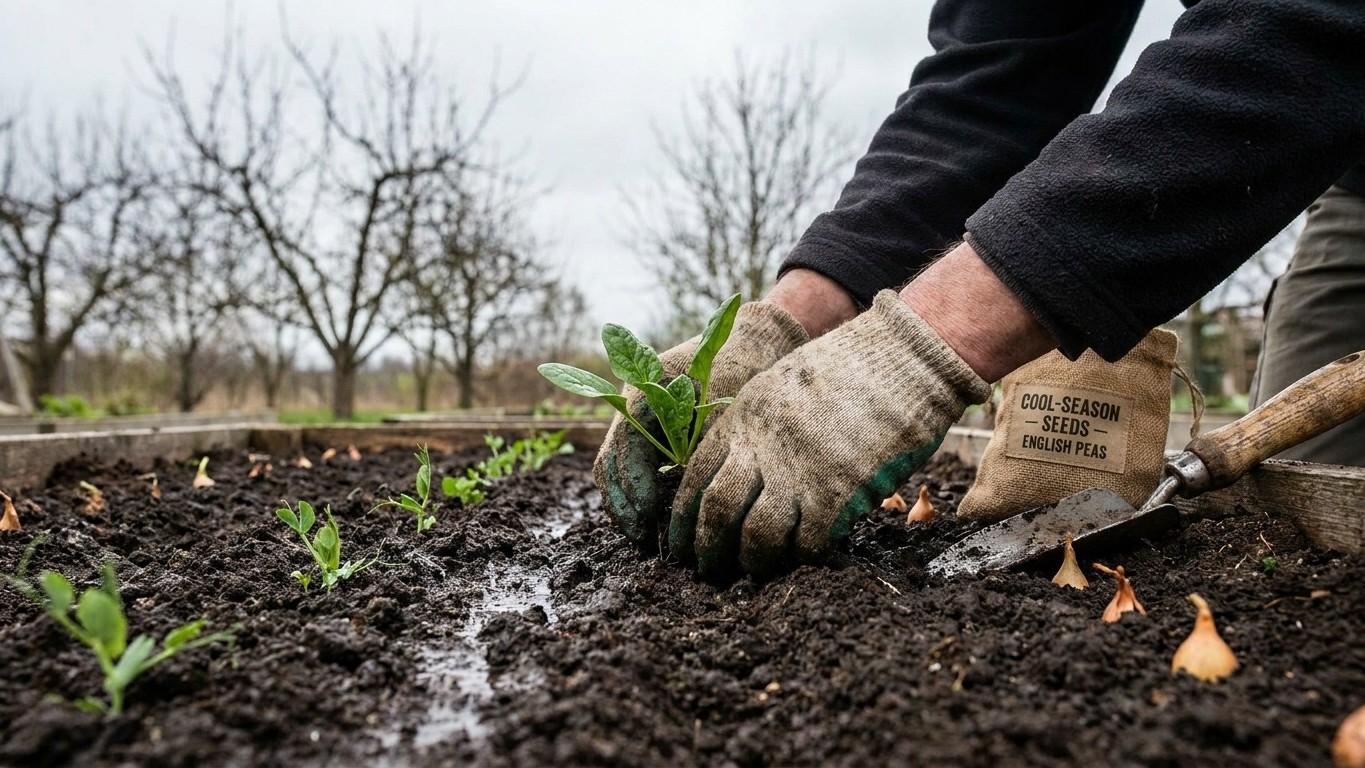

Kentucky sits in the thick of frost season during March, with the state’s last spring freeze arriving anywhere from March 24 to April 4. That means hardy crops like peas, onion sets, spinach, and garlic can go into the ground now, while tomatoes, peppers, and beans still need to wait. The exact answer for your yard depends on soil temperature and local elevation, not the date on the calendar.
What goes in the ground in March

The calendar says March, but the ground doesn’t read calendars. What decides whether a seed germinates or rots is soil temperature and moisture, and in most of Kentucky that soil is still cold and often too wet to work in early March. The last freeze typically lands somewhere between March 24 and April 4 at the reference station near Louisville, and NWS Louisville has noted that this urban station tends to run later in spring than the rural counties around it. Translation: if you garden outside the city, your own frost window is probably tighter than the state average, and pushing tender crops out early is a bigger gamble than the forecast suggests.
What survives this window without protection is a short, specific list. Peas go in as soon as the soil can be worked, since cold soil doesn’t bother them the way it bothers beans. Onion sets and shallots can still go in where the ground has thawed and drained. Spinach, lettuce, kale, collards, and other hardy greens tolerate a hard frost once established, and radishes and turnips germinate fine in cool soil. Garlic planted the previous fall is already up and growing, needing nothing more than a weed check.
Everything frost-tender stays out of open ground. Tomatoes, peppers, squash, cucumbers, beans, and corn will not survive a freeze, and setting them out because a warm afternoon fooled you into thinking spring arrived is the single most common mistake of the month. Brassica transplants (broccoli, cabbage, cauliflower) can go under a cold frame or low tunnel toward the back half of the month if they’ve been hardened off, but full open-air exposure before the frost window closes is still a risk. If you have cold frames or row cover on hand, this is the month they earn their keep, buying two to three weeks of extra growing time on greens and alliums.
What to start under cover
Seed-starting math runs backward from your frost window, not forward from the first day of the month. With the last freeze landing between March 24 and April 4, slow growers like tomatoes and peppers should already have been started roughly six to eight weeks earlier, meaning late January into early February. If that window slipped past you, it’s not too late to start a shorter-season tomato variety now, but expect a later harvest and a smaller plant at transplant time.
March is the better window for crops with a shorter runway. Cucumbers, summer squash, and melons only need three to four weeks indoors before they’re ready to go out, which lines up well with a mid-to-late March start for transplanting after the frost risk clears. A second round of cole crop starts (broccoli, cabbage) sown now gives you a later transplant batch for succession, stretching the harvest instead of getting everything at once.
The two failure modes to watch for are opposite problems with the same root cause: timing against a fixed date instead of your actual frost window. Start too early and you end up with rootbound, leggy seedlings sitting on a windowsill for weeks longer than they should, stretching toward weak light and struggling once transplanted. Start too late and the plant never catches up, entering the ground undersized and behind schedule for the full season. Counting backward from your county’s frost range, not from March 1, keeps you out of both traps.
What is ready to pick
Little comes out of open ground in Kentucky during March, and that’s worth saying plainly rather than padding the list. What’s still producing is what made it through winter under cover or in the ground already. Overwintered kale and collards, often sweeter after cold exposure, are ready to pick as soon as leaves reach usable size. Spinach and mâche that were sown in fall and mulched through winter come back to life as days lengthen, and a cold frame planted in late winter can already be yielding baby greens.
Indoors, sprouts and microgreens fill the gap for households wanting fresh greens without waiting on the garden. A jar of sprouting mung beans or a tray of pea shoots on a counter takes a week to ten days, a useful bridge while outdoor crops are still weeks from maturity.
March is also the month to walk the root cellar or pantry shelf and check stored crops before they turn on you. Winter squash should feel firm with no soft spots near the stem; a squash that’s started to sweat or smell yeasty is on its way out and should be used first. Potatoes sprouting eyes are still edible once the sprouts are removed, but they’re losing quality fast. Onions with soft necks or green growth pushing through the top are best pulled from storage and used immediately rather than left to rot and spread to the rest of the batch.
The jobs that matter this month
March rewards work that has nothing to do with seeds in the ground. Dormant pruning of fruit trees and cane berries is best finished before buds break, and in much of Kentucky that break is imminent, making early March the last comfortable window to prune apples, pears, and brambles without disrupting the coming season’s fruit set. Wait too long and you’re cutting into new growth instead of dormant wood, which stresses the plant and can reduce yield.
Soil, seed, and structure
Soil testing pays off now because results take time to come back and amendments (especially lime, which needs weeks to adjust pH) need a head start before the growing season demands performance. Turning the compost pile, now that it’s thawing and active again after winter, speeds up decomposition just in time for spring bed prep. Seed catalogs move fast this time of year, and popular varieties of tomatoes, peppers, and beans do sell out, so placing an order now beats discovering your first choice is gone in April.
Maintenance that saves time later
Cleaning and sharpening tools before the rush of planting season means you’re not stopping mid-task to deal with a dull hoe or rusted pruners. Repairing raised beds, fencing, and trellis structures now, while nothing is growing yet, avoids having to work around live plants later. And a final pass through the root cellar or garage, checking stored crops for the rot mentioned above, keeps a single bad potato from spoiling the whole bin.
What not to do in March
The classic March mistake in Kentucky is trusting the air instead of the soil. A run of 70-degree afternoons doesn’t mean the ground has warmed to match, and tender transplants set out during a warm spell often sit through a hard freeze within days, since the last frost date runs into early April in a normal year. Wait for the soil itself to warm and drain, not just the thermometer on the porch.
A related error is uncovering hardy crops too early after a mild stretch. Pulling row cover or opening a cold frame because a few warm days arrived leaves greens and alliums exposed right when a late cold snap rolls back through, which is common in this transition month. Leave protection in place until you’re past the bulk of the frost window, even if it means a few extra days of covering plants that look like they’d be fine without it.
Nitrogen timing trips up plenty of gardeners too. Feeding a heavy dose of nitrogen to lawns or beds before real growth has resumed pushes soft, weak top growth that a late freeze can damage, and on lawns it can green up blades while roots are still dormant, leaving the grass more vulnerable rather than healthier. Hold off on nitrogen-heavy feeding until growth is clearly underway, and lean on soil test results rather than habit to decide what and how much to apply.
Checking this against your own county
A state-wide frost window is a starting point, not an instruction for your specific yard. Kentucky stretches from the Mississippi River lowlands in the west to the Appalachian foothills in the east, and elevation alone can shift a frost date by a couple of weeks in either direction. Low-lying areas that collect cold air overnight often see frost linger later into spring than nearby higher ground.
The most reliable next step is checking with the University of Kentucky Cooperative Extension Service, which publishes county-level planting guidance and can confirm how your local conditions compare to the state averages used here.
Common questions
Can I plant tomatoes in Kentucky in March?
Not outdoors. The last frost typically falls between March 24 and April 4, and tomatoes won’t survive a freeze. Starting seed indoors in March is possible for shorter-season varieties, but ideally tomato seed starting happens six to eight weeks before that frost window, meaning late January to early February.
When is the last frost date in Kentucky?
Based on NOAA’s 1991-2020 climate normals at the Louisville reference station, the last spring freeze falls between March 24 and April 4. Rural Jefferson County and other parts of the state can see this date arrive earlier, since the urban station tends to run later than surrounding rural areas.
What vegetables are frost-hardy enough for March planting in Kentucky?
Peas, onion sets, shallots, spinach, lettuce, kale, collards, radishes, and turnips can handle the cold soil and lingering frost risk of March. Garlic planted the previous fall is already growing and needs no special protection.
Is Kentucky in USDA zone 6 or 7?
Both, depending on location. The USDA Plant Hardiness Zone Map places Kentucky across zones 6a to 7a, a range based on average annual extreme minimum temperature. Where your specific address falls within that range affects which perennials and fruit trees will reliably survive winter.