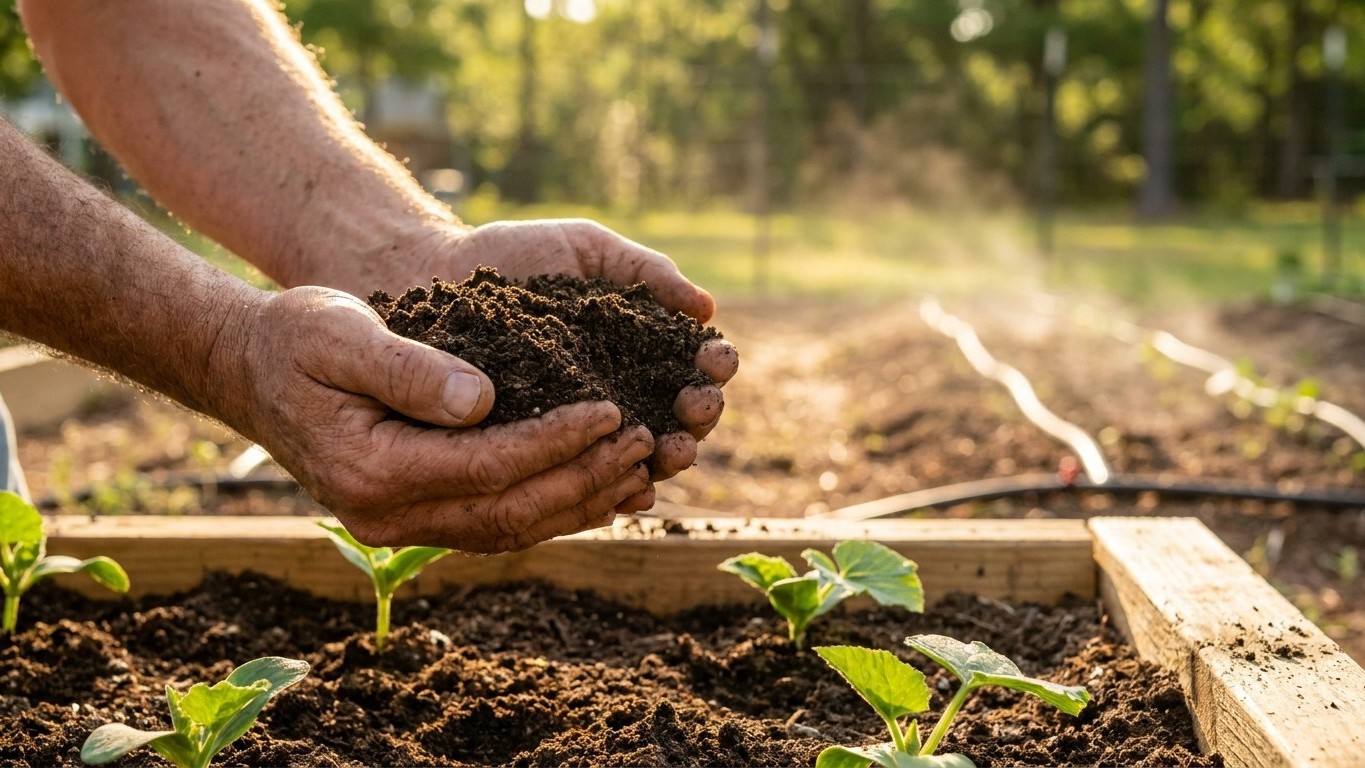

Summer squash goes into Kentucky ground once the soil itself has warmed, typically a couple of weeks after the last spring frost risk fades. With a frost-free stretch running from late March into early November across most of the state, gardeners here get a long, forgiving window with room for more than one planting if the first one falters.
When the soil is warm enough in Kentucky
The question every Kentucky gardener asks in spring is simple: when can I put squash seed in the ground? The honest answer starts with frost data, not soil temperature, because frost dates are what’s measured and published. NOAA’s 1991-2020 Climate Normals put the last spring freeze (32°F) for the reference station at a window running March 24 to April 4. That’s a probability band, not a guarantee. Some years the cold breaks earlier, some years it lingers into mid-April, and the data simply describes what happened three years in ten versus seven in ten during that three-decade record.
Frost is a proxy, and a rough one at that. Summer squash doesn’t care about frost directly. It cares about soil temperature, and soil warms on its own schedule, days to weeks after the air stops freezing at night. Seed dropped into cold, wet ground sits and rots before it ever germinates, frost or no frost. That’s why the practical rule among longtime growers is to wait until the soil has had a real stretch of warm days, not just a frost-free forecast, before direct-seeding or setting out transplants.
Why the station matters
There’s a wrinkle worth knowing. The National Weather Service office in Louisville has flagged that its own reference station, being urban, runs warmer in spring and cooler-arriving in fall than the rural county around it. In practice, that means a garden outside the city should expect a tighter frost-free window than the raw dates suggest, and shouldn’t assume the urban numbers apply to a farm ten miles out.
Given that, most Kentucky gardeners treat the first half of April as the earliest sensible window for setting out summer squash, and hold off longer in cooler pockets or low-lying spots where cold air pools overnight. Raised beds and black plastic mulch both help nudge soil temperature up faster than bare, flat ground, which matters more for squash than for hardier crops since squash seedlings simply stall in cold soil rather than pushing through it.
As for which type to start with, that’s a question for later in this page. What matters here is timing: watch the soil, not just the calendar, and treat the frost date as a planning tool rather than a start gun.
How long the season lasts here
Stretch the two frost dates out and Kentucky’s frost-free season runs from around March 24 to April 4 on the early end, through to November 2 to November 12 in fall. Taken at their widest, that’s roughly seven and a half months of frost-free growing, one of the more generous windows among the summer squash territories in this series. Taken at their tightest, it’s still well over seven months, plenty of time for a crop that’s usually harvesting within two months of sowing.
That length changes the whole strategy. A short season, the kind found further north, forces a single planting and makes every week of delay costly. Kentucky’s window does the opposite: it makes a second, even a third, sowing realistic. Summer squash plants tend to slow down and get chewed up by pests and disease as the season wears on, so many growers here don’t try to nurse one planting through five months. They sow again in early-to-mid summer, timed so the new plants start bearing just as the first round fades, and let the long fall window carry that second crop to a finish well before the November frost risk arrives.
Direct-seed or transplant
The length of the season also affects whether transplanting is worth the trouble. Summer squash resents root disturbance, and transplants need a careful check of the root ball before they go in the ground, since a squash seedling that’s been root-bound too long in a small pot rarely recovers its vigor. In a short-season territory, that risk is worth taking, because a transplant buys two or three weeks that the calendar can’t spare. In Kentucky, with months to spare on both ends, direct-seeding after the soil has warmed is often the simpler and lower-risk choice, with transplants reserved mainly for gardeners chasing the earliest possible first harvest.
Anyone planning that second or third sowing should time it against the first fall frost date, working backward far enough that the plants have finished their productive run before cold shuts them down. For the mechanics of spacing those plantings out through the season, the succession sowing guide on this site walks through the timing in more detail.
Heat and water in Kentucky
Kentucky averages 37.2 days a year at or above 90°F at the reference station, a meaningful heat load but not an extreme one compared with territories further south and west. That count matters because summer squash pollen loses viability fast once temperatures push into the high 90s; flowers open, but fewer set fruit, and growers sometimes see a run of blossoms drop without producing anything during the hottest stretch of July and August. Thirty-seven days isn’t enough to write off a summer, but it’s enough to expect a slowdown in fruit set during the peak of the heat, usually recovering as temperatures ease back in early fall.
Rainfall across the growing season averages about 12.0 inches over June, July and August, out of 48.3 inches for the year. That’s a reasonably wet summer by national standards, not a drought-prone one. But the month-by-month split matters more than the total.
| Month | Average rainfall |
|---|---|
| June | 4.27 inches |
| July | 4.05 inches |
| August | 3.71 inches |
August, the driest of the three and often one of the hottest, is exactly when a squash plant’s huge leaves are losing the most water to evaporation, and its shallow root plate can’t always keep pace. The combination of rising heat and falling rainfall late in summer is the real pressure point, more than the seasonal total suggests on its own.
There’s another wrinkle worth knowing: Kentucky’s summer rain tends to arrive as thunderstorms rather than steady soaking rain. A downpour that drops an inch in twenty minutes mostly runs off a compacted or clay-heavy garden bed rather than soaking down to the root zone, so the monthly averages can overstate how much water actually reaches the plant. That same humidity, paired with warm nights, also sets up conditions for powdery mildew and other leaf diseases on squash, which spread fastest when foliage stays damp overnight. Watering the soil rather than the leaves, and giving plants enough spacing for air to move through, does more to manage that risk than any product applied after the fact. On the driest stretches, particularly in August, a consistent watering schedule matters more than relying on the sky to do the work, and a rain gauge on the actual plot settles the question better than any regional average can.
Which summer squash suit Kentucky
Kentucky’s long season takes the pressure off choosing the earliest possible type. With seven-plus frost-free months, there’s time for a bush-habit yellow squash, a zucchini-type, or a scalloped pattypan to mature and still leave room for a second planting behind it. Type matters more than speed here.
Given the humidity and the periodic disease pressure that warm, damp nights bring, disease resistance is the first thing worth checking in any variety description, ahead of days-to-maturity or fruit shape. A plant that shrugs off powdery mildew for an extra few weeks in August often outproduces a faster-maturing type that collapses once the humidity sets in. Bush-type squash, kept with enough spacing between plants for air to move freely, also fare better here than sprawling vines packed tight, since airflow at the base of the plant does real work against the fungal pressure this climate brings.
None of that points to a specific variety name, and that’s deliberate. Seed catalogs list dozens of yellow, zucchini, and pattypan types, and which ones actually perform well in Kentucky’s clay soils, humidity and heat pattern is a question that gets answered locally, through trial plots and real seasons, not through a general guide. The University of Kentucky Cooperative Extension Service runs exactly those trials and publishes results specific to the state’s growing conditions, county by county in some cases. That’s the source worth checking before buying seed, because a variety that thrives in a trial garden near Louisville may behave differently in the cooler hollows of eastern Kentucky, reflected in the state’s own 6a-7a hardiness range spanning the map.
The type of squash, the spacing, and the watering habits described above will do more for a Kentucky garden than any single variety choice. Get those right, and most reasonably disease-resistant summer squash sold through a Kentucky-focused seed source will perform close to what the extension trials report.