
Louisiana’s frost dates are almost beside the point for melons. With a last spring freeze landing between January 18 and February 8, and the first fall freeze not showing up until December 17 to January 8, cold isn’t what limits your harvest here. Heat is. The real planting calendar runs backward from summer, not forward from frost.
The short answer for Louisiana
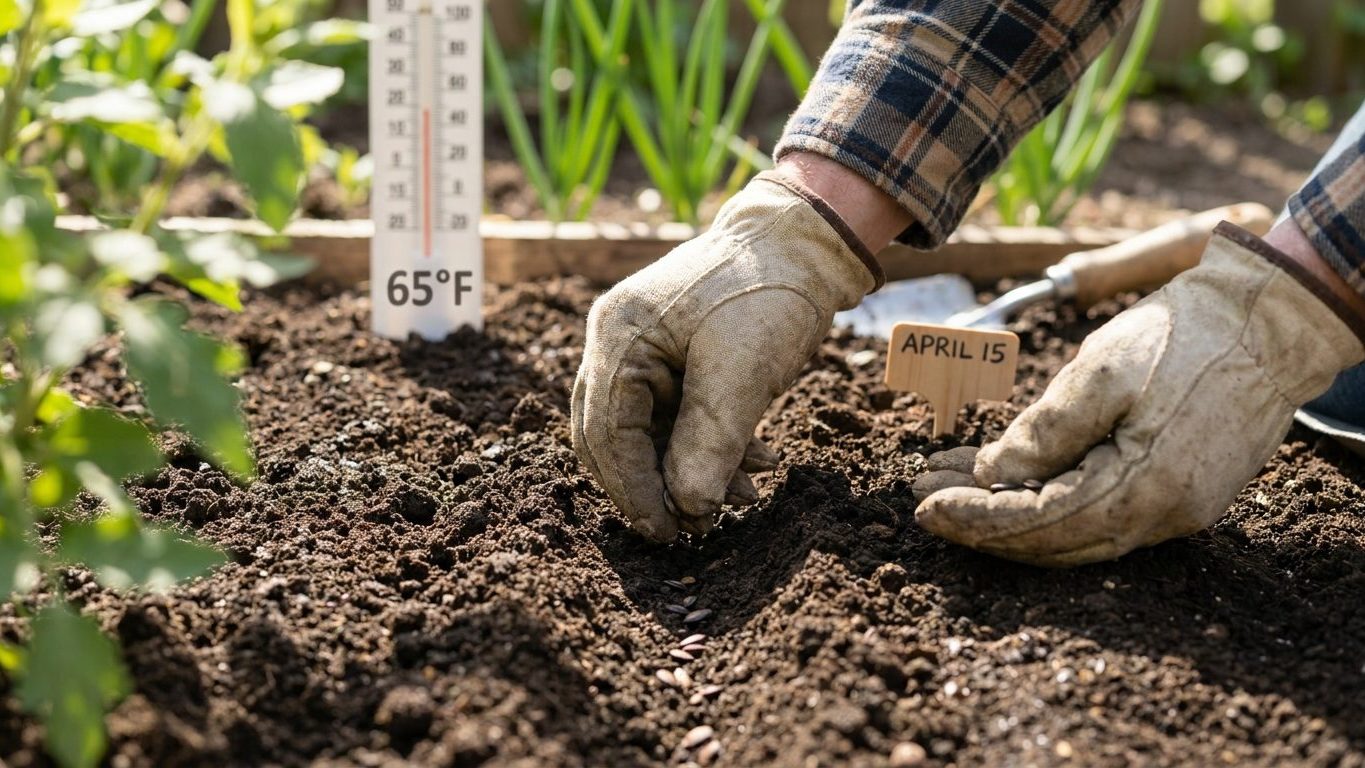
Plant Melons in Louisiana from mid-February through March for a spring crop, and again from late June through July for a fall crop that beats the holiday-season frost. Those two windows exist because of one number: 70.7 days a year hit 90°F or higher at the reference station, and most of them stack up in June, July and August. Melons germinate fine once soil hits the mid-60s, which in south Louisiana can happen well before the “official” last freeze window even closes.
Here’s the twist the NOAA freeze data makes clear: a 32°F freeze only occurs in 86.8 percent of years at this station. That means roughly one winter in seven never freezes at all, and when it does, the window straddles New Year’s Eve. A calendar built on “wait until after the last frost” barely applies in the southern half of the state. Growers there are really scheduling around soil temperature and around getting fruit off the vine before peak heat wrecks pollination, not around ice.
That’s why the spring window opens in mid-February rather than waiting for a frost date that may never come. A melon seeded in mid-February to early March, with roughly 70 to 90 days to maturity depending on variety, ripens in May or early June, ahead of the worst of the 90-degree stretch. Push planting into April and the fruit set lands right in the hottest, most humid weeks, when pollen viability drops and bees get less active during the hottest part of the day.
The second window, late June into July, works because the fall frost date is so late and so unreliable that it barely constrains anything. A melon planted the first week of July and needing 80 days matures around the third week of September, months before any freeze risk even at the earliest edge of the December 17 date. That gives Louisiana gardeners something most colder states don’t get: two real planting windows in the same year, both driven by dodging heat rather than chasing warmth.
None of this replaces a soil thermometer or a parish-level recommendation, but as a starting frame: mid-February to March for spring, late June to July for fall, with the summer months themselves treated as a season to avoid starting anything new.
What will not work here
Long-season melon varieties are the first casualty. Anything rated past 90 to 100 days to maturity, planted at the tail end of the spring window in late March, is still developing fruit when the days-above-90°F count starts climbing through June and July. Heat that intense during flowering causes blossom drop and poor fruit set, so the plant survives but the harvest doesn’t show up. The same slow varieties fail again if pushed too late into the fall window, since a 100-day melon started in July is still ripening as the first frost arrives sometime between mid-December and early January.
Watering on a fixed weekly schedule fails for a different reason. Summer rainfall averages about 21.3 inches across June, July and August, with July actually the driest of the three at 6.79 inches against June’s 7.62 and August’s 6.91. That rain doesn’t arrive evenly. It shows up as thunderstorms that dump an inch or two at once, then nothing for a stretch, while 70.7 days a year of 90-degree-plus heat are pulling moisture out of the soil the whole time. A gardener watering every Sunday regardless of conditions ends up alternating between waterlogged roots after a storm and stressed, wilted vines during the dry stretch between fronts. Melons respond to that swing with cracked fruit and inconsistent sweetness, not just a smaller harvest.
Tight spacing is the third failure point, and it’s a humidity problem more than a heat problem. That same rainfall total, combined with Louisiana’s summer humidity, keeps foliage wet longer after every storm than it would in a drier climate. Vines planted close together trap that moisture between leaves, which is exactly the environment powdery mildew and downy mildew need to spread. A spacing chart copied from a seed packet written for a drier state doesn’t account for how much longer leaves stay damp here after a typical afternoon storm.
Put together, the pattern is consistent: slow varieties, rigid watering schedules and tight spacing all fail here specifically because Louisiana’s heat load and rainfall pattern are more extreme in both directions than most planting guides assume.
What changes across Louisiana
Louisiana spans USDA Hardiness Zones 8a to 10a, which is a wide spread for one state. That range is built entirely on average annual extreme minimum temperature, so it’s a measure of how cold winter gets, not how long the growing season runs or how brutal summer gets. Still, that spread tells you something useful: the northern parishes and the coastal parishes are not gardening on the same calendar.
In the zone 10a areas near the coast, freezes are rare enough that gardeners can lean harder into the late-planted fall window without much frost risk at all, since the mild end of that zone barely dips to freezing most years. Further north, toward the 8a end of the range, freezes are more reliable and arrive earlier, which tightens the fall window and makes that late-June to July planting date less forgiving. A grower in the northern parishes pushing a fall crop into late July risks running out of season before harvest, even though the state-level fall frost date suggests plenty of room.
The spring side shifts too, just less dramatically. Soil warms up earlier near the coast, where winters are milder, than it does in the northern parishes, so the practical start of the mid-February window can lag by a few weeks depending on where in that 8a-10a range a garden sits.
There’s no single answer for a state that covers three hardiness zones. The honest version of this calendar is a range, not a date, and the only way to know which end of that range applies to a specific yard is to check the USDA Plant Hardiness Zone Map directly rather than guessing from a parish name or a memory of last winter.
Where to check this for your own county
The LSU AgCenter, Louisiana’s land-grant extension service, is the right next stop. This state-level article is a starting frame built from climate normals at one reference station. It was never going to match every parish, and it isn’t supposed to.
What’s worth looking for on the AgCenter site is a parish-specific planting calendar, since LSU AgCenter maintains local offices and publishes guidance tuned to regional conditions rather than one blanket statewide schedule. Alongside the calendar, look for variety trial results or recommended cultivar lists for the parish in question. Melon varieties that hold up against southern Louisiana’s humidity and disease pressure aren’t necessarily the same ones that perform best in the drier, slightly cooler conditions of the northern parishes, and county-level trial data reflects that in a way a state map never can.
A parish extension office recommendation beats anything on this page, plainly. This article works from broad regional numbers, hardiness zone ranges, and normals from a single reference station. A parish agent, or the published data for that specific county, accounts for local soil types, microclimates and the actual varieties that have performed well in test plots nearby. Treat this page as the wide-angle version and the parish office as the close-up.
If a parish page doesn’t list melons specifically, the AgCenter’s vegetable planting guide is usually the broader document to check first, since it typically covers the whole warm-season vegetable lineup with dates and variety notes organized by region of the state rather than by individual parish.
Checking this against your own garden
Every date on this page is a normal, an average built from decades of weather station data. A gardener’s own yard will confirm or override it, and three simple observations settle the question faster than any calendar.
Soil warmth by feel comes first. Push a bare hand a couple inches into the planting bed in the morning before the sun has warmed the surface. If it feels cool or damp-cold rather than mild, the soil hasn’t caught up to the calendar yet, regardless of what date it is. Melon seed sitting in cold soil doesn’t die, it just stalls, rots, or germinates unevenly, which shows up weeks later as a patchy stand.
The first flush of male flowers is the next signal. Melon plants produce male flowers before female ones, often by a week or two, and a strong early flush of males means the plant has enough warmth and daylight to be moving toward fruit production. A vine that flowers weakly or drops buds is usually responding to either heat stress or a cooler microclimate than expected, both worth noting for next season’s timing.
First true leaves, the ones that appear after the initial rounded seed leaves, mark the point where the seedling has shifted from stored seed energy to actual growth. If those true leaves are slow to show up compared to what the seed packet suggests, that’s a direct read on how warm the local soil actually is, more reliable than any regional average. Between soil feel, flowering timing and leaf development, a gardener gets a running record of their own microclimate that no state-level calendar, including this one, can replace.