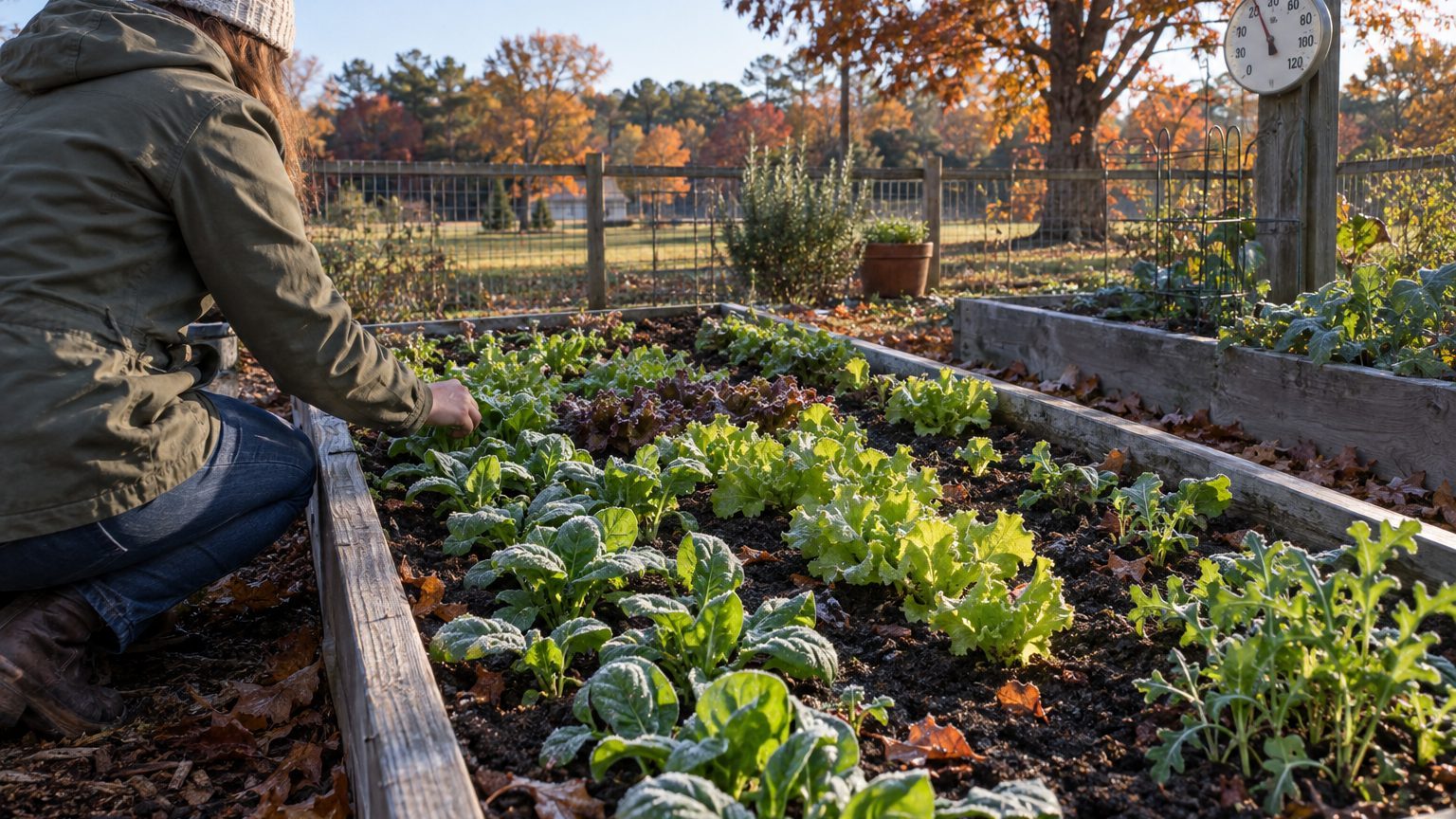

Sow winter salads in Louisiana through the cool months. Start in fall once nights cool, and finish spring sowings before warming weather pushes lettuce to bolt. The frost dates behind that advice are unusual. New Orleans has a fall freeze window of December 17 to January 8 and a spring one of January 18 to February 8, and some winters skip freezing entirely. Heat, not frost, sets your deadlines.
The short answer for Louisiana
Build your calendar around the cool season, not around a “last frost” date. NOAA’s 1991-2020 Climate Normals for New Orleans, the reference city used on this page, give these windows:
| Event | Window |
|---|---|
| First fall freeze (32°F) | December 17 to January 8 |
| Last spring freeze (32°F) | January 18 to February 8 |
Each window is a probability, not a promise. It marks the dates when the chance of a 32°F freeze sits between 30 and 70 percent. Inside the fall window, a freeze has become about as likely as not. Inside the spring window, a late freeze is still about as likely as not. Neither is a date to plant by.
The same data explains why this isn’t a normal frost calendar. A 32°F freeze happens in only 86.8 percent of years at this station, so roughly one year in seven has no freeze at all. The fall window also straddles New Year’s, which makes “first frost” a slippery idea. And the mean daily minimum of the coldest month is 46.1°F. That figure decides whether plants survive winter, and for most salad crops here the answer is yes.
So the practical calendar has two parts. The main sowing happens in fall, early enough that seedlings have real roots before the December and January freeze odds climb. A second, shorter run goes in during late winter, while the spring window is still open and the heat hasn’t arrived. Between those runs, the garden mostly needs harvesting.
This page doesn’t carry a dated, week-by-week sowing schedule for each crop, and it won’t invent one. What it does give you is the frame: the freeze bands above, the cool-season logic, and the warning that the end of your season is set by warmth. For which crops fit that frame, see The Best Winter Salads for Louisiana. For the broader picture, start with Winter Salads for Louisiana Gardens.
What will not work here
Waiting for the last frost is the first mistake. Northern calendars say “sow after the last frost,” and here that would put you in late January or early February, with the warm months close behind. A crop started on a northern schedule runs out of cool weather before it matures.
The second failure is sowing too early in fall. Lettuce seed is stubborn in hot soil, and the soil here stays warm long after the calendar says autumn. Seed scattered in a warm bed may sulk, sprout unevenly, or produce seedlings that bolt or wilt in the first warm spell. The fall window opens when the soil cools, not when you feel ready.
Third, the slowest winter salads get squeezed. A crop that needs a long stretch of cool, steady weather has a narrow runway in a place where the coldest month’s mean minimum is 46.1°F and spring warmth arrives early. The cool season is real, but it’s short on the back end. Fast-maturing greens fit comfortably. Anything that demands months of cold to form tight heads is a gamble.
Humidity is the quieter problem. Louisiana’s cool season is also damp, and close spacing traps moisture around leaves. Crowded rows of lettuce or mustard dry slowly after rain and invite leaf diseases. Give plants room, water in the morning, and lean toward raised beds or well-drained soil, because heavy ground that stays soggy can rot seedlings.
Then there’s the opposite error: assuming winter will do the thinning for you. Because roughly one year in seven has no 32°F freeze at all, you can’t count on cold to hold back insects or to slow the plants. Aphids and caterpillars keep working through mild winters.
Finally, don’t treat a hard freeze as impossible. Most years do freeze, and in the 30 to 70 percent bands a night at 32°F is a live possibility. Young seedlings and the tender crops sown in the fall’s final weeks are the ones that suffer. Keep a sheet of frost cloth or an old bedsheet within reach during December and January, and you’ll rarely need it, which is the point.
What changes across Louisiana
The state isn’t one garden. The USDA Plant Hardiness Zone Map (2023 edition, built on 1991-2020 normals) places Louisiana in zones 8a to 10a. That zone system rests on one number only, the average annual extreme minimum temperature, so it says how cold the worst nights get, not how long the cool season lasts. A spread from 8a to 10a is wide, and there is no single answer for the whole state.
The dated windows on this page are for New Orleans. They don’t transfer unchanged to the rest of the state. The figures here show that south Louisiana barely freezes. North Louisiana freezes far more reliably, and the colder end of the zone range sits toward the north.
If you garden in the north, shift your thinking in two ways. Expect freezes to arrive more dependably and to last through more of the winter, which makes frost cloth or low covers a regular tool rather than an emergency one. Your cool-season salads will also sit in colder conditions for longer, so hardy greens are more at home than in the south. Treat the New Orleans dates as a rough guide only, and be ready to adjust.
If you garden on the south coast, the opposite applies. Freezes are a lighter worry, while warmth is the bigger one. Your fall sowing may start later, because soil takes longer to cool, and your spring cutoff may come sooner. Many coastal gardeners find that the cool season behaves like a long, mild stretch with an occasional cold snap rather than a true winter.
Which zone do you fall in? This page can’t say, and it shouldn’t guess. Look up your location on the USDA Plant Hardiness Zone Map, then treat your zone as one input, alongside your own frost history, rather than as a calendar.
Where to check this for your own county
The best next stop is the LSU AgCenter, Louisiana’s land-grant extension service. Louisiana is organized by parishes rather than counties, and the AgCenter has parish-level offices staffed by agents who know local conditions.
Look for two things. The first is a local planting calendar or vegetable planting guide, ideally one that lists sowing windows for leafy greens by region of the state. The second is the list of varieties that have been trialled in your area. A variety that does well in a university trial in Louisiana has been tested against the same humidity, disease pressure and warm spells you’ll face.
A parish recommendation beats a state one, and this page is the state one. It’s built on a single reference city and a USDA-wide zone range. An extension agent can tell you things this page can’t: how your soil drains, which pests are active, and whether the local season is running ahead of or behind the usual pattern.
When you contact an office, bring specifics. Say what you want to grow, whether you garden in raised beds or in-ground, and roughly where in the parish you are. Ask when local gardeners start fall sowing, when they stop in late winter, and which varieties have held up best. Write the answers down next to the New Orleans freeze windows from this page, and you’ll have a calendar that fits your own ground.
Checking this against your own garden
Your own observations outrank every date above. Three are worth watching, and none needs equipment.
Soil warmth by feel. In the morning, press your hand flat into the bed. If the soil still feels warm rather than cool, wait before sowing lettuce. A bed that cools sooner than your neighbor’s tells you your garden sits lower, shadier or more open to the air.
The first true leaves. Seedlings first show rounded seed leaves, then the first real, shaped leaves. Note how many days that takes in fall. If it’s slow, the soil is cooler or the bed is shaded. If it’s quick, you have a warm, protected spot, which will matter when late winter arrives.
The first blackened tender plant. Watch the basil, peppers or other tender plants still in the yard. The morning one of them turns dark and limp is your own local frost date. Compare it with the December 17 to January 8 window and you’ll see whether your garden runs colder or milder than the New Orleans reference.
Keep a short note of all three each year. After two seasons, you’ll have a calendar that no state page can write for you.
Common questions
Can I still sow winter salads in January?
Often, yes, since the spring freeze window runs January 18 to February 8 in New Orleans and the weather is still cool. But the clock is running against you, because the later you sow, the less cool weather your crop has left. Choose fast-maturing greens and sow earlier in the month rather than later.
Do I need frost protection?
Keep some within reach. A 32°F freeze occurs in 86.8 percent of years at the New Orleans station, so most years bring at least one. Roughly one year in seven has none, so don’t count on either outcome.
Is the New Orleans calendar right for north Louisiana?
Not exactly. North Louisiana freezes far more reliably, and the state spans USDA zones 8a to 10a. Use the New Orleans windows as a reference, then check with your parish extension office.
What ends the season, frost or heat?
Heat. South Louisiana barely freezes, with a coldest-month mean daily minimum of 46.1°F, so plants rarely die from cold. Warming weather in late winter and spring is what makes lettuce bolt and turns leaves bitter.