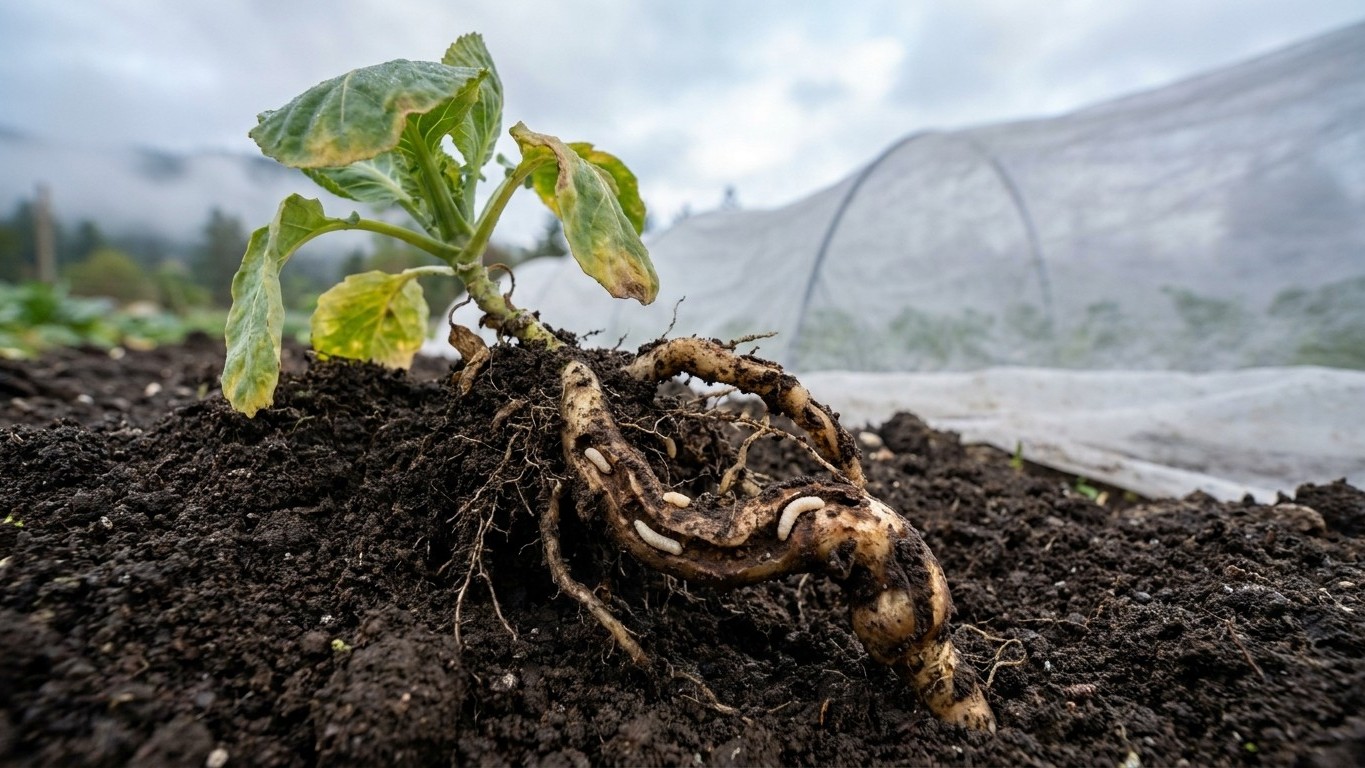

Sweet potato slips go into Maryland ground in late spring, after the last frost window has closed and the soil has warmed. NOAA’s normals put that window between April 3 and April 16, but those dates are a floor, not a planting date. Sweet potatoes sulk in cold ground, so the real start comes several weeks later. The first fall frost, between October 26 and November 5, sets the finish line. The wider crop picture is in Growing Sweet Potatoes in Maryland.
The short answer for Maryland
Plant slips after the April 3 to April 16 frost window has passed and the soil feels warm, which in practice means several weeks later. Never plant into that window itself. The “several weeks” is a common gardening rule of thumb, not a figure this page can source, so treat the frost dates as the earliest possible start and your own soil as the judge.
The window itself needs a careful reading. It comes from the NOAA NCEI 1991-2020 Climate Normals, and it is a probability, not a promise. Between April 3 and April 16, the chance of another 32°F freeze sits somewhere between 30 and 70 percent. Before April 3, a freeze is more likely than not. After April 16, it gets less likely without ever reaching zero. The figures come from a Baltimore reference station, so they describe a typical year there, not any particular spring.
| Measure | Maryland figure | What it means for sweet potatoes |
|---|---|---|
| Last spring frost (32°F, 30-70% band) | April 3 to April 16 | The earliest any frost-tender plant should be considered, not the planting date |
| First fall frost (32°F, 30-70% band) | October 26 to November 5 | The deadline for a finished crop and for digging |
| Days at or above 90°F | 24.6 a year | Real summer heat, which sweet potatoes tolerate well |
| Summer rainfall (June to August) | about 12.6 inches | Enough rain in an average year that watering is a supplement, not the main supply |
Why the frost date is only the starting line
Sweet potatoes are tropical in origin. A light frost blackens the vines, and cold, wet soil stalls slips that do survive. A garden can be past its last frost and still be too cool for them. That is why warm-season crops and cool-season crops live on such different calendars, even in the same bed.
The fall end of the window
Do the arithmetic between the later spring date (April 16) and the earlier fall date (October 26) and you get about 193 days. Sweet potatoes cannot use all of them, because planting waits for warmth. Still, late spring planting leaves a comfortable runway before fall frost, and the 24.6 days a year at or above 90°F mean Maryland summers deliver the heat these plants want. The state is a good fit for the crop. The mistakes come from timing, not climate.
What will not work here
Planting in April fails. A frost band that runs into mid-April means a slip set out at the start of it has somewhere between a 30 and 70 percent chance of meeting another 32°F freeze. Even if the frost spares it, the soil is usually still cold. Cold soil leaves slips sitting without growing, and sitting in wet ground is how they rot. Peas and lettuce love that weather. Sweet potatoes do not.
Planting too late, or with the wrong variety
Waiting until July fails in the other direction. The first fall frost can arrive as early as October 26, and a slip that goes in very late has far less time to size up roots before that date. The slowest-maturing varieties are hit hardest, because they need the longest stretch of warm weather to finish. If your planting will be late for any reason, variety choice matters, and The Best Sweet Potatoes to Grow in Maryland covers which types suit the state’s season.
Watering and spacing habits borrowed from drier places
Maryland gets about 12.6 inches of rain across June, July and August, and 45.0 inches over a full year. June is the driest summer month at 3.98 inches, with July at 4.48 and August at 4.09. That is not a desert schedule, so a fixed daily watering routine can overdo it. Too much water late in the season can crack or rot the roots.
But rain and soil interact. A sandy bed lets an inch of rain drain through within a day, while clay can hold it for a week. With 24.6 days a year reaching 90°F, evaporation is real, and a summer thunderstorm often runs off instead of soaking in. Sandy beds may need a top-up between storms, while clay beds may need none. These are normals for one reference station, not a forecast, so a cheap rain gauge on your own plot settles it better than the regional number.
Humid summers also punish crowding. Sweet potato vines sprawl, and vines packed too tightly keep their leaves damp and their air still. Give them room, and expect to give them more of it than a dry-climate guide would suggest.
What changes across Maryland
Maryland is not one garden. The USDA Plant Hardiness Zone Map (2023 edition, built on 1991-2020 normals) runs from 5b to 8a across the state. That is six half-zone steps, so there is no single answer for the whole state, and any claim that there is should make you suspicious.
Mountains versus the bay
Western Maryland, meaning Garrett and Allegany counties, is mountainous and runs weeks later than the frost dates on this page. A gardener there should push planting later, expect the fall frost earlier than the Baltimore figures, and lean toward varieties that mature faster. Warming the bed ahead of time with black plastic is a common way to gain a little ground in a short season.
The Eastern Shore runs milder. Frost can leave earlier and arrive later there, which gives a longer stretch to work with. Even so, don’t plant at the first hint of warm weather. A warm week in April is not the same as warm soil.
Zone is not the whole story
The hardiness zone rests on one variable, the average annual extreme minimum temperature. That tells you how cold your worst winter night gets, and sweet potatoes are grown as a summer crop and dug before winter. So the zone is a rough guide to how your area sits relative to the rest of the state, not a planting instruction. Frost dates and summer warmth matter more. To see where your own address falls, use the USDA Plant Hardiness Zone Map and look up your ZIP code. This page cannot tell you your zone, and neither can a neighbor’s guess.
Where to check this for your own county
Start with University of Maryland Extension, the state’s land-grant extension service. Its county offices and Master Gardener volunteers know the local conditions in ways a statewide page cannot. This page gives you the state-level picture from Baltimore-based normals. A county recommendation beats a state one, every time, and you should treat this page as the state one.
When you get there, look for two things. The first is a local planting calendar for warm-season vegetables, ideally with sweet potatoes named, so you can see the dates your county’s agents actually suggest. The second is any record of varieties trialled in your county. A variety that finishes well in a coastal county’s long season may struggle in the mountains, and county trial results will show that in a way a national seed catalog never will.
One honest limit: the facts behind this page do not include a county-level sweet potato calendar, so there are no county dates here to offer. If an extension office gives you a date that differs from the ones above, go with the office. Its advice is built on local weather records and local growers’ results.
Checking this against your own garden
Your own observations outrank every date on this page, and three of them need no equipment at all.
Soil warmth by feel. Push your hand a few inches into the bed in the morning. If the soil feels cool and clammy, wait. If it feels noticeably warm, the bed is ready. A bed that warms faster than the one next to it is telling you about its microclimate: sun exposure, drainage, a wall that holds heat.
New leaves on the slips. After planting, slips often droop for several days. The sign that they have taken hold is fresh growth, the first new leaves unfolding at the tips. If it takes a long time, the bed is cooler or drier than you thought, and that is useful information for next year’s planting date.
The first cool nights in fall. When the tips of the vines start to look damaged or blackened, you have reached your garden’s real fall frost, which may come earlier or later than the October 26 to November 5 band. Note the date. A low corner of the yard or a spot at the bottom of a slope will get hit first, and that tells you which parts of your property run colder than the regional figure suggests.
Write all three dates down for a couple of seasons and you will have a calendar more accurate than any normal from a distant weather station.
Common questions
Can I plant sweet potatoes in Maryland in April?
It is a gamble you do not need to take. April 3 to April 16 is the band in which the odds of another 32°F freeze run between 30 and 70 percent, and the soil is usually still too cool for the crop. Wait until the window has passed and the ground has warmed.
How late is too late to plant?
The page has no sourced cutoff date. The deadline is set by the first fall frost, which normally falls between October 26 and November 5. The later you plant, the less time roots have to size up, and slow-maturing varieties suffer most.
Does Maryland get hot enough for sweet potatoes?
Yes. The Baltimore reference station averages 24.6 days a year at or above 90°F, which is the kind of summer heat this crop likes. Western Maryland’s mountains run cooler and later, so gardeners there have a shorter effective season.
How often should I water them?
There is no fixed schedule. Summer brings about 12.6 inches of rain across June, July and August, with June the driest month at 3.98 inches, but how much reaches the roots depends on your soil and on whether the rain falls gently or in a storm. A rain gauge in your bed shows what actually arrived.