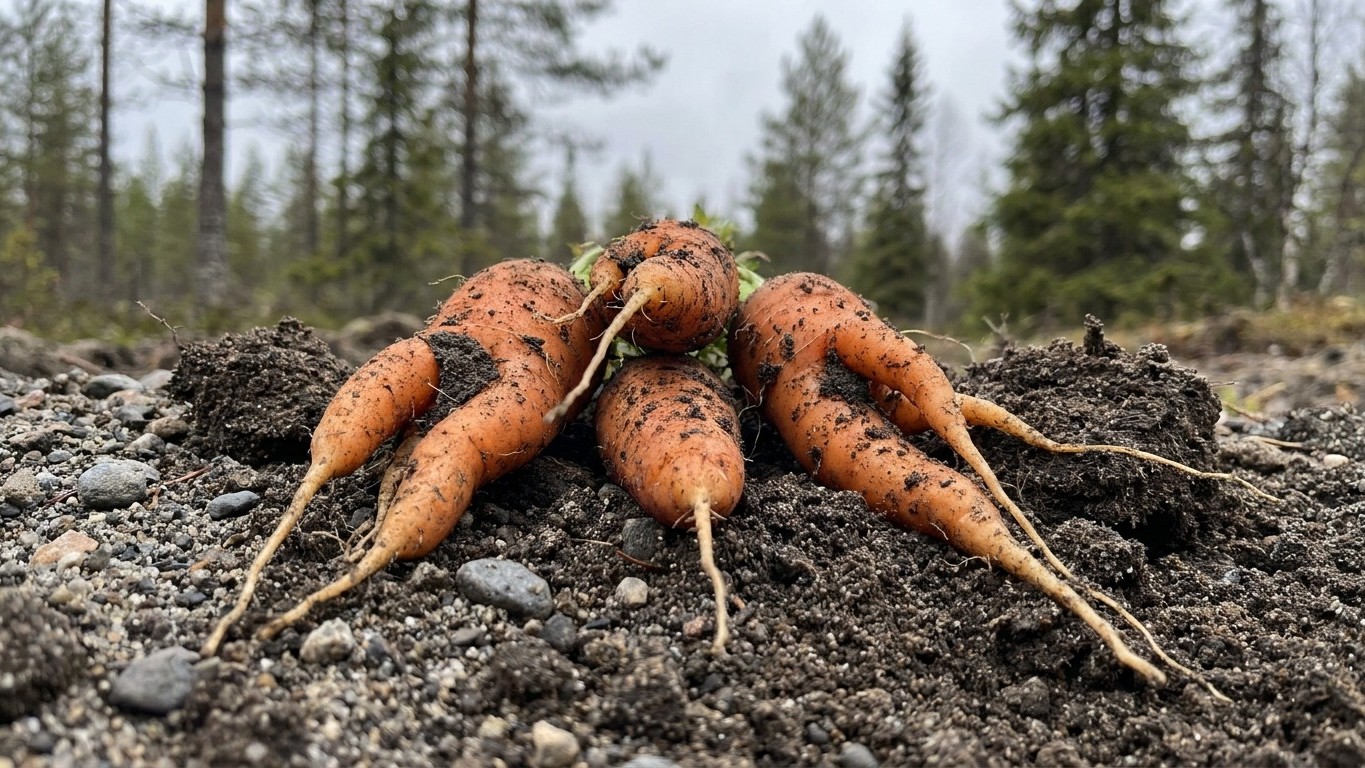

Count 70 to 100 days from the day the seed goes into the ground. Carrots are sown in place, so there is no transplant date to count from. Start checking at the low end: brush the soil off a shoulder and see whether the root looks like the picture on your seed packet. To keep them, cut the tops off the same day, then hold the roots at 33 °F with high humidity. Leave the leaves on and the clock runs out in 10 to 14 days.
The short answer
Nevada’s official state soil is the Orovada series, an Aridisol, which means a dry-climate soil that is usually alkaline and often carries salts. USDA records for the surface layer of its major components (223 of them, in the Soil Survey Geographic Database) show 66 percent sand, 8 percent clay and 26 percent silt. Surface pH is about 7.5, which is alkaline. Organic matter sits near 1.4 percent, and the drainage class is well drained. Nevada law named it the state soil, so it stands for the state’s ground in general, not for your yard.
Will a carrot fork in it?
Probably not, at least not because of texture. Utah State University Extension describes the ideal carrot bed as deep, sandy, well-drained soil rich in organic matter, and says heavy or rocky soil makes the root fork. Orovada ticks the first two boxes. Sand and fast drainage give a taproot room to push straight down. The box it misses is organic matter, and 1.4 percent is thin. Compost is the fix here, worked in to hold moisture in a soil that otherwise lets water run through. Double digging and raised beds are the answer for the opposite problem: clay-heavy, poorly drained ground where roots split and twist. A different variety does not solve that, and the source names none.
The soil also shapes harvest. In loose, sandy ground a watered carrot tends to lift with a steady pull, while in heavy ground you will want a digging fork to loosen the row first so the roots come out whole instead of snapping.
A starting point, not a diagnosis
Nevada spans hundreds of soil series, and this one is a starting point. River bottoms, hill country and any lot a builder has scraped or filled can differ completely from it. The figures above are representative values for the mapped surface layer, not a measurement of a worked garden bed, and the 7.5 pH belongs to the series, not to your plot. If you are planning a first crop, the broader guide to Growing Carrots in Nevada covers the season from seed to row. The forking question gets its own treatment in Will Carrots Fork in Nevada Soil? The next section shows how to learn what your own ground does.
The test that settles it in your own garden
An afternoon and a spade will tell you more than a state map. Do this when the soil is moist but not soaked, a day or two after watering, so it behaves the way it will in the growing season. The test costs nothing, and it gives you the facts that decide whether you need compost, double digging or a raised bed.
Five steps
- Dig a test hole. Go down as deep as your spade blade reaches, then keep going with a trowel or digging fork. A carrot wants loose ground the length of its root, so note where the digging gets hard.
- Read the walls. Look for changes in color or texture, a layer that resists the spade, and stones. Rocks and a hard layer are what turn a taproot sideways, and in dry-climate soils a hard layer is worth looking for.
- Feel the texture. Take a handful of damp soil and rub it between your fingers. Gritty and loose means sand. Smooth and floury means silt. Sticky, and it rolls into a ribbon or holds a polished shape when squeezed, means clay.
- Watch the water. Fill the test hole with water and let it soak away, then fill it again and watch the second round. If it vanishes quickly, the bed is well drained and will need regular watering. If water is still standing hours later, drainage is poor and a raised bed is the safer route.
- Send a sample to a lab. Look for a soil testing service through your county’s University of Nevada, Reno Extension office. Ask for pH, organic matter and salts, because a dry-climate soil can carry salts that your hand and eye cannot detect.
Reading what you found
Gritty soil that drains quickly puts you close to the state soil’s profile: good for straight roots, short on organic matter, and in need of compost and steady watering. Sticky soil, stones or standing water point to double digging with plenty of compost, or to building a bed above the native ground. As a final check, pull a few carrots from your first row and look at the shape. Forked or stubby roots tell you the soil is still too heavy or too hard where the taproot is growing.
What goes wrong here
Nevada’s dry air, hot spells and fast-draining ground cause a predictable set of problems. Most trace back to water, heat or soil structure, and each one has a practical remedy.
Failures and their fixes
- Forking in heavy or rocky ground. Where clay, stones or a hard layer block the taproot, the root splits or twists. Double dig the bed with plenty of compost, pick out stones, or build a raised bed and fill it with loose, sandy, compost-rich soil. A different variety will not get around it.
- Poor germination in a hot spell. Carrot seed is small, sown in place, and needs the top of the bed to stay moist until it sprouts. In sandy ground that surface dries fast. Water lightly and often, and shade the row or lay a thin cover over it until seedlings show. Check that the cover is lifted as soon as they appear. The source gives no temperature cutoff, so judge by the bed: if it keeps drying out, the seed is at risk.
- Splitting from uneven water. A root that dries out and then gets a heavy soaking can swell faster than its skin allows and crack. Keep moisture steady instead of swinging between dry and flooded. Compost raises the water-holding capacity of a low-organic-matter soil, and a slow, regular soaking beats an occasional drenching.
- Leaving the tops on after harvest. The leaves keep drawing moisture out of the root, so the carrot goes limp. Cut the tops off right away. Bunched carrots with the tops on keep only about 10 to 14 days, while trimmed roots last for months under the right conditions.
- Storing them too warm. Clemson Cooperative Extension recommends 33 °F and high humidity to prevent wilting. That is just above freezing, colder than a typical cellar. A carrot held near 50 °F will sprout and soften in a fraction of the time, so a cool cellar is not a substitute.
- Damage that looks like a soil problem. Chewed or scarred roots often come from animals, not from the ground. What Eats Carrot in Nevada, and When helps tell the difference before you blame the bed.
Common questions
How many days until I can pull carrots in Nevada?
Plan on 70 to 100 days counted from seeding, never from a transplant date, since carrots are not transplanted. Clemson Cooperative Extension gives about 65 to 75 days after planting as a harvest window, which fits the early end of that range. Your seed packet states days to maturity for the kind you chose, so use that to narrow it down, then pull one carrot to check.
How do I know a carrot is ready?
Brush the soil from the top of a root and look at the shoulder. If the carrot looks the size and color the packet promises, pull one and taste it. A carrot left in the ground a little longer is not ruined, but the packet’s maturity date is your guide, and the soil check in this article tells you whether roots are coming out straight.
How long will carrots keep after harvest?
With the tops on, bunched carrots keep about 10 to 14 days. Cut the tops off first, because the leaves keep pulling moisture from the root, and trimmed carrots keep for months when held at 33 °F with high humidity.
Can I store carrots in a root cellar?
Only if the cellar actually holds 33 °F. That is just above freezing and colder than most cellars, and at 50 °F carrots sprout and go soft in a fraction of the time. Check the temperature with a thermometer before you trust the space, and keep the humidity high so the roots do not wilt.