
In Maryland, plant the hardy roots (turnips, kohlrabi, horseradish) as soon as the soil can be worked, and hold celeriac until frost danger has passed. The growing window runs roughly 27 to 31 weeks, long enough for celeriac in most of the state. Heat and humidity matter more than cold here, and Jerusalem artichokes need their permanent spot chosen before the tubers go in.
When the soil is warm enough in Maryland
The last spring frost in Maryland falls between April 3 and April 16, according to NOAA’s 1991-2020 Climate Normals (the 30-70% probability band for a 32°F freeze). Those dates describe a range of odds, and a freeze can still turn up after them. Treat them as a starting line for your own watching, not a promise. The mountains of Garrett and Allegany counties run weeks later, and the Eastern Shore runs milder.
Frost is a proxy, not the signal
The frost date is a stand-in. Celeriac, kohlrabi, turnips, rutabagas, horseradish and Jerusalem artichokes respond to the temperature of the soil, and soil warms after the frost risk ends, not at the same moment. A bed can be frost-free for two weeks and still be cold and wet four inches down, which is where seeds sit and where transplant roots have to start working.
A cheap soil thermometer settles the question better than the calendar. The hardy types (turnip, rutabaga, kohlrabi, horseradish) tolerate cool soil and go in first, as soon as a handful of earth crumbles instead of smearing. Celeriac is the cautious one. Its transplants should wait until frost danger is behind you and the soil has had time to warm, because a cold snap can stall young plants. Exact soil temperature thresholds and the varieties that perform here are best taken from University of Maryland Extension, which has trial data this page does not.
Site Jerusalem artichokes before you plant them
Jerusalem artichoke is effectively permanent once planted. Every fragment of tuber left in the ground regrows, and digging a bed over only scatters the pieces. It is probably the most regretted planting in a vegetable garden. Choose the spot first: an edge of the property, a corner you are happy to give up, or a deep container sunk where it can be contained. Keep it well away from the beds you rotate each year.
With that settled, planting is simple. Set tubers in spring once the soil can be worked, and harvest after the tops die back. The tubers store inulin rather than starch, and many people find them hard on the digestion. A small first portion is the sensible way to find out how you react.
How long the season lasts here
Both ends of the season come from the same NOAA normals. The first fall frost arrives between October 26 and November 5. Pair the earliest spring date (April 3) with the latest fall date (November 5) and you get 216 days. Pair the latest spring date (April 16) with the earliest fall date (October 26) and you get 193. That is roughly 27 to 31 weeks without a typical freeze, depending on the year and where in the state you garden.
What does that length allow? A window this long lets you sow twice. A spring sowing of turnips or kohlrabi can come out in early summer, and the same bed can take a second sowing in late summer for a fall harvest, when cooling nights usually sweeten these roots. A short northern season gives you one go at it, and then transplanting becomes a gamble on root disturbance. Maryland can afford to be less anxious. Starting celeriac indoors and setting out sturdy transplants is a reasonable bet here, and a slow start costs less than it would in Minnesota.
The figure is still an average over a diverse state. Garrett and Allegany counties sit in the mountains and run weeks later in spring, and their window will be shorter than the range above. The Eastern Shore will stretch it. If you garden in western Maryland, count your own first and last frosts for a couple of seasons and treat the shorter pairing as your planning number.
For the mechanics of staggering sowings (how many weeks apart, what to follow with what), the succession sowing guide on this site walks through it. For crop-by-crop detail on this family, start with Celeriac, Kohlrabi, Horseradish and Jerusalem Artichokes.
Heat and water in Maryland
This page does not carry a verified count of days above 90°F or a summer rainfall total for Maryland, so it quotes neither. What can be said honestly is the pattern gardeners here know: central Maryland and the Eastern Shore run hot and humid through the summer, while the mountains stay cooler. That split shapes how these roots behave.
Heat and humidity together are hard on roots. Turnips, rutabagas and kohlrabi turn woody or pungent when they mature in hot weather, and long wet spells invite rot and leaf disease. Mulch keeps the soil cooler and evens out moisture swings. Airflow matters as much as water, so give plants room and avoid watering late in the day. Turnip, rutabaga and kohlrabi are brassicas, which means they share their troubles with cabbage, kale and mustard. A gardener who rotates them into a former cabbage bed has rotated nothing. The crop rotation guide on this site explains how to space them out.
Two facts govern the whole group. The first is season length. Celeriac is the long one, and a window of 193 to 216 days is enough for it to finish across most of Maryland if it starts indoors. In the mountains the margin is thinner, and a cool, short year can leave you with small roots. The second is winter cold, which decides what stays in the ground. The mean daily minimum of the coldest month at the Baltimore reference station is 25.4°F (NOAA 1991-2020 normals). That is an average, not a record low, but it sits well below freezing. USDA’s 2023 Plant Hardiness Zone Map (the system built on average annual extreme minimum temperature) puts the state across zones 5b to 8a, so other parts of Maryland run colder or warmer than Baltimore.
Horseradish and Jerusalem artichokes are hardy perennials and stay put under mulch across that range. The more tender roots are another matter. Celeriac is the one to lift first, before the soil freezes, and in western Maryland the other roots should come out sooner too. Turnips, rutabagas and kohlrabi stand light frost but not a hard freeze that locks the ground.
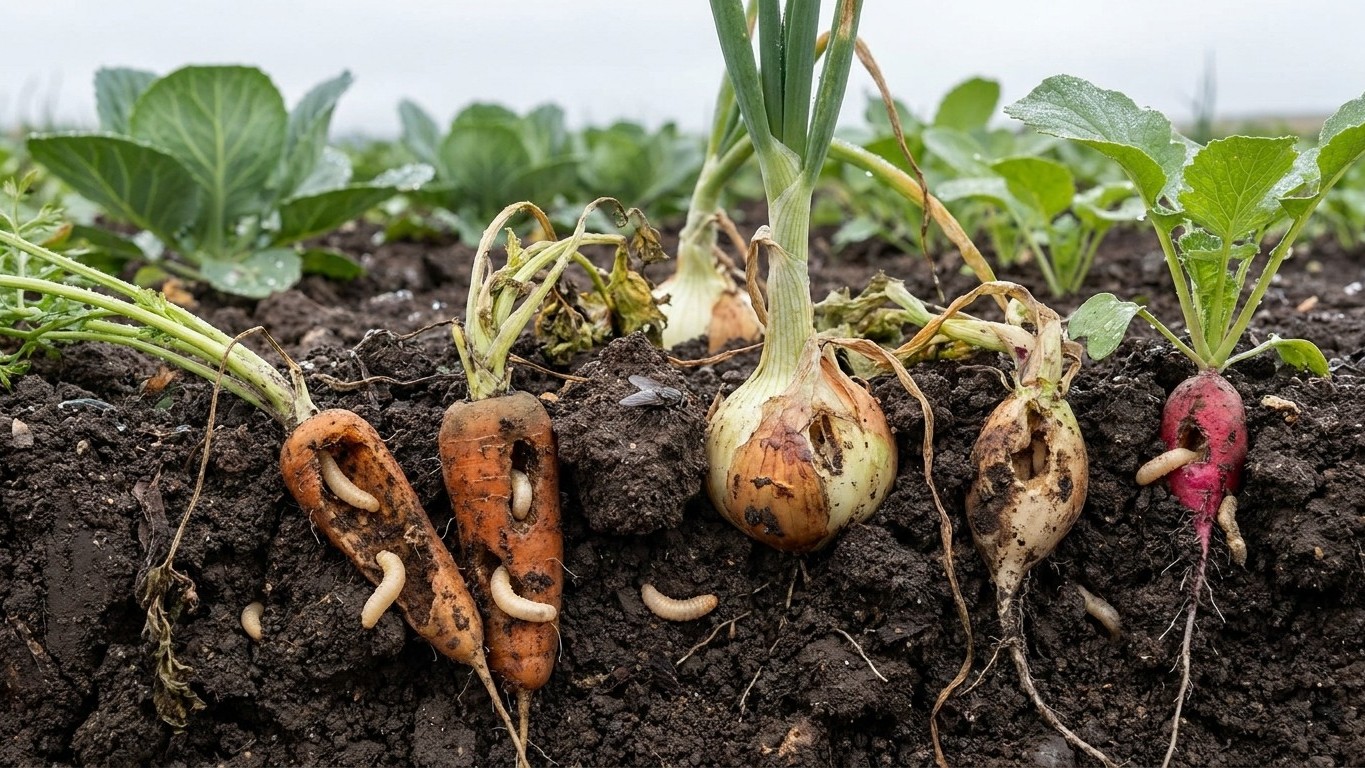
Whatever you lift, inspect it before it goes into storage and again as it sits. A soft patch, a weeping spot or a moldy crown ends the question for that root. Do not decide a root is safe because it looks sound from the outside. Rot often starts at the crown or on the underside, and a single bad root can spread trouble through the rest.
Which these root crops suit Maryland
Choose by type and by what this state’s conditions reward. Maryland’s long window favors anything that needs time, which makes celeriac a real option here, and it also gives hardy roots two seasons. The heat favors types grown with airflow and shade at the root. The humidity makes disease resistance the first thing to look for on a seed packet or in a nursery catalog.
| Type | Fit for Maryland | Main watch point |
|---|---|---|
| Turnip and rutabaga | Spring and late-summer sowings both work in a long window | Brassicas: share diseases with cabbage, kale and mustard |
| Kohlrabi | Quick and cool-season; time it to avoid midsummer heat | Also a brassica, so rotate it with them |
| Celeriac | Long season, feasible from indoor-started transplants | Needs steady moisture; lift before the ground freezes |
| Horseradish | Hardy perennial that overwinters in the ground | Spreads from root pieces; vapors when grated |
| Jerusalem artichoke | Hardy perennial for a permanent spot | Cannot be fully removed once established |
Horseradish deserves a plain note. Grating the fresh root releases compounds that burn the eyes and airways. Ventilate the kitchen, open a window, and keep your face away from the bowl. Nobody should treat it as a joke.
This page names no varieties, deliberately. A cultivar recommendation is only worth something if it comes from trials run in your climate, and this page does not have those results. Maryland spans mountains, Piedmont, coastal plain and Eastern Shore, and a variety that does well on one can sulk on another. University of Maryland Extension is the place to get the types and varieties trialled near you. Local Extension offices also know your region’s disease pressure, which in a humid state is worth more than any catalog description.
Gardeners comparing climates can look at how neighboring conditions change the answer, for instance Growing Unusual Root Crops in Missouri and Growing Unusual Root Crops in Tennessee.
Common questions
Can I plant as soon as the last frost date passes?
For the hardy roots, you can plant before it. For celeriac, wait. Soil lags behind the air, so check it with a thermometer and with your hands. Maryland’s April 3 to April 16 range is a probability band, and a late freeze remains possible.
Can celeriac finish in Maryland?
In most of the state, yes, if you start it indoors and set out sturdy transplants. The frost-free window of 193 to 216 days is generous. In Garrett and Allegany counties the season is shorter and the margin is thinner.
Can I leave these roots in the ground over winter?
Horseradish and Jerusalem artichokes overwinter in the ground under mulch. Celeriac should come out before the soil freezes, and so should the other roots in western Maryland. Inspect anything you lift. A soft patch, a weeping spot or a moldy crown means discard it.
Where can I find varieties that suit my part of Maryland?
Ask University of Maryland Extension. Its recommendations come from local trials, and conditions vary from the Eastern Shore to the western mountains, so the nearest office will know what has done well close to you.