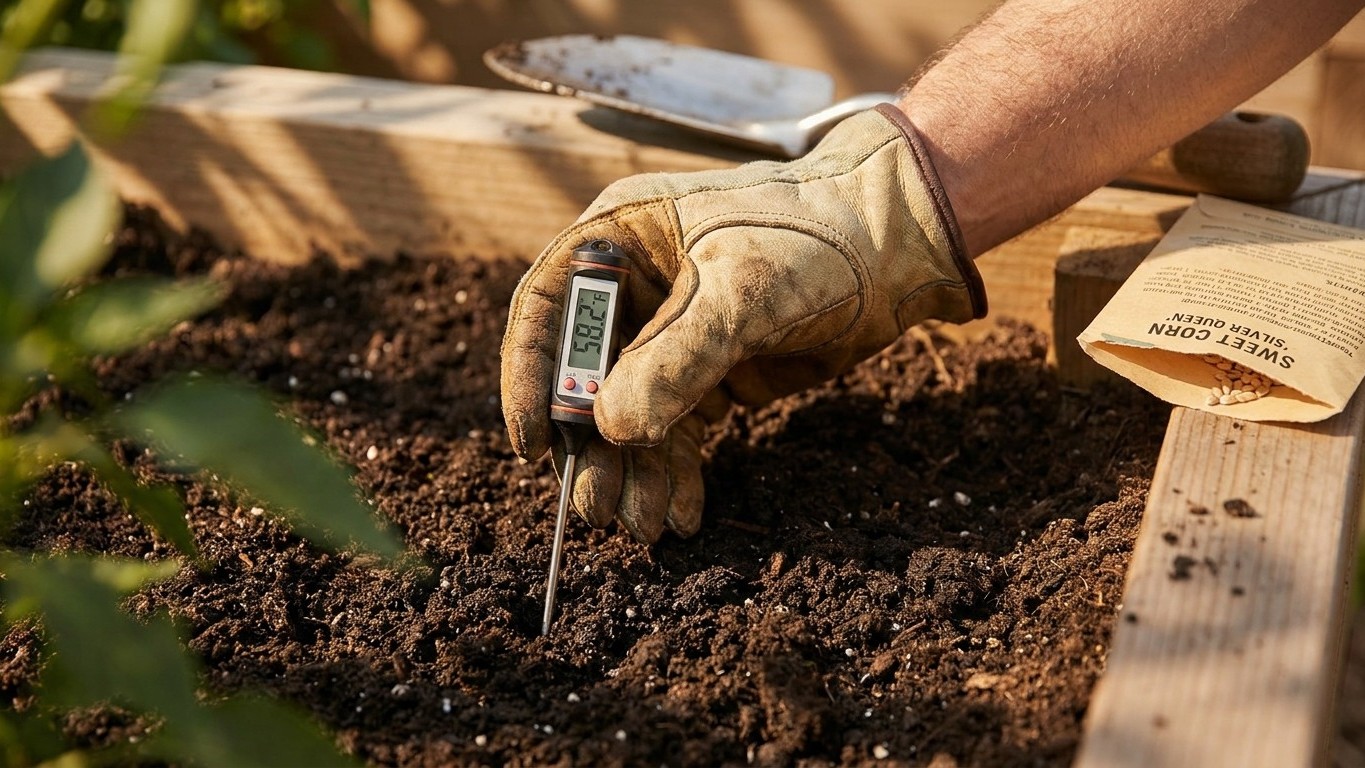

Sweet corn in Massachusetts goes into the ground once soil temperature holds above 60 degrees, not on the calendar date of the last frost. For most of the state that means late May into early June, sometimes later inland. From there, a 60 to 90 day variety has to mature before the first fall frost arrives. The math works for almost every corner of the Commonwealth, but the margin shrinks fast once you leave the coast.
The short answer
Here’s where people trip up: they watch the thermometer for a frost-free night, see it, and plant corn the next morning. Wrong move. Sweet corn seed doesn’t care about frost at all. It cares about soil temperature, and soil warms on its own schedule, well behind the air. At the reference coastal station, the last spring frost typically falls between April 1 and April 8. Soil at 60 degrees Fahrenheit, the threshold sweet corn actually needs, arrives measurably later than that window, sometimes by several weeks. Planting on the strength of a frost date alone, before the ground itself has caught up, is one of the most common ways a home garden ends up with a spotty, gap-toothed row of corn.
Once soil does clear 60 degrees, the countdown starts: sweet corn needs 60 to 90 days from planting to reach maturity, depending on the variety. The question is whether that window closes before the first fall frost shows up. At the reference station, first fall frost lands between November 3 and November 14. That leaves a frost-free stretch on the order of seven months between the last spring frost and the first fall frost, and the soil-to-harvest window sits comfortably inside that span for nearly any 60 to 90 day variety, coastal or not.
The caveat matters. The reference station sits on the waterfront in a dense urban setting, which makes it the mildest spot in the state by a wide margin. Inland suburbs, the Connecticut River Valley, and especially the Berkshires see frost arrive earlier in the fall and linger later in the spring than these numbers suggest. Nobody has published exact local dates here, so the honest move for an inland gardener is to track their own microclimate rather than assume the coastal numbers apply.
Heat matters too, separate from frost entirely. The reference station averages 10.2 days a year at 90 degrees or hotter. That’s the load that drives soil warming in the first place, and it’s also what pushes water demand once the crop is up and growing. A run of those 90-degree days early in the season is often exactly what finally pushes soil past the 60-degree line after a cool, slow spring.
Does a late variety fit here?
Not every sweet corn variety runs the same clock, and the gap between a fast one and a slow one is bigger than most gardeners expect.
A 60-day variety
A 60-day variety is the forgiving option. Even if soil warming runs late, and even if planting slips into mid-June because a cold, wet spring kept the ground stubborn, a 60-day corn still has room to mature well before any fall frost the state throws at it, coastal or inland. It’s the safer choice for a garden with a shorter or less predictable season, and it gives a gardener the flexibility to plant a second, later round for a stretched harvest without gambling on the calendar.
A 90-day one
A 90-day variety asks more of the season, and here the geography of Massachusetts actually splits the answer. At the reference coastal station, the frost-free window between soil warming and first fall frost is wide enough that a 90-day corn planted in late May or early June still finishes with weeks to spare before November. In that setting, a late variety fits, plainly, and comfortably.
Move inland, and the picture tightens. Fall frost arrives earlier in the Berkshires and in many interior valleys than at the coastal reference point, though no exact date for those areas is published here. Combine that earlier fall frost with soil that also warms later at elevation, and the safe planting window for a 90-day variety narrows from both ends at once. For an inland or high-elevation Massachusetts garden, a 90-day corn is a tighter fit than the state-level numbers imply, and a grower there is better served leaning toward an earlier-maturing variety or planting the moment soil actually clears 60 degrees, with no room to wait.
What goes wrong here
- Soil sown too cold. Planting by the frost date instead of the soil thermometer is the single most common failure. Seed sitting in soil below 60 degrees germinates unevenly at best and rots at worst. The remedy is simple and unglamorous: check the soil itself, not the sky, and wait until it holds above 60 degrees before the first seed goes in.
- A variety too late for the season. A 90-day corn planted late, or planted somewhere inland where fall frost arrives sooner than the coastal reference date, can run out of season before it finishes filling out. The remedy is matching maturity length to the actual local window, favoring a 60-day variety wherever the margin looks tight, and planting as early as the soil allows rather than as early as tradition suggests.
- Sweetness lost for reasons that have nothing to do with weather. Standard (su), sugary-enhanced (se), and supersweet (sh2) types cross-pollinate if they tassel at the same time, and the supersweet flavor gets diluted or ruined in the process. This has nothing to do with frost, soil temperature, or heat days. It’s purely a timing and layout problem, and the fix is to stagger plantings or otherwise keep different types from tasseling in the same window, while still planting each variety in its own block of three or more rows so pollination within that block succeeds.
Common questions
Can I plant sweet corn right after the last frost date in Massachusetts?
Not reliably. The last spring frost at the coastal reference station falls between April 1 and April 8, but soil doesn’t reach the 60-degree threshold sweet corn needs until well after that date. Planting on the frost date alone usually means cold, wet soil and poor germination.
How do I know if my soil has actually reached 60 degrees?
A soil thermometer pushed a few inches into the bed, checked over several consecutive mornings, is the only reliable way. Air temperature and frost dates don’t tell you what the soil itself is doing, especially in a spring with big day-to-night swings.
Does the Berkshires region need a different planting date than eastern Massachusetts?
Very likely yes, though exact local frost dates for that region aren’t published here. The reference frost dates come from a coastal, urban station that’s the mildest spot in the state, and inland and higher-elevation areas see frost earlier in fall and later in spring, which shortens the safe window for planting and for variety choice.
Can I grow two different sweet corn types in the same garden?
Yes, but only if they don’t tassel at the same time. If a standard and a supersweet type shed pollen during the same window, the sweetness of the supersweet crop suffers. Staggering planting dates so tasseling doesn’t overlap, while still keeping each type in its own block of three or more rows, solves the problem without needing any specific separation distance.