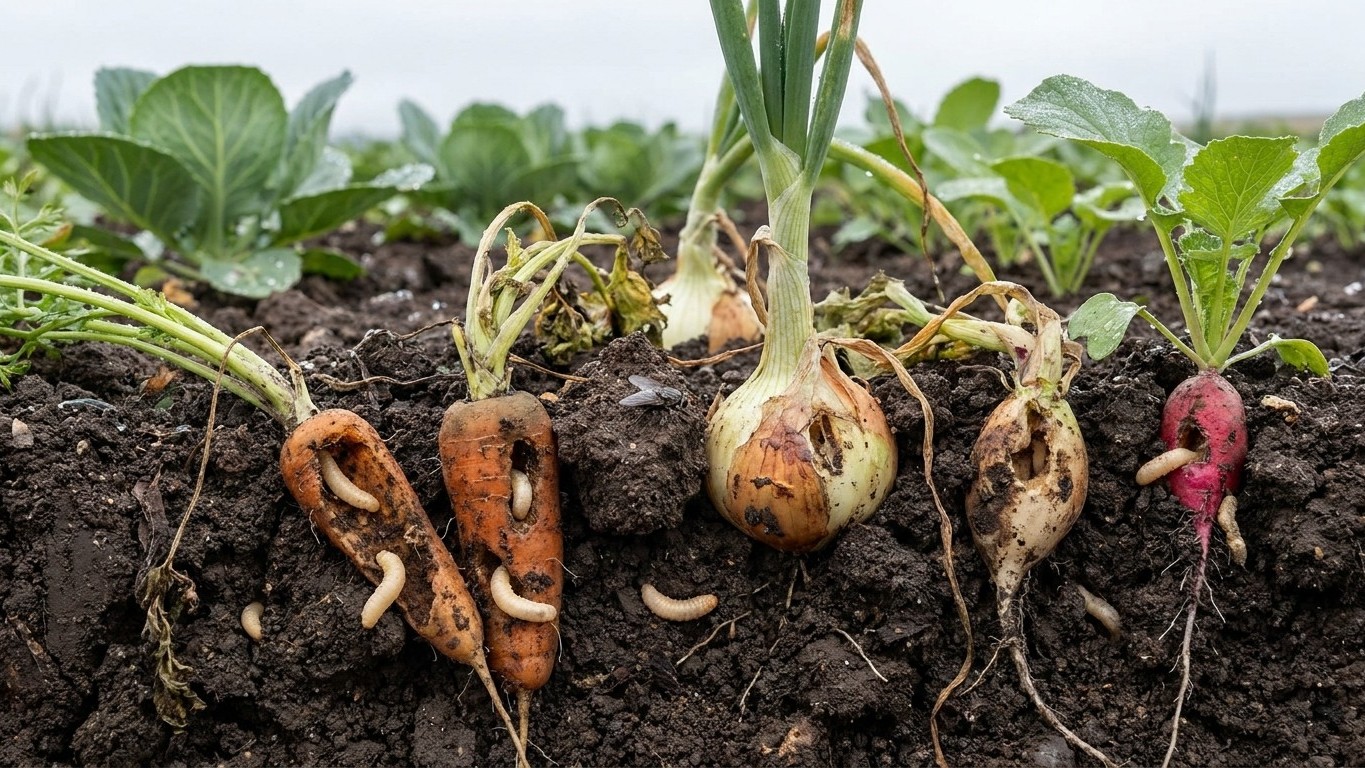

In Massachusetts, most unusual root crops go into the ground from early to mid spring, and the last-frost date is only a rough guide because soil trails the air. Kohlrabi, turnips and rutabagas tolerate a cool start. Horseradish and Jerusalem artichokes are hardy perennials. Celeriac is the one that struggles to finish. Where you garden matters too, since Boston’s airport station is the mildest spot in the state.
When the soil is warm enough in Massachusetts
The date most gardeners want is the last spring frost. NOAA’s 1991-2020 Climate Normals put it at April 1 to April 8, based on the 30 to 70 percent band of 32°F freeze probabilities at Boston’s Logan station. That is a probability, not a promise, and a late freeze after the band is always possible.
Logan sits on the waterfront in a dense city, and it is the mildest spot in the state. Inland suburbs and the Berkshires see frost later in spring and earlier in fall. Treat those April dates as the early edge of the range, and push them back the farther you are from Boston Harbor.
Frost is also a proxy. Roots don’t wait for the air to stop freezing. They wait for the soil, and the soil warms after the frost risk ends, not alongside it. A bed can be frost-free on paper and still be cold and wet a few inches down, where seed rots or sulks. A cheap soil thermometer pushed to planting depth in the morning tells you more than the calendar. Your state extension service publishes the soil conditions its trials used, and those are worth following.
The crops differ in how much they care. Kohlrabi, turnips and rutabagas are cool-season vegetables and are the first to go in. Horseradish and Jerusalem artichokes are planted dormant, so they go in as soon as the ground is workable. Celeriac is different. It is started indoors and set out as a transplant once frost risk has passed, because it needs the longest run of any root in this group.
Site Jerusalem artichokes before you plant them
Pick the spot first, because this is the planting gardeners most often regret. Jerusalem artichoke is effectively permanent once planted. Every fragment of tuber left in the soil regrows, and digging the bed over only scatters the pieces. Give it a corner you will never need back, away from the vegetable beds, or a large container sunk into a border edge that you inspect every year.
The vegetable also carries a plain fact about eating. Jerusalem artichokes store inulin instead of starch, and many people get digestive discomfort from it. A small first portion is the sensible way to find out how you react. Neither cooking nor frost can be counted on to change that.
For a broader look at how these crops differ, see Celeriac, Kohlrabi, Horseradish and Jerusalem Artichokes.
How long the season lasts here
The same NOAA normals put the first fall frost at November 3 to November 14. Pair the earlier dates and you get April 1 to November 3, which is 216 days. Pair the later ones, April 8 to November 14, and you get 220 days. That is the span at Logan, and it is long by northern standards.
The number matters less than what it allows. A window of this length gives room for a second sowing: a cool-season root such as a turnip or kohlrabi can go in again in late summer to mature in the cooler fall, when many of these crops do their best work. The succession sowing guide on this site covers how to space those plantings.
Celeriac is the other beneficiary. It is slow, and in a short season the plant is still small when the cold arrives. A window near 216 to 220 days makes transplanting worthwhile, because the root has time to swell after the seedling survives the move. Even so, the window runs from the last freeze to the first, and celeriac needs the warm middle of it, not the shoulders.
Move inland and the arithmetic tightens. The brief’s caution applies: inland suburbs and the Berkshires frost later in spring and earlier in fall than Logan. This page has no verified frost dates for those places, so it won’t guess at a shorter count. Look up the normals for the nearest station to your garden. If the window is noticeably shorter than Logan’s, the first sowing becomes the only one, and transplanting celeriac starts to look like a gamble. Transplanting also carries a cost, since celeriac sulks if its roots are disturbed.
Kohlrabi, turnips and rutabagas fit short windows better than celeriac does. Horseradish and Jerusalem artichokes hardly depend on the window at all, since they grow back every year from what is already in the soil.
Heat and water in Massachusetts
The usual hot-summer questions are how many days climb above 90°F and how much rain falls in summer. This page has no verified count of 90°F days or summer rainfall total for the state, so it gives neither. It also does not borrow a Southern script. If your garden sits somewhere hotter, Growing Unusual Root Crops in Texas deals with shade and heat at the root. If it sits somewhere colder, Growing Unusual Root Crops in Michigan is the closer comparison.
What can be said is how a cool, damp summer treats this group, because Massachusetts gardeners see that kind of year. Roots swell slowly. Leaves stay wet, and foliar mildew follows. Disease pressure rises, and crops that would have been ready in a warm summer sit in the bed longer, which gives rot more time to find them. Good spacing, morning sun, and watering at the soil rather than overhead all help. So does keeping the bed weeded for airflow.
Two facts decide the rest. The first is season length, which tells you whether celeriac can finish at all. At Logan it probably can, and inland you should check before committing.
The second is the winter low. NOAA’s Boston normals give a mean daily minimum of 23.1°F in the coldest month. That is the average night low, not the record low, and it means nights below freezing are routine. The USDA Plant Hardiness Zone Map (2023) uses a different measure, the average annual extreme minimum, and puts Massachusetts across zones 5a to 7b. That is a state-wide range, so your own zone depends on where you garden.
For the perennials and hardy roots, that cold is manageable. Horseradish and Jerusalem artichokes can stay in the ground under mulch, which is the reason to site the artichokes carefully. Celeriac and any other root you want to keep should be lifted and stored before the soil freezes.
Storage touches food safety. Inspect every root before it goes into storage and again during the winter. A soft patch, a weeping spot or a moldy crown ends the question: that root goes to the compost, and looking sound elsewhere does not make it safe. This page makes no promise about how long any root will keep.
Horseradish needs one more warning. Grating a fresh root releases compounds that burn the eyes and airways. Work with ventilation, keep your face away from the bowl, and open it slowly after grating. This is a real irritant, not a quirk.
Which these root crops suit Massachusetts
Choose by type, and let your own conditions settle the details. A short season, which inland and upland Massachusetts may have, favors the earliest types and discourages celeriac. A humid or wet summer, which the state can deliver, makes disease resistance the first thing to look for on a seed packet or in a catalog. Heat is a smaller concern here than in the South, though roots still benefit from airflow and some shade at the soil surface.
| Type | What the facts here say |
|---|---|
| Kohlrabi, turnips, rutabagas | Cool-season, tolerate an early start, suit a second sowing at Logan’s season length. All are brassicas. |
| Horseradish | Hardy perennial, stays in the ground under mulch. Grate with ventilation. |
| Jerusalem artichokes | Hardy and permanent. Site away from beds. Start with a small portion. |
| Celeriac | Needs the longest season and steady moisture. Reasonable near Boston, doubtful on shorter inland seasons. |
Turnips, rutabagas and kohlrabi are brassicas. They share their pests and diseases with cabbage, kale and mustard, so a gardener who moves them into a cabbage bed has rotated nothing. Follow the rotation page in this series and keep the whole family on a separate schedule from the rest of the garden.
This page names no varieties, and that is deliberate. A cultivar that thrives in a coastal Boston garden may sulk in the Berkshires, and a name is only worth repeating if someone trialed it near you. For that, go to UMass Extension, which publishes guidance and variety information for Massachusetts growers. Guessing at a name here would only give you false confidence.
Common questions
Can Jerusalem artichokes stay in the ground over winter in Massachusetts?
Yes, they are hardy perennials and overwinter in the soil under mulch, which is exactly why they are so hard to remove. Any tuber fragment left behind will regrow, so plant them only where you accept a permanent stand.
Is celeriac worth trying in Massachusetts?
Near Boston, where the window between frosts at Logan runs 216 to 220 days, it is a reasonable bet with transplants. Inland, check your local frost dates first, because a shorter window leaves the root too little time to swell.
Can I plant turnips or rutabagas where cabbage grew last year?
No. Turnips, rutabagas and kohlrabi are brassicas, so they share diseases and pests with cabbage, kale and mustard. Rotate the whole group together, using the rotation page in this series.
How do I tell whether a stored root is still good?
Inspect it by hand and by eye, root by root. A soft patch, a weeping spot or a moldy crown ends the question, and looking sound elsewhere does not make the root safe.