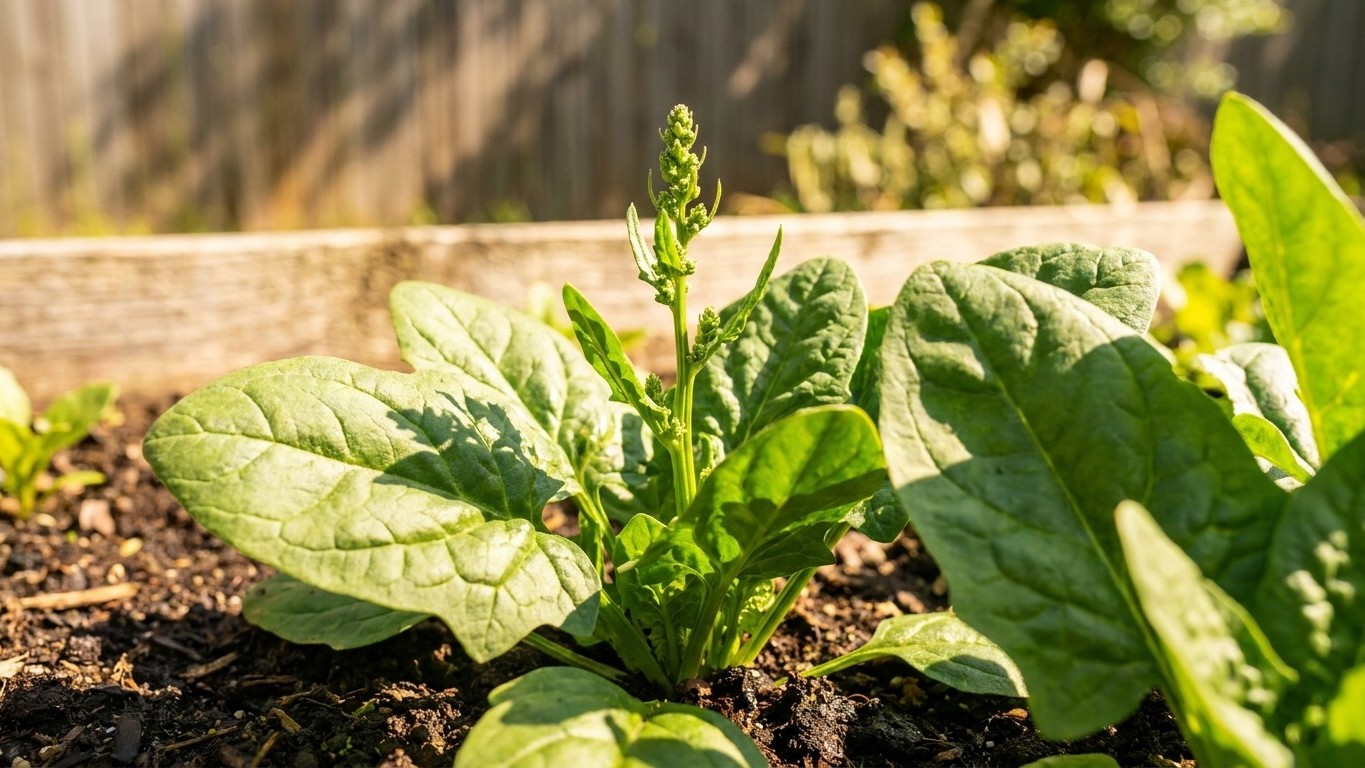

Spinach bolts early almost everywhere in Minnesota, and the culprit isn’t the state’s famous humidity or its short growing season. It’s daylight. At 15 hours and 25 minutes on the longest day of the year, Minnesota summers hand spinach exactly the trigger it’s genetically wired to respond to by flowering, regardless of how mild the temperatures stay.
The short answer
The reference city for Minnesota’s climate data sits far enough north that its longest summer day stretches to 15 hours and 25 minutes of daylight. That number matters more than any thermometer reading, because spinach bolts during long days and warm temperatures together, and the “long days” half of that equation is already met here by early June, weeks before the hottest weather even arrives.
This is the piece of the puzzle a lot of gardeners get backwards. A cooler-than-average Minnesota summer feels like it should buy spinach extra time in the ground. It doesn’t. Day length is a fixed clock that runs the same whether the mercury hits 70 or 95, and once the days stretch long enough, the plant starts diverting energy into a flower stalk instead of leaves. Shade cloth and extra watering can slow the process, but they can’t reset the calendar.
So which is the real limit here, the day length or the heat? In Minnesota, it’s mostly the day length, with heat as a secondary accelerant. The state’s heat load is moderate by national standards. The reference station averages just 10.6 days a year at 90°F or hotter, which is a modest number compared to states further south or west. That means Minnesota spinach isn’t usually cooked out of the ground by scorching temperatures the way it might be in a hotter climate. Instead, it’s pushed into flowering by the sheer length of daylight during the weeks surrounding the summer solstice, with the 75°F growth ceiling adding pressure on top of that once the season’s hot stretch does arrive.
Practically, this means the strategy for Minnesota gardeners isn’t waiting out a heat wave. It’s racing the calendar. Spinach sown early enough to mature before the days get long enough to trigger flowering will produce a full crop of tender leaves. Spinach sown late, hoping cool weather will hold it back, will bolt anyway, because the long days arrive on schedule no matter what the forecast says. The four spinach varieties commonly sold to home gardeners (Bloomsdale, Melody, Teton, and Olympia) aren’t documented with specific bolt-resistance data by the source used for this guide, so no variety should be assumed to dodge the day-length trigger. Timing the sowing date does more work than variety selection.
How long the spring window really is
Working out the usable spring window means stacking two facts on top of each other: the sowing rule, and the point at which day length starts working against the crop. Here’s how that plays out across a Minnesota spring.
- Sowing starts 2 to 3 weeks before the last spring frost. With the last frost falling between April 17 and April 30 in the milder, southern part of the state (the Twin Cities), spinach can go in the ground as early as late March to early April. Northern Minnesota, where frost lingers two to three weeks longer, pushes that sowing date into mid-to-late April.
- Cool weeks follow immediately. April and most of May in Minnesota sit well under the 75°F ceiling that spinach needs to keep growing well, which is exactly the stretch where the crop puts on its best leaf growth with no bolting pressure at all.
- Day length climbs steadily toward the solstice. By late May and into early June, daylight is closing in on that 15-hour-25-minute peak, and this is the stretch where flowering gets triggered even if the air stays comfortable.
- Heat arrives on top of long days by mid-June. Minnesota’s heat load is modest overall, but the days above 90°F that do occur cluster in summer, adding warmth on top of already-long days and accelerating any bolting that’s started.
- The window closes. Adding it up, spring Spinach in Minnesota has roughly nine to ten usable weeks, running from early April sowing through early-to-mid June, before day length alone (with heat compounding it) ends the harvest.
That’s a tighter window than gardeners moving from milder states often expect. It isn’t a heat problem in the usual sense. It’s a clock problem, and the clock doesn’t negotiate.
The autumn crop, and when the soil lets you sow
Fall spinach flips the whole equation. Instead of racing lengthening days, the crop is racing shortening ones, which is why fall spinach almost never bolts if it’s timed right. The two real obstacles are soil temperature at sowing and frost at the finish line, and they squeeze the calendar from both ends.
Soil too warm to germinate
Spinach seed germination drops off once soil temperatures climb above 80°F, according to Utah State University Extension. In Minnesota, soil holds heat well into late summer, especially after a stretch of the year’s warmest days. With an average of 10.6 days a year reaching 90°F air temperature, soil beneath the surface stays hot enough to suppress germination through most of July and often into August. Sowing too early, hoping to get a jump on the fall crop, usually means poor or spotty germination simply because the ground hasn’t cooled down yet.
The frost that ends the season
On the other end of the calendar, the first fall frost lands between October 11 and October 23 in the milder southern part of Minnesota, arriving two to three weeks earlier across the northern part of the state. The source used here gives no days-to-maturity figure for spinach, but it does say to plant 50 to 75 days before the date you want to harvest. Counting back from a realistic early-October harvest target (ahead of that frost window) puts the sowing date somewhere between mid-July and mid-August, depending on which end of the 50-to-75-day range applies.
That’s where the squeeze becomes obvious. The frost math wants seed in the ground by mid-July on the early end. The soil-temperature reality says the ground is often too warm to germinate spinach well until later in the summer. The workable compromise for most of Minnesota lands in mid-to-late August, aiming toward the 50-day side of that range rather than 75, and watching soil temperature directly rather than relying on the calendar alone. Gardeners who wait for soil to cool but still push sowing into early September risk running short on days before the first frost arrives, particularly in the northern part of the state where that frost date comes weeks sooner.
Common questions
Does shade cloth stop spinach from bolting in Minnesota?
Shade cloth can lower leaf temperature and slow the process somewhat, but it doesn’t change day length, which is the primary trigger here. It buys a little time, not a reprieve.
Is northern Minnesota better or worse for spinach timing than the Twin Cities?
Worse on both ends. The last spring frost and first fall frost both run two to three weeks tighter in northern Minnesota, shrinking an already narrow spring window and pushing the fall sowing date earlier, right when soil is still likely to be warm.
Should I pick a specific spinach variety to avoid bolting?
The four commonly available varieties (Bloomsdale, Melody, Teton, and Olympia) aren’t documented with bolt-resistance data in the source used for this guide. Sowing timing matters more than variety choice for Minnesota’s day-length problem.
Can I just plant spinach again in midsummer if the spring crop bolts?
Not usefully. Midsummer in Minnesota sits at or near peak day length and often includes the year’s hottest stretch, the worst possible combination for spinach. Fall sowing, timed to cooling soil and the pre-frost harvest window, is the better second shot.