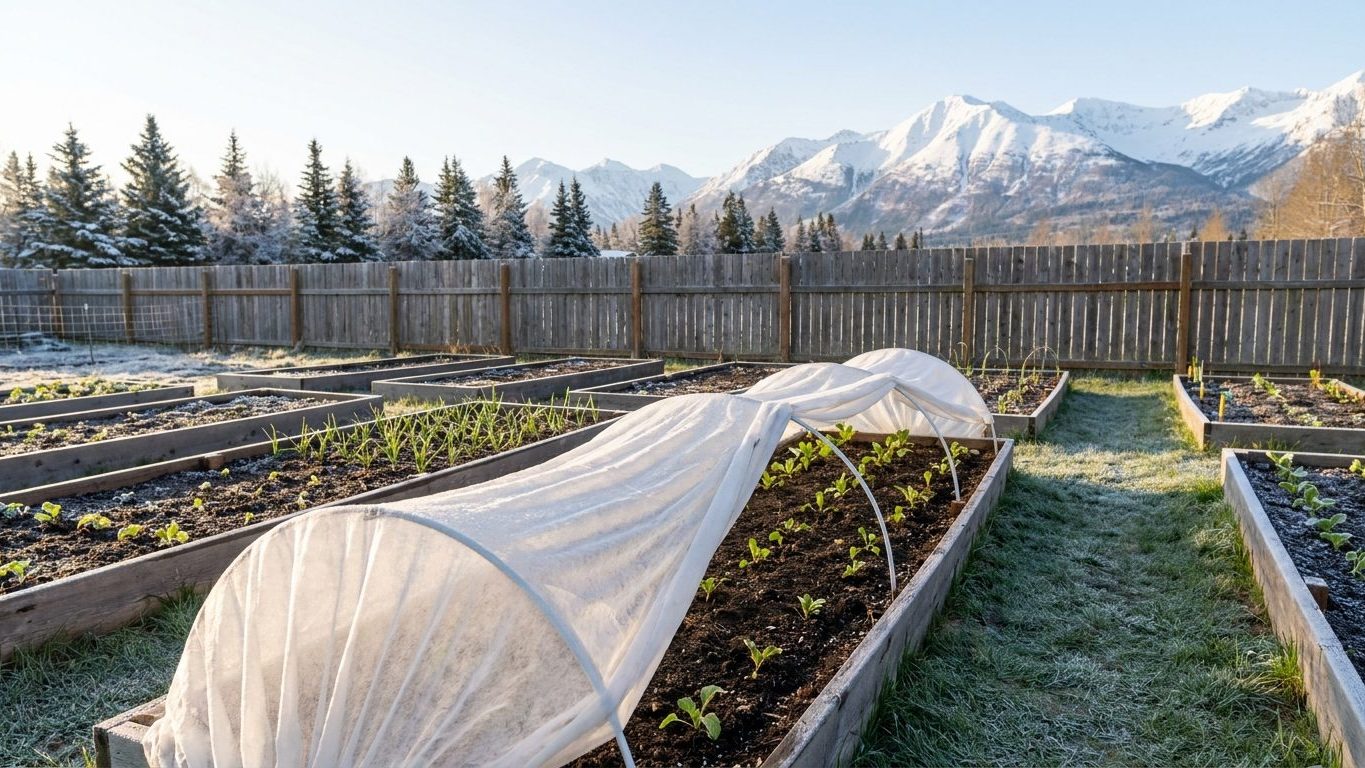

Cover tender crops whenever the forecast low drops to 32°F or close to it, and cover cool-season crops only for the harder freezes. In the Deep South, where winters are mild and cold arrives in short snaps, the nightly forecast matters more than the date. The reference dates for Jackson run March 6 to March 22 in spring and November 7 to November 22 in fall. A garden outside town should shift both.
The short answer for Mississippi
Covers go on in two windows: late winter until the last freeze is behind you, and early November until the cold ends the crop. Inside those windows, the trigger is the overnight forecast. A warm week in February or a cold week in April will override any calendar.
The Jackson dates come from the NOAA 1991-2020 Climate Normals for the airport weather station. They are probabilities of a 32°F freeze. A date inside each range means the odds of a last spring freeze, or a first fall freeze, sit somewhere between 30 and 70 percent. A freeze before or after either range is entirely possible.
When do you cover for a late spring freeze?
Keep covers within reach until the end of March at least. Many gardeners set out tomatoes, peppers and squash in spring, so those plants are the ones most at risk. Beans and cucumbers sown early are just as tender.
The airport is warmer than most gardens. Suburban and rural yards typically see the last spring freeze one to two weeks later than the airport, and more at elevation. A gardener outside the city should keep covers handy until the nights settle.
The average low of the coldest month at Jackson is 36.6°F. That means a typical January night stays above freezing, and freezes arrive as a night or three of cold between mild stretches. A cover that goes on at dusk and comes off the next morning suits that pattern. Heavy winter construction does not. The Which Season Extenders Work in Mississippi guide sorts the options by how much cold they handle.
When do you cover for the first fall freeze?
Start watching the forecast in late October and cover from early November, when the Jackson range begins. Outside the city, the first fall freeze often arrives one to two weeks earlier than at the airport, so the first cold night can come in late October. A few covered nights can buy tomatoes, peppers and beans several more weeks of fruit.
Put the cover on in late afternoon, while the soil still holds the day’s warmth, and take it off the next morning once the air is above freezing. Fall-sown lettuce, spinach, kale and collards shrug off a light frost. They need covers only when a hard freeze is forecast, meaning temperatures well below 32°F.
What will not work here
The calendar alone will not work. Because the Jackson dates are a 30 to 70 percent band, relying on them means losing plants in the years the freeze falls outside it. A garden in the country faces even worse odds, with the first fall freeze often a week or two ahead of the airport’s.
Can you leave a cover on all day?
Sealed plastic over a bed fails on a mild, sunny afternoon. Heat builds fast under it and can cook seedlings by midday. Where winters are mild and humid, a closed tunnel also holds damp air around the leaves, which invites fungal disease. Vent plastic, or take it off, on any sunny day. Fabric row cover breathes better, but it still needs to come off on warm afternoons once the freeze has passed.
Bees can’t reach flowers under fabric, and fruit won’t set. By late spring, when summers are hot and humid, any cover left on is a liability.
Is heavy winter protection worth building?
Rarely. With an average coldest-month low of 36.6°F at the reference station, deep-winter structures built for northern gardens are overbuilt here. Double-layered tunnels and heated frames cost more in money and work than a lightweight cover put up for a few nights.
Covers touching the leaves defeat the purpose. Cold passes straight through fabric or plastic that rests on foliage, and a wet bedsheet sags onto the plants and freezes there. Prop the cover on stakes, tomato cages or hoops so it clears the tops of the plants and reaches the ground on all sides. Weigh the edges down with soil or boards so cold air can’t blow underneath.
Will a cover change when onions form bulbs?
No. The Jackson station sits at 32.32 degrees north, and day length at that latitude, not warmth, tells an onion to stop making leaves and start making a bulb. A cover can protect transplants from a freeze, but it will not speed up bulbing. Choose onion types suited to the day length of your latitude.
What changes across Mississippi
The USDA Plant Hardiness Zone Map (2023, built on 1991-2020 normals) places Mississippi in zones 7b to 9a. That spread is wide enough that no single cover schedule fits the whole state. The system rests on one variable, the average annual extreme minimum temperature, so it tells you what survives winter. It does not tell you the last frost date.
The Jackson figures come from a reference city at 32.32 degrees north. A gardener near the Tennessee line sits several degrees of latitude from Jackson, and one near the Gulf Coast sits well south of it. Both live in different climates from the airport.
How should a gardener in north Mississippi adjust?
Plan for colder nights and a later spring. In the north and in higher hill country, treat the Jackson spring dates as the earliest the cover season might end and the fall dates as the latest it might begin. Add a week or two in spring and subtract a week or two in fall, then add more for elevation gain. Cold air also pools in low spots and valleys, so a garden at the bottom of a slope freezes before one on the ridge.
Gardeners in the south, closer to the Gulf, can often start tender crops earlier and keep fall crops going later, with fewer nights that need covering. The same logic applies there in reverse, though a late cold snap can still catch an early planting.
To find your own zone, use the USDA Plant Hardiness Zone Map and enter your ZIP code. Then read the Extending the Growing Season in Mississippi guide for how those zones play out in practice.
Where to check this for your own county
Mississippi State University Extension is the place to confirm any date for your county. Its agents work with the soils, freeze patterns and pests of each area, and every county has an office.
Look for two things. The first is the local planting calendar, which lists the sowing and transplanting windows for your area. The second is the list of varieties that have been trialed in your county, because a tomato or pepper that thrives in the south of the state can sulk in the north, and the reverse is also true. Ask the agent which crops are most often lost to late freezes in your area, and when the typical first fall freeze comes where you live.
A county recommendation beats a state one. A statewide range such as the Jackson dates is a starting point, because it comes from a single city’s weather station. The county office knows how many days earlier or later your area runs and which hollows and ridges behave differently.
Checking this against your own garden
Your own observations outrank every date above. Three things to watch will tell you more about your yard than any published calendar.
First, check soil warmth by feel. Push a hand a few inches into the bed in the morning. If it feels cold and damp, warm-season seeds will sit and rot. Compare a bed against a south-facing wall with one in an open or shaded spot. The warmer spot is your early microclimate, and the colder one is where you should wait or cover longer.
Second, watch for the first male flowers on squash and cucumbers. Male blooms open before the females, and their arrival tells you the plants have settled into warm weather. If they appear early in one part of the yard and late in another, you have found where your garden warms first.
Third, count the first true leaves on seedlings. The first pair of leaves are seed leaves. The true leaves come after, and a seedling with true leaves is ready for the night air and can handle a cover. Seedlings that stall at the seed-leaf stage in one bed are telling you that bed stays cold.
Keep a note of the dates of your last spring frost and first fall frost for a few years. That record will tell you more than a reference station.
Common questions
What temperature should I cover plants in Mississippi?
Cover tender crops when the forecast reaches 32°F. On a clear, still night, frost can form when the forecast sits a few degrees above freezing, so cover then too if the plants are tomatoes, peppers, squash or beans.
Do cool-season vegetables need covers?
Only for a hard freeze. Lettuce, spinach, kale and collards handle a light frost and often taste sweeter afterward. A hard freeze, with temperatures well below 32°F, can still damage them, especially young transplants.
Should I put covers on before sunset?
Yes. Cover in late afternoon while the soil still holds the day’s warmth, and the cover traps some of that heat overnight. Remove it the next morning once the air is above freezing, so plants don’t overheat.
Is a bedsheet good enough for a frost cover?
For a single cold night, yes, if it is propped up so it doesn’t touch the leaves and the edges reach the ground. Avoid plastic resting on foliage, and take any cover off the next morning. A wet sheet is heavy and can freeze onto the plants, so keep it dry.