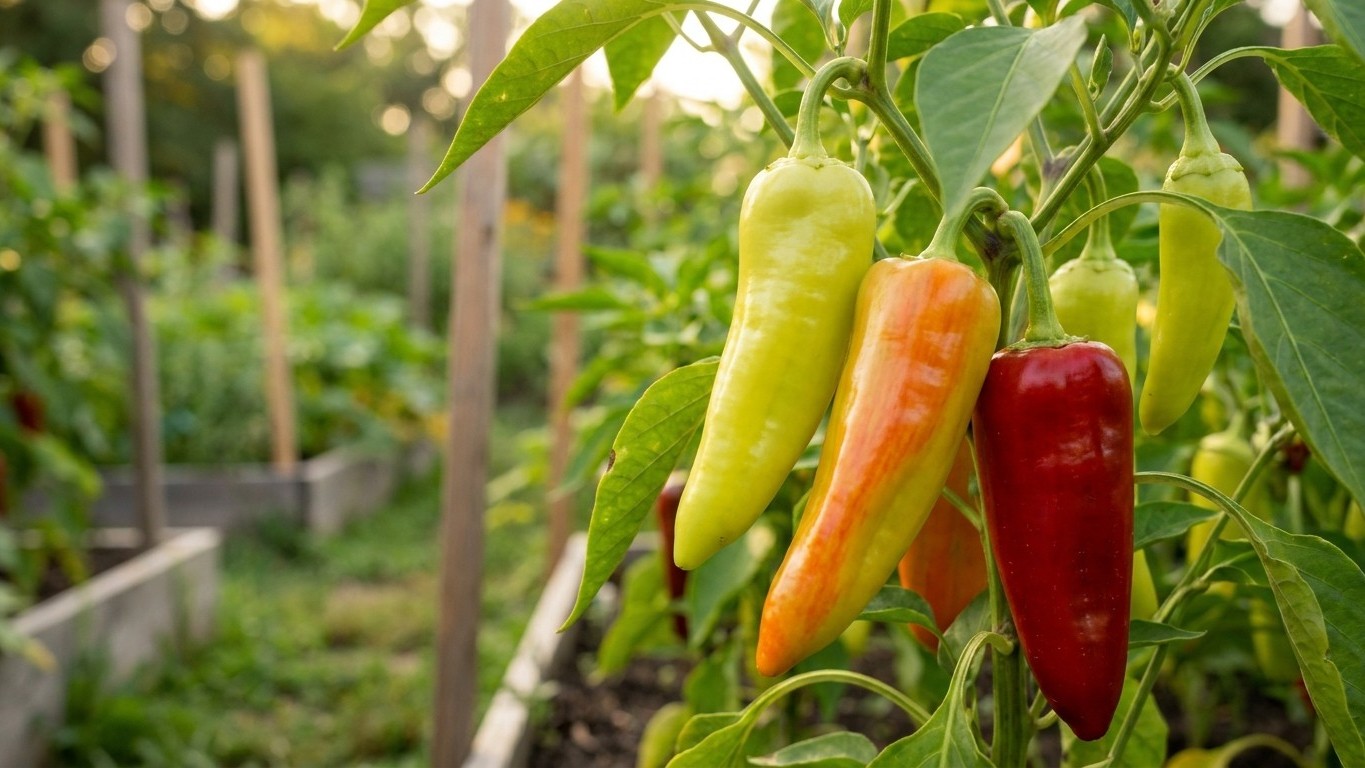

Pick peppers when the fruit has reached full size and feels firm, which is about 70 to 85 days after transplanting. Then keep them out of the refrigerator. A household fridge runs colder than peppers can stand, and the fruit pits and goes soft within days. The right spot is cool but not cold, with damp air. A gardener who gets the picking right and the storage wrong loses most of the harvest on the kitchen shelf.
Keeping them, and for how long
What temperature and humidity do peppers need?
Clemson Cooperative Extension, through its Home & Garden Information Center, states the target in one line: the optimal conditions for storing peppers are temperatures of 45 to 50 °F (about 7 to 10 °C) and 80- to 90-percent relative humidity. Both numbers matter. The temperature protects the flesh, and the humidity keeps the skin from wrinkling as the fruit loses water.
That temperature range is warmer than a domestic refrigerator. Peppers are a warm-season crop, and their tissue is injured by cold. Below about 45 °F they develop chilling injury: small sunken pits on the skin, softening, and a watery look once the fruit comes back to room temperature. The damage often does not show while the pepper sits in the cold. It appears a day or two after you take it out, which is why so many people blame the pepper instead of the drawer.
The same extension factsheet puts the harvest at about 70 to 85 days after transplanting. That count starts the day the plant goes into the garden, not the day the seed was sown. Transplants should go out after frost, once the soil reaches 60 °F (about 16 °C), according to Utah State University Extension.
How long do peppers last under those conditions?
The Clemson figure is two to three weeks. Treat it as the ceiling for a perfect pepper in a perfect spot, not as a shelf life you can count on. Fruit that was picked at the right stage, with no cuts, no sunscald and no soft spots, has the best chance of reaching the long end. A pepper that was nicked by a pruner or bruised in a bucket will start to break down much sooner.
A few habits stretch the odds. Cut the fruit from the plant with a short piece of stem attached instead of pulling it, because a torn shoulder is an open door for rot. Leave peppers unwashed until you use them, since surface water speeds spoilage. Check the stored batch every few days and use the softest fruit first. One failing pepper can spoil its neighbors.
Color matters too. Peppers left on the plant to turn red, yellow or orange are fully ripe and sweeter, but they take longer to reach that stage, and every extra week in the field is a week of exposure to cold nights. Where the mean last spring frost at the Moncton station falls on May 23, and the frost falls later than that date in one year out of two, a late transplant and a slow summer can push ripening into the weeks when the nights turn raw. Many growers in the Maritimes pick green and plan around it.
Where in the house that actually is
Which room comes closest to 45 to 50 °F?
Start by ruling things out. The kitchen, the living room and any heated bedroom sit well above 50 °F for most of the year, and peppers kept there soften and shrivel faster than the storage figures assume. The refrigerator is too cold. An attached garage looks promising, but it follows the weather. On a mild September afternoon it may be fine, and during a cold snap in October or November it can drop to where peppers freeze, then swing back up the next day.
The closest match in most Maritime houses is an unheated or barely heated basement, a cold room off the basement, or a corner of the cellar away from the furnace, the water heater and any warm ductwork. Concrete and below-grade walls hold a steadier temperature than the rest of the house, and the air there is usually damper, which is what peppers want. A cool back porch can work for a short stretch of fall, as long as the forecast stays above freezing.
How do you check before you commit the harvest?
Do not trust your hand. A basement that feels cool can sit at 58 °F, and one that feels cold may still be inside the range. Put a thermometer in the spot for a few days before the peppers go in, preferably a min-max model, and read it morning and evening. Skipping this check is how a whole harvest ends up in the wrong place, and you only find out when the fruit goes soft.
If the reading is too warm, move down to a lower shelf or to a different corner, away from the heat source. If it is too cold, try a higher shelf or a spot nearer an interior wall. A cheap hygrometer will tell you whether the humidity is close to the 80 to 90 percent range. Without one, a loosely closed or perforated plastic bag keeps moisture around the fruit while still letting air move, and a damp basement does the rest. A tightly sealed bag traps too much water and invites mold, so leave it open at one end.
Common questions
When are peppers ready to pick in New Brunswick?
Count 70 to 85 days from the day the transplant went into the garden, then judge by the fruit. A pepper is ready when it has reached the full size for its type, feels firm, and has a glossy skin. Peppers that are meant to turn red, yellow or orange can be picked green and are perfectly edible, but they will taste sharper and the plant will keep producing more fruit if you harvest regularly.
The planting date drives the calendar. Transplants should wait until frost is past and the soil reaches 60 °F. The mean last spring frost at the Moncton station is May 23, and since the frost falls later than that in one year out of two, early June is a safer starting point for most gardens. A plant set out on June 1 would reach the 70 to 85 day window between about August 10 and August 25, although a cold, wet summer can stretch it. Northern and upland districts run weeks behind Moncton.
Why did my peppers pit and go soft in the refrigerator?
Chilling injury. Peppers are damaged when held below about 45 °F, and a household refrigerator is colder than that. The cells in the skin and flesh break down, which shows up as small sunken spots and a limp, watery texture. Putting them in the crisper drawer helps the humidity but does nothing for the temperature.
If a pepper has already pitted, it is still safe to eat when it is otherwise sound. Cut away the bad spots and cook it soon, because the damaged tissue gives rot a head start. For the next batch, use the 45 to 50 °F spot described above for the fruit you plan to keep, and put only what you will use within a day or two in the fridge.
Do hot days or cool nights hurt peppers in New Brunswick?
Both can, because fruit set fails at both ends. Utah State University Extension reports that peppers drop flowers or fail to set fruit when nights fall below 55 °F (about 13 °C) or when days climb above 32 °C. On the hot side, the Moncton A station averages 1.0 day a year reaching 32 °C and 4.6 days a year above 30 °C, so a long run of scorching weather is unusual there. The cool side is up to you: watch your own nights with a thermometer, since an airport station says little about your yard, your slope or a low spot where cold air settles.
Missing fruit has other causes as well, and our guide to Why Peppers Fail to Set Fruit in New Brunswick goes through them. A slow start can also be a planting problem, and Growing Peppers in New Brunswick covers the season from transplant to harvest.
Should I pick everything before a frost?
Yes, when a frost is forecast and the plants still carry usable fruit. Peppers are not frost tolerant, and a night that dips to freezing can damage leaves and fruit alike. Harvest every pepper that has reached a decent size, including the green ones, and move them to your cool storage spot rather than the kitchen counter.
Before you pick, look the fruit over for damage from insects and slugs, which can open the way for rot in storage. Damaged peppers should be used first or discarded. Our article on What Eats Pepper in New Brunswick, and When shows what to look for. For local frost timing in your own district, the county or regional agricultural office knows the ground better than any single station average.