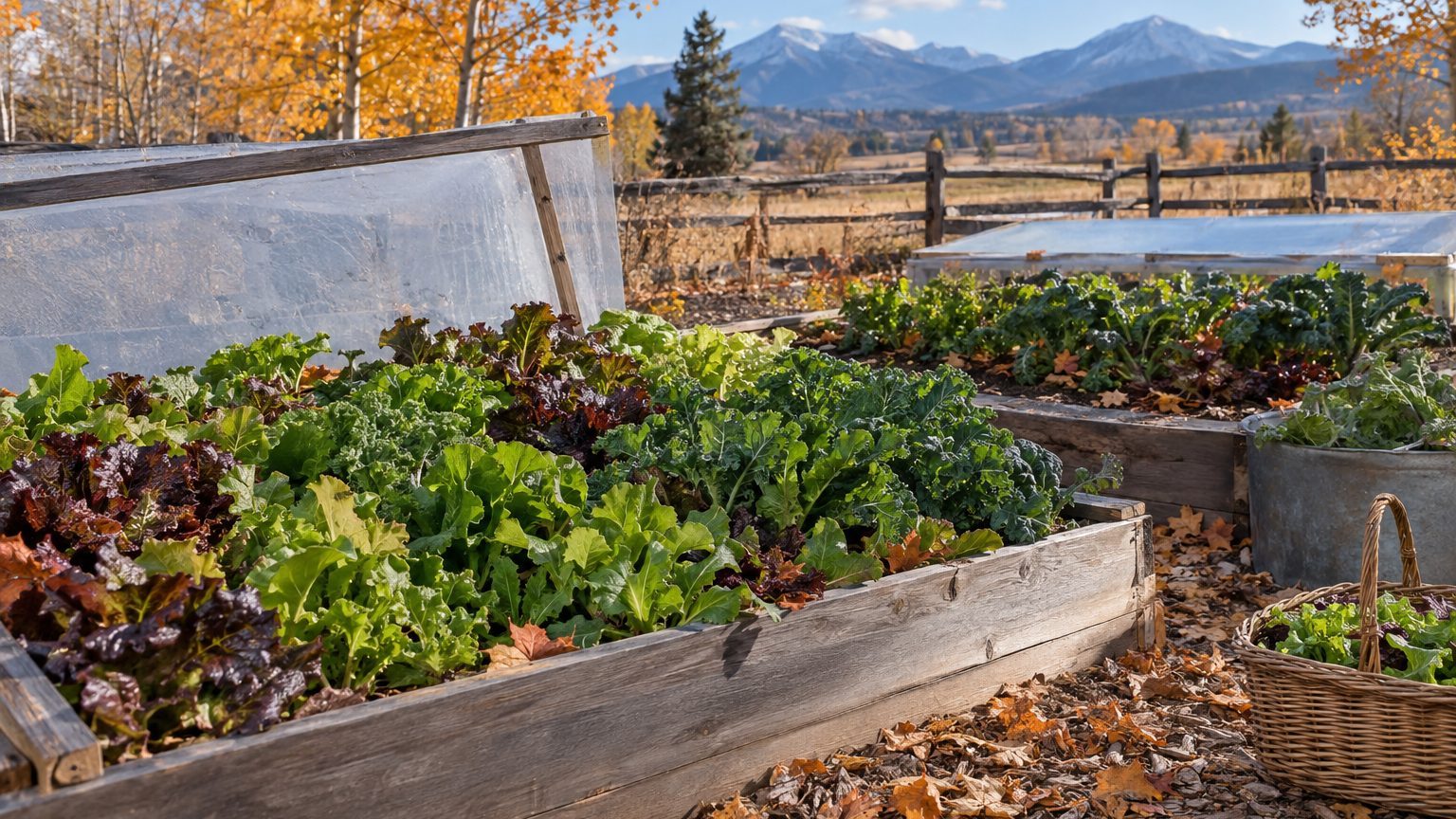

Winter salads can be grown across Virginia, but the calendar depends on which Virginia you garden in. The Tidewater coast stays mild enough that hardy greens often keep going with little help, while the Blue Ridge and the southwest turn cold weeks sooner. The dates below come from one coastal weather station, so read them as the mild end of the state and adjust inland.
When the soil is warm enough in Virginia
The date most gardeners ask about is the last spring freeze. At NAS Oceana (station USW00013769), the NOAA NCEI 1991-2020 Climate Normals put it between March 20 and April 3, using the 30-70% probability band for a 32F freeze. That is a probability, not a promise, and a freeze after April 3 can still happen in any given year.
Frost is also only a proxy. Salad seed does not care about the calendar. It cares about the soil, and soil warms after the frost risk ends, not along with it. A bed can be frost-free for two weeks and still be cold, wet and slow to wake up. Squeeze a handful: if it crumbles instead of clumping into a sodden ball, it is ready to take seed.
Winter salads flip the problem around, which surprises people. In late summer the soil is the opposite of cold. Many lettuce-type seeds sulk in hot ground, so the sowing window opens when the soil cools, not when the air feels autumnal. Shading the row, keeping it evenly moist and sowing toward evening all help while the ground is still warm.
The other end of the calendar sets your deadline. The same Oceana normals give a first fall freeze between November 10 and November 24, and a fall sowing is planned backward from that range. The goal is a plant already near cutting size when growth slows with the shortening days, because a seedling that is still tiny at the first freeze will mostly sit there until spring.
One caution matters more than any date on this page. Coastal Virginia Beach is the mild end of the state. The Blue Ridge and southwest Virginia run weeks later in spring and earlier in fall, so a mountain gardener should shift every date in the direction of “sooner” for fall sowing and “later” for spring. The state’s land-grant extension office, Virginia Cooperative Extension, can point you to the dates and varieties that have been trialled near your county. This page names no varieties for exactly that reason.
How long the season lasts here
Subtract the dates and the arithmetic is simple. From the latest spring freeze in the band (April 3) to the earliest fall one (November 10) is 221 days. From the earliest spring date (March 20) to the latest fall date (November 24) is 249 days. Call it roughly 221 to 249 days between freezes at the Oceana station, or a little over seven months at the short end and eight at the long.
The number itself matters less than what it allows. A window this long permits a second sowing. You can put in a first batch of a cool-season green in early autumn, then another a couple of weeks later, so the whole bed does not mature in one burst and bolt or freeze together. Staggered rows turn one harvest into a rolling one, and the bed keeps producing as the first batch is cut down.
A long window also changes the transplanting question. Starting seedlings in trays while a summer crop still occupies the bed buys time, and it is worth the root disturbance when you have weeks to recover from it. Leafy greens that resent root check do better direct-sown. Where the window is tight, the math reverses: a gardener with only a single chance has little room to lose a week to transplant shock.
That is the Blue Ridge situation. This page has no verified frost dates for the mountains, and I am not going to estimate them. The state-level caution says only that they are weeks shorter at each end. Weeks off a 221-to-249-day window can be the difference between two sowings and one, so inland gardeners should treat their first sowing as the one that has to work.
For the mechanics of staggering batches, the Winter Salads: What Grows When Lettuce Will Not overview on this site is the place to start. It handles the sowing rhythm that this state page only describes.
Heat and water in Virginia
The verified figures for this page do not include a count of days above 90 F or a summer rainfall total, and I am not going to supply numbers I cannot source. What can be said without them is general: Virginia summers are warm and humid, which matters for seedlings started in August and for how fast leaf diseases move through crowded rows. Local extension offices publish station-level numbers for your county.
The figure that decides the crop is cold. At the Virginia Beach reference station, the mean daily minimum of the coldest month is 31.6 F, from the NOAA NCEI 1991-2020 Climate Normals. A typical night in the coldest month sits just under freezing, and plenty of nights go lower, because it is an average. That one number sorts winter salads into three groups.
- Stand uncovered: the hardy leafy types, such as spinach-type greens, mustards, chicories and mâche-type rosettes, which usually carry through coastal winters in the open.
- Need a cover to stay edible: tender lettuce types, which survive some frost but turn damaged and unappetizing without a row cover or low tunnel.
- Cannot manage at all: warm-season salad plants, which finish at the first freeze regardless of cover.
Zone maps tell the same story with a wider brush. The USDA Plant Hardiness Zone Map 2023 spans zones 5a to 8b across Virginia, and it is built on a single variable, the average annual extreme minimum temperature. That is a statewide range, so cite your own location rather than the span. Virginia Beach is the reference city here, and the mountains sit far colder than it does.
The first fall freeze sets how late a sowing can still count. With freezes arriving between November 10 and 24 at the coast, a sowing that has not reached useful size by then will barely grow as the light fails. Daylight, not temperature, throttles growth in midwinter, and no cover changes that.
Warm, humid years bring their own trouble. Crowded rows in damp air invite mildew and other leaf disease, and a bed that never dries between waterings makes it worse. Water at the root in the morning, thin seedlings early and leave space for air to move. For a neighbor to compare against, Winter Salads for Tennessee Gardens covers a state that shares part of Virginia’s inland climate, and Winter Salads for Minnesota Gardens shows what happens when cold, not humidity, runs the whole show.
Which winter salads suit Virginia
Choose by type, not by variety name. Virginia’s conditions point in three directions, and each one favors a different quality in the plant.
| Virginia condition | What to favor |
|---|---|
| Shorter season inland | The earliest-maturing types, sown on the first workable date |
| Hot, humid late summer | Types given shade and mulch at the root, with room for airflow |
| Humid air and damp foliage | Disease resistance as the first criterion |
On the coast, where the window runs long, speed matters less than staying power: the hardy leafy groups above, sown in staggered batches. Inland, the earliest types move to the top of the list, because the first sowing has to reach size before the light fades. For hot starts, choose plants that tolerate warm germination or sow in shade. Humidity makes disease resistance the first thing to read on a seed label, ahead of flavor and ahead of looks.
Specific varieties are deliberately absent here. This page has no local trial data, and a variety that thrives in a Tidewater garden may fail in a Shenandoah Valley one. The only recommendation that means anything is one tested near you, and Virginia Cooperative Extension and its county offices are where those results live. Refusing to name a cultivar here is the correct answer, and a name pulled from memory would only look helpful.
Everything in this guide is grown in beds and containers. Gathering salad greens from the wild is a separate matter and not something this site covers, since several plants resemble young salad leaves and some are seriously toxic.
Common questions
When should I sow winter salads in Virginia?
Work backward from the first fall freeze. At the Oceana station that falls between November 10 and November 24, and the sowing should reach useful size well before then. Mountain and southwest gardeners should sow earlier, because freezes arrive weeks sooner there. Your county extension office can give local dates.
Do I need row cover in Virginia?
It depends on the type and the location. At the Virginia Beach reference station, the coldest month’s average minimum is 31.6 F, which hardy leafy greens often handle uncovered. Tender lettuce types usually need cover to stay edible, and inland gardens run colder than the coast.
Does my USDA zone tell me what to plant?
Only partly. The USDA Plant Hardiness Zone Map 2023 uses the average annual extreme minimum temperature alone, and Virginia spans zones 5a to 8b. It says nothing about summer humidity, soil warmth or how late the first fall freeze arrives. Use it as one input, alongside your local frost dates.
Can I pick wild greens or watercress for a winter salad?
This site does not cover wild harvesting. Wild watercress growing in water grazed by livestock can carry liver fluke, and several plants that resemble young salad leaves are seriously toxic. Grow salad greens from seed in beds or containers, where you know exactly what you are cutting.