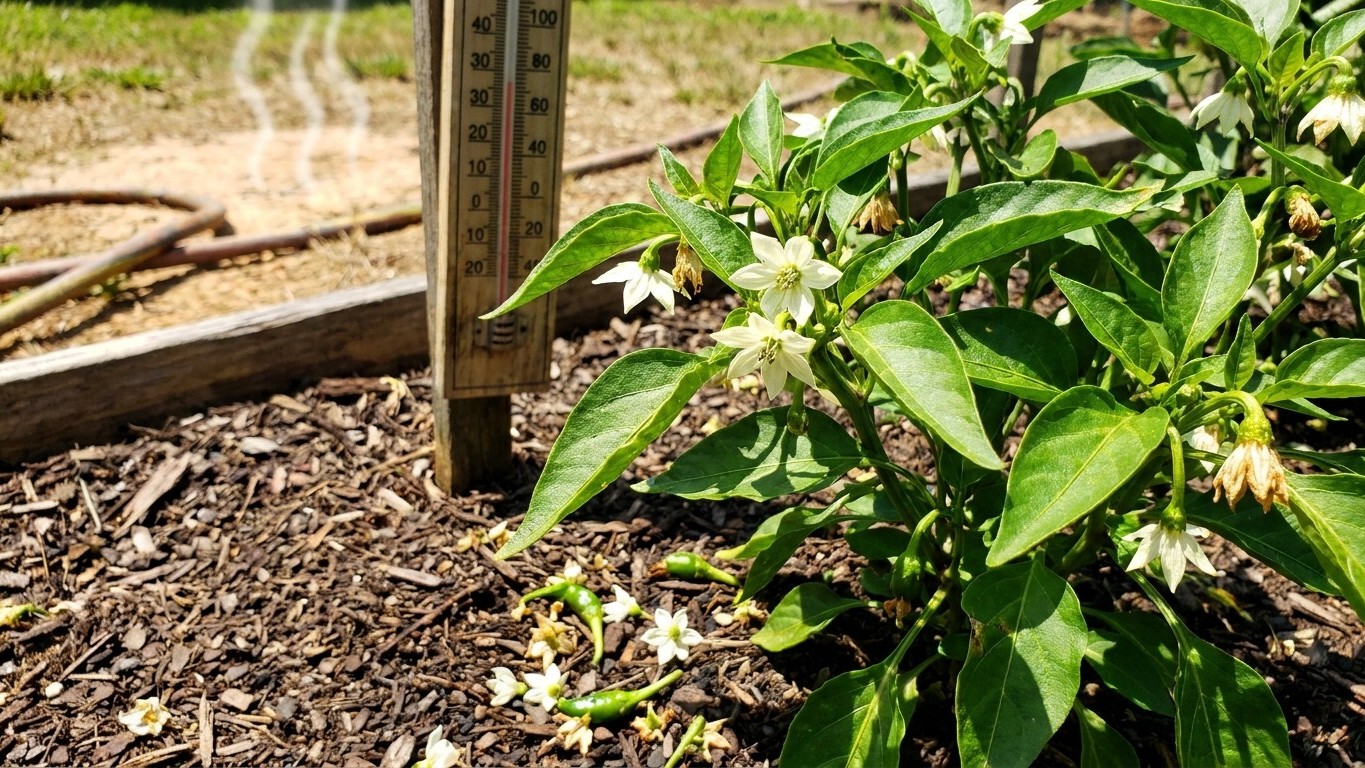

Peppers Fail to Set Fruit in Missouri when summer heat pushes past 90°F for stretches long enough to sterilize pollen and stall blossoms before they turn into fruit. The state’s reference station averages 32.7 days a year at or above that mark, landing squarely in the weeks when pepper plants should be flowering hardest. Fruit set can also shut down on the cool end, and this site doesn’t track summer night lows for Missouri, so watch your own thermometer through the season.
The short answer
Start with the number: 32.7 days a year at or above 90°F, measured at the reference station in Kansas City over the 1991-2020 Climate Normals period, according to NOAA NCEI. That figure isn’t an average summer temperature. It’s a count of individual days that cross a threshold, and it’s the number that actually predicts trouble in a pepper patch, because pepper flowers respond to heat spikes, not to seasonal averages. When daytime highs sit above 90°F for several days running, pollen loses viability and the plant drops blossoms rather than waste energy setting fruit that won’t finish. A pepper bush can look green and healthy through this stretch and still produce almost nothing, because the failure happens at the flower, not in the leaves.
Timing makes this worse than it sounds. Once a flower is successfully pollinated, a pepper still needs 35 to 45 days from that point to reach harvest, according to Utah State University Extension. That means a heat spike that wipes out a flush of blossoms in mid-July doesn’t just cost you that week. It costs you the harvest that would have ripened in late August, because there was nothing behind it to replace the loss. In a county with regular 90-plus stretches, this can repeat two or three times across a growing season, which is why pepper yields in Missouri gardens often look thin even when rainfall and soil fertility are fine.
The other end of the failure gets less attention but matters just as much. Fruit set also stops when nights drop below 55°F, a threshold that applies regardless of how hot the days get. Cool nights are common at both edges of the Missouri growing season, right when gardeners are eager to get transplants in the ground early or squeeze out a late crop before frost. This site does not carry summer night minimum data for Missouri, and there’s no reliable way to infer it from latitude or from the coldest month of the year. The only fix is to track your own overnight lows with a simple min/max thermometer near the pepper bed, especially in the first few weeks after transplant and again as nights start cooling in early fall.
When to start seed here
Working backward from the calendar gives a starting date that actually fits your yard, rather than a generic seed-packet suggestion. Here’s the sequence to run for your own county.
- Find your last spring frost window. NOAA NCEI’s 1991-2020 Climate Normals put the 32°F freeze probability band for Missouri between April 6 and April 20. The MCI station sits well north of Kansas City, so that range skews later there; the downtown Kansas City station runs about five days earlier in spring, and southern Missouri counties are milder still. Pin down which end of that range fits your location before doing any more math.
- Add a soil-temperature check on top of the frost date. Frost passing isn’t the only condition. Soil at transplant depth needs to reach 60°F, and cold soil in early spring can lag behind air temperature by a couple of weeks even after the frost risk clears. Don’t transplant on the calendar date alone; confirm with a soil thermometer pushed a few inches down.
- Count back 8 to 10 weeks from your planned transplant date. That’s the indoor sowing window Utah State University Extension recommends for peppers, which germinate and grow slowly compared with many other vegetable starts. Ten weeks gives more of a cushion if your indoor setup runs on the cool or dim side; eight weeks fits a warmer, well-lit setup.
- Do the arithmetic for your own date. Take a mid-range frost date like April 13. Counting back 8 weeks lands seed-starting around mid-February. Counting back 10 weeks pushes it to early February. If your county sits at the earlier end of the frost window, shift both dates a week or so sooner; if you’re in the milder south, you can shift later.
Skipping either the soil-temperature check or the frost-date adjustment for your specific county is the most common reason transplants stall right after they go in the ground. A transplant set out into 55°F soil sits there doing nothing while a neighbor’s plant, started the same week but transplanted two weeks later into warmer ground, catches up and passes it by midsummer.
What goes wrong here
- Blossom drop during a hot spell. Days at or above 90°F, especially in back-to-back stretches during flowering, sterilize pollen and cause the plant to shed flowers rather than set fruit. With 32.7 such days a year on average in the state, this is the most common failure. Provide light afternoon shade with cloth during the hottest stretch, keep soil moisture even rather than letting plants swing between dry and soaked, and hold off on high-nitrogen fertilizer, which pushes leafy growth instead of flowering.
- Blossom drop from a cool night. Nights below 55°F, whether from an early transplant or a cool snap late in the season, stop fruit set just as effectively as heat does. Because summer night lows aren’t tracked here for Missouri, keep a thermometer near the bed and note actual overnight readings rather than guessing. If a cold night is forecast on young transplants, cover them; established plants tolerate an occasional cool night better than seedlings do.
- Sunscald on exposed fruit. Strong summer sun can bleach or blister pepper skin when fruit sits exposed after heavy pruning or after a plant loses leaves to disease or wind damage. Keep foliage full rather than stripping lower leaves, and avoid pruning for airflow during the hottest weeks; a little extra leaf cover over the fruit does more good than harm.
- Blossom-end rot on developing fruit. This shows up as a dark, sunken patch on the bottom of the pepper and traces back to inconsistent watering rather than a calcium shortage in the soil. Uneven moisture, wet one week and dry the next, interrupts calcium uptake at the exact moment fruit is developing. Mulch to buffer soil moisture swings and water on a steady schedule instead of reacting to whichever week feels dry.
Common questions
How many days does Missouri average above 90°F each year?
The reference station in Kansas City averages 32.7 days a year at or above 90°F, based on NOAA NCEI’s 1991-2020 Climate Normals. That’s a count of individual hot days, not an average summer temperature, and it lines up with the state’s most common cause of pepper fruit-set failure.
When should I transplant peppers outdoors in Missouri?
Transplant after your local last frost date and once soil temperature reaches 60°F. NOAA NCEI puts the statewide 32°F freeze probability window between April 6 and April 20, with the MCI-area station running later and the Kansas City downtown station about five days earlier; southern Missouri is milder still. Check both frost date and soil temperature before moving plants outside.
Why do my pepper blossoms fall off without producing fruit?
Fruit set fails at both ends of the temperature range: days at or above 90°F sterilize pollen, and nights below 55°F stop the process just as effectively. Missouri’s reference station logs 32.7 such hot days a year on average, so a hot stretch during flowering is the more common culprit here, but a cool night early or late in the season causes the identical symptom.
Does the 90°F threshold mean Missouri’s average summer temperature is that high?
No. It’s a count of how many individual days each year reach or exceed 90°F, not an average across the whole summer. It measures heat load, the kind of spike that damages pollen and stresses cool-weather crops, rather than describing typical daily conditions.