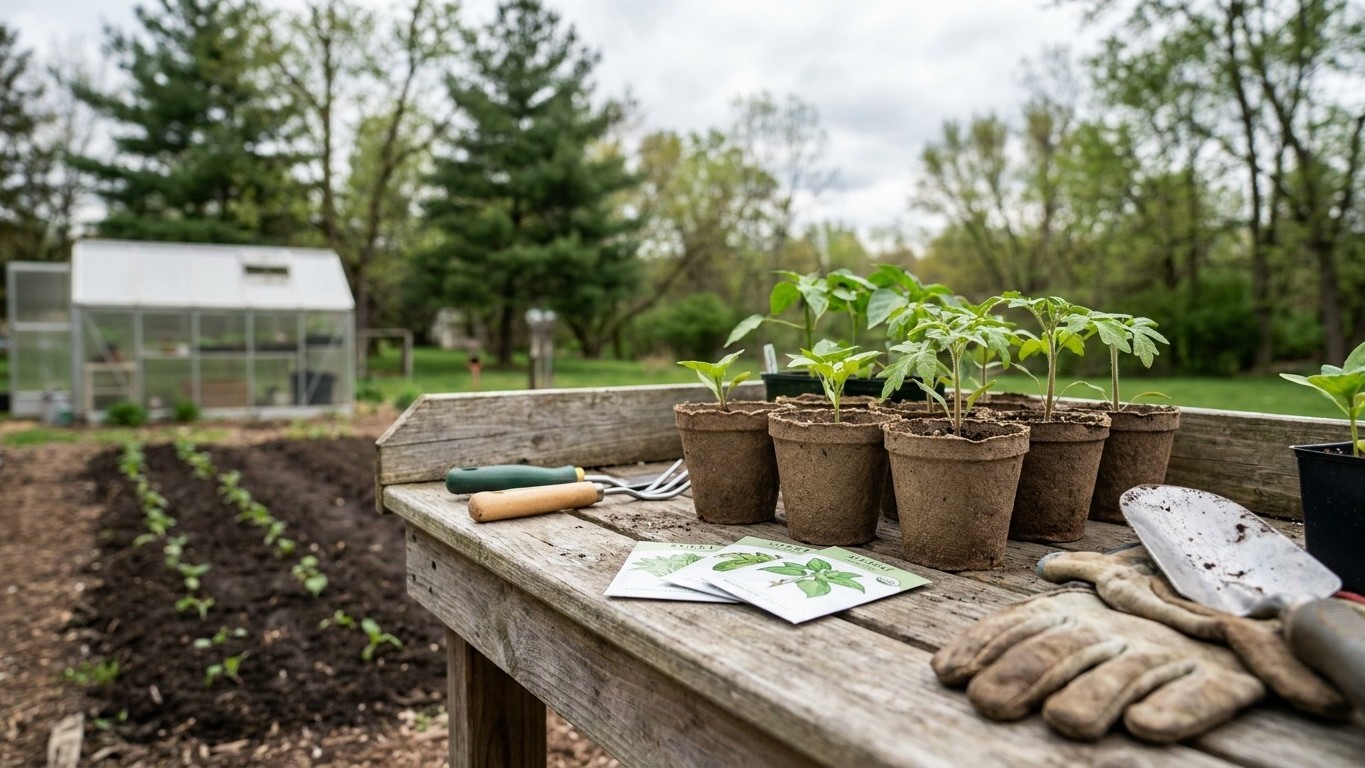

April is Missouri’s real planting month: cold-hardy crops go straight into the ground from the first week on, while the state’s last frost still falls somewhere inside this very month, so timing within April matters more than the date on the calendar. Warm-season crops wait for the tail end, or for May.
What goes in the ground in April

The number that actually runs this month is the frost window, not the month itself. Across the reference station used for this region, the last spring freeze at 32°F falls between April 6 and April 20, according to NOAA’s 1991-2020 climate normals. That’s a probability band, not a promise, and it shifts by location: the downtown Kansas City station tends to clear about five days earlier than the airport station used for that data, and southern Missouri clears earlier still. Treat early April as still inside frost risk and treat the back half of the month as the safer stretch, especially the further south you garden.
What doesn’t care about that window: the cold-hardy crops that shrug off a light freeze. Peas can go into the ground as soon as soil is workable and not sopping wet. Spinach, lettuce, kale, and other leafy greens tolerate a frost once they’ve got true leaves. Onion sets and transplants, radishes, carrots, and beets all handle cool soil and a stray cold night. Seed potatoes go in through this stretch too, cut and cured a day or two before planting so the cut sides callus over instead of rotting in cool, damp ground.
Garlic planted the previous fall is already up and growing; there’s nothing to plant there now except a side-dress of compost. Hardened-off brassica transplants, broccoli and cabbage started indoors weeks earlier, can go out under a floating row cover in the first half of the month for extra insurance, then lose the cover once the region is solidly past its local frost date.
What’s still a gamble: tomatoes, peppers, squash, cucumbers, and beans. Soil temperature, not air temperature, decides whether these germinate or just rot. A warm afternoon in early April doesn’t mean the soil four inches down has caught up. Hold these for the very end of the month at the earliest, and only in the state’s warmer southern counties.
What to start under cover
Work backward from the frost window instead of forward from a date on a seed packet. Tomatoes and peppers need roughly six to eight weeks indoors before they go outside, which means they should already have been started in February for an April 6-20 transplant target; if that window slipped, it’s better to buy started plants later than to force a stunted seedling to catch up. Cucumbers, squash, and melons run a shorter clock, about three to four weeks from seed to transplant size, which makes April the month to start them indoors or under a cold frame for setting out in mid-to-late spring once the soil has genuinely warmed.
The two ways this goes wrong are opposites. Start too early and the seedling outgrows its pot before the ground is ready, ending up rootbound, leggy, and stressed the day it finally gets transplanted, a plant that often never fully recovers its vigor. Start too late and the plant is still small when the safe planting window arrives, which pushes the harvest back weeks and can cost a gardener the difference between a full tomato season and a short one before fall frost arrives on October 18-29.
Succession starts matter here too. A second and third tray of lettuce, kale, or broccoli started under cover every couple of weeks through April keeps transplants coming so the garden isn’t planted all at once and harvested all at once. Cold frames and unheated hoop houses do double duty this month: they harden off what was started indoors and let a gardener sneak in an extra few weeks of season on both ends.
What is ready to pick
Asparagus is the headline crop for this stretch, sending up spears through established crowns once soil temperatures climb into the 50s; established beds (three years or older) can be cut for several weeks. Rhubarb stalks thicken enough for a first harvest by mid-to-late April in most of the state, and the rule there is simple: pull stalks by twisting at the base rather than cutting, and never eat the leaves.
Anything that overwintered under mulch or row cover is worth checking now. Kale and collards that sat through the cold months often taste sweeter than a fall crop, since cold exposure converts starches to sugars in the leaves. Cold-frame lettuce and spinach sown in late winter reach a pickable size by early-to-mid April, harvested a few outer leaves at a time to keep the plant producing.
Radishes from an early-March sowing are usually ready inside a month, so an April harvest is realistic if the timing lined up. Beyond that, storage crops carry the kitchen. Potatoes, onions, and winter squash held over from the previous season should get a hands-on check now: soft spots, sprouting eyes, or a sweet fermented smell mean it’s time to use that item up or compost it before it spreads to the rest of the stored crop. A single soft squash left in a bin can take out its neighbors within a couple of weeks.
The jobs that matter this month
Soil preparation earns its place at the top of this list because everything else depends on it. Working compost into beds now, while they’re still workable but not waterlogged, sets up drainage and fertility before the heavier spring planting begins. Testing soil pH and nutrient levels this month, rather than after something fails to thrive, gives enough lead time to correct with lime or amendments before summer crops go in.
Structure and support before plants need it
Staking and trellising go up before peas and early vining crops actually need them, not after they’ve flopped over. A trellis installed over an already-sprawling pea vine damages roots and stems; one installed at planting time never has to be forced later. The same logic applies to tomato cages, which are far easier to set over a six-inch seedling than to wrestle around a three-foot plant in June.
Mulching cool-season beds now conserves the soil moisture that April’s variable rainfall doesn’t always deliver on schedule, and it suppresses the first flush of weed seedlings before they establish. Watering rhythm matters more than volume this month: newly transplanted seedlings need consistent moisture while their root systems establish, which usually means shorter, more frequent watering rather than one deep soak a week.
Scouting, pruning, and the paperwork of a garden
Pest scouting pays for itself now. Aphids, flea beetles, and slugs all show up early on tender new growth, and catching a small population in April is a five-minute job; catching an established one in June is a season-long fight. Finish any dormant pruning on fruit trees and cane berries before buds break fully open, since pruning cuts made after active growth starts invite disease and slow the plant’s recovery. Sharpening and cleaning tools, repairing raised bed edges and fencing, and finalizing the summer seed order all belong on this month’s list too, since popular varieties sell out well before planting season peaks.
What not to do in April
The classic mistake is trusting the air instead of the soil. A run of 70-degree afternoons doesn’t mean the ground has warmed to the 60-plus degrees that beans, squash, and cucumber seeds need to germinate reliably. Seed sown into soil that’s still in the 50s often just sits there and rots before it sprouts, and a gardener who then re-sows loses two to three weeks compared to waiting for the soil itself to catch up.
Pulling row covers or cold frame lids off too early after a warm spell is the second trap. A few mild days in early April feel like spring has arrived, but the last-frost window for this region runs through April 20 in the cooler parts of the state, and a single overnight freeze after tender growth has been exposed can undo weeks of head start. Leave protection in place, or ready to redeploy overnight, until the region is solidly past its local frost date.
Nitrogen timing trips people up too. Heavy nitrogen applied to transplants right at planting pushes soft, leafy growth at the expense of root establishment, and that soft growth is exactly what late frosts and early pests target first. A better sequence is a modest starter feeding at transplant, then a stronger nitrogen application once the plant is actively growing and has a root system to support the new leaves. Working wet soil is the last one: tilling or digging beds that are still saturated from spring rain compacts the structure for the rest of the season, undoing months of soil-building work in an afternoon.
Checking this against your own county
A single state-wide frost window is a starting point, not an instruction for a specific yard. Elevation, local topography, and simple north-south distance move these dates by a couple of weeks across Missouri; a garden in the state’s southern counties routinely clears frost risk well before one in the north does, and a low-lying spot that collects cold air overnight will lag behind a slope just a mile away. For a planting calendar built around a specific county, and for current frost and soil data, the Missouri extension service is the source to check before locking in a planting date.
Common questions
Is it safe to plant tomatoes outdoors in April in Missouri?
Only at the very end of the month, and only in the state’s warmer southern counties. The reference frost window runs April 6 to April 20, and tomatoes are damaged by any frost, so most gardeners are better off waiting until early May to be safe.
What vegetables can go outside earliest in April?
Peas, onion sets, spinach, lettuce, kale, radishes, carrots, beets, and seed potatoes all tolerate cool soil and an occasional light frost, making them the safest early-month choices.
Why does the same frost date not apply everywhere in the state?
The published window comes from one reference station, and NOAA’s own data shows a nearby downtown station clearing frost about five days earlier in spring. Elevation, local air drainage, and the general north-south gradient across Missouri shift the real date at any given address further still.
What USDA hardiness zone is Missouri in?
The state spans zones 5b through 7b on the USDA Plant Hardiness Zone Map, a range built on average annual extreme minimum winter temperature rather than spring frost timing, so it’s useful for choosing perennial plants but not for picking a planting date.