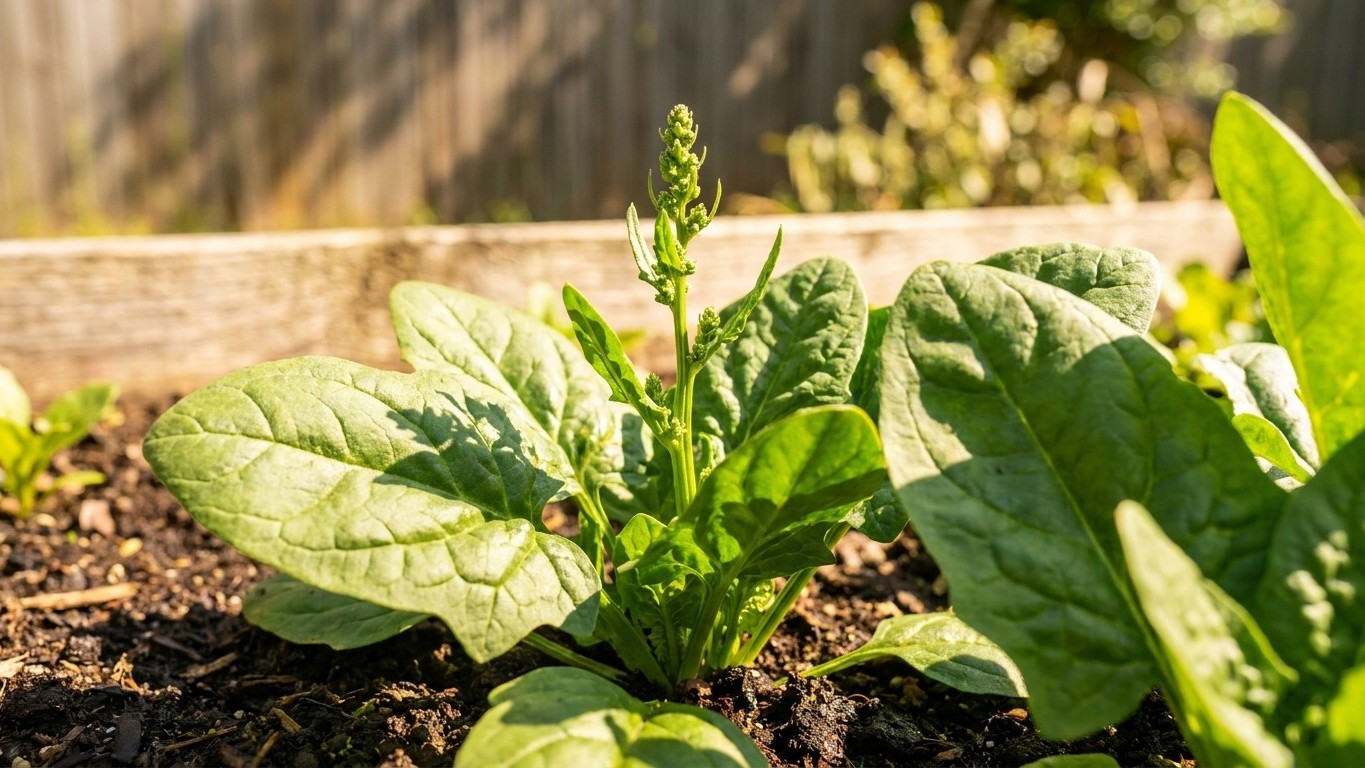

Spinach in Missouri gets eaten by chewing insects, sap-feeding insects, slugs and a few larger animals. Each shows up on its own schedule. The pattern follows the weather: chewers and slugs hit seedlings in cool, damp stretches, sap-feeders build as spring warms, and fall sowings meet whatever late summer left behind. The timing matters more than the name on the insect.
Which pests attack spinach in Missouri
Species identification belongs to University of Missouri Extension, and the county office there is the right place to take a damaged leaf. What a gardener can sort out alone is the feeding habit, and spinach gets hit by five kinds of feeder. They differ enough that the damage usually points to the group.
Chewing insects take bites out of the leaf blade. You see ragged edges, holes with clean margins, and sometimes dark droppings on the leaf below. Sap-feeding insects do the opposite: they leave the leaf whole but weaken it. Look for curled or puckered new growth, a sticky shine on the leaf surface, and pale speckling. Leaf-tunneling larvae live between the leaf surfaces and leave winding or blotchy pale trails you can see through the blade.
Slugs and snails are not insects, but they do the most visible damage in a wet spring. They leave irregular holes of varying size, often with dried silvery trails across the leaf or the soil beside it. Larger animals are the fifth group. Their signature is whole leaves or whole seedlings clipped off, with no insect in sight and no bite pattern on what remains.
Tree and field-crop pests that turn up in Missouri lists have no business on a spinach row. A borer that lives in trunks or a pest of corn ears will not be what you are looking at here. If a diagnosis from a search result names one of those, set it aside. Spinach is a low, short-lived leaf crop, and the culprits live close to the ground or on the underside of leaves.
Plant size shapes the risk. A seedling with two or three leaves can lose half its leaf area to a single night of feeding. A mature rosette can lose a third and keep growing. That is why the first weeks after emergence carry the most risk. For the bigger picture on the crop, see Growing Spinach in Missouri.
When each one shows up, and what it does first
Spring comes first. At the Kansas City reference station, the mean last spring freeze falls between April 6 and April 20. The downtown station runs about five days earlier, and southern Missouri is milder still. Spinach sown as soon as the soil can be worked is already up before most insects are active. Early on, the usual visitors are slugs and snails, because cool, damp nights suit them. The first sign is irregular holes in the lowest leaves, plus a silvery trail if you look early in the morning.
Chewing insects follow as the weather warms, usually once seedlings have their first true leaves and the plants are visible from a distance. The first sign is notched leaf edges, then holes in the middle of the blade. Check the underside of leaves and the soil right at the base of the plant.
Sap-feeders and leaf-tunnelers tend to arrive later, when the crop is bigger and the weather has turned warm. Spinach grows best where temperatures do not exceed 75 F, and the reference station averages 32.7 days a year at 90 F or more. Plants under that heat stress are weaker, and the longest day of the year brings 14 h 46 of daylight. Long days and warmth together push spinach to bolt, and a bolting plant tastes bitter and is not worth defending. If you are watching a spring row go to seed, Will Spinach Bolt Early in Missouri? explains the timing.
Fall changes the picture. Seed will not germinate well in soil above 80 F, so the sowing window opens when the soil cools, not when the frost approaches. Seedlings in early fall meet leftover late-summer insects, and slugs return with the first cool, wet spells. The first fall freeze at the reference station falls between October 18 and October 29, and that ends most feeding. The sowing details are in When to Sow Autumn Spinach in Missouri.
Telling the damage apart from everything else
Plenty of things make spinach look chewed or sick, and gardeners often reach for an insecticide when the real problem is water or nutrition. A quick look at the pattern usually narrows things down. The table below gives the distinguishing sign for each common look-alike, not a diagnosis.
| What you see | Possible cause | What helps tell them apart |
|---|---|---|
| Holes with clean edges, droppings on leaves below | Chewing insect | Droppings and feeding on the underside; damage returns after you remove it |
| Holes of varying size with dried silvery trails | Slugs or snails | Trails on leaves and soil; worst after rain; check at dawn |
| Curled, puckered new leaves, sticky shine | Sap-feeding insect | Distortion in the youngest leaves; small insects on leaf undersides |
| Pale winding trails inside the leaf | Leaf-tunneling larvae | Hold the leaf to the light; the trail sits between the leaf surfaces |
| Yellowing of older leaves, no holes | Nutrient shortage | Even yellowing across the plant, with no bite marks and no insects |
| Midday wilting, crisp edges | Water stress or heat | Plants recover by evening after watering; soil is dry a few inches down |
| Spots or fuzzy growth on leaves | Fungal disease | Spots with a pattern or growth on the leaf surface, often after long wet spells |
| Torn, shredded leaves in one direction | Wind, hail or foot traffic | Damage matches a storm or a path, and no insects are present |
The single most useful habit is to check the underside of several leaves and the soil at the plant base before you decide anything. Insects that cause real damage are usually findable within a minute or two, and a clean underside points you toward water, soil or disease. If you find something and cannot name it, collect a leaf and take it to your county extension office rather than guessing. Many of these problems look alike from three feet away, and a wrong guess wastes a short season.
What actually works here, and what is a waste of time
A physical barrier set up at the right moment beats almost any treatment. Cover the bed with floating row cover at sowing, before anything has found the seedlings, and bury or weight the edges so nothing crawls in underneath. It blocks flying insects, many chewers and larger animals. The catch is that a cover laid over a bed already holding pests simply protects them, so rotate the bed away from last year’s leafy crops.
Calendar choices do the rest. Spinach sown so that it matures while temperatures stay under 75 F grows fast and stays tender, and fast growth outpaces most feeding. Sow too late in spring and the crop meets heat and long days together, which means bolting and pests at once. In fall, sowing into soil still above 80 F fails no matter what insects do, so wait for the soil to cool.
For slugs, the practical steps are small ones. Water in the morning so the surface dries by evening, clear boards and debris near the bed, and check at dawn. For chewers and sap-feeders, look under leaves every few days and pick off what you find while the plants are small.
Spraying on a hunch is the main waste of time. A product aimed at the wrong group does nothing to the real problem, and it can harm the insects that feed on pests. Heavy feeding with fertilizer does not make up for lost leaf area either. Ask your local extension office what is labeled for spinach in the state before buying anything for the row.
Where to check this for your own county
Pest pressure varies within the state. The reference station up near the Kansas City airport runs later in spring and fall than downtown, and southern Missouri is milder than both. A pest that is common in one county may be rare in the next. Statewide patterns do not tell you what is in your garden.
University of Missouri Extension has a county office for each county. Staff there can identify a specimen, tell you what has been active locally, and tell you which products are approved for use on spinach. Bring a whole damaged leaf, a few intact ones for comparison, and a note of when you sowed. Bagging the sample and keeping it cool keeps it recognizable.
Your own records help most. Write down the sowing date, the first day you saw damage, and the weather in the week before. Over a couple of seasons, that note tells you exactly when your garden’s problems begin.
Common questions
Can you eat spinach with holes in the leaves?
Yes, if you trim off damaged or slimy parts and wash the rest well. Damaged leaves also decay faster, so use them first.
Why is my fall spinach not coming up?
Warm soil is the usual reason. Germination drops once the soil goes above 80 F, so a sowing made in a hot early fall may fail with no insect involved. Wait for the soil to cool, and then sow again.
Does row cover stop everything?
No. It keeps out flying insects and larger animals, but it does nothing about pests already in the soil. Seal the edges, and rotate beds so last year’s leaf crop is not underneath.
How long does harvested spinach keep?
Two weeks is a ceiling, and it applies only at 32 F with high humidity. At the 41 to 50 F of a typical fridge, leaves yellow within days. Keep it at the back of the bottom shelf, never in the door.