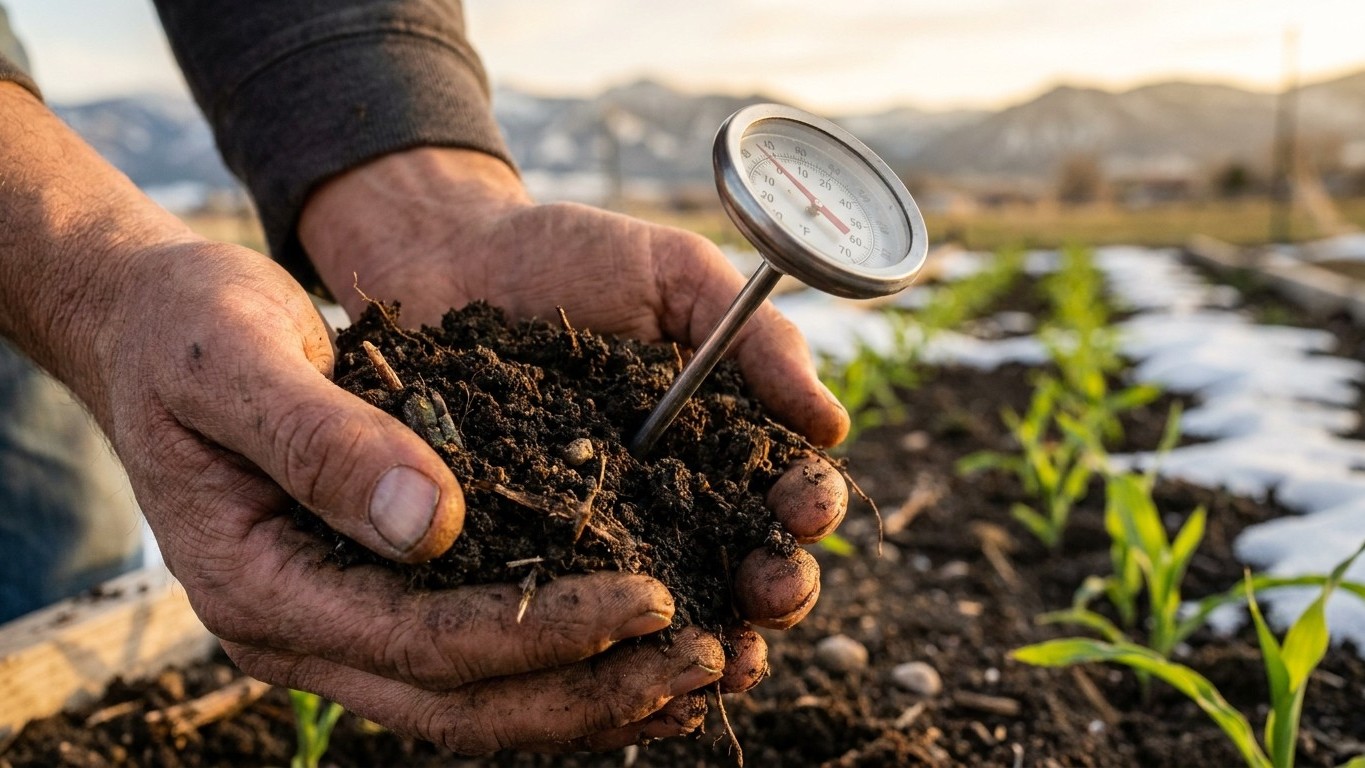

Yes, sweet corn ripens across Missouri in a typical year, but only if you plant by soil temperature instead of the calendar. Corn seed rots or germinates unevenly in cold ground, and the state’s long frost-free stretch (mid-April to mid-to-late October in most counties) gives enough runway for a full 60 to 90-day crop, as long as you wait for the soil to actually warm up before you drop seed.
Will Sweet Corn Ripen in Missouri? The short answer
Here’s the detail that trips up a lot of home gardeners: soil hitting 60 F is not the same event as the last spring frost, and it happens noticeably later. Around the Kansas City International Airport station, NOAA’s 1991-2020 climate normals put the last spring freeze (32 F) somewhere between April 6 and April 20. That date only tells you when the air stops freezing at night. The ground underneath still has to shed its winter chill, and that process runs well behind the air temperature, especially in a spring with lingering rain or cloud cover. Sweet corn seed sitting in soil colder than 60 F doesn’t just grow slowly, it can rot outright before it ever breaks the surface, according to Utah State University Extension’s guidance on sweet corn.
So the real planting trigger isn’t a date on the wall, it’s a soil thermometer reading. Once that threshold is reached, and it will vary from one county’s microclimate to the next, the clock for the crop itself is 60 to 90 days from planting to harvest, per the same USU Extension guidance. For a closer look at pinpointing that moment county by county, see When to Sow Sweet Corn in Missouri. The question worth asking isn’t whether Missouri’s spring is warm enough eventually, it’s whether there’s enough season left after the soil warms to fit that 60-to-90-day window before the first fall frost shuts things down.
On the other end of the calendar, NOAA’s normals for the same reference station put the first fall freeze between October 18 and October 29. That gives a frost-to-frost season stretching from roughly early-to-mid April through late October, somewhere in the neighborhood of six months. Even accounting for the delay between the last frost and the soil reaching 60 F, there’s still a wide stretch of warm ground left before autumn arrives, comfortably more than the 90 days the slowest sweet corn needs. Add in the region’s summer heat load, an average of 32.7 days a year reaching 90 F or hotter at the Kansas City reference station, and you’ve got a season that’s not just long enough on paper but hot enough to push corn through pollination and fill without stalling.
The caution worth repeating: the Kansas City airport station sits well north of the city itself, and its readings run a touch colder than what gardeners closer to downtown actually experience. The downtown station typically warms about five days earlier in spring. Head further south in the state and the frost-free window opens even wider. None of that changes the basic math, it just means gardeners south of the reference station have a bit more cushion than the numbers above suggest.
Does a late variety fit here?
A 60-day variety
A short-season sweet corn, one that reaches harvest in around 60 days from planting, fits Missouri’s window with room to spare almost anywhere in the state. Even if you’re conservative and wait until well after the last frost for soil to hit 60 F, you’re still planting in a stretch that leaves 150 days or more before the first fall freeze arrives. A 60-day crop uses less than half of that. This is the safer choice for anyone planting later than they’d like, whether that’s because of a wet spring, a slow-to-warm garden bed, or a second succession planting mid-summer for a fall harvest.
A 90-day one
A longer-season variety, closer to 90 days from planting to harvest, also fits the calendar in Missouri, but with noticeably less margin. Working from the same numbers, planting won’t realistically happen until the soil clears 60 F, some stretch of time after the April 6-20 frost window closes. From there, the crop needs its full 90 days to finish, and it has to clear that finish line before the first fall frost lands between October 18 and October 29. Run the arithmetic and the season still holds, even in a cautious year, there’s enough distance between a realistic planting date and the first fall freeze to let a 90-day variety mature. It just leaves far less cushion for a late, wet spring or an early fall cold snap than the 60-day option does. Anyone planting a longer-season variety should treat the soil temperature check as non-negotiable rather than optional, since a late start compresses that margin fast.
What goes wrong here
- Seed goes in before the soil warms. The last frost date tempts gardeners to plant early, but 60 F soil often arrives weeks after that frost clears. Seed sitting in cold, wet ground rots or germinates so unevenly that stands end up thin and staggered. The fix is simple and unglamorous: check the soil with a thermometer rather than a calendar, and hold off until it reads consistently above 60 F.
- A variety pushed past what the season can carry. A 90-day corn still fits Missouri’s frost-to-frost window, but only with a realistic planting date built around actual soil warmth, not wishful thinking. Choosing something even longer than 90 days, or delaying planting further because of a wet start to the season, eats into the margin fast. The remedy is matching the variety’s days-to-maturity to how late you’re actually able to plant, and leaning toward the shorter end whenever the spring runs cold or wet.
- Sweetness disappears for reasons that have nothing to do with weather. Sweet corn types (su, se, and sh2) cross-pollinate if their tassels shed pollen at the same time, and the result is starchy, disappointing ears regardless of how well the season cooperated. Utah State University Extension’s guidance doesn’t publish a separation distance for this, so don’t plant by a rule-of-thumb number of feet or rows. What matters is timing: stagger planting dates so the types don’t tassel together, or grow only one type per season. Plant in blocks of three or more rows rather than single rows either way, since block planting is what lets the wind pollinate ears reliably in the first place.
Checking this against your own county
The frost dates and soil-warming pattern above come from a single reference station, and Missouri stretches across enough latitude and elevation that your county could run several days earlier or later than that station in either direction. Before you commit to a planting date, it’s worth confirming local frost timing and soil temperature guidance with the University of Missouri Extension, which tracks conditions at the county level rather than relying on one regional airport station. Their local offices can also weigh in on which maturity ranges tend to perform best in your specific corner of the state, since a river bottom garden and a hilltop plot a few miles apart can warm at noticeably different rates.
Common questions
How do I know when soil has actually reached 60 F?
A simple soil thermometer pushed a couple of inches into the planting bed, checked in the morning over several consecutive days, is the most reliable way to know. Relying on the last frost date alone will consistently mislead you, since the soil lags behind the air by a noticeable stretch.
Can I plant sweet corn twice in one season in Missouri?
Given the length of the frost-free window here, a second, later planting of a short-season variety after the first harvest is workable in many years, as long as there’s still enough time left before the first fall frost for that second crop to finish its 60 to 90 days.
How do I tell when an ear is actually ripe?
Look for three signs together, not one alone: silks that have turned dry and brown, husks that are still moist and green, and milky (not clear, not thick) juice from a kernel when you puncture it with a fingernail. All three should line up before you pick.
Does the picking window follow the same clock as the planting-to-harvest days?
No, and mixing these two up causes a lot of disappointed harvests. The 60 to 90-day figure runs from planting and tells you whether the crop fits the season. A separate, shorter window, roughly 17 to 24 days from when silks first emerge, tells you which week to actually go out and pick. Track both, but don’t confuse one for the other.